By Sam McBride
Growing up in the small, relatively remote Kootenay city of Nelson, British Columbia in the 50s and 60s, I often thought that we Nelsonites would be on the sidelines as the world outside changed year by year.
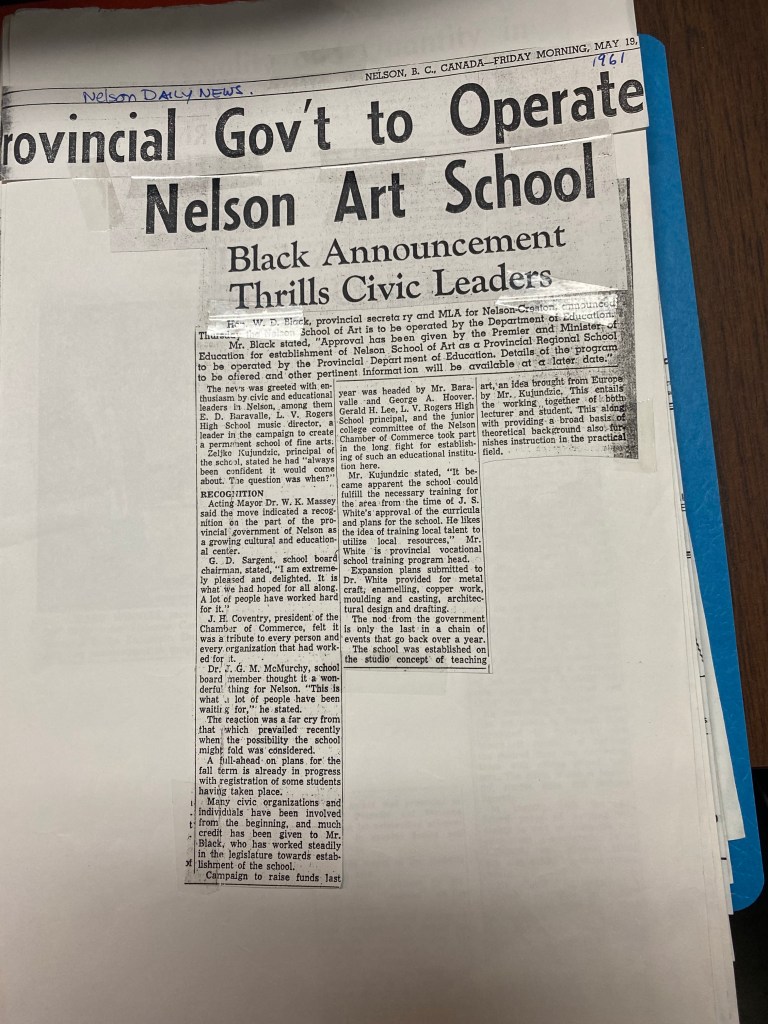
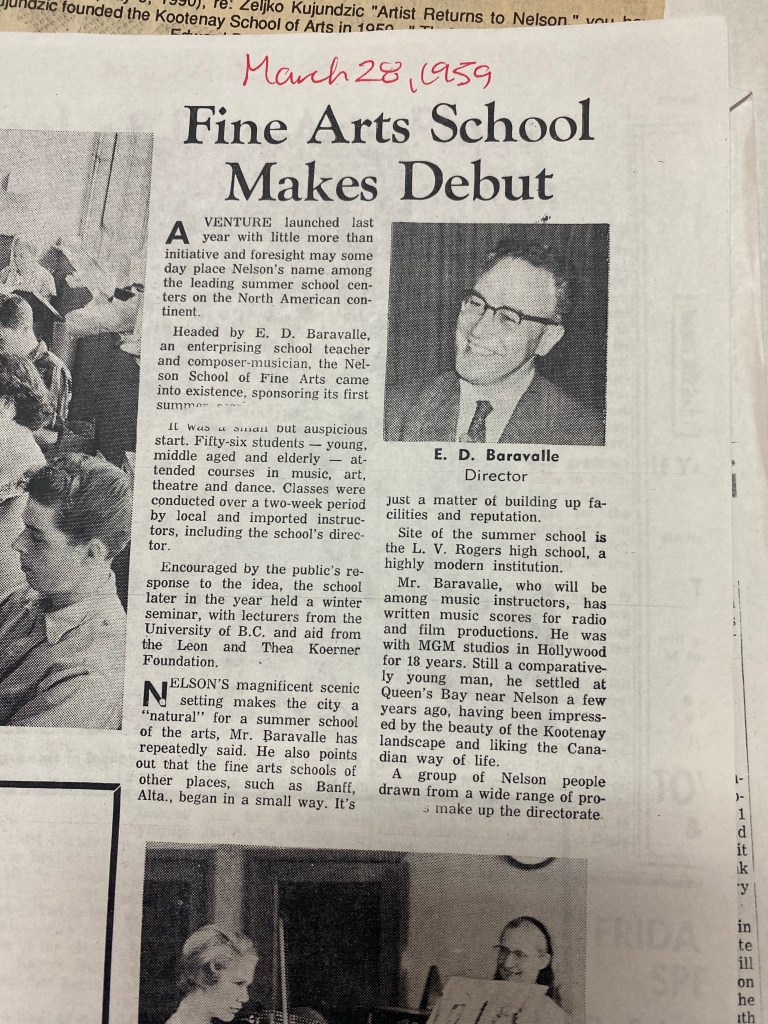
Then in the late 50s and early 60s I noticed there was a lot of excitement about Nelson becoming a centre for training in visual and performing arts. The names you often heard were Ed Baravalle, a veteran of numerous Hollywood movies as music editor, including “The Ten Commandments” in 1956. He came to Kootenay Lake for a visit, and loved the scenery and setting so much he made his new home at Queens Bay and was the driving force and first director of the Nelson Summer School of the Fine Arts. His right-hand man in this work was the dynamic painter Zelko Kujunzik from Europe.
My mother Dee Dee, who had spent much of her youth learning and performing piano and voice, was thrilled to see her longtime home town become an arts centre, and volunteered at many levels to support. In the summer of 1961 she enrolled me in a children’s drama class that led to me performing the role of King Hector’s son in the play “The Trojan Women” which was part of a gala School of Fine Arts event on July 27, 1961 at the LV Rogers High School gym that also included dance and music presentations.
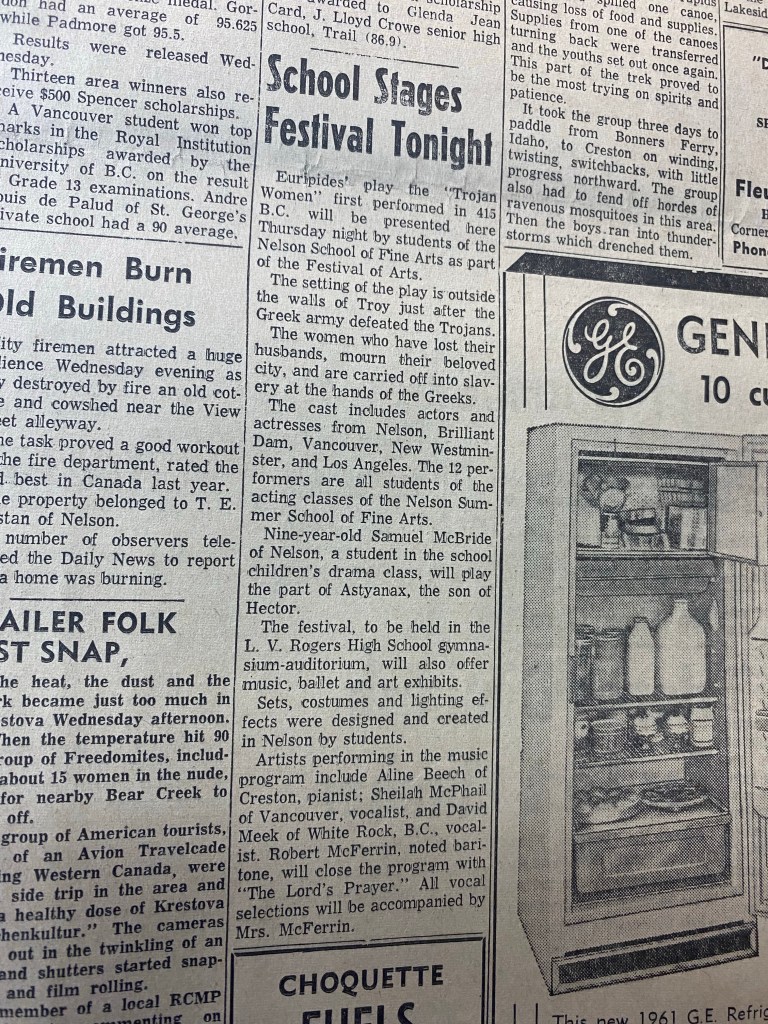
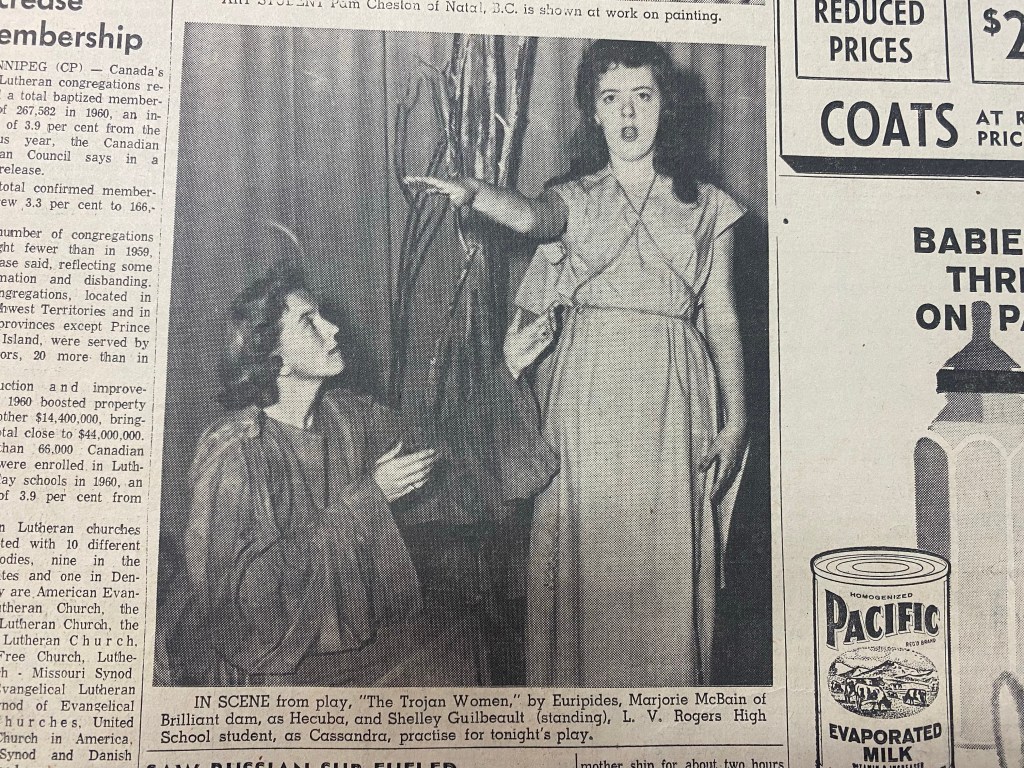
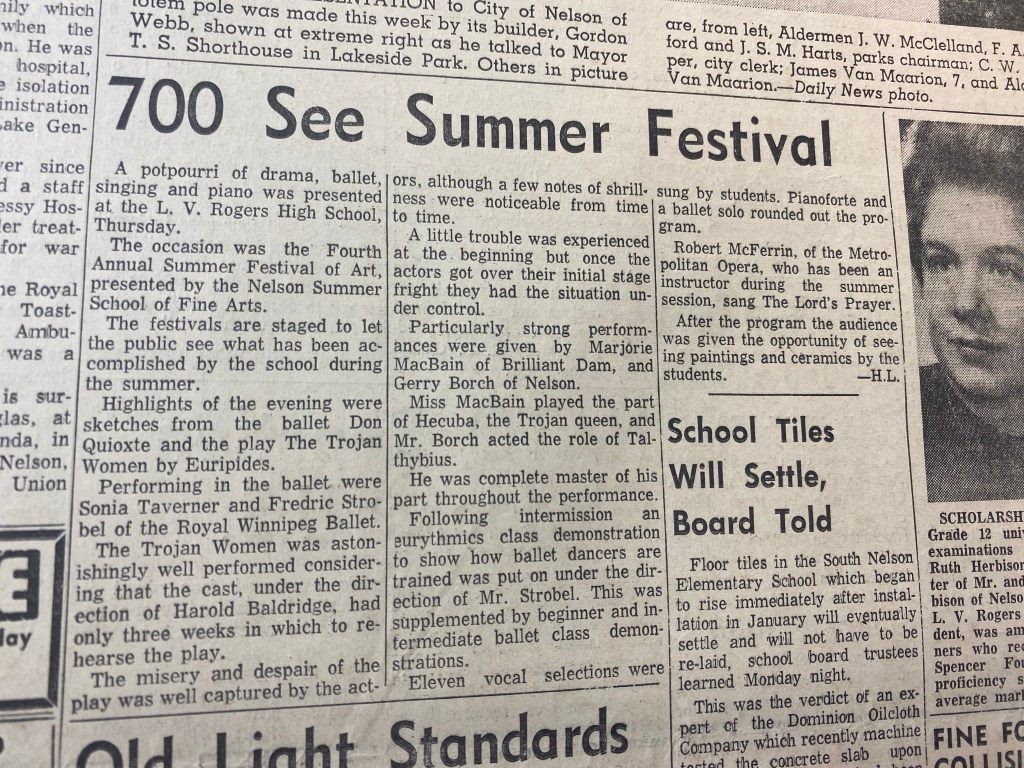
A highlight of the evening was the singing of “The Lord’s Prayer” by renowned American baritone Robert McFerrin, accompanied on the piano by his wife Sarah. Robert had made a name for himself as a singer for Hollywood movies like Porgy and Bess, where his voice was dubbed into songs by Sidney Poitier playing Porgy.
My mother and many other Nelsonites regarded the years of the School of Fine Arts as a Golden Age for the city.

Very likely in the audience that night was the couple’s 12-year-old son Bobby McFerrin, who would become famous in his own right in the 1980s for his soothing song “Don’t Worry, Be Happy”.
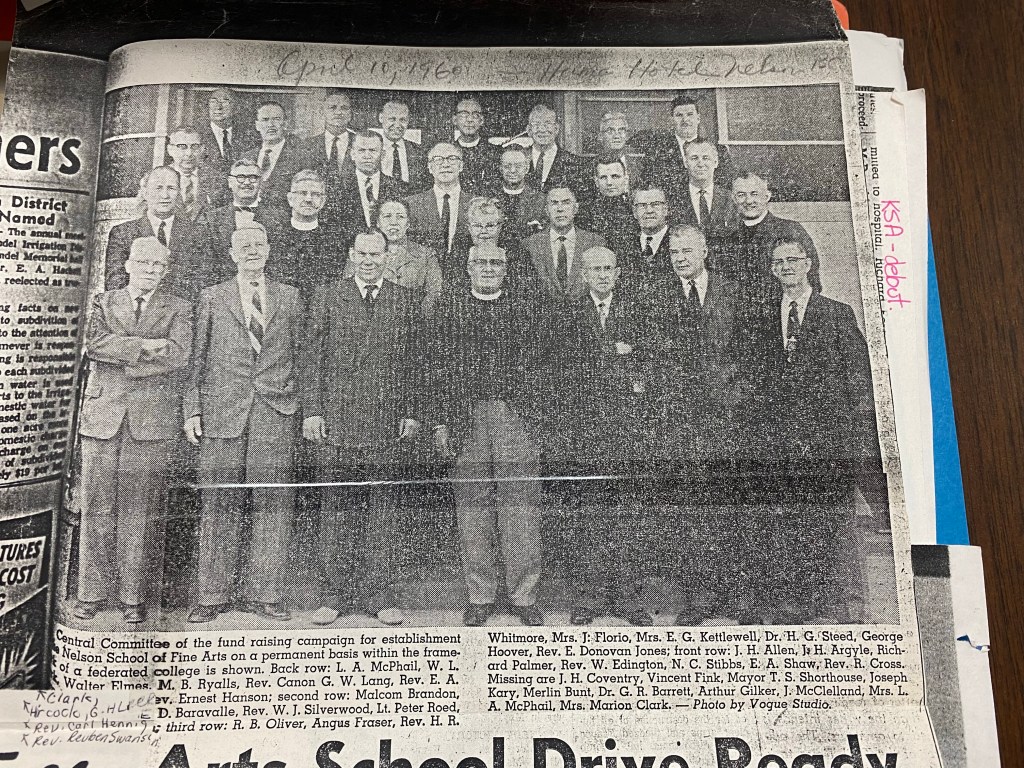
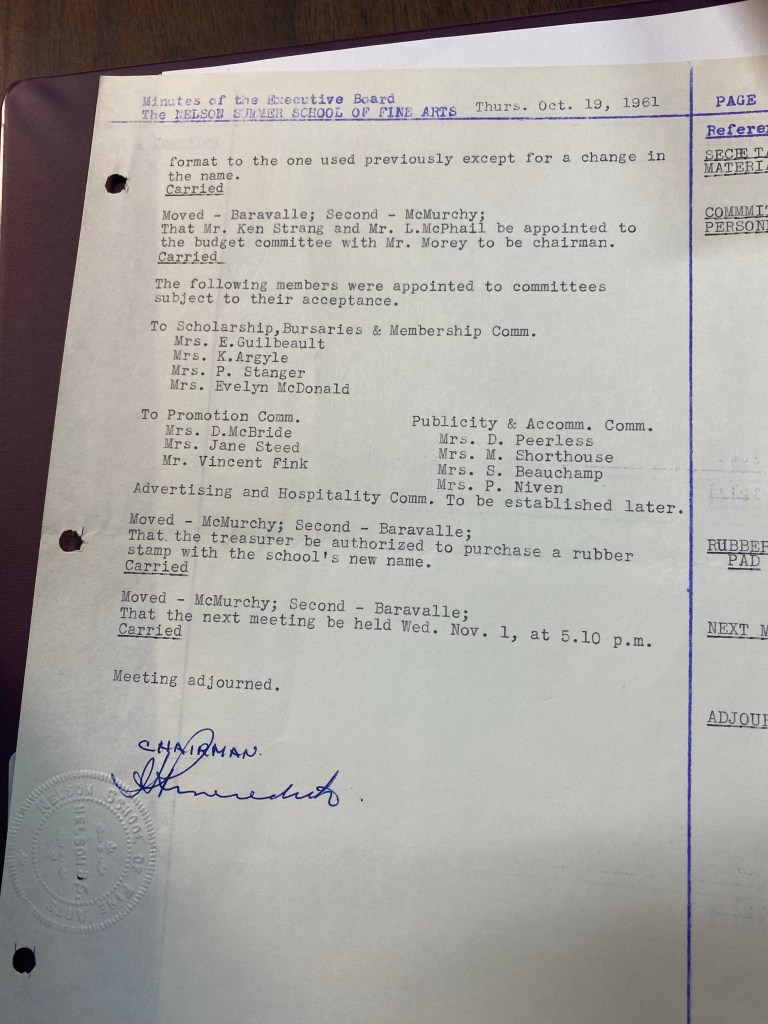
Here are some Nelson Daily News articles with information on the founding of the Nelson School of Fine Arts.
 thebravestcanadian