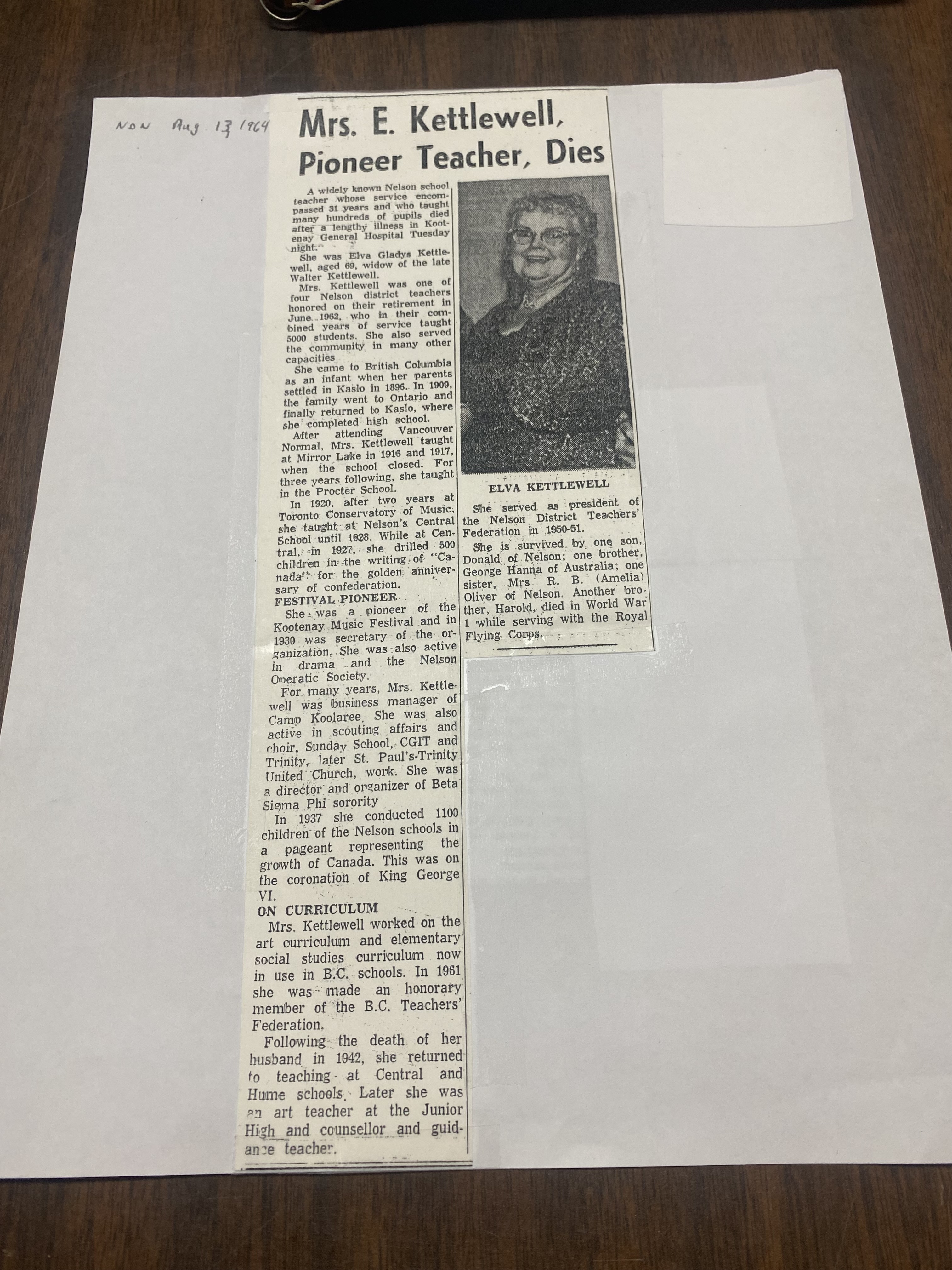
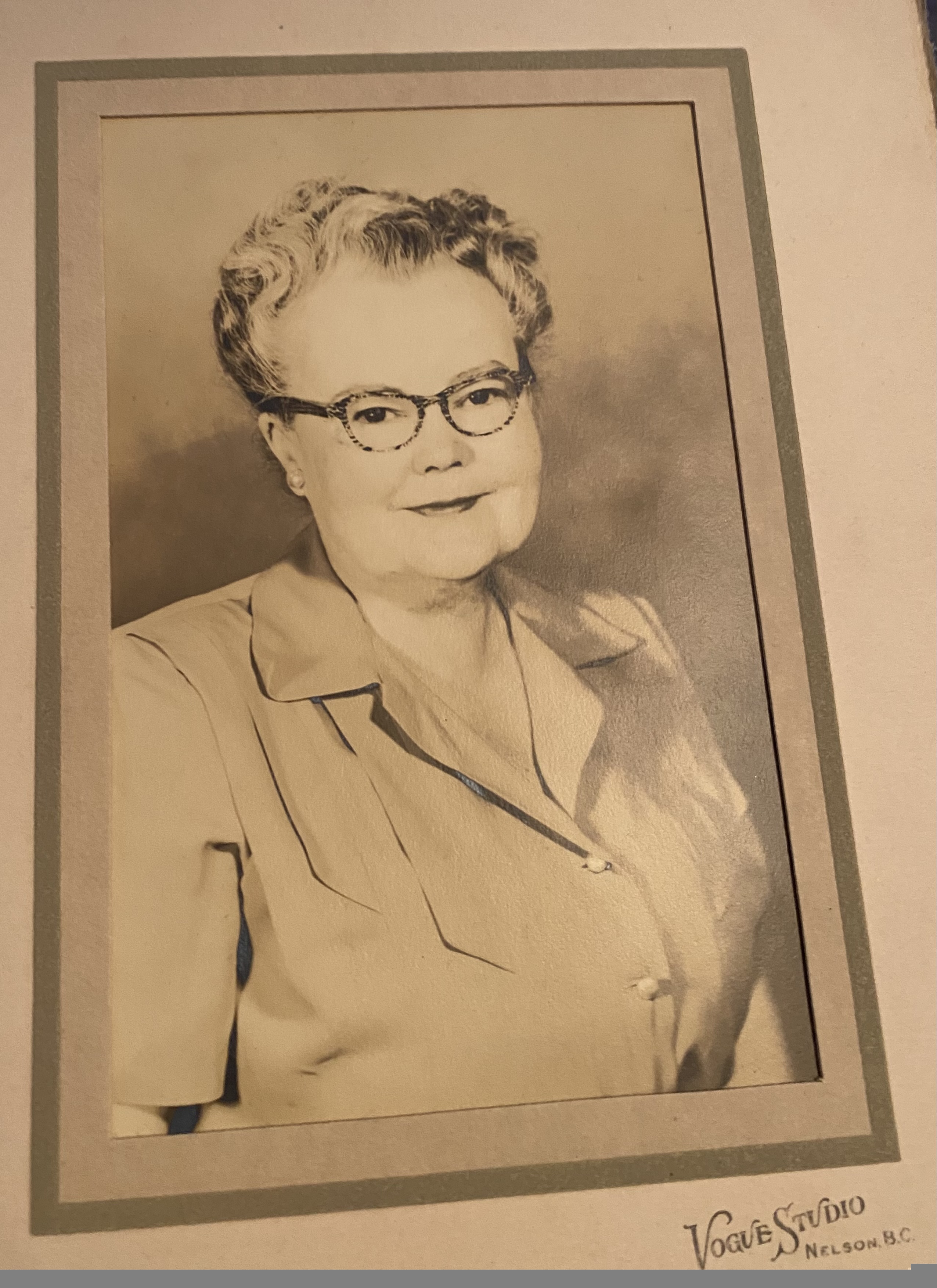
Someone in my family tree who stands out for exceptional, longtime contributions to Nelson and other West Kootenay communities is Elva Hanna Kettlewell (1896-1964), wife of my grandfather R.L. McBride’s first cousin Walter Kettlewell.
Elva was born in Watford, Ontario to Leander Hanna (1861-1932) and Maud Shugg (1871-1952), and came west to Kaslo as a baby when her father wholeheartedly joined the exciting mining boom at the north end of Kootenay Lake. The family moved to Cobalt, Ontario in 1909 for Leander’s mining work, then were welcomed back to Kaslo in 1912.
Elva knew from an early age that she wanted to be a teacher. After attendingVancouver Normal (teaching) school she first taught at Mirror Lake, south of Kaslo, in 1916 and 1917, then taught for three years at the Proctor School, before moving to Nelson to teach at Central School, where she retired in 1962. I was a student at Central School in the late 1950s and early 1960s and hoped to have Elva as a teacher, but I was assigned to other teachers for the grades 3 and 4 which she was teaching.
Elva was well-known in Nelson for her support and involvement in many local organizations, including Camp Koolaree, the Canadian Girls in Training, amateur theatricals, the Trinity United Church, and the Kootenay Music Festival.
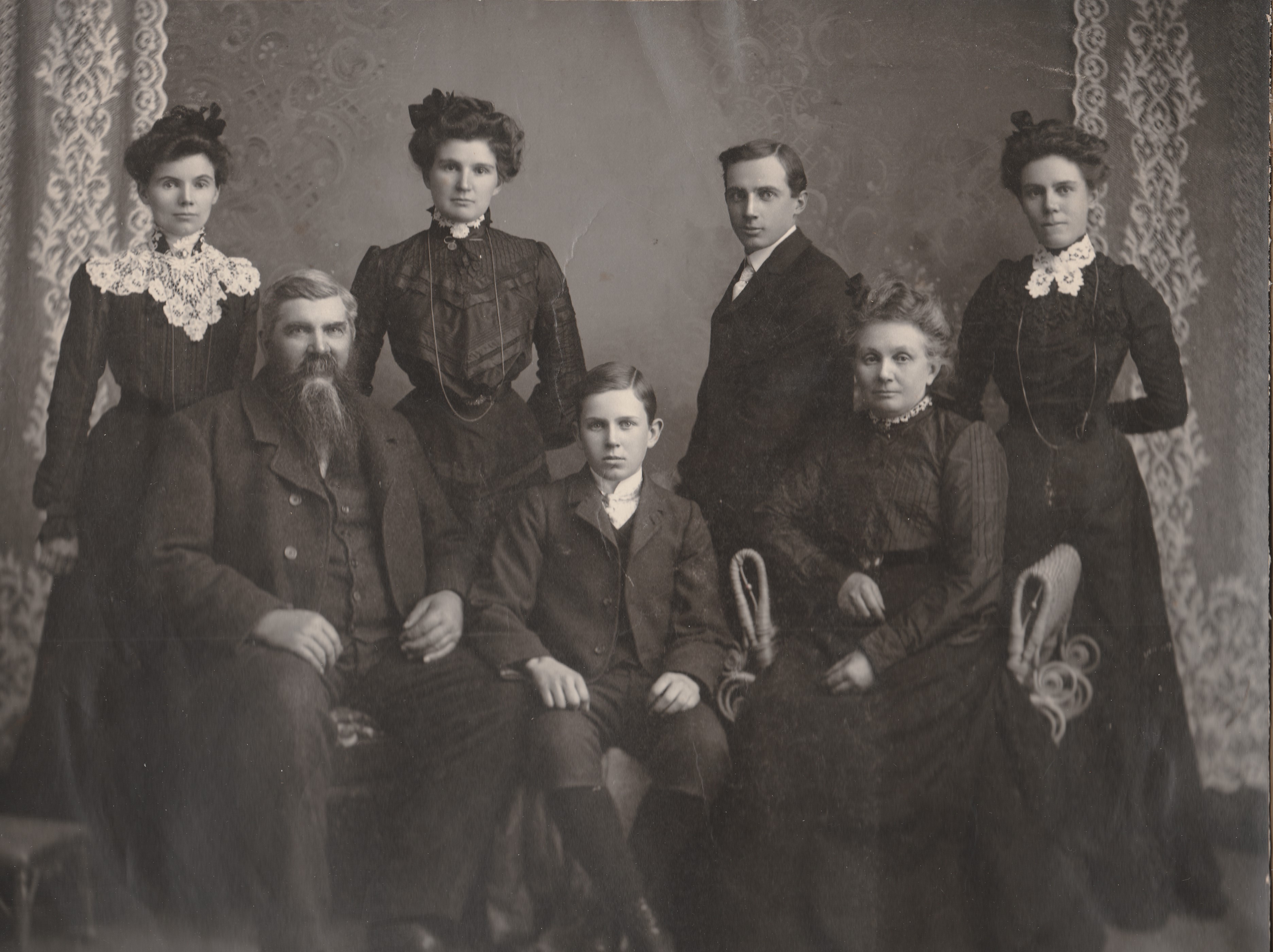
Elva’s mother Maud at far left in a Shugg family portrait, standing behind her father William Shugg (1841-1922). To date, I have not found an identified photo of Leander Hanna, who was husband of Maud and father of Elva and her siblings.
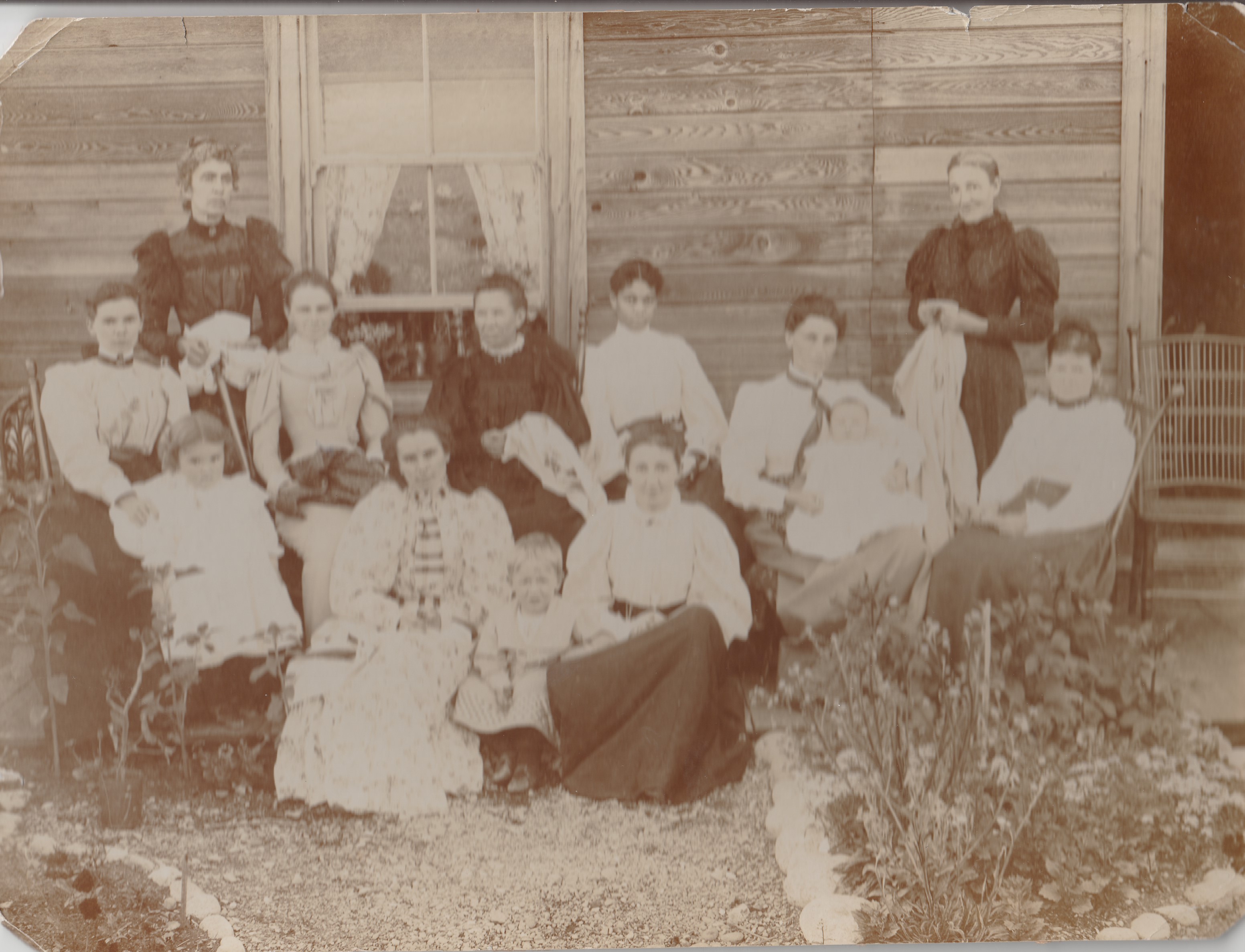
Early photo in Kaslo of Maud Hanna (far left) behind daughter Elva. Circa 1898.
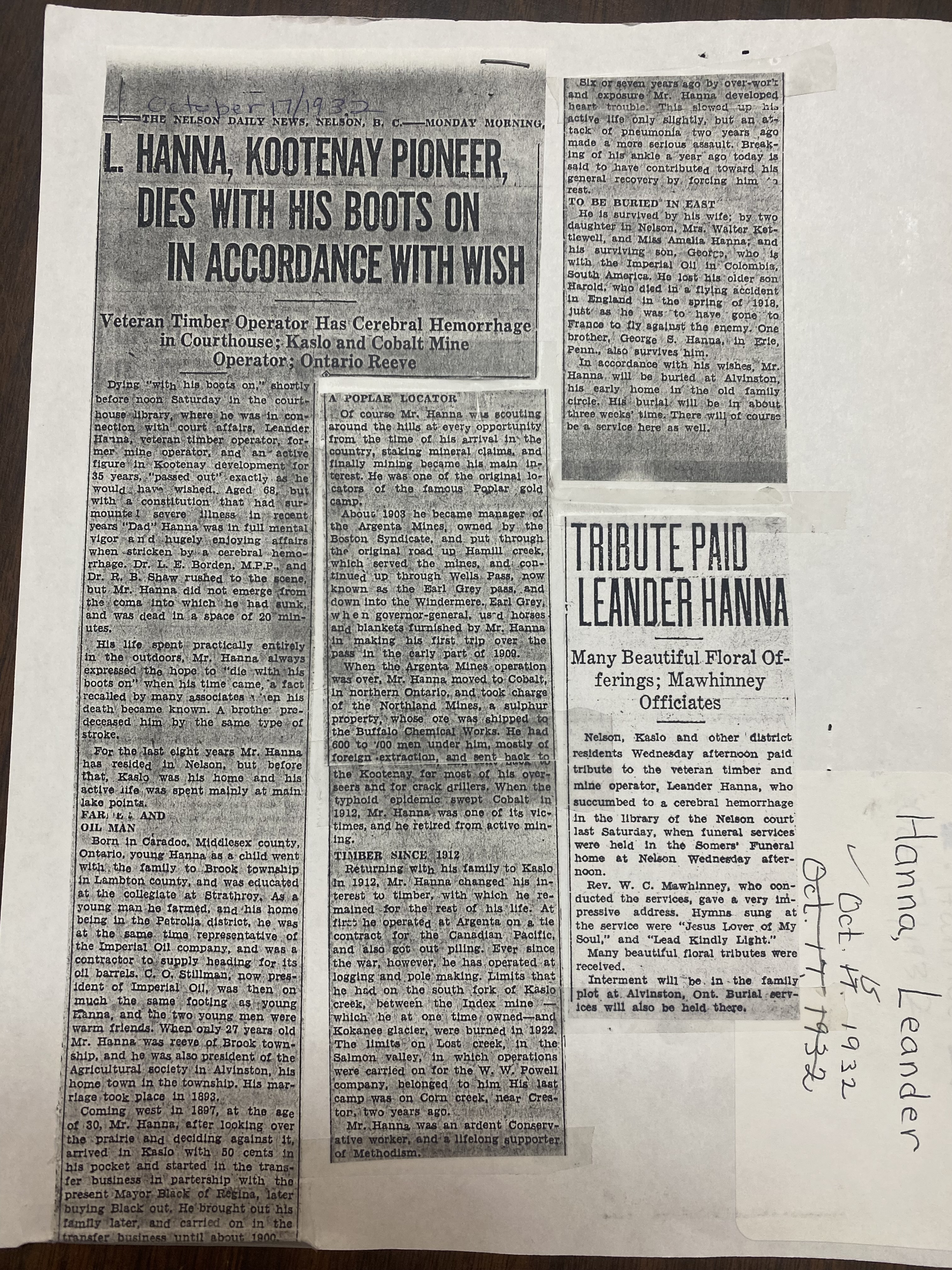
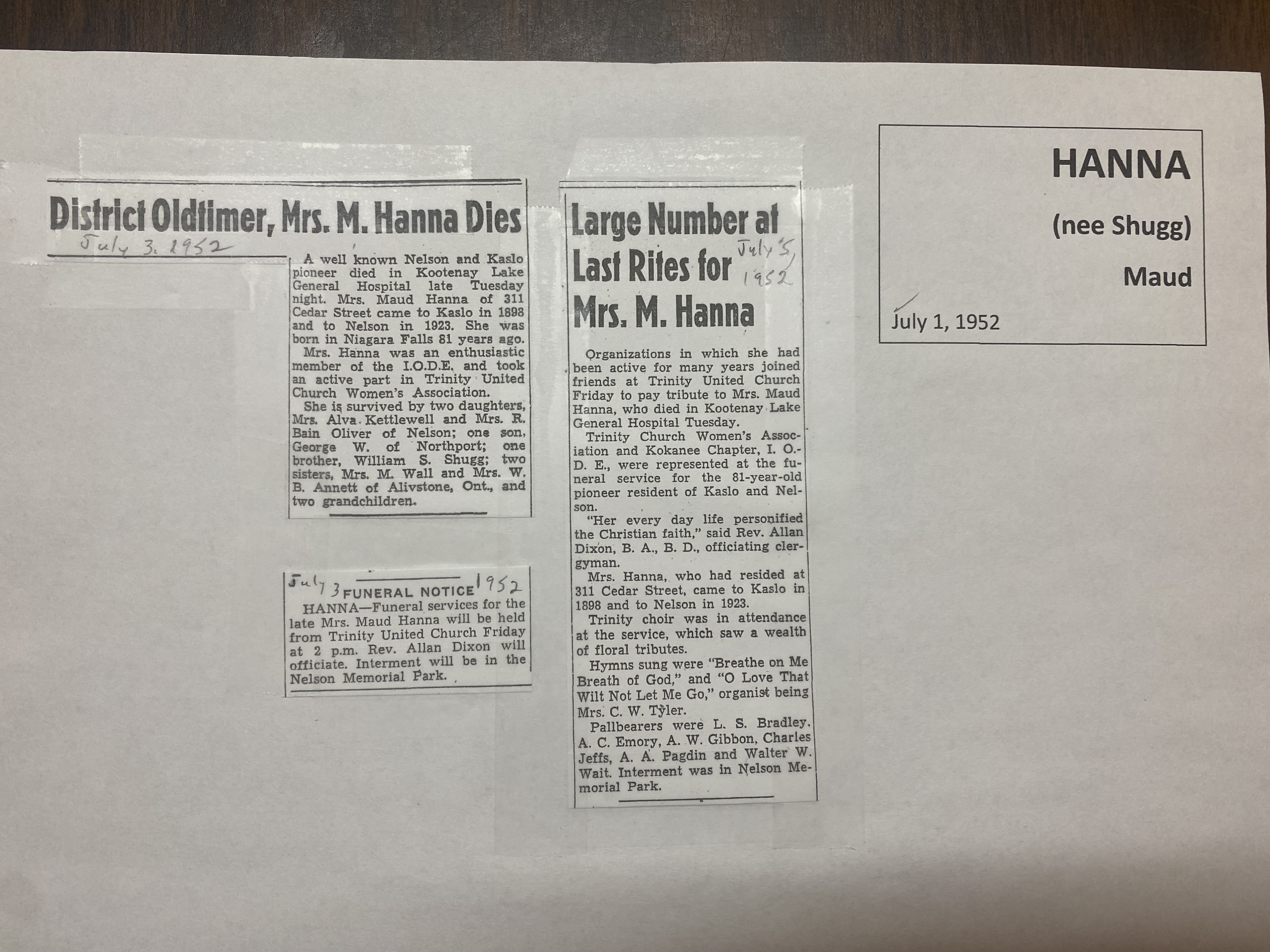
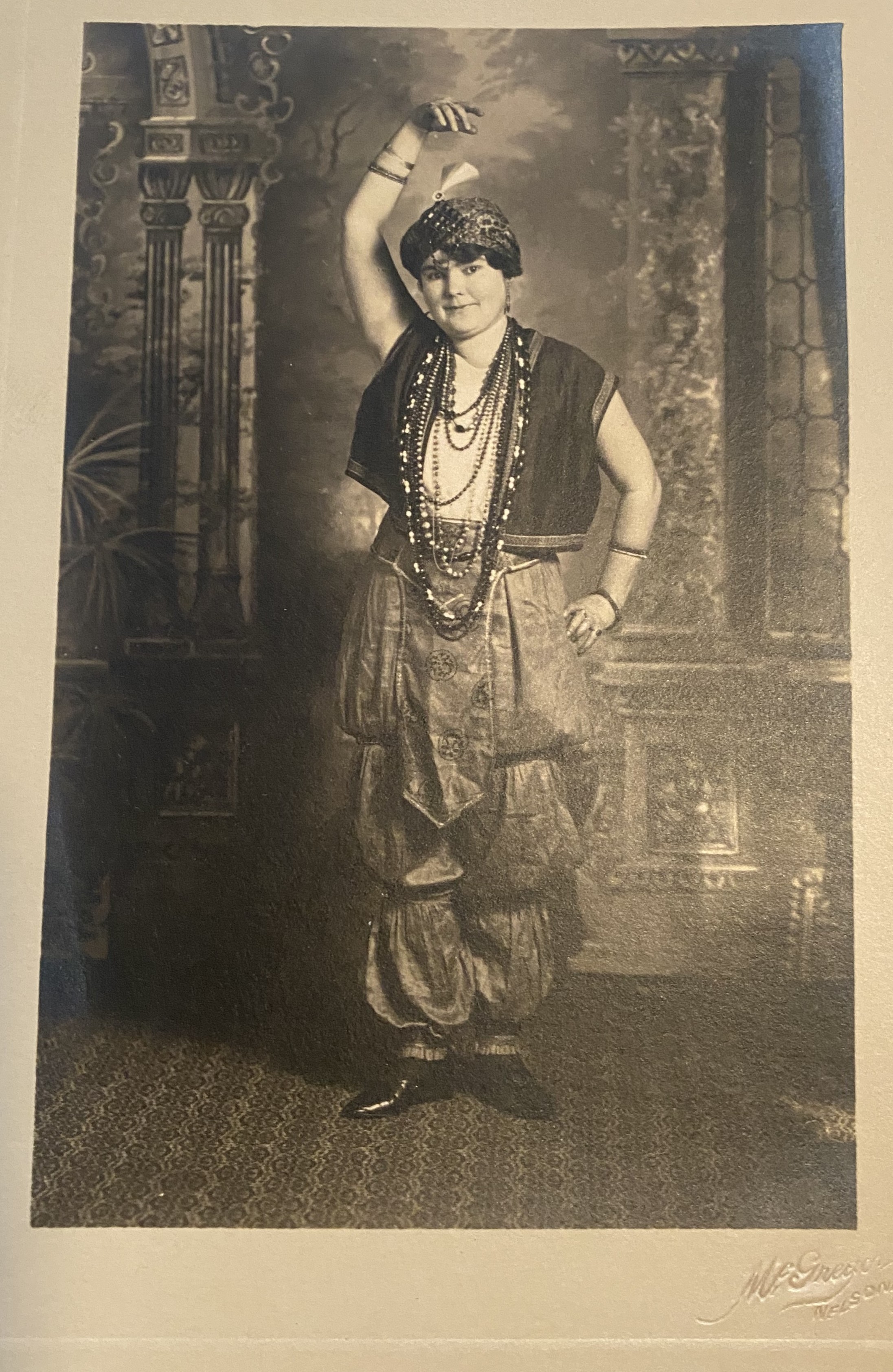
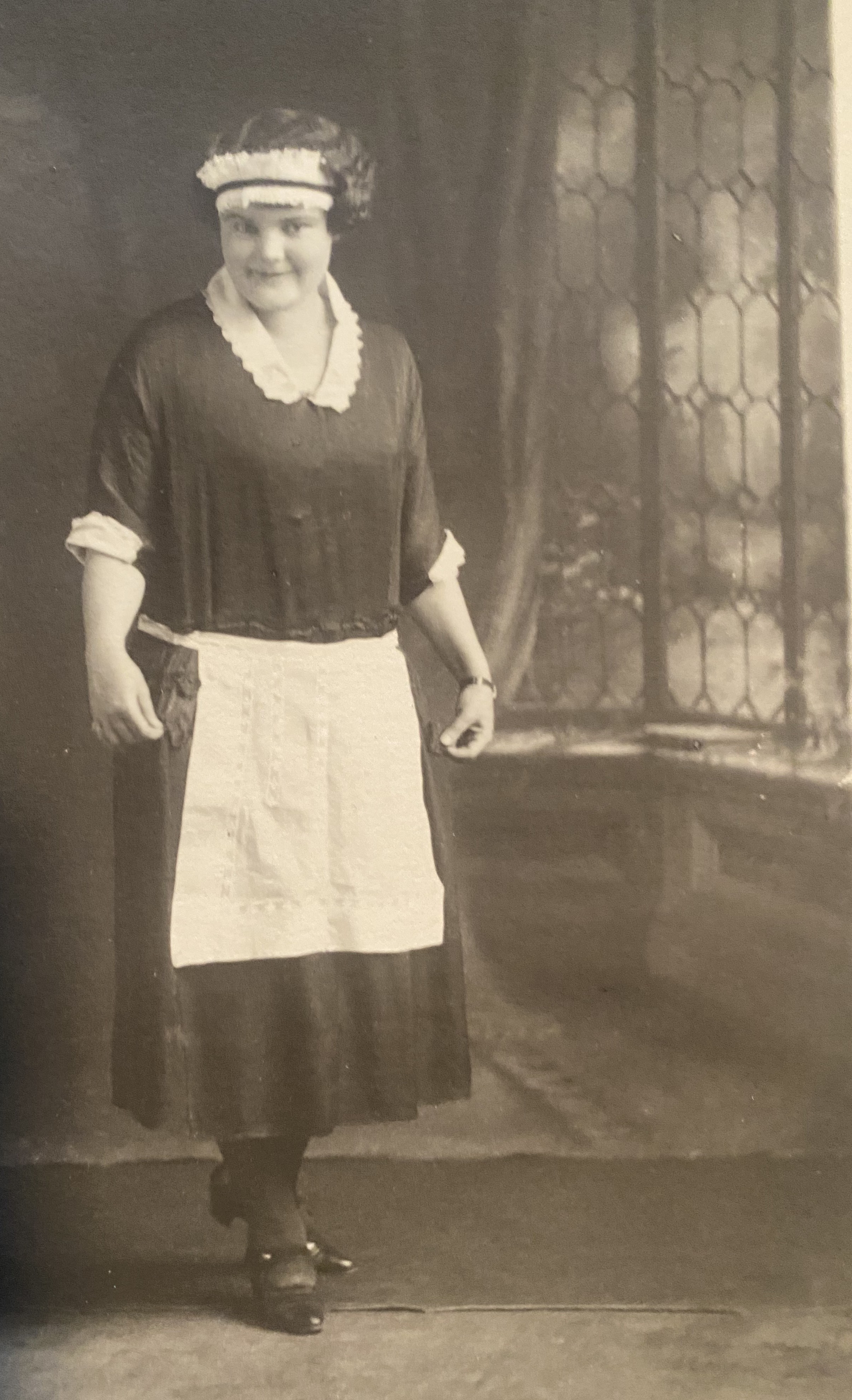
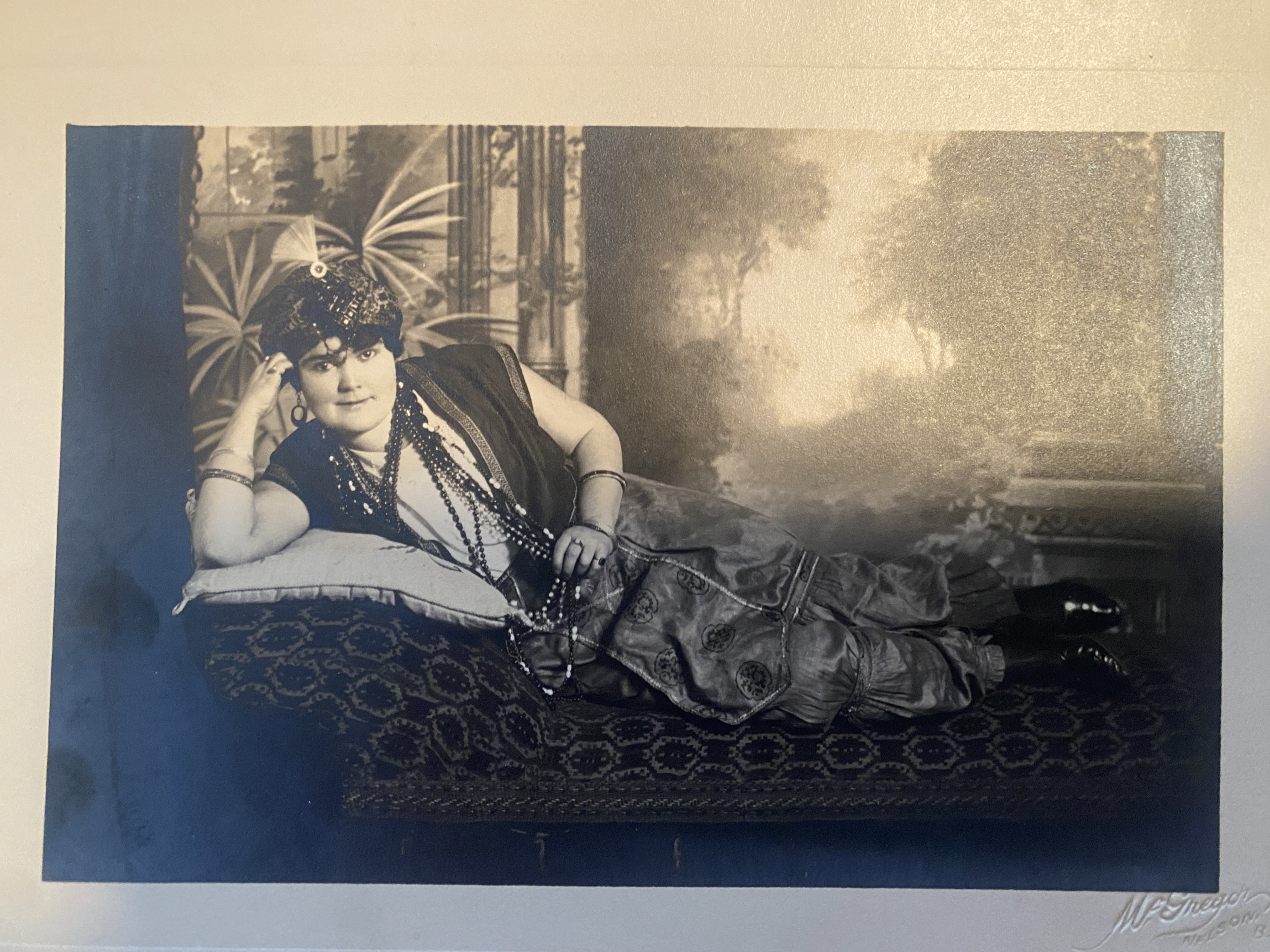
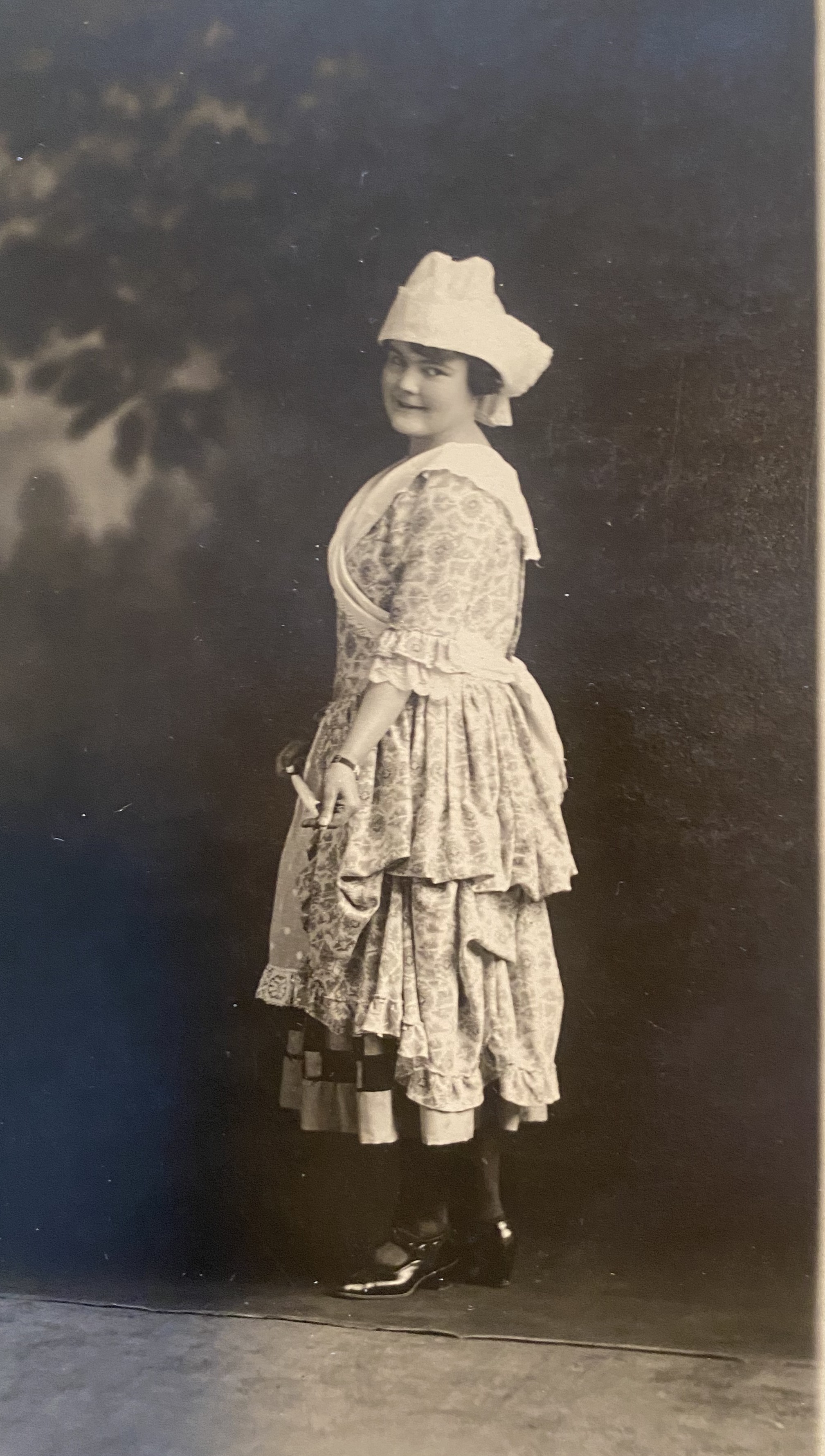
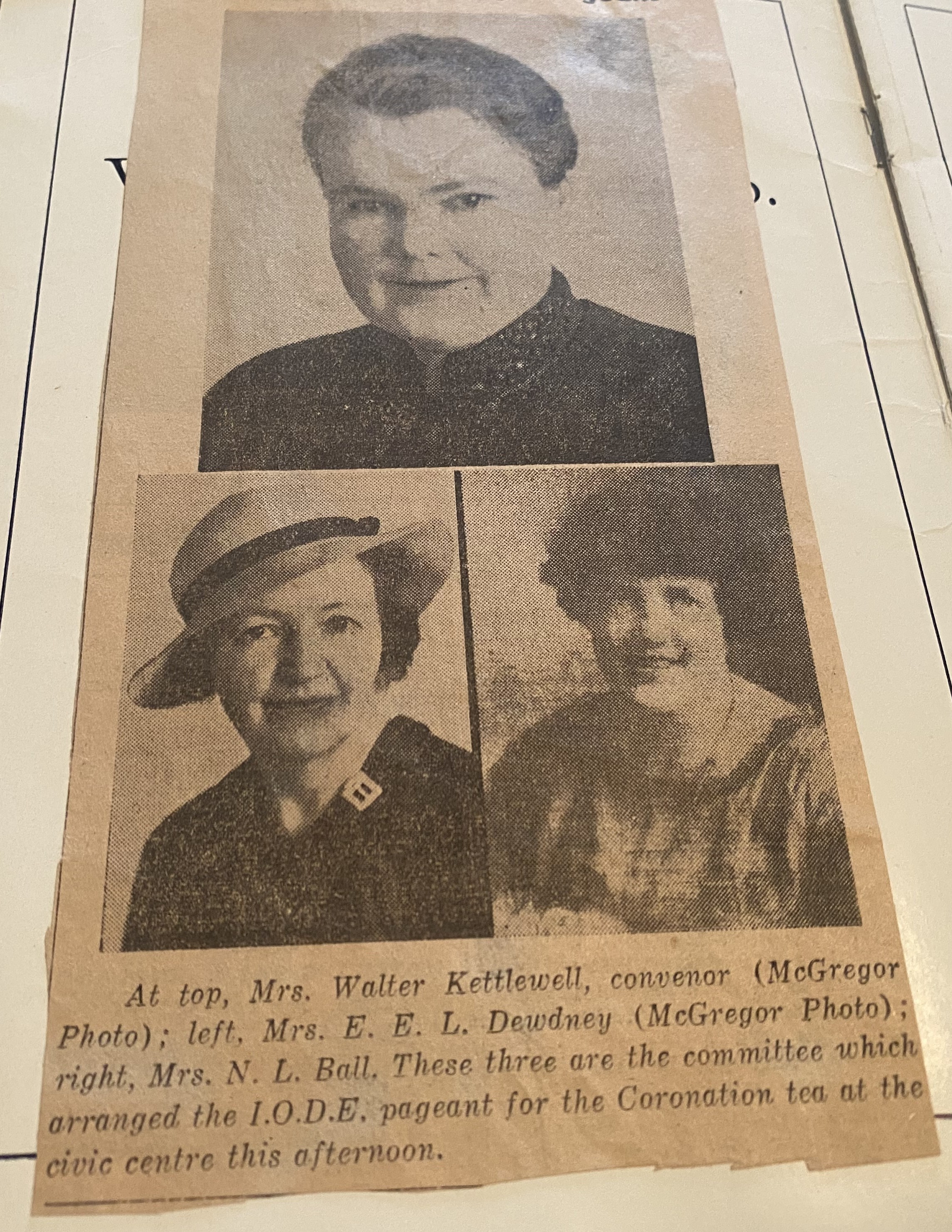
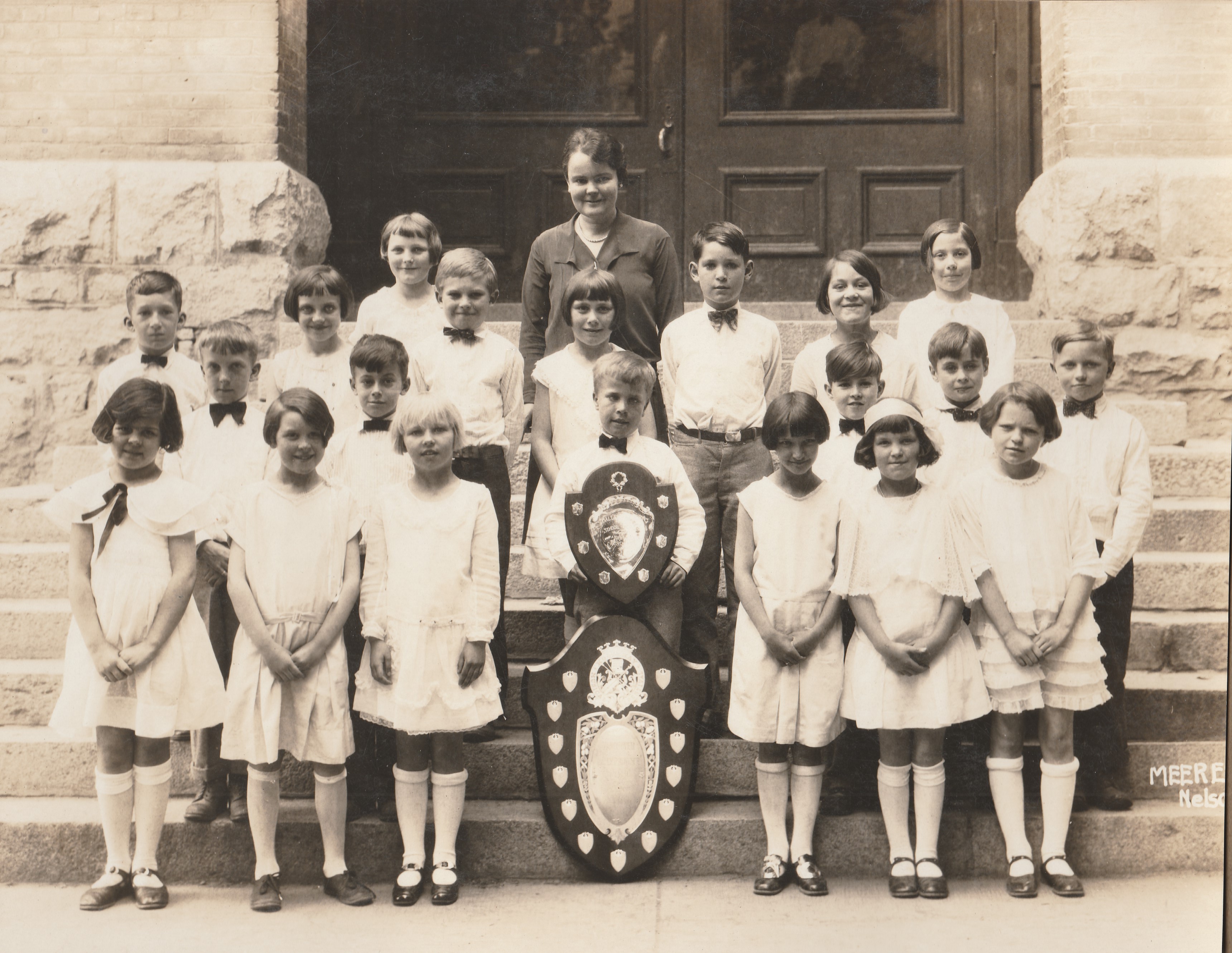
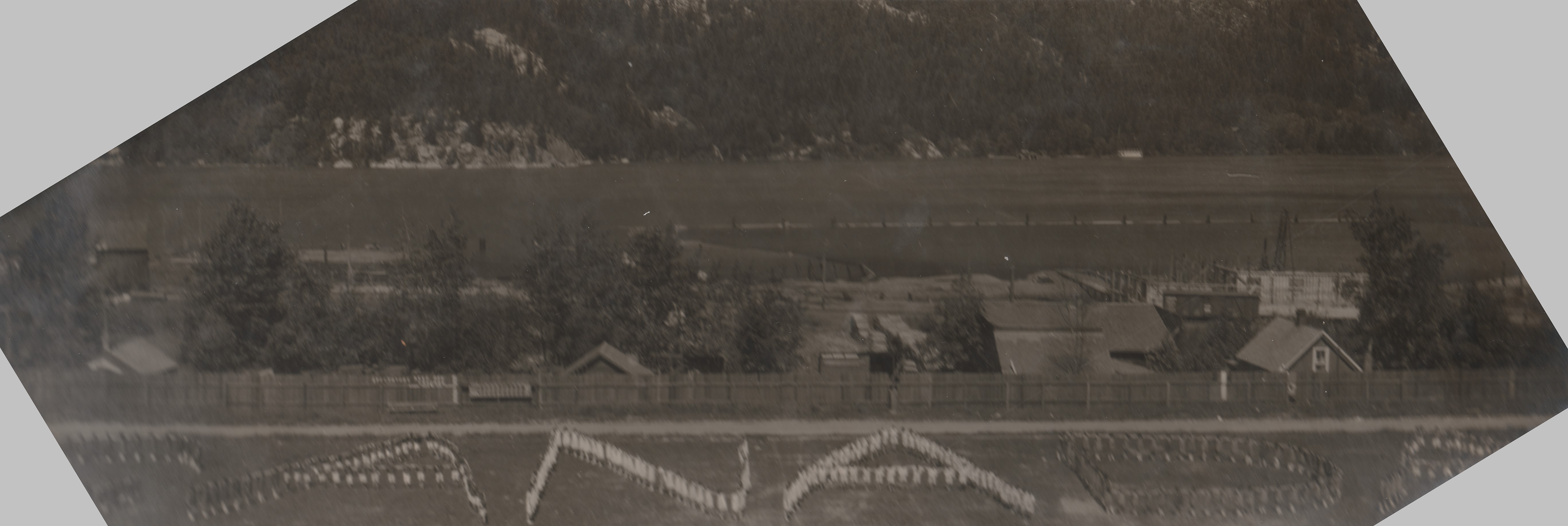
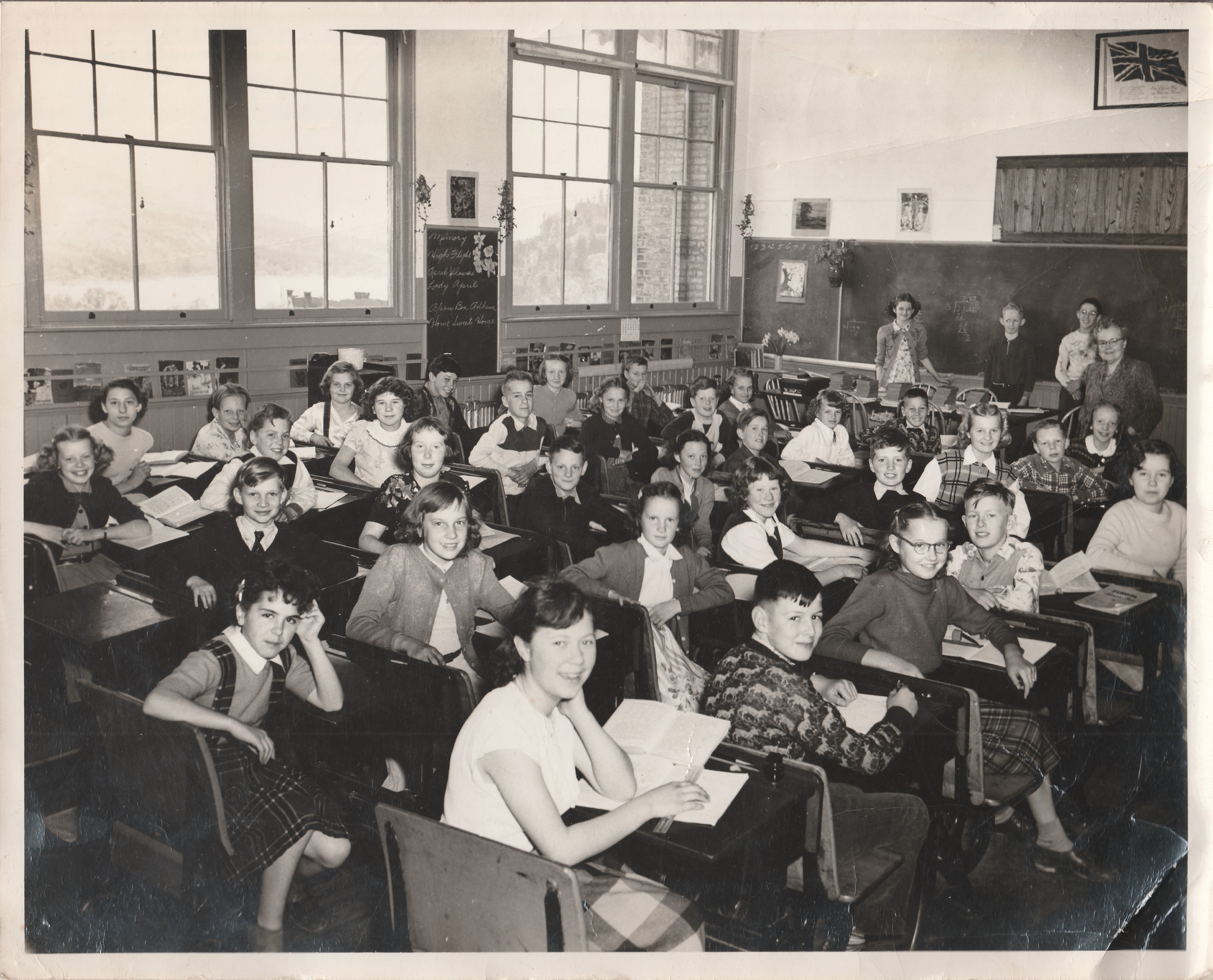
News coverage after the death of Elva’s father Leander Hanna in 1932 shows the high esteem in which he was held as a dynamic West Kootenay businessman. Courtesy of the Nelson Archives and Museum.The story of Elva’s mother Maud was told in tributes after her death in Nelson in 1952.Elva in costume for Nelson community theatre productions.Elva and my grandmother Helen Dewdney were very involved in organizing a Nelson pageant in honour of the coronation of King George the Sixth in 1937.Elva with her students at Central School in about 1925.Elva organized hundreds of Nelson students to fill out the name Canada, marking the 60th anniversary of Confederation in 1927.Elva, at far right in front of the students, of a class at Central School in about 1950.
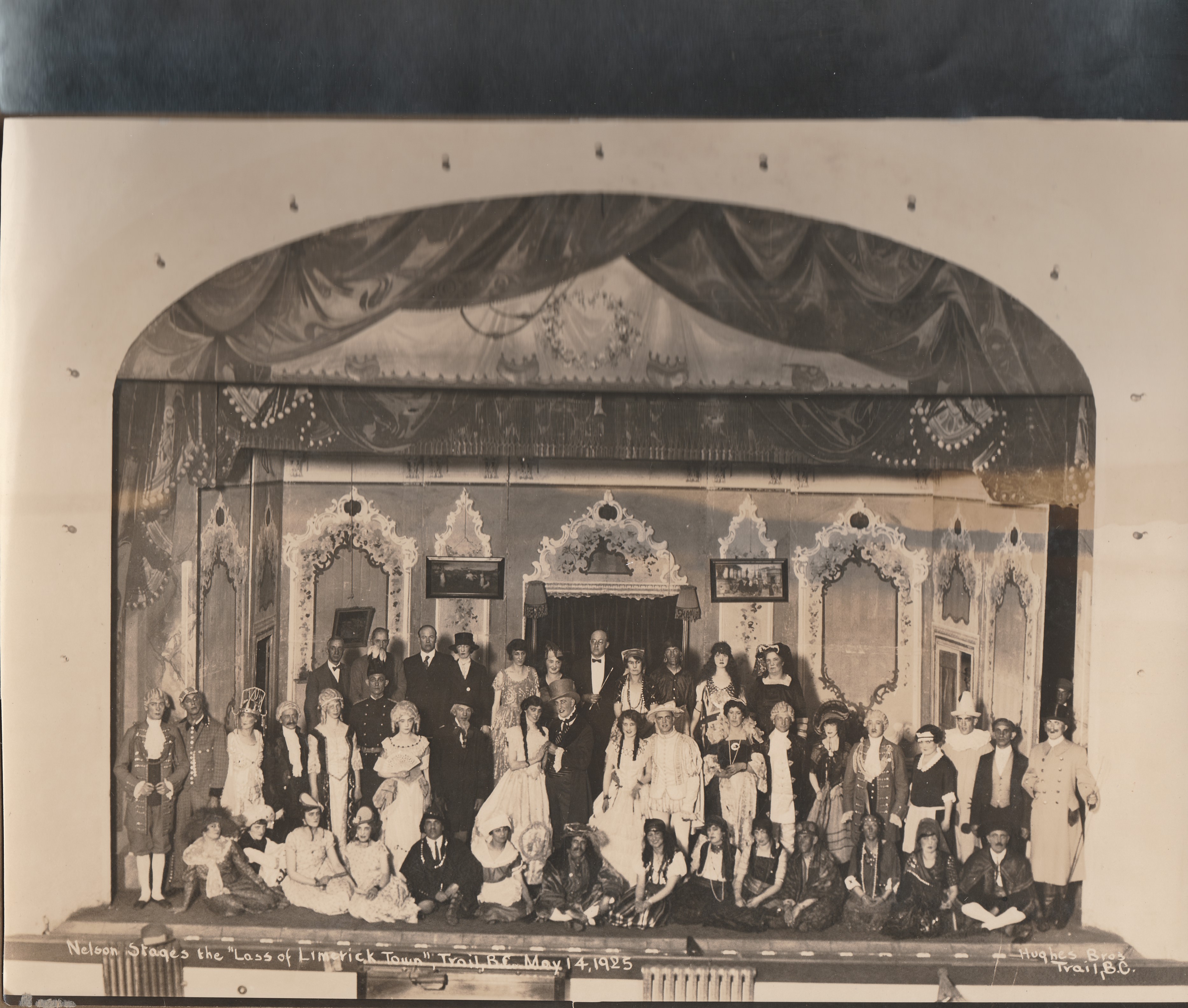
In this photo of “The Lass from Limerick” in 1925, Elva is the maid, fourth from the right, second row.
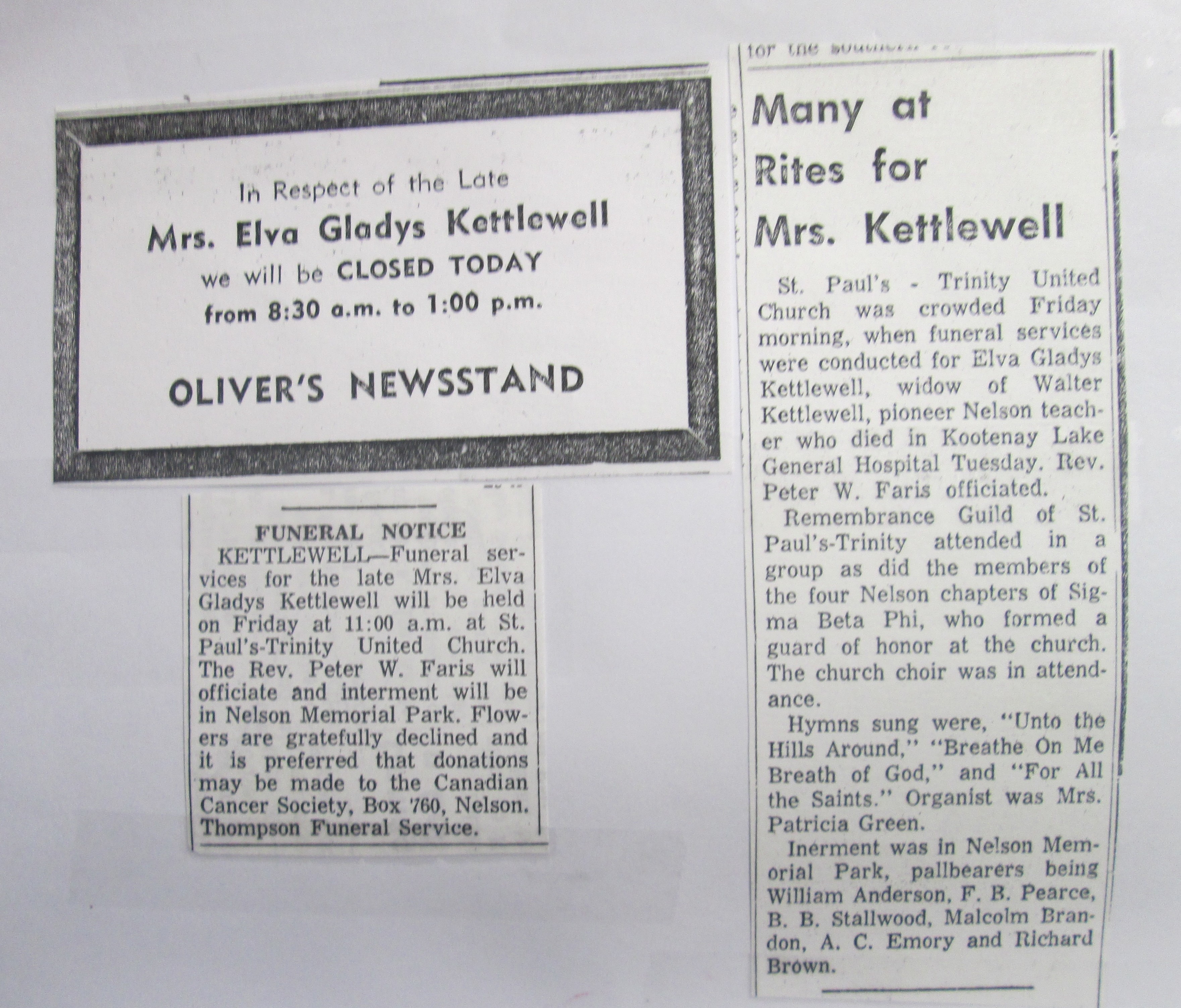
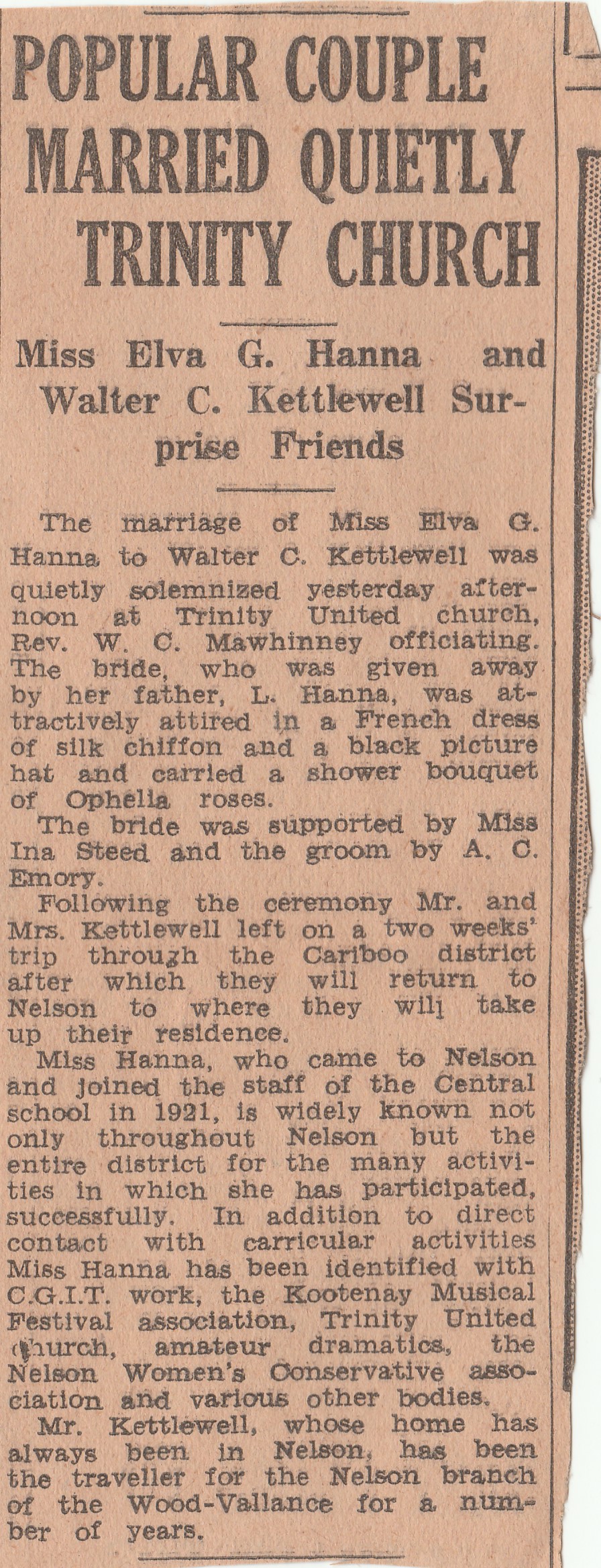
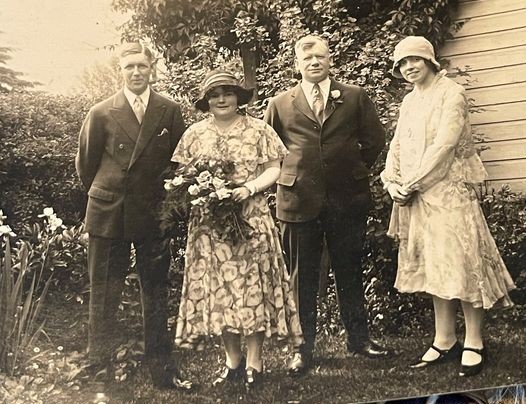
Elva married Walter Kettlewell in 1930, and their son Don was born in 1933.The Nelson Trinity United church was packed for the Elva’s memorial service in 1964. Outside the church, police helped to direct traffic for people coming for the funeral.
Someone on my family tree that I have long been curious about is Walter Charles Kettlewell (1889-1942), who was a first cousin of my grandfather R.L. McBride (1881-1959). They both were born and raised in London, Ontario, where McBride family immigrants settled after leaving Northern Ireland for Canada in 1831. Walter was a son of Noah Kettlewell and Kate McBride, who was a sister of R.L. McBride’s father Richard McBride.
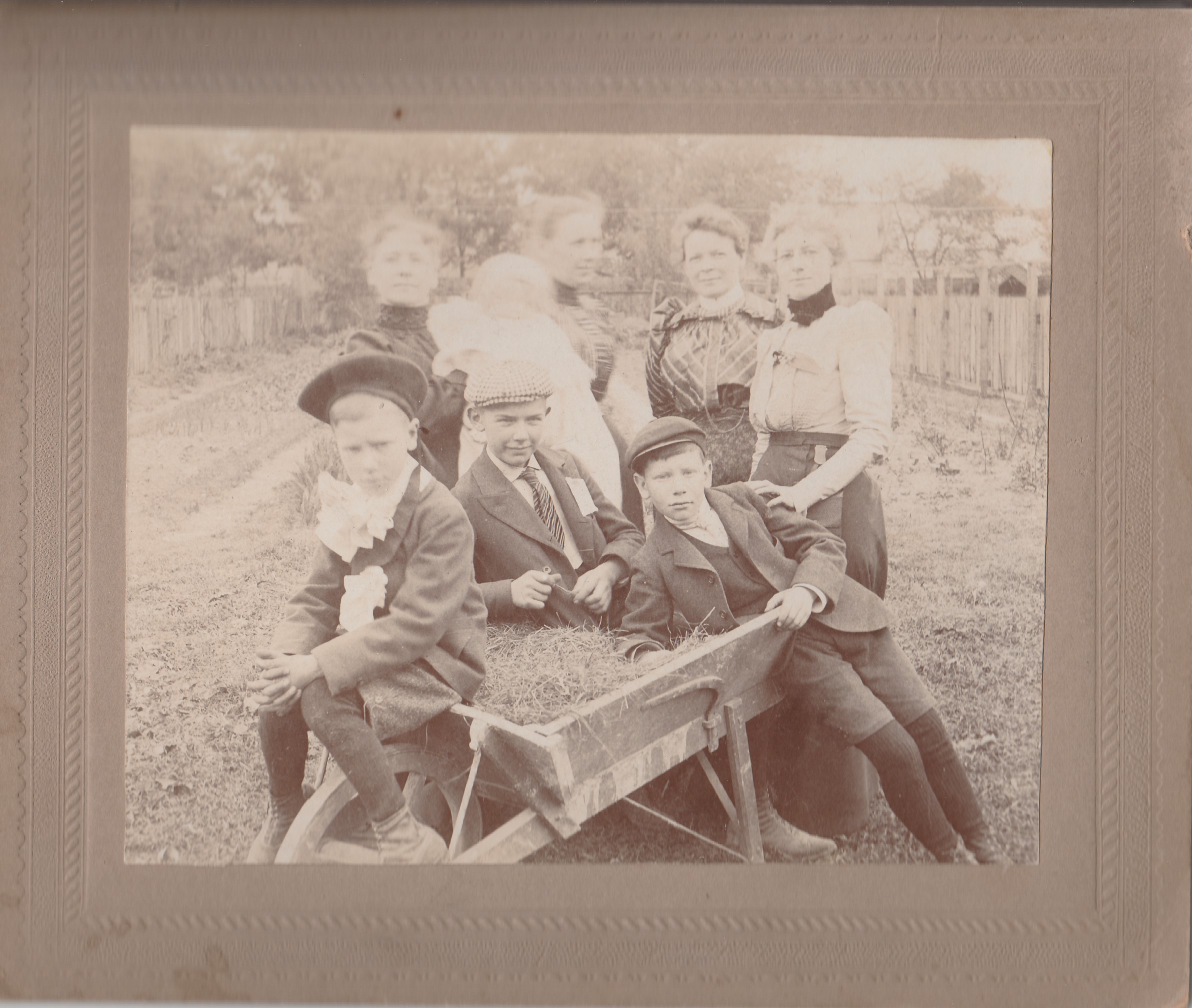
Walter Kettlewell, leaning, front right, at about age 10 in 1899 in London, Ontario. Beside him to his left are his cousin Fraser McPherson and brother Keith Kettlewell on far left. Behind them, from left to right, are Walter and Keith’s mother Kate McBride Kettlewell, aunt Martha McBride, aunt Mary McBride, and cousin Ruth McBride.
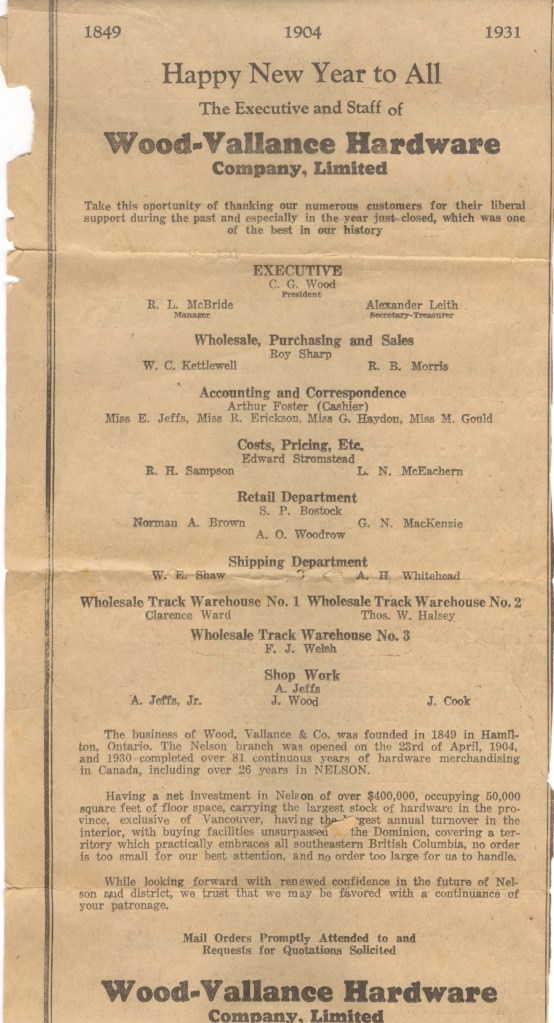
My dad Leigh McBride often mentioned Walter Kettlewell as a driving force behind the remarkable growth of the Nelson-based Wood Vallance Hardware Company which, at its peak, had a service area as far north as Revelstoke, east to the Alberta border, south to the U.S. border, and west to the Okanagan and even as far as Princeton. The company helped Nelson become known as a centre of commerce — not just mining and logging.
In 1907 R.L. McBride as general manager of Wood Vallance invited Walter and his brother W. Keith Kettlewell (1892-1954) to come west to Nelson to work with Wood Vallance. Soon after, their parents Noah (1850-1910) and Kate (1857-1952) moved to Nelson, where they lived the rest of their lives.
Keith would work for Wood Vallance in Nelson, serve in the First World War, and later settle in Trail where he managed Cominco’s hardware store for a number of years. In that era, Cominco was a substantial customer of Wood Vallance, and its president S.G. Blaylock had Wood Valllance manage part of Cominco’s purchasing function. My dad told me that his father and assistant Les McEachern would drive from Nelson to Trail every Thursday for purchasing meetings.
Walter’s job title for many years at Wood Vallance was “traveller”, which took him on the road to gain new customers for the company, and also develop successful relationships with suppliers. As a very active and enthusiastic Mason, Walter had “brothers” in virtually every community, who welcomed him with open arms, which was a big help in spreading the word about Nelson and Wood Vallance.
I was recently very pleased to hear from Walter’s grandaughter Leah who thought I might be interested in her collection of Kettlewell and Hanna family photographs. While Walter was before my time, I well remember his wife Elva Hanna Kettlewell (1896-1964), who was a teacher at Central School when I was there, and very well-known as a community volunteer, notably as a counsellor at Camp Koolaree.
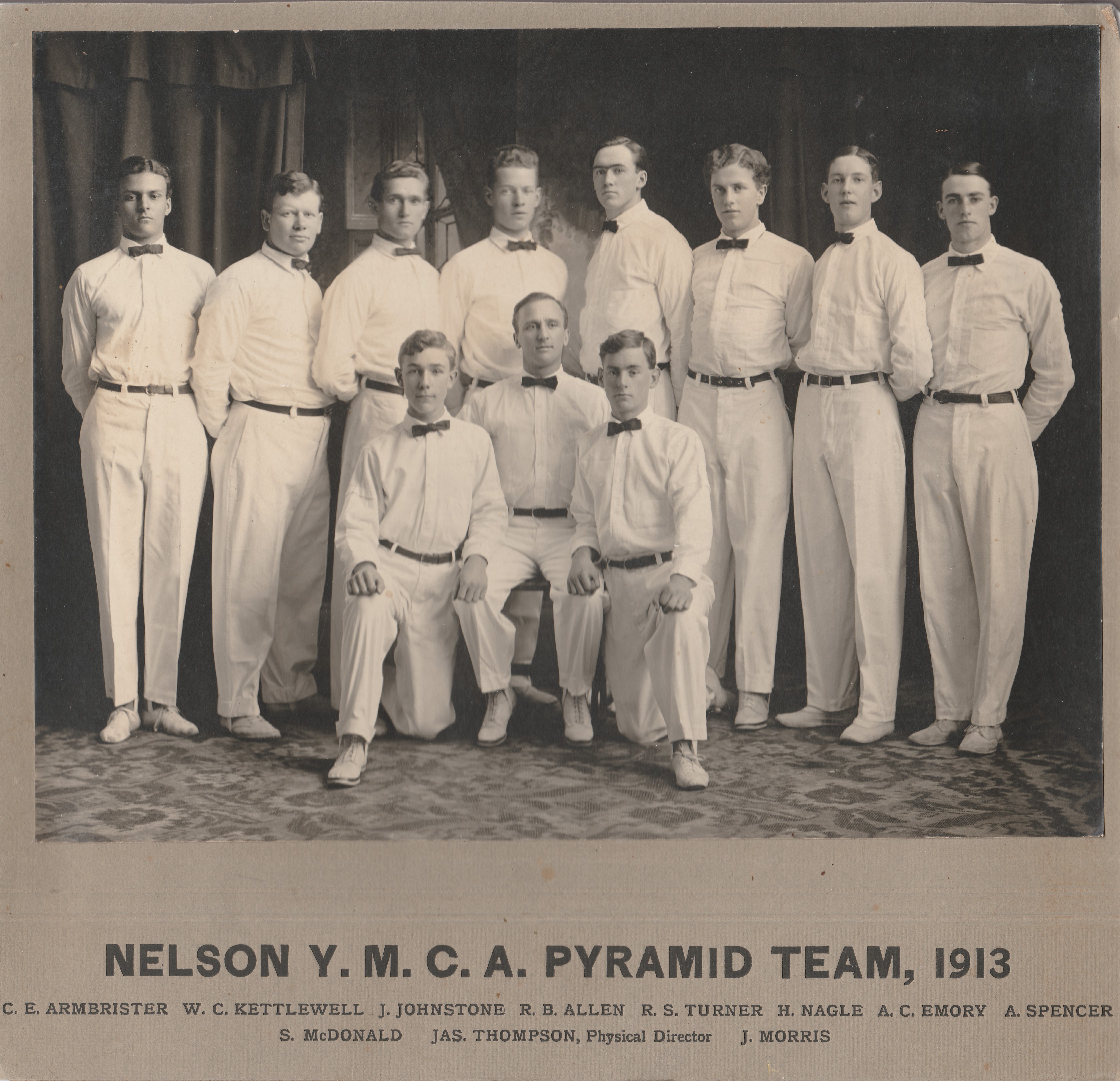
Walter, third from left, top row, with other gymnastic team members, 1913.
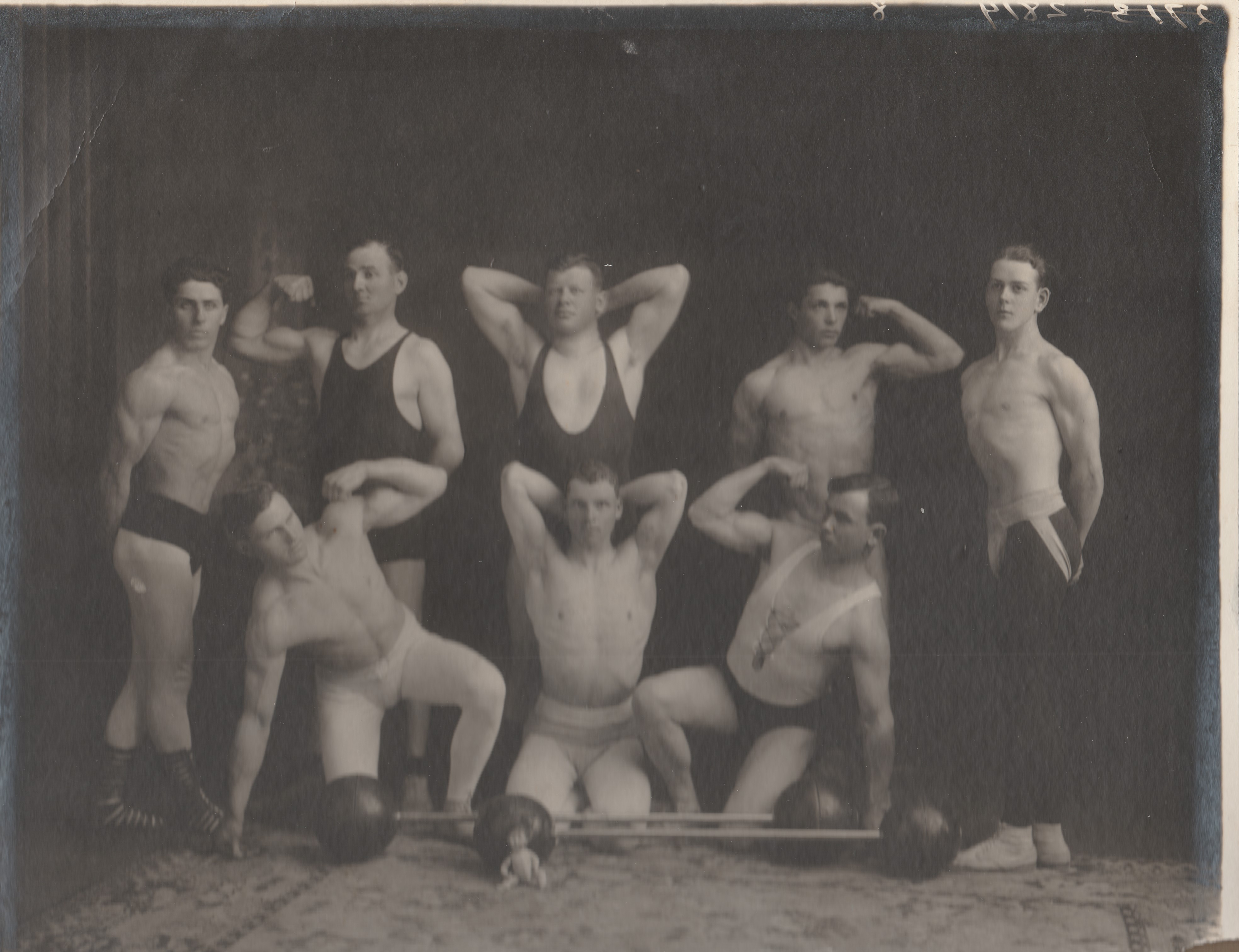
These photos show how Walter was “a picture of health” in Nelson sports clubs before World War One, including several gymnastic formations. Walter survived the war and technically was not injured, but damage to his health from trench warfare would bother him for the rest of his life.
one of the gymnastic team’s poses.
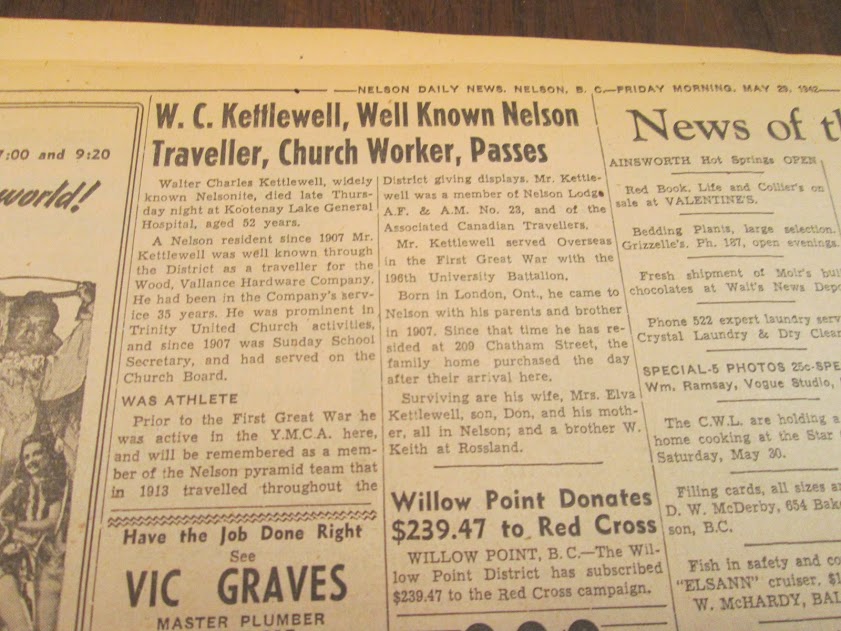
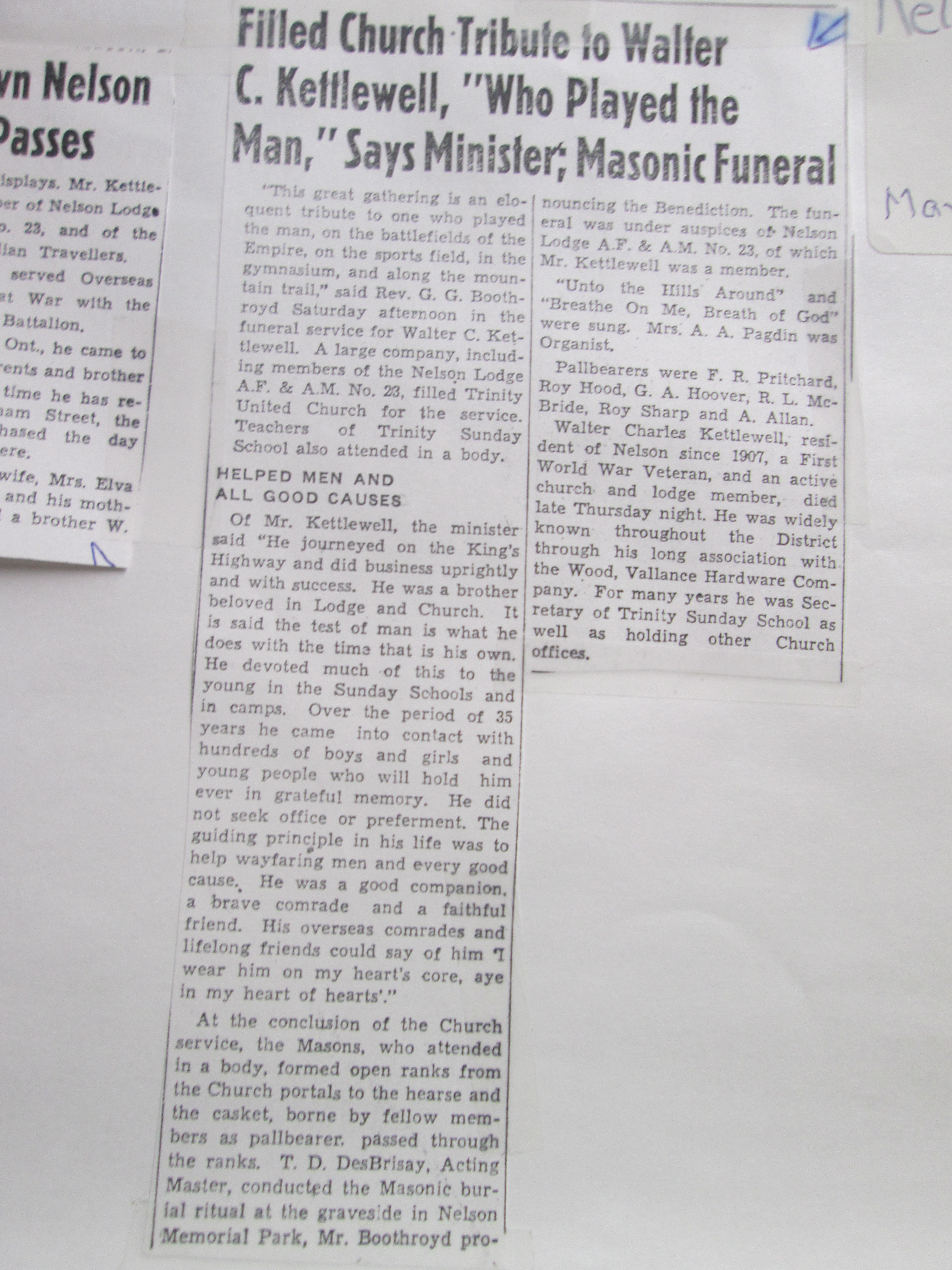
The Nelson Daily News articles posted here include a report of Walter and Elva’s wedding, as well as death notices that reflect on Walter’s life.
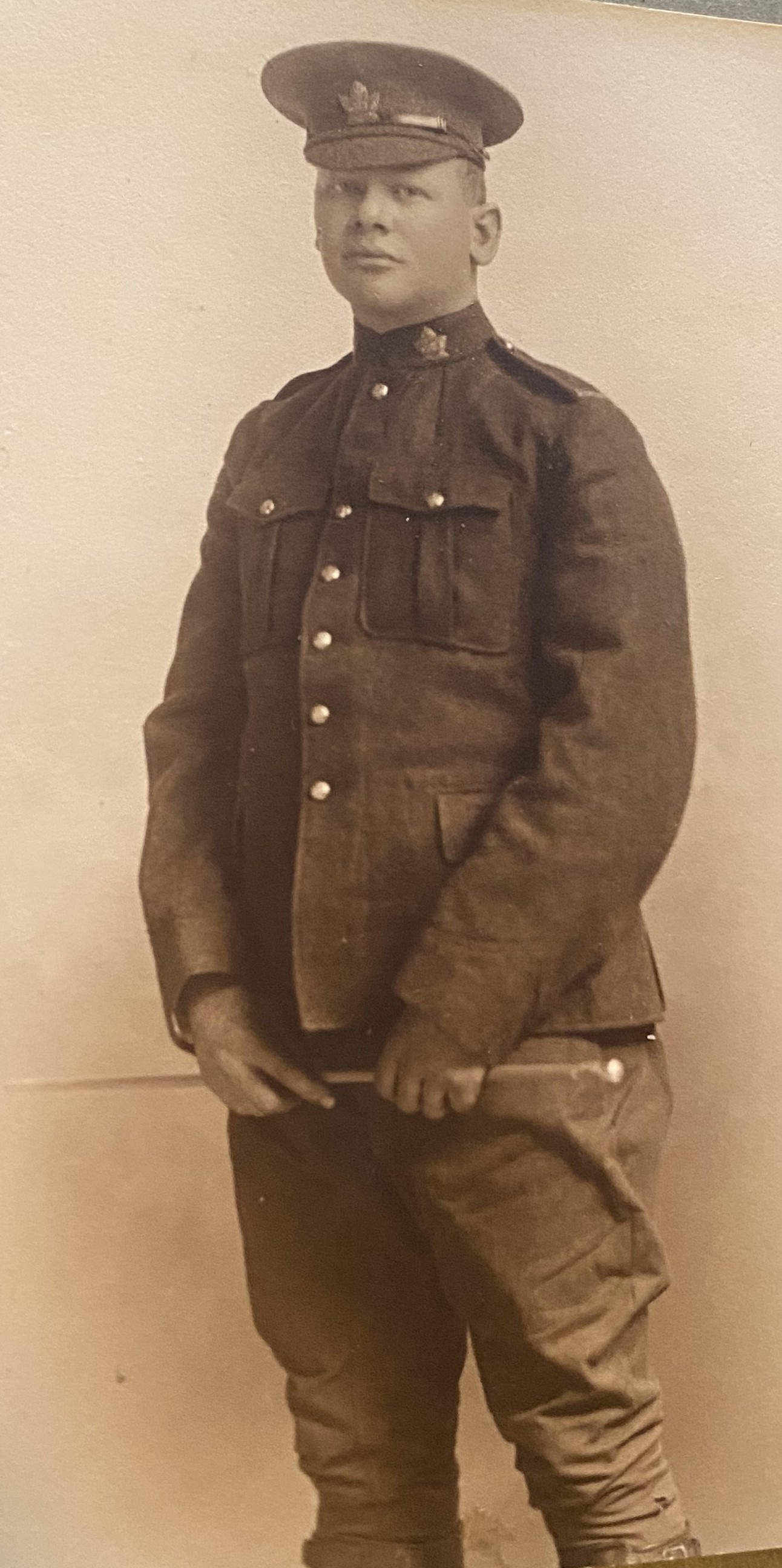
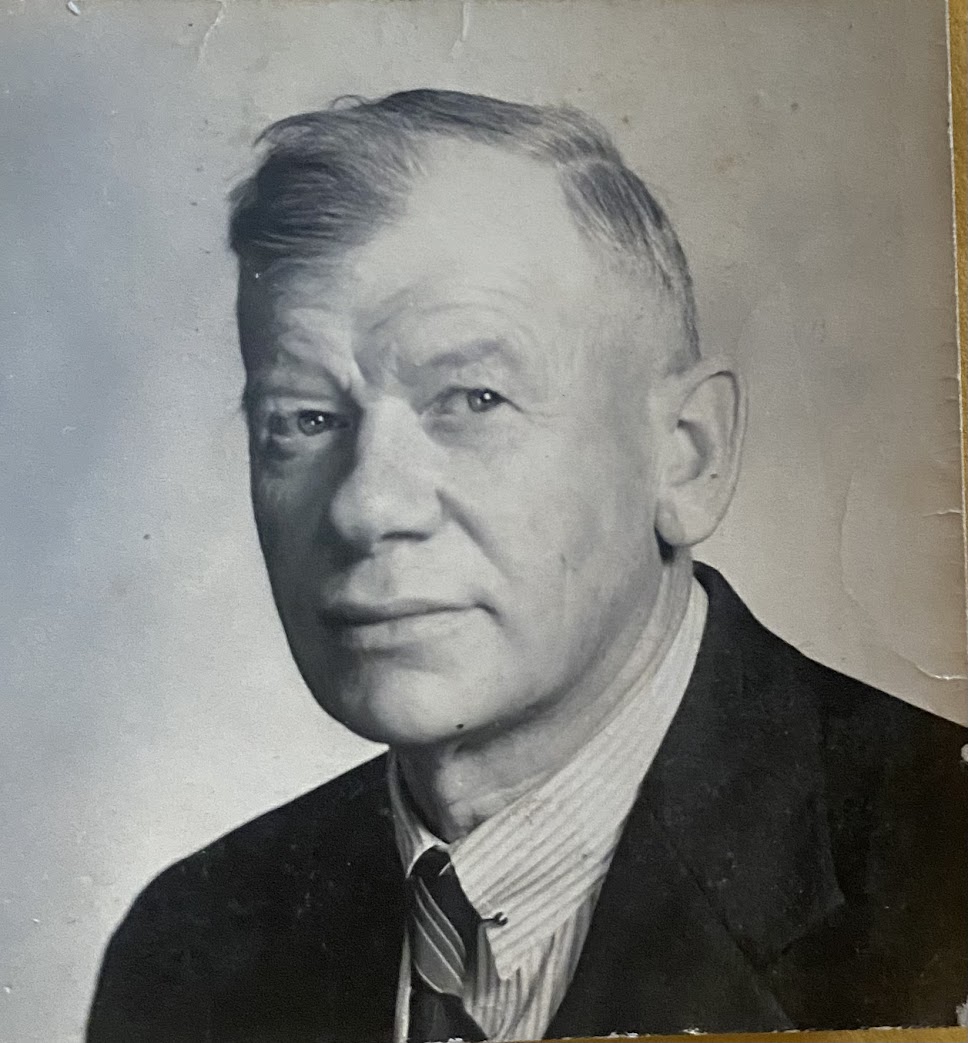
Private Walter Kettlewell in uniform in World War OneWalter married Elva Hanna in 1930. Pictured here are from left: A.C. Emory, Elva Kettlewell, Walter Kettlewell, and Ina Steed.Walter Kettlewell in the late 1930s
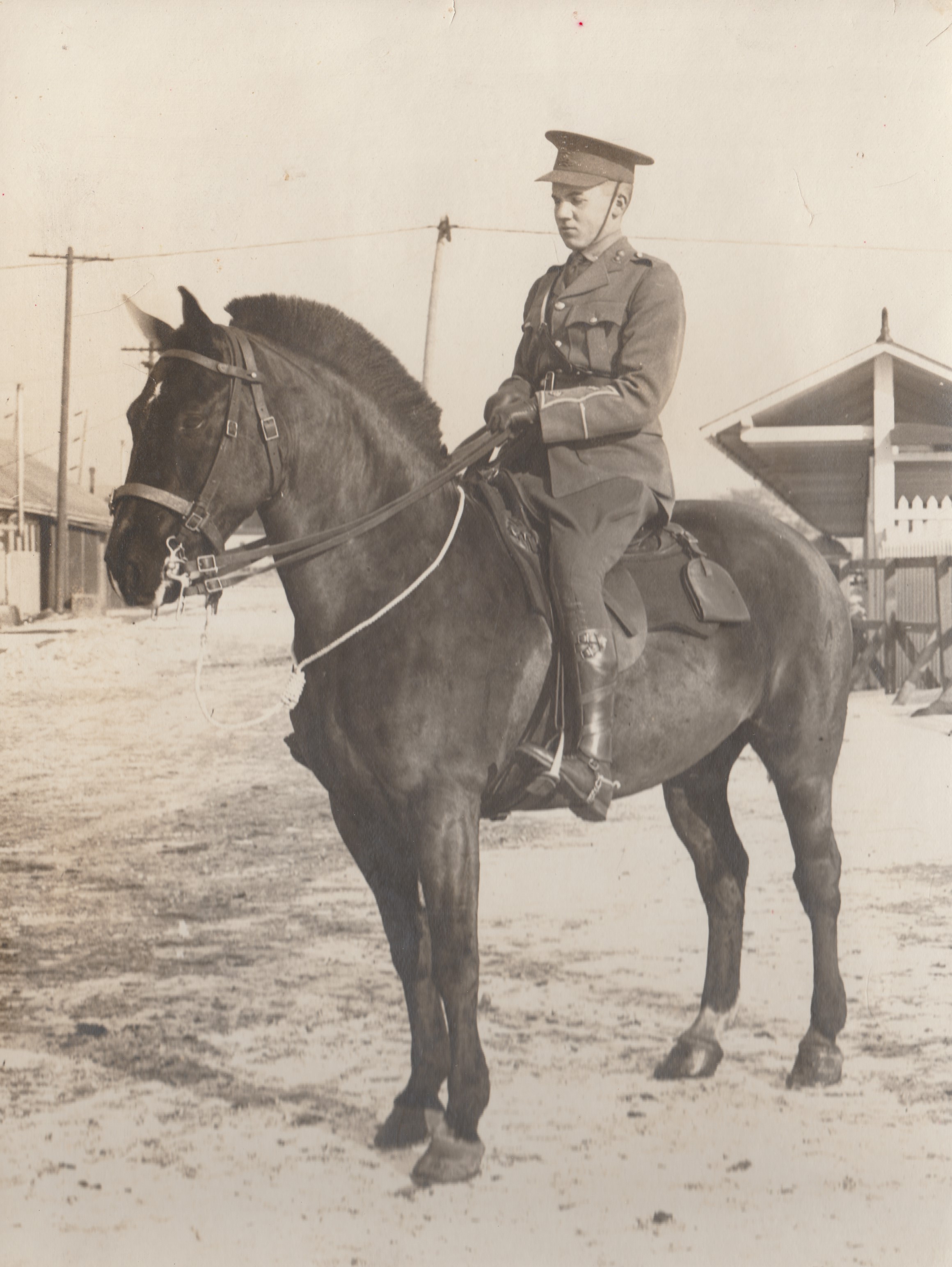
News reports of Walter’s death and funeral in 1942.Walter’s younger brother W. Keith Kettlewell on horseback.He was among the wounded in World War One. He came to Nelson from Ontario with Walter and their parents, Noah and Kate Kettlewell.
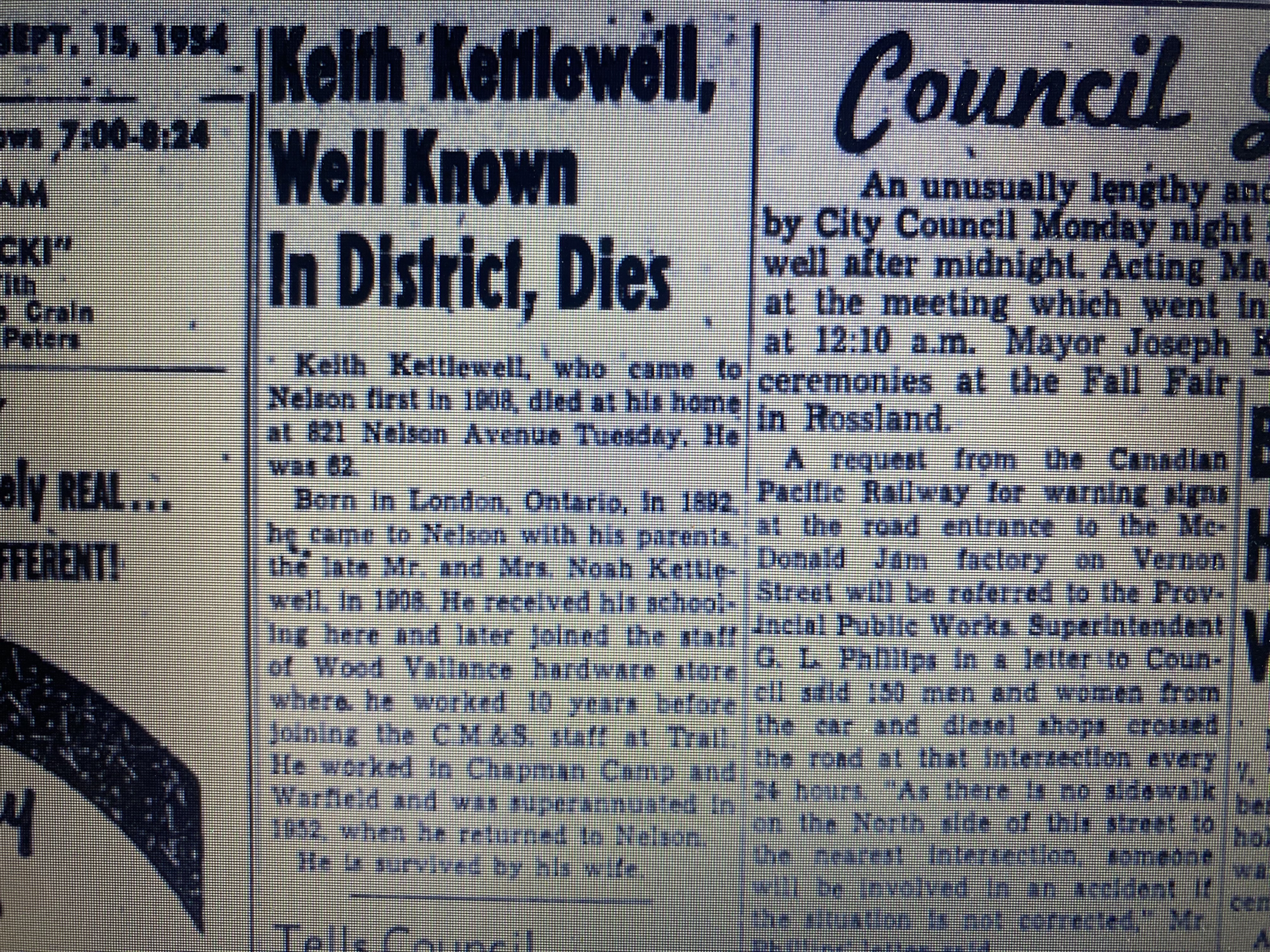
Nelson Daily News Sept. 15, 1954 report of death of Keith Kettlewell at age 64.
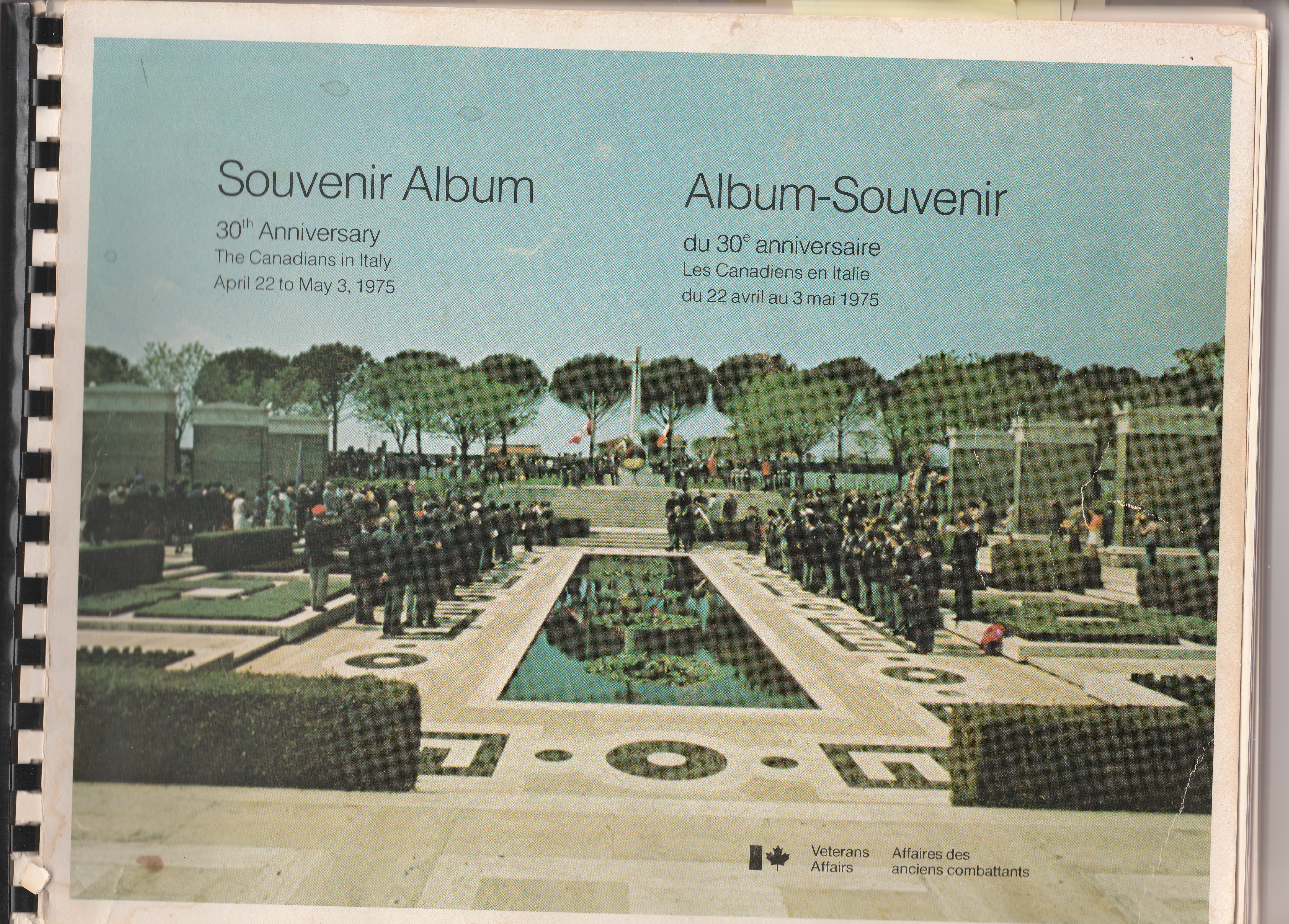
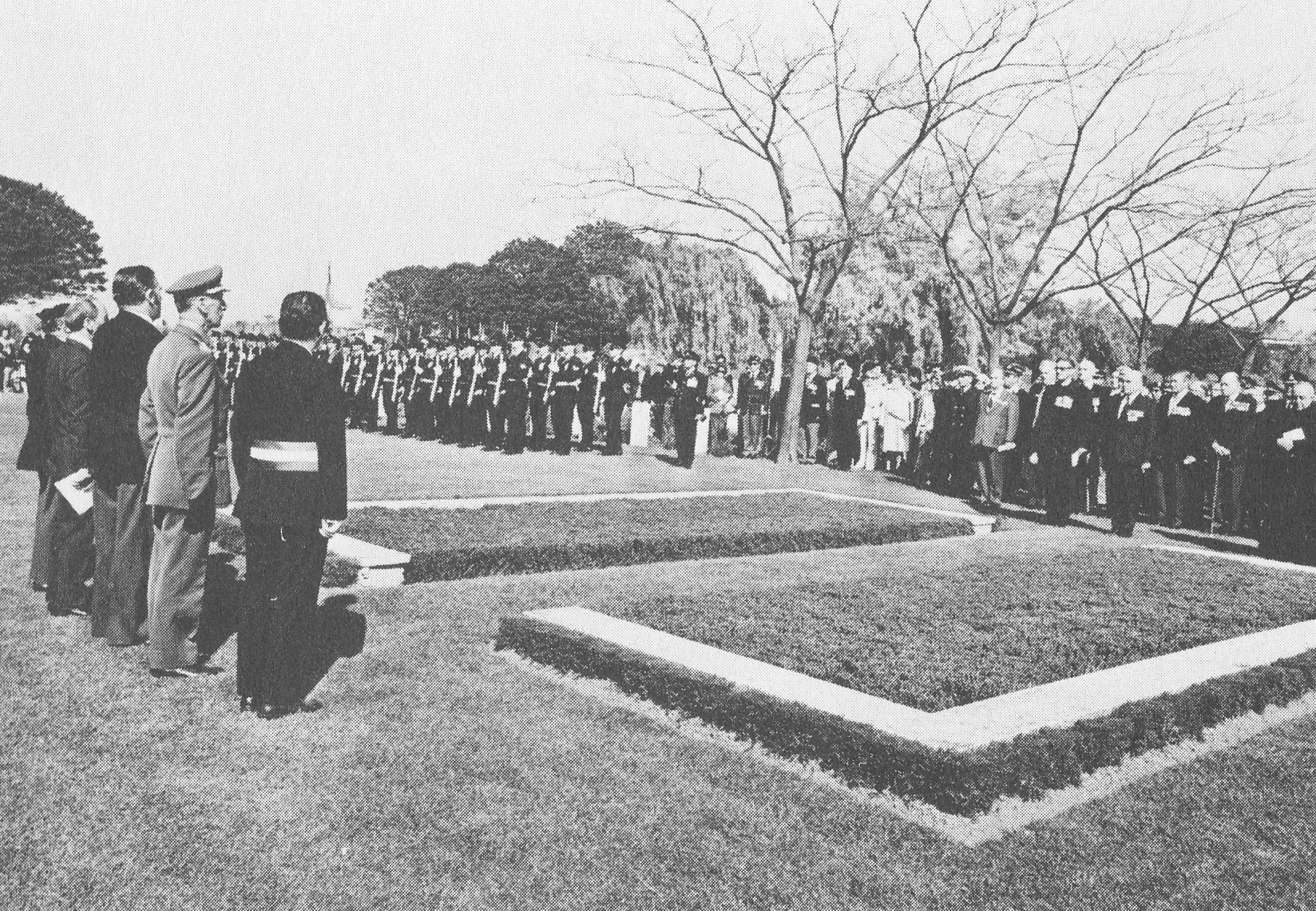
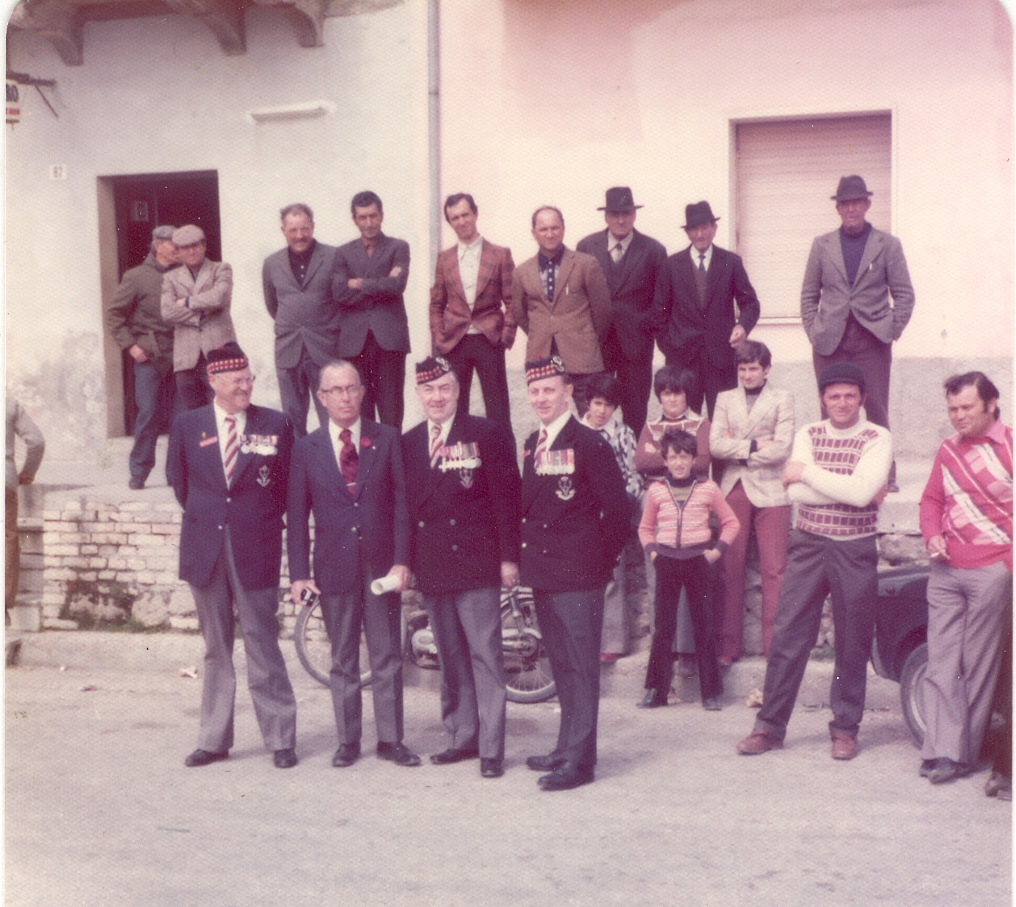
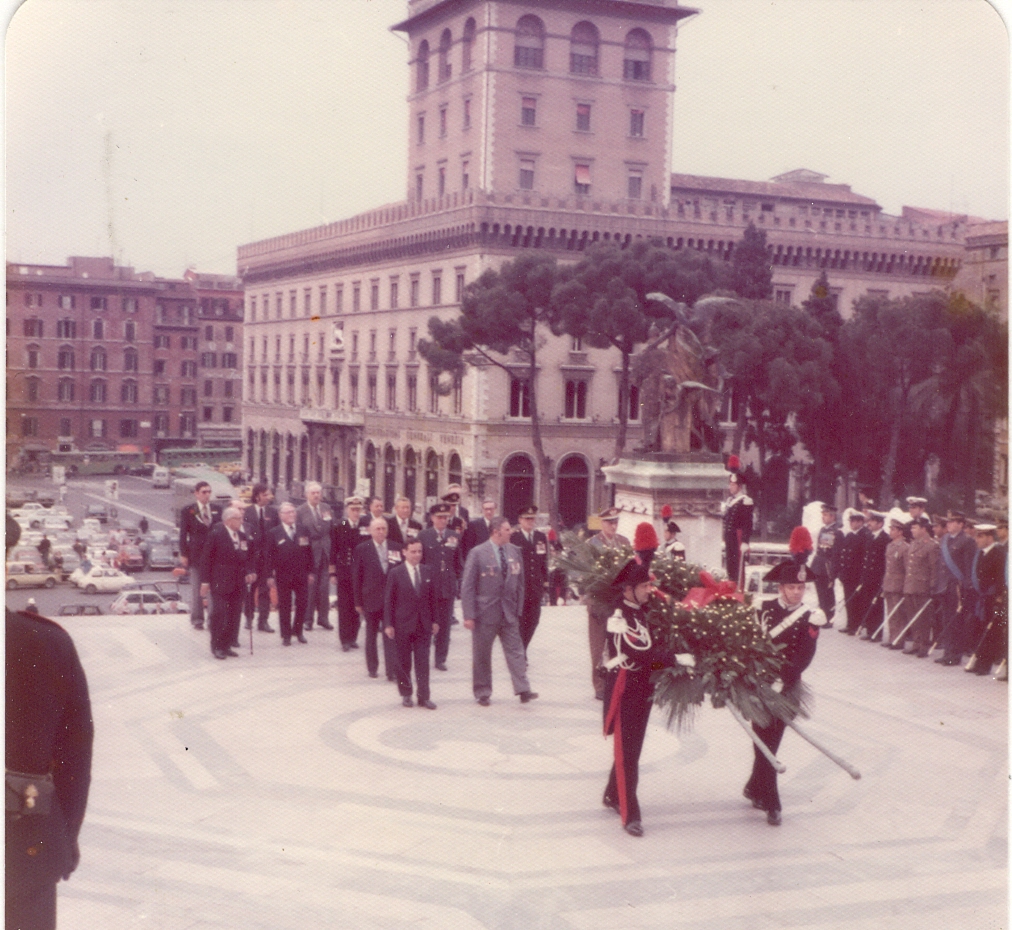
Fifty years ago, in the last week of April 1975, my father Major Leigh Morgan McBride (1917-1995) and about 200 other participants gathered in Sicily and mainland Italy to commemorate the 30th anniversary of Canadians in the Italian Campaign of World War Two.
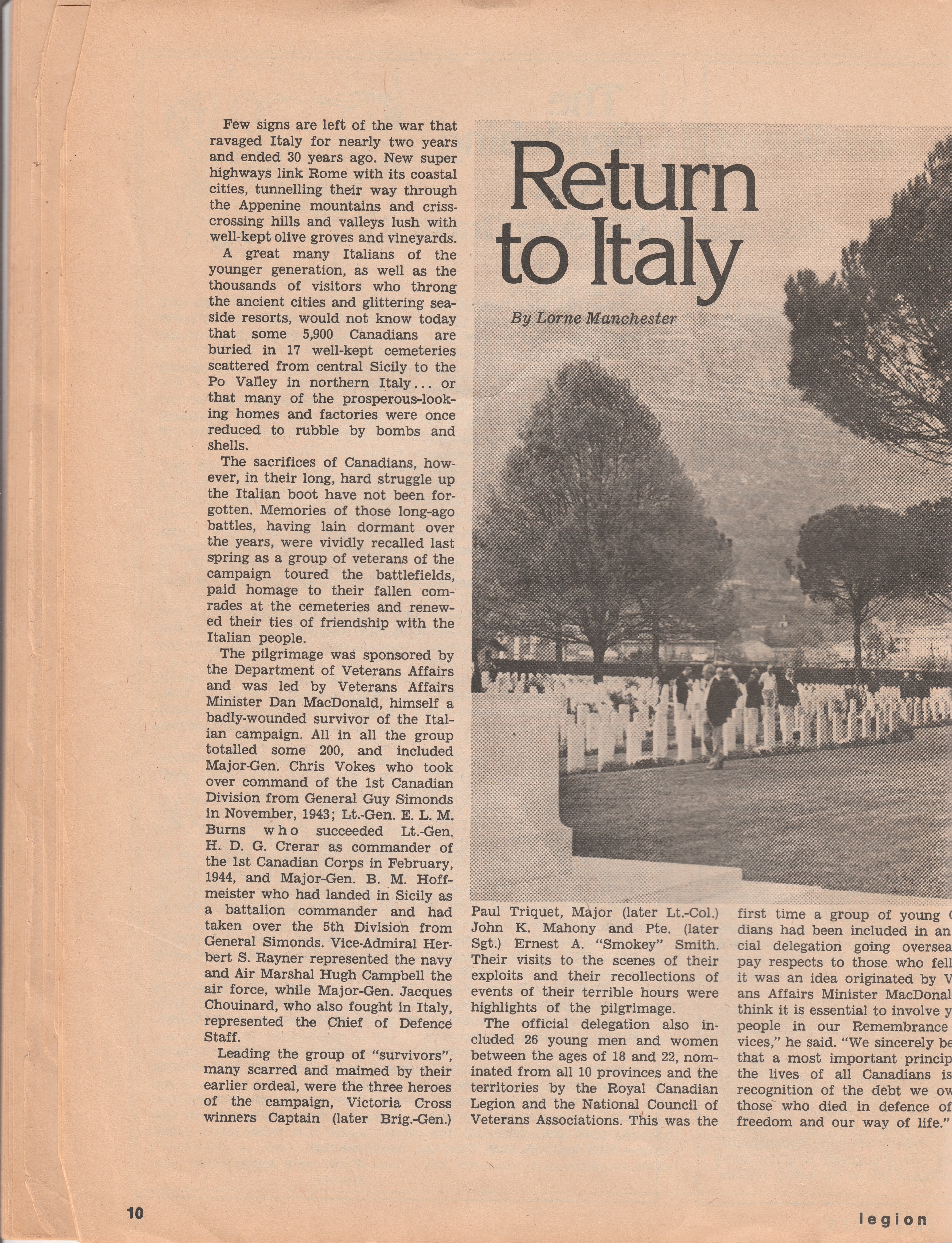
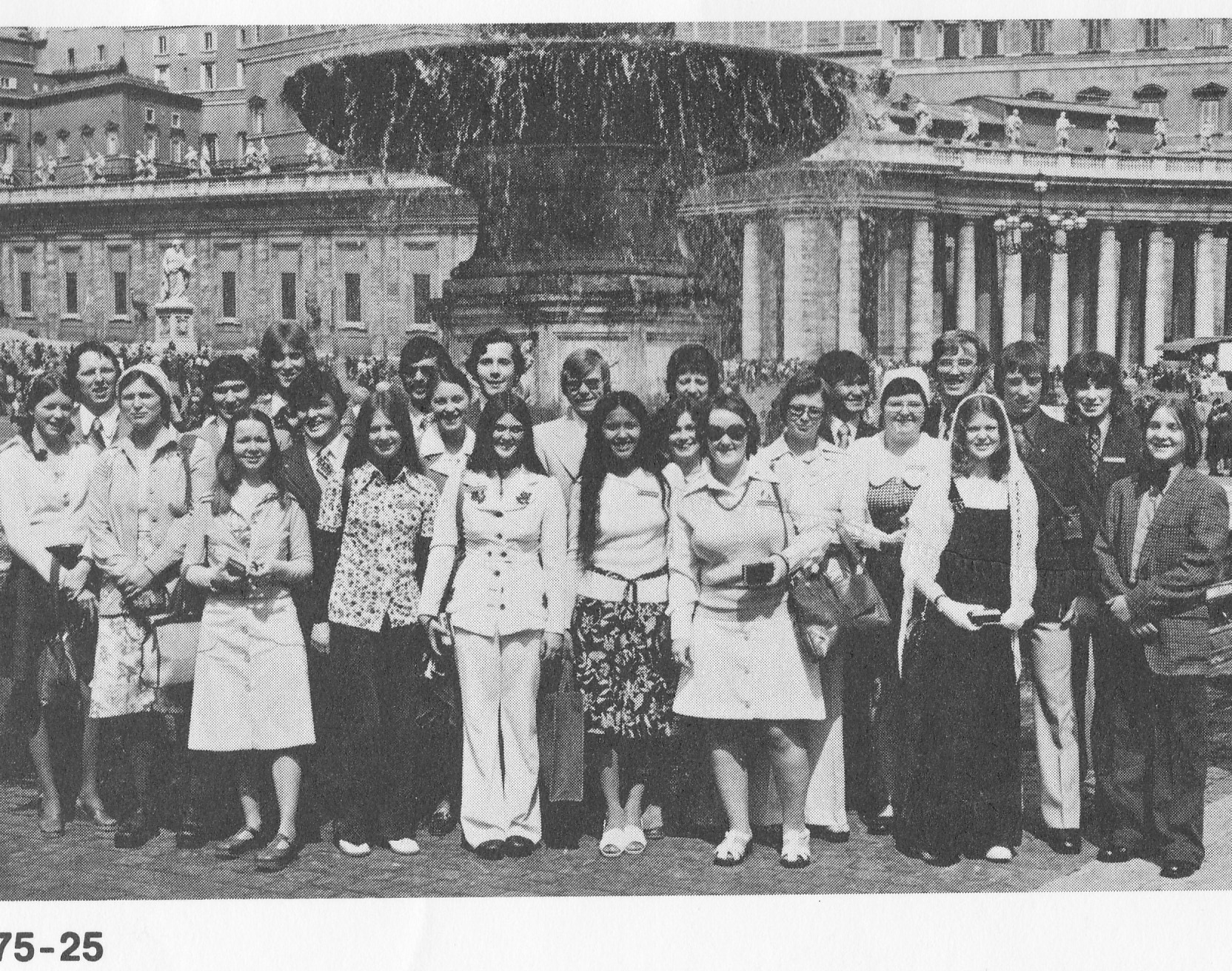
The group included the three Victoria Cross recipients in the battles, as well as survivors and dignitaries from across Canada. Most would be in their fifties or sixties, but there was also a delegation of 26 young men and women between 18 and 22, nominated from all 10 provinces and two territories by the Royal Canadian Legion and the National Council of Veterans Associations.
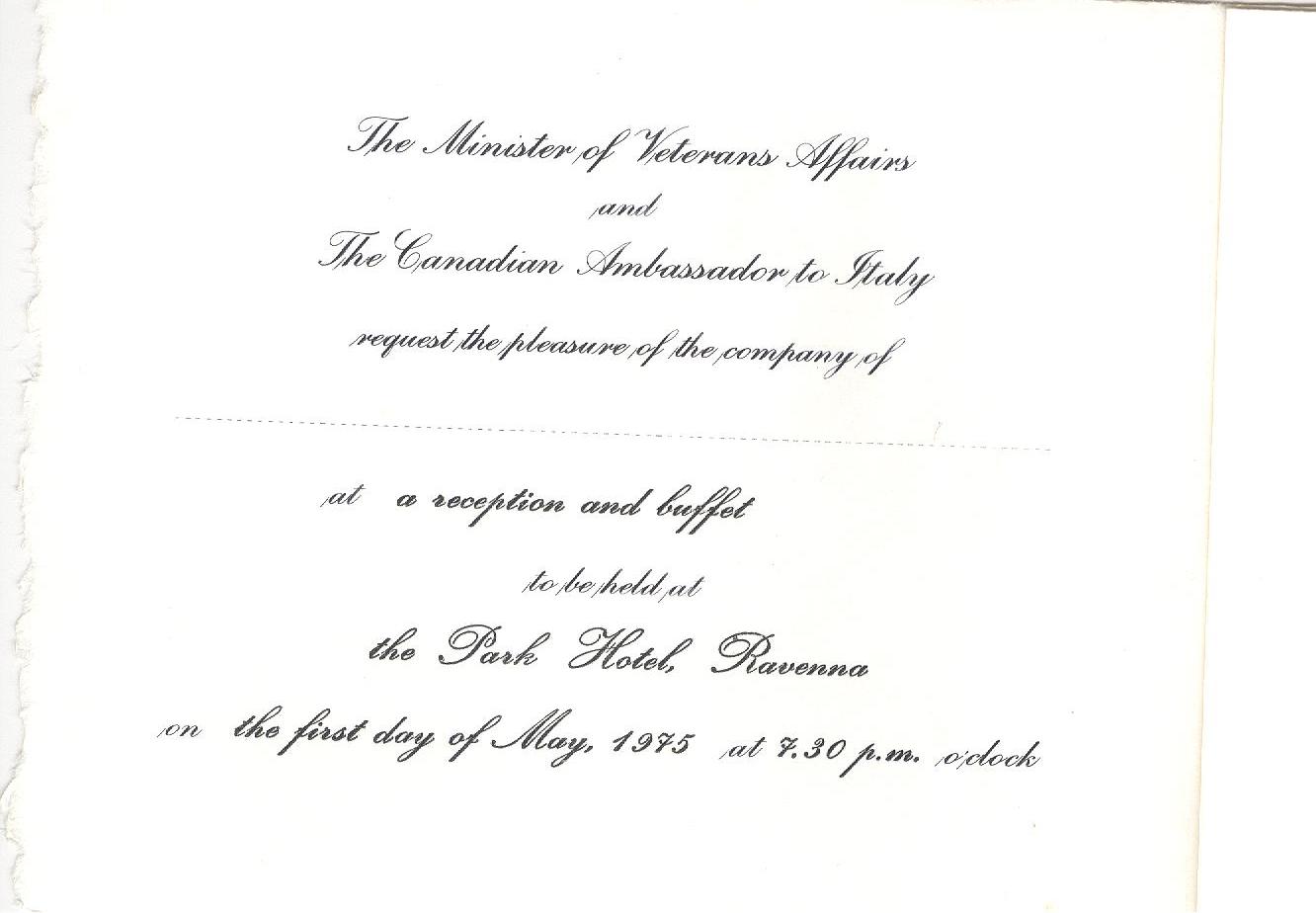
One of the invitations my dad Leigh McBride received for an event in conjunction with the 30th anniversary reunion in spring of 1975. He had a keen sense of history, and had a habit of keeping souvenirs for future use. He died in 1995 without ever writing about his memories of the war or this reunion. But as his son looking after family memorabilia, I have been pleased to use the technology of today to share his keepsakes for posterity.
The pilgimage was sponsored by the federal Department of Veterans Affairs and led by Veterans Affairs Minister Dan MacDonald, himself a badly wounded survivor of the campaign, losing an arm and a leg. He said “I think it is essential to involve young people in our Remembrance services”, noting that the debt owed by all Canadians to those who died in defence of our freedom and our way of life must always be remembered.
Below is a list of the youth participants recorded in the Souvenir Album. It would be interesting to hear if any of these people follow the popular Canadians in the Italia Campaign group in Facebook, and what they remember of the experience. They would be about 70 now. It would be even better to hear from veterans of WW2 who were there, which is possible as I hear more and more of folks living past 100.
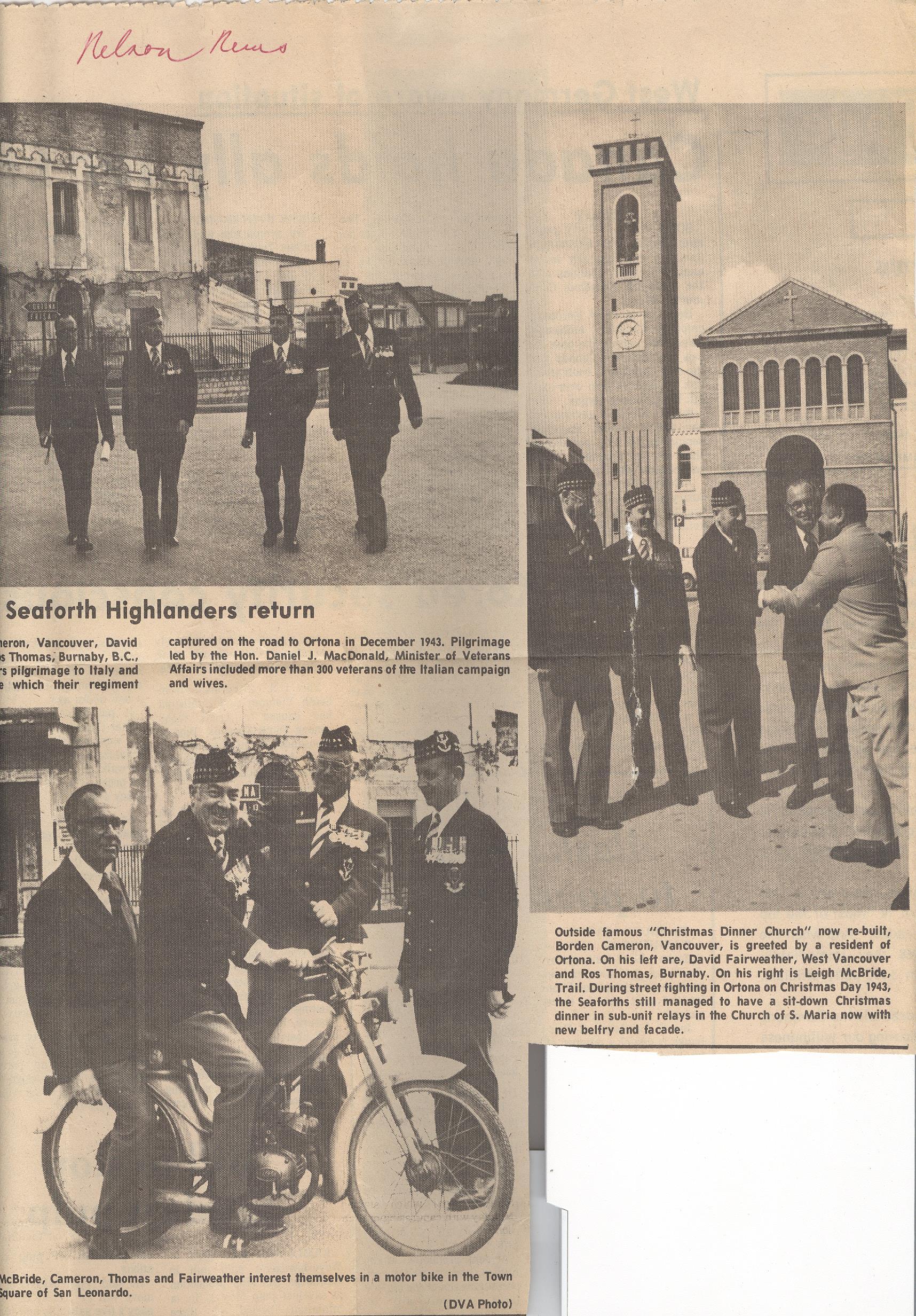
The photos and information above were sent to hometown newspapers of the men who were photographed in the 30th anniversary reunion. In Leigh’s case, the group of submitted photos was featured in his two hometown newspapers, the Nelson Daily News and Trail Daily Times.Above: Members of the Youth Delegation gathered in St. Peter’s Square in Rome at the start of the remembrance experience.
Newfoundland – Jacqueline Ryan, St. Johns; Wayne Payton, Botwood;
PEI – Christine Shepherd, Cardigan; Martin Morrisson, Flat River;
Nova Scotia – Colleen Middleton, L’Ardoise; Anthony Olender, New Glasgow;
New Brunswick – Catherine Gillespie, Dorchester; John Kerrigan, Musquash;
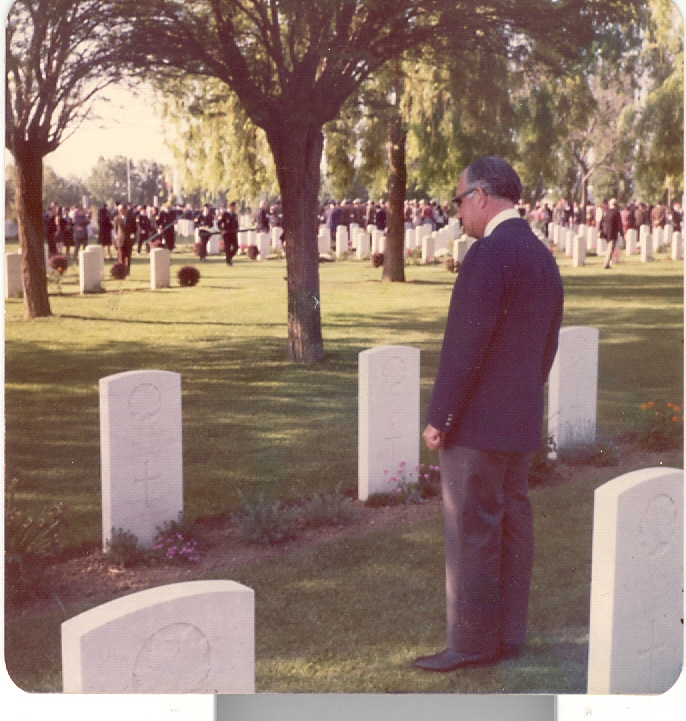
Leigh at the grave of his brother and fellow Seaforth Highlanders of Canada officer Capt, Kenneth Gilbert McBride (1920-1944) in Coriano Ridge Cemetary. The 1975 event was quite emotional for Leigh, as it was the first time he visited the grave of his brother. They grew up in Nelson, B.C., sons of R.L. and Winnie McBride.
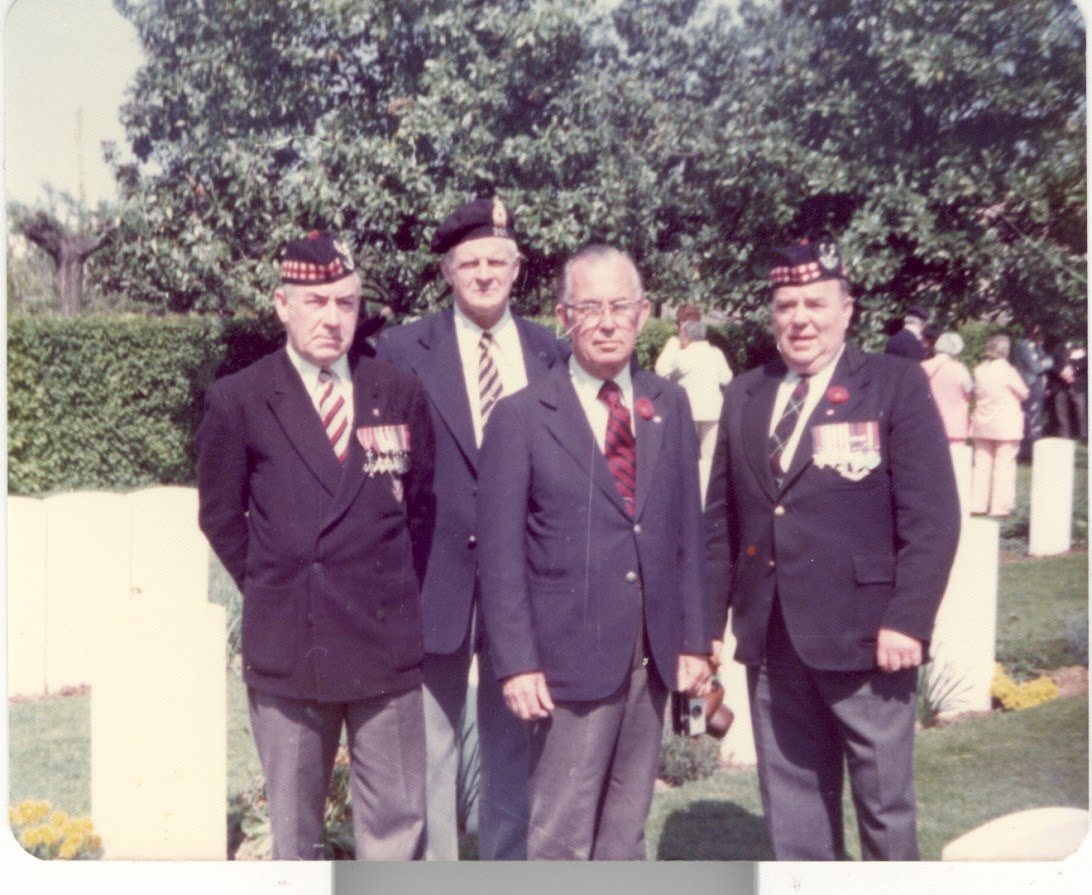
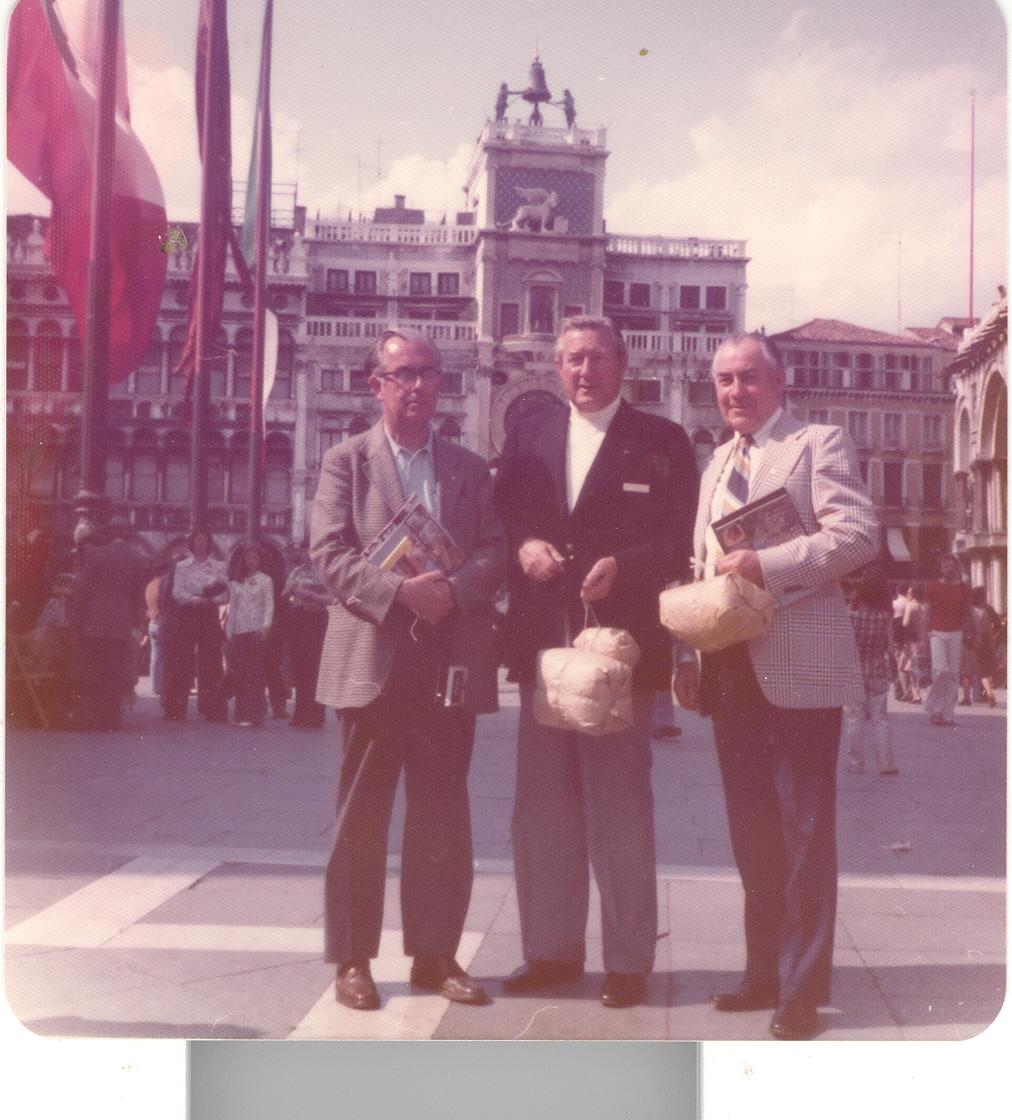
Left to right: Seaforth Highlander vets
Leigh McBride, Bert Hoffmeister and Borden Cameron. On a side trip to Venice,
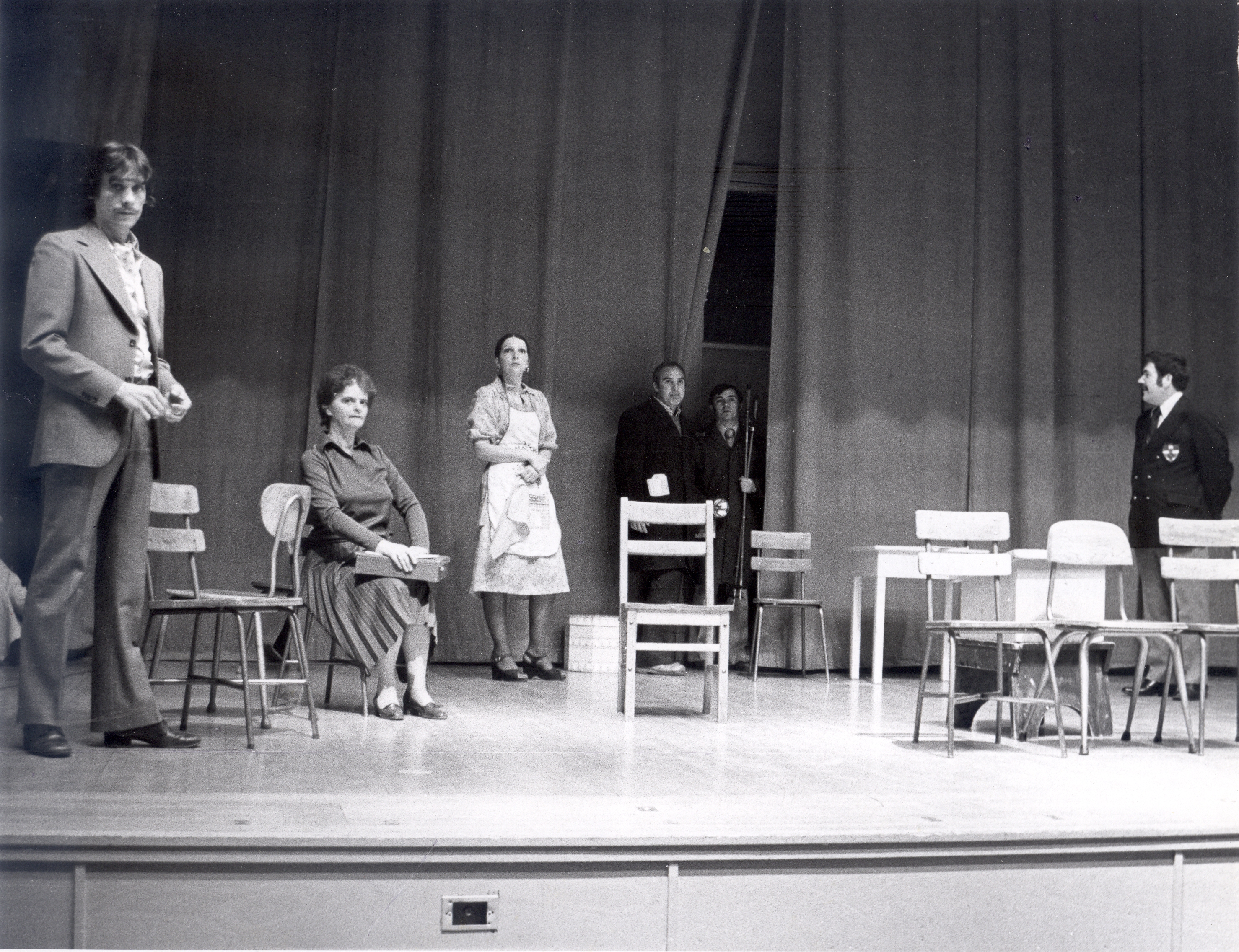
As its second show, Trail Theatre Unlimited chose to present Trail and district audiences with performances of Agatha Christie’s “The Mousetrap”, which had the distinction of being the longest-running play in the history of London theatre.
The murder mystery play had been running continuously in London since opening in the West End in 1952. The 26-year string at the time far exceeded any other show at the time — and its momentum has continued 47 more years to today in 2025, aside from shutting down temporarily on March 16, 2000 due to the Covid virus which impacted live theatre around the world. The show resumed on May 17, 2021 and has been performed continuously at the St. Martin’s Theatre since then. As of 2002, the show was performed for its ten millionth audience member in London. The 30,000th performance on March 19, 2025 was the next cause for celebration.
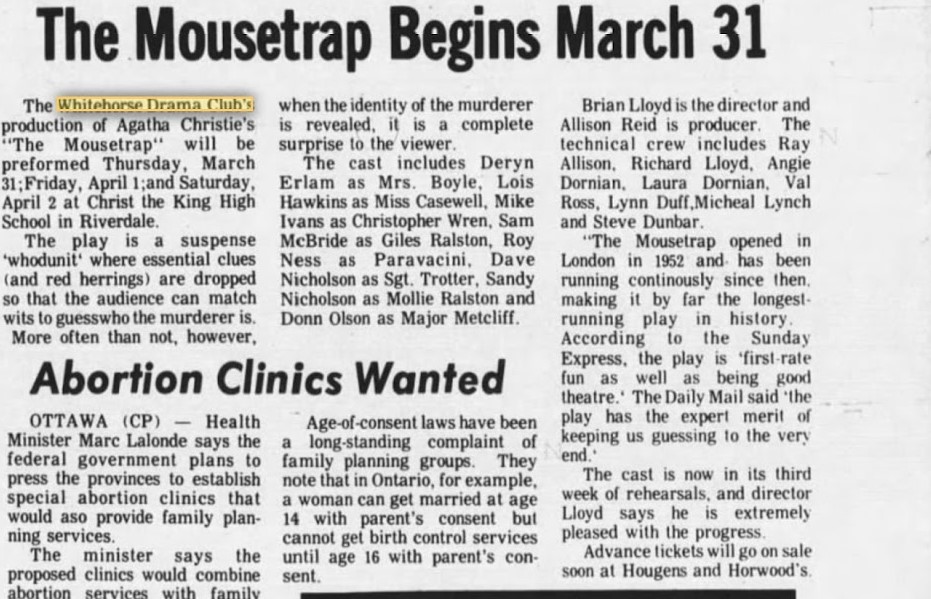
In early January, 1978 the executive of Trail Theatre Unlimited met to plan for the club’s spring production. The consensus was that the group should build on the successful momentum of their debut show “Dirty Work at the Crossroads” with a spring show that was somewhat more serious than the farce-like melodrama “Dirty Work”. As a member of the executive of Theatre Unlimited, I had suggested to others that we do “something like” The Mousetrap, which I had watched in London in the summer of 1975 and then two years later performed in with the Whitehorse Drama Club in the Yukon. When we could not think of a good alternative, the decision was made to do “The Mousetrap”.
Several members of the club were surprised that such a popular professional show was available for amateur groups to perform, for a reasonable fee of about $50 for each performance. We looked into that, and saw that the rights holder (Agatha Christie’s grandson) had rules that no amateur productions could be done in the United Kingdom, but they were allowed outside the country. Another rule is that no film could be made based on the play until the London show closed, so no movies have ever been made.
Something that all productions — professional or amateur — have to do is live up to the tradition of keeping the identity of the killer secret, so as not to spoil it for future audiences. The actor playing the killer comes on stage after the curtain closes and asks the viewers to keep the secret to themselves, as much of the fun for the audience is trying to guess which of eight characters is the murderer — and Agatha Christie provided clues throughout the play that give you reason to suspect any one of the characters.
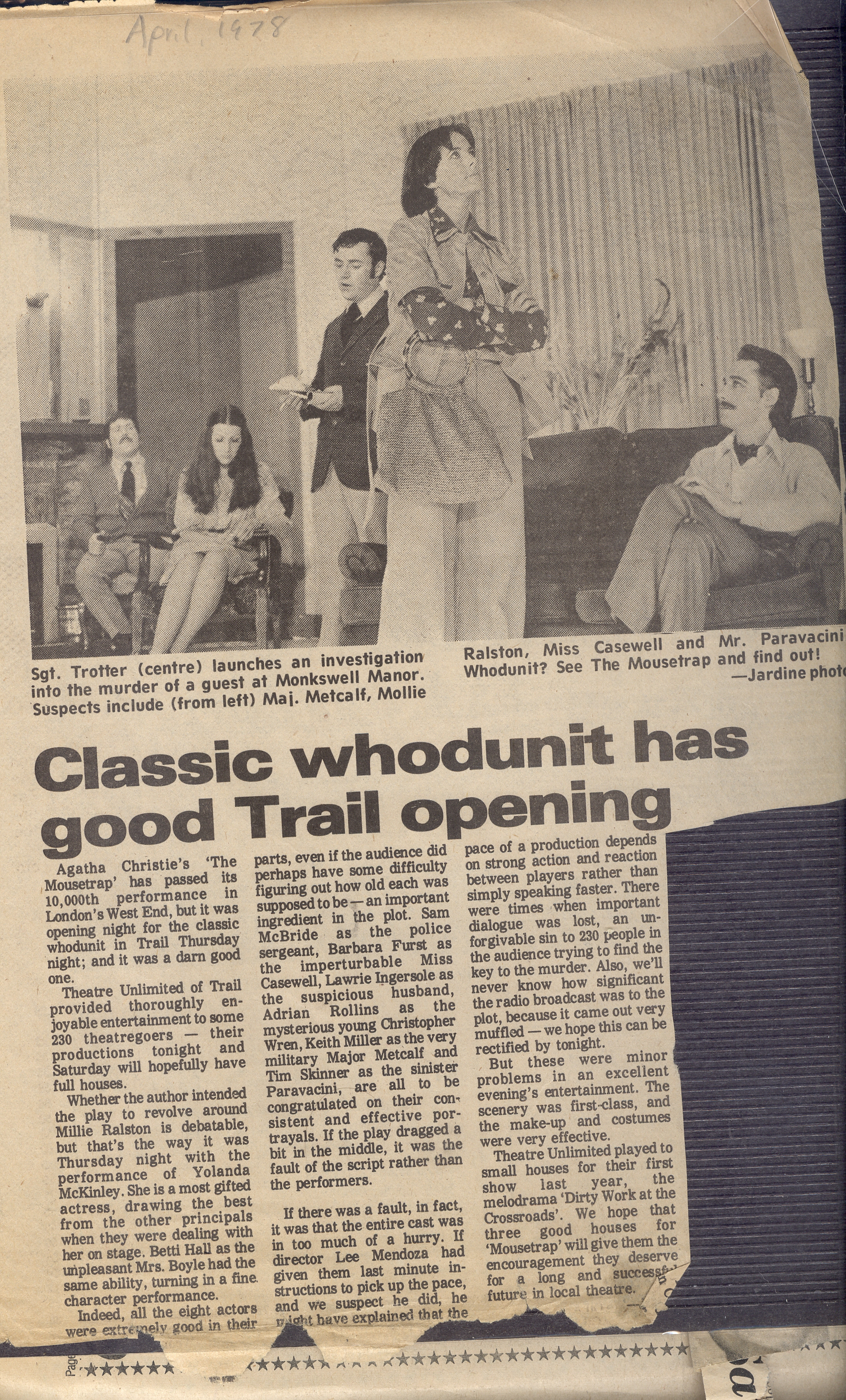
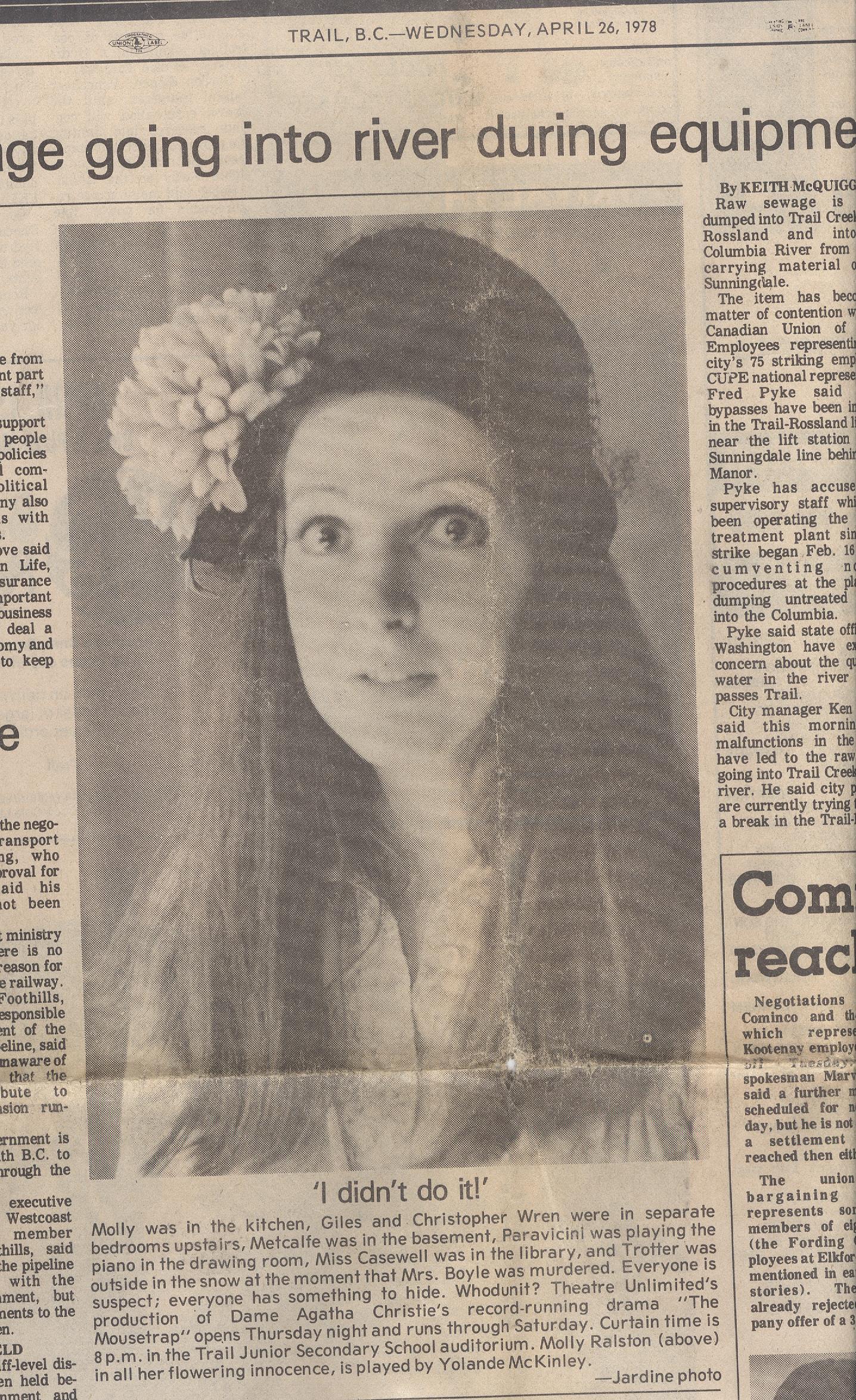
We were able to use artwork from the recent Mousetrap show in Whitehorse for the Trail Theatre Unlimited show as well. Many thanks to artist Lottie Hutton.Seen in a rehearsal are, from left: Tim Skinner as Paravacini, Betti Hall as Mrs. Boyle, Yolanda McKinley as Mollie Ralston, Lawrie Ingersole as innkeeper Miles Ralson, Sam McBride as Sgt. Trotter and Keith Miller as Major Metcalf.Trail Daily Times review of the show by editor Jack Fisher, who would later become active in Theatre Unlimited as an actor and organizer, as well as performing in Rossland Light Opera Players shows.
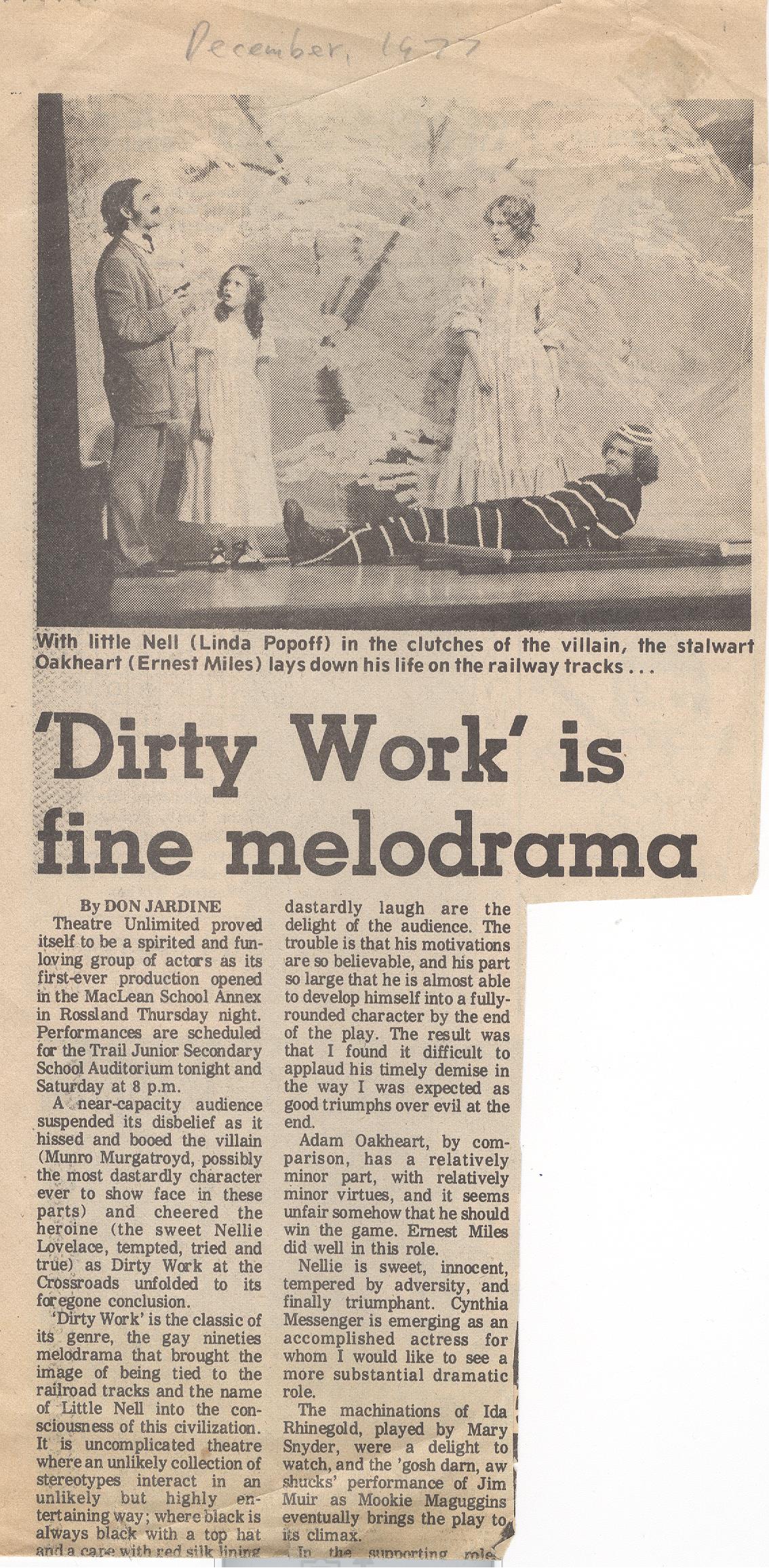
Community theatre returned to Trail, British Columbia in the fall of 1977 with performances of the classic melodrama “Dirty Work at the Crossroads” by the new theatre club Trail Theatre Unlimited. The group included several newcomers as well as veterans of the former Trail Little Theatre group which was active for a number of years.
With some start-up funding provided by the Trail and District Arts Council, an initial organizing meeting got the ball rolling for a non-profit society that would present a variety of shows well into the 1980s. Several of the members were also volunteers with the long-established Rossland Light Opera Players.
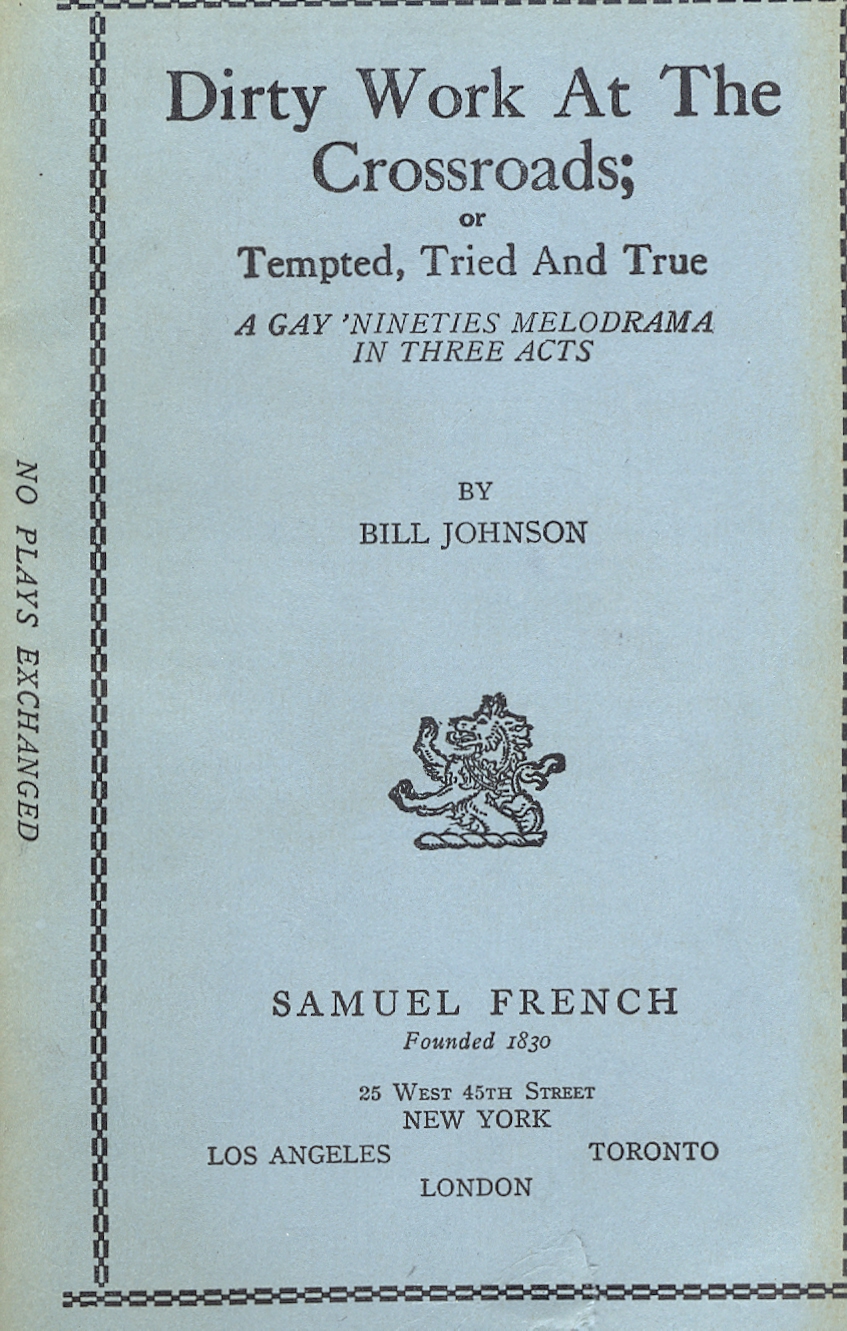
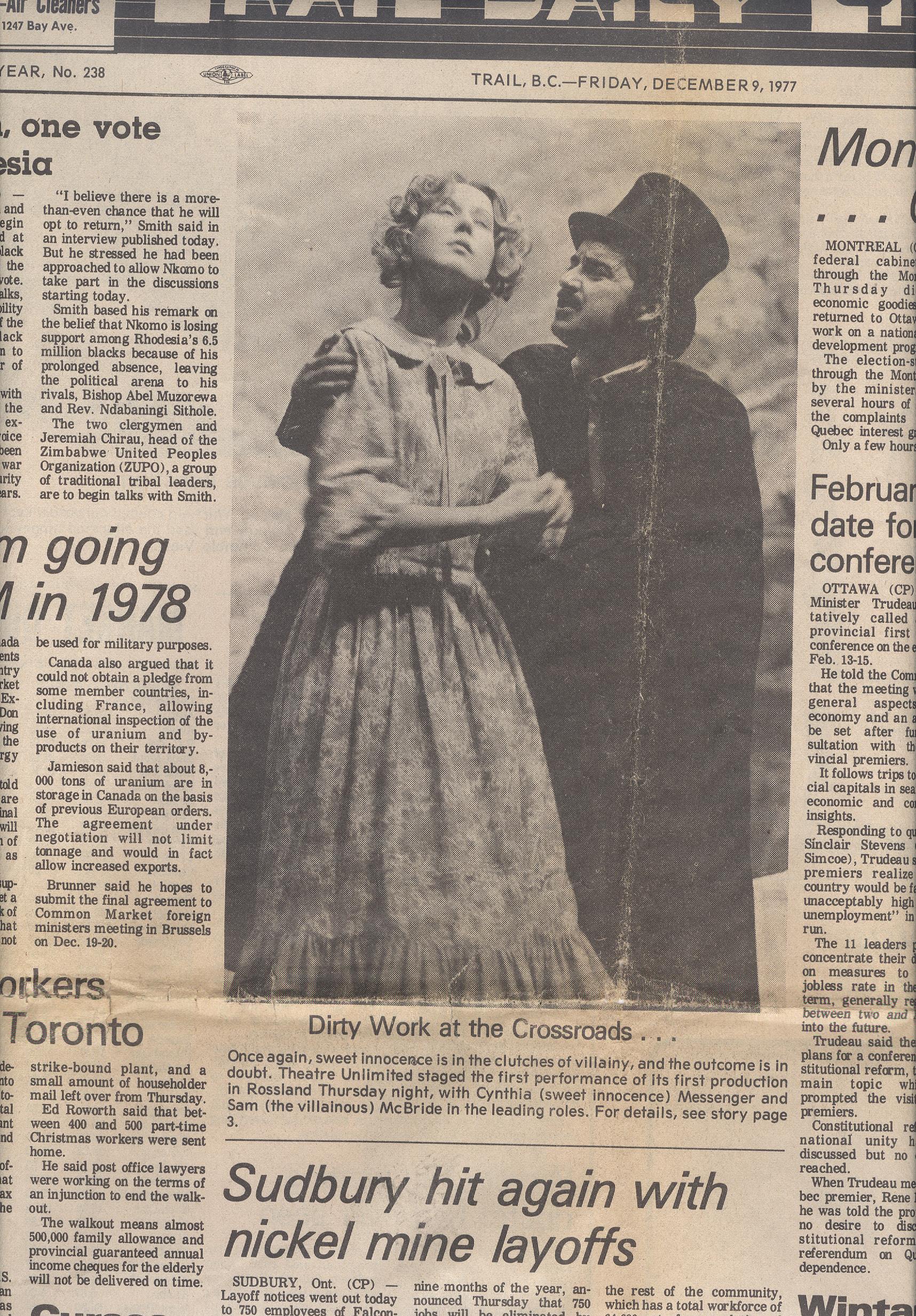
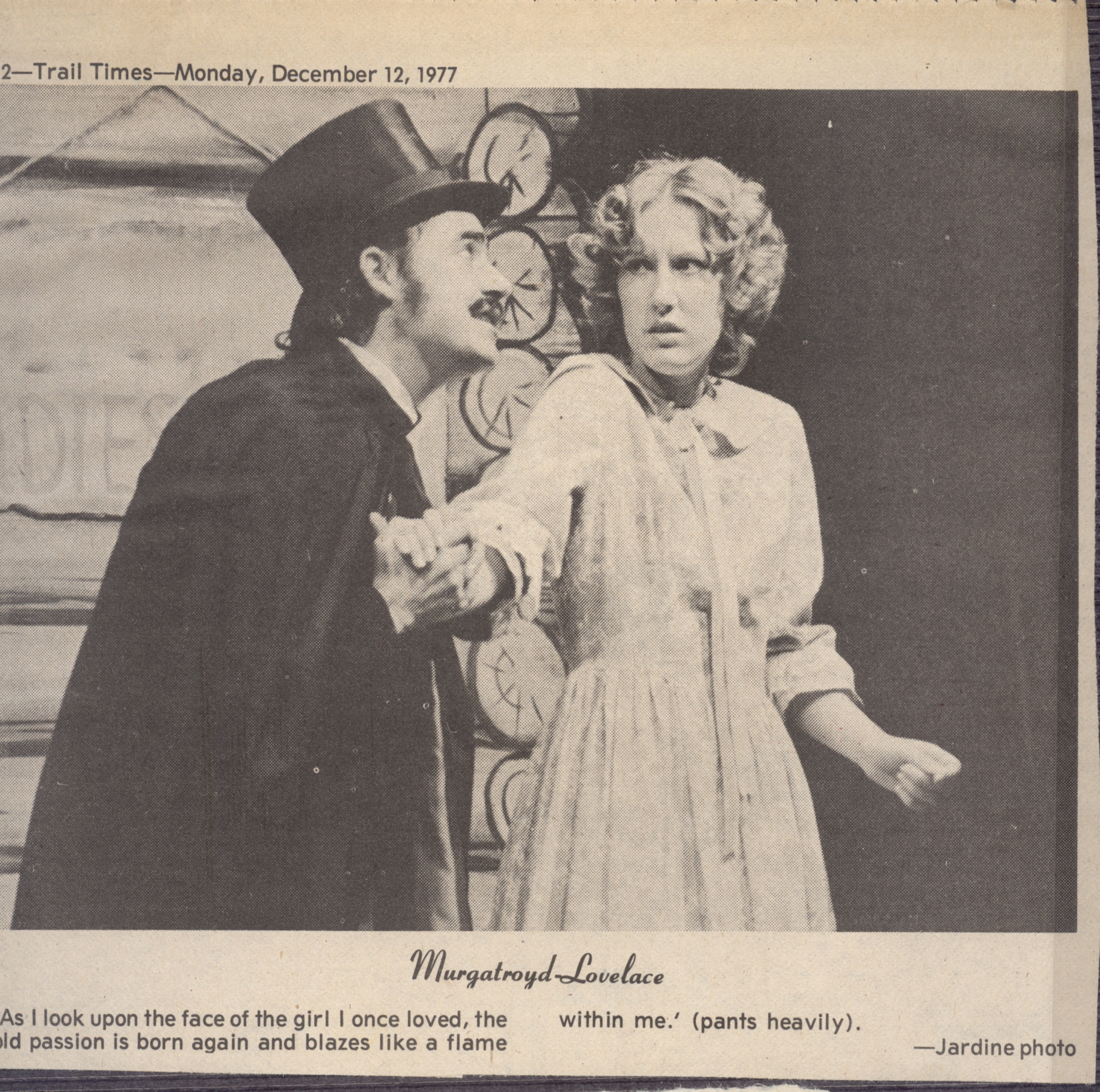
The group examined options for its debut show, and decided that “Dirty Work at the Crossroads” featuring classic character stereotypes from the 1890s era would be fun for participants and audiences. A night of auditions was held, which included acting roles as well as appointment of volunteers for set construction, lighting, costumes, publicity and tickets. The show had a small audience — maybe about 50 — on its opening night, with more on the second night and closing night, large thanks to ample coverage by the Trail Daily Times newspaper. The Times editor at that time, Jack Fisher, was a veteran of several Rossland Light Opera Players shows, as both an actor and director.
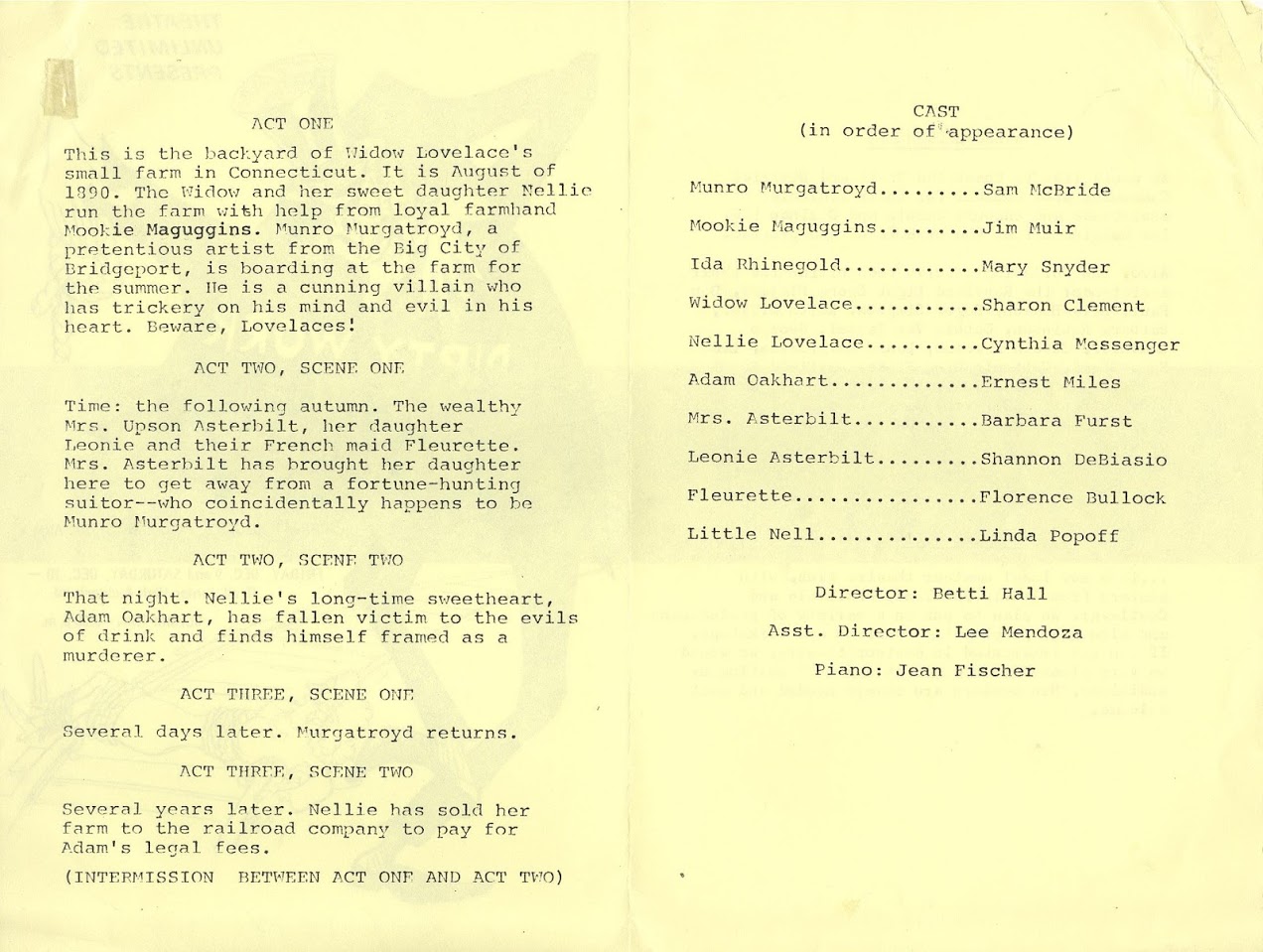
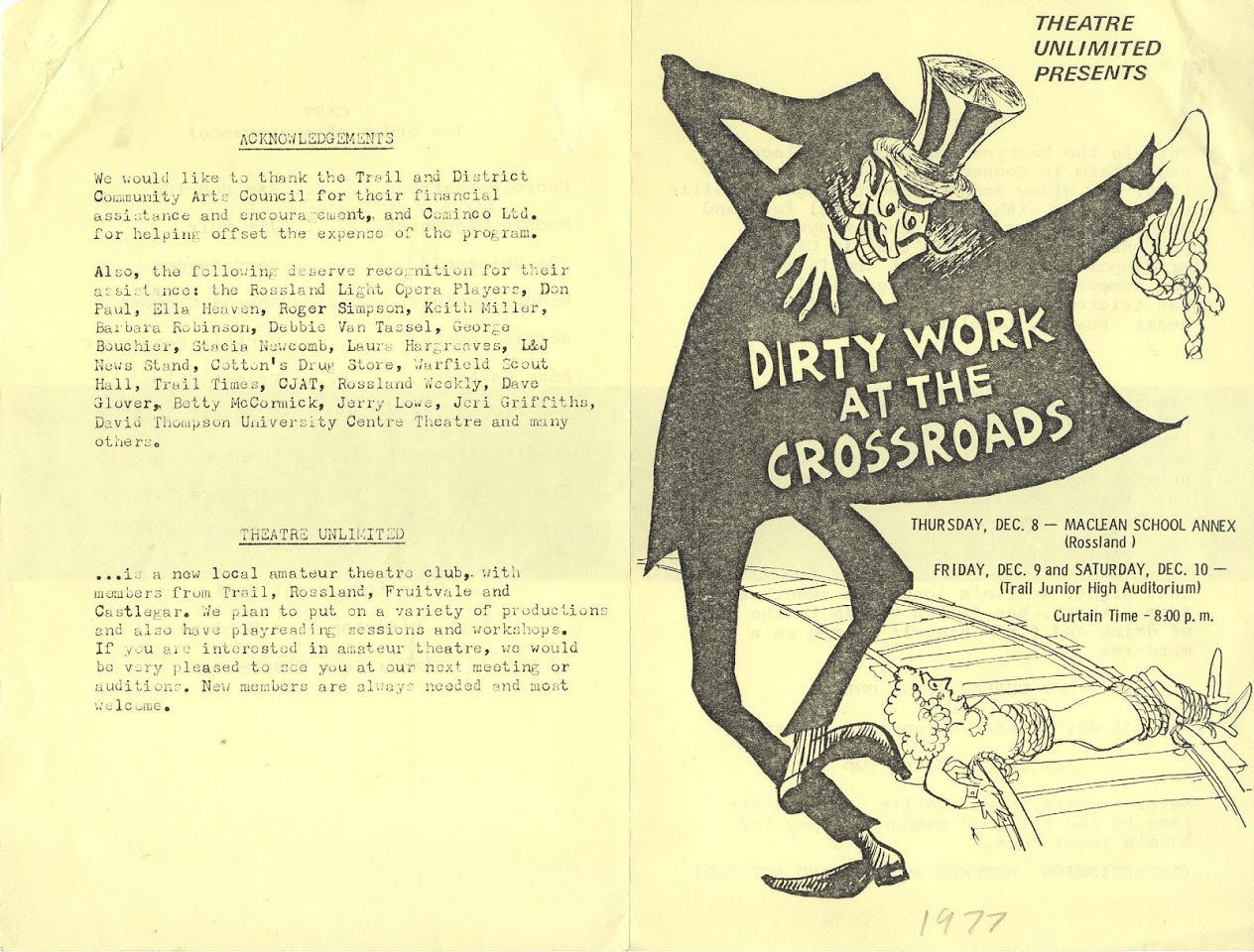
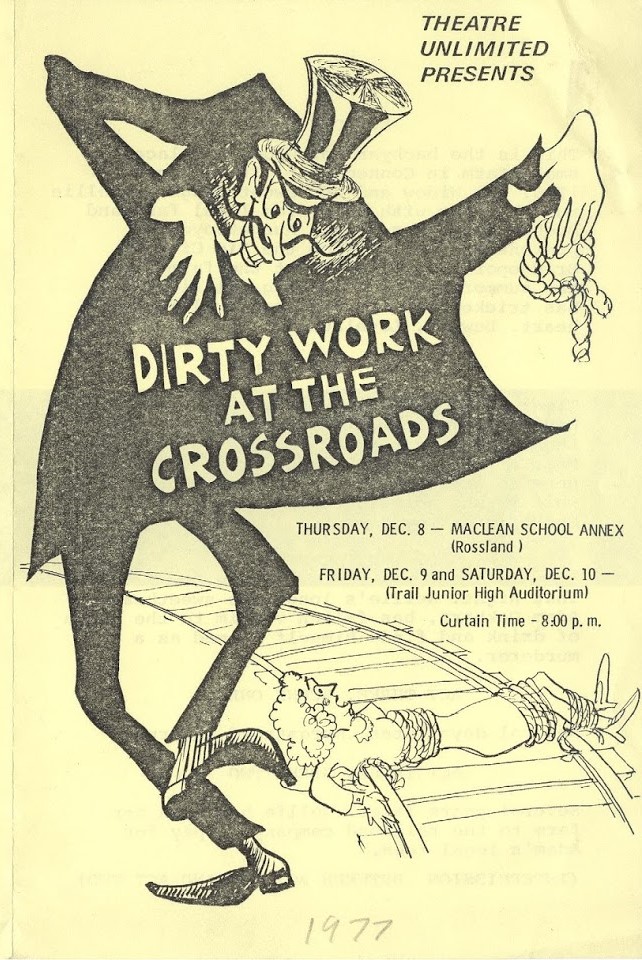
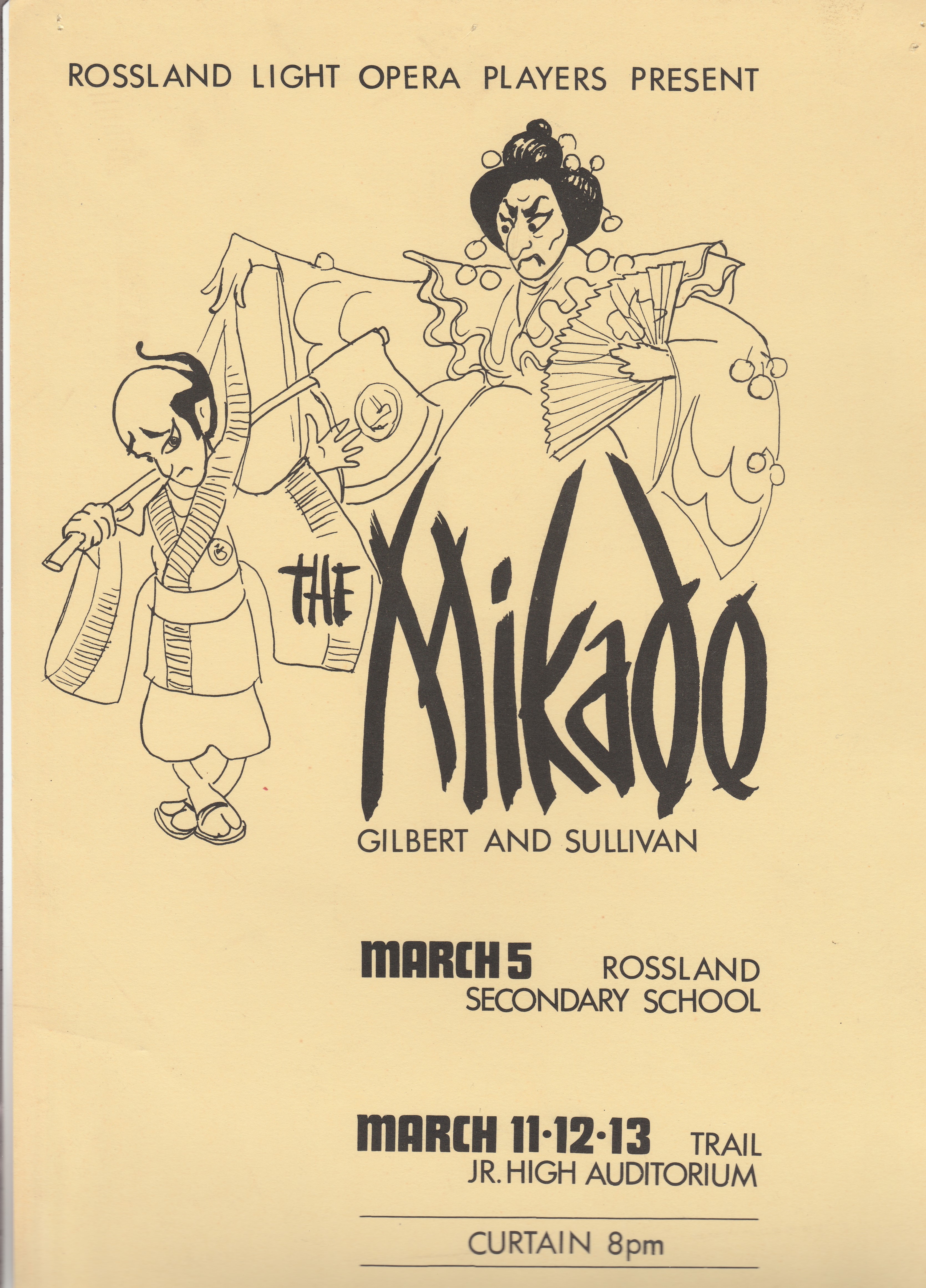
We were also very fortunate that graphic artist George Bourchier designed and produced a superb design for our posters. The design was also used for the front of the show’s program, attached below, which provides an outline of the plot and list of characters. The first show was at the MacLean School Annex in Rossland, and the next two performances were at the Trail Junior High Auditorium, which today is known as the Charles Bailey Theatre.
script for the show from the performance rights company. As I recall, we paid $25 in royalties for each performance. We kept further costs to a minimum, thanks to donations from Cominco and other donors. This gave the group a base for its next show, “The Mousetrap”, presented in the spring of 1978.
I was recently going through old scrapbooks of memorabilia from when I lived in Trail, B.C. and worked for Cominco Ltd. (now known as Teck Resources) in the late 1970s and early 1980s, as I am organizing photos, posters and other material for donation to local archives.
I worked at the Cominco B.C. Group public relations department as a writer, and one of my colleagues at the Main Gate Building in Trail was graphic artist George Bourchier from Rossland, who shared my interest in community theatre. He was very involved with the Rossland Light Opera Players (RLOP) for many years, both as an organizer and performer, following in the footsteps of his late father Eric Bourchier who was an RLOP founding member in 1952 and a huge fan of Gilbert and Sullivan musicals which he learned growing up in England. Taking after his father, George not only memorized much of the dialogue in the major Gilbert and Sullivan shows (e.g. Mikado, Trial By Jury, Pirates of Penzance, HMS Pinafore), he also got to know the “business” of the characters, such as movement and expressions that became part of the G&S tradition.
George was born in Kimberley, B.C. in 1927 and died in 1993 in Trail Hospital. I remember him as a great friend and terrific graphic artist. I also have fond memories of his wife Babs, who was a tremendous organizer and leader of RLOP for many years, as well as acting and singing in a variety of roles with RLOP productions. Barbara “Babs” Killough was born in Castlegar in 1937 and passed away in Rossland at age 63 in 2001.
With my background in communications, I was usually in charge of publicity for the shows of RLOP as well as the Trail Theatre Unlimited group, which was active in that period. For reference, I kept photos, posters and other memorabilia in files, many of which survive today.
1977
First show of the Trail Theatre Unlimited group, 1977. As publicity person, I asked George if he could do a “very basic” poster for me that would not take much of his time. What he produced as absolutely first-rate, and was a big factor in the successful launch of the new community theatre club. 1977.
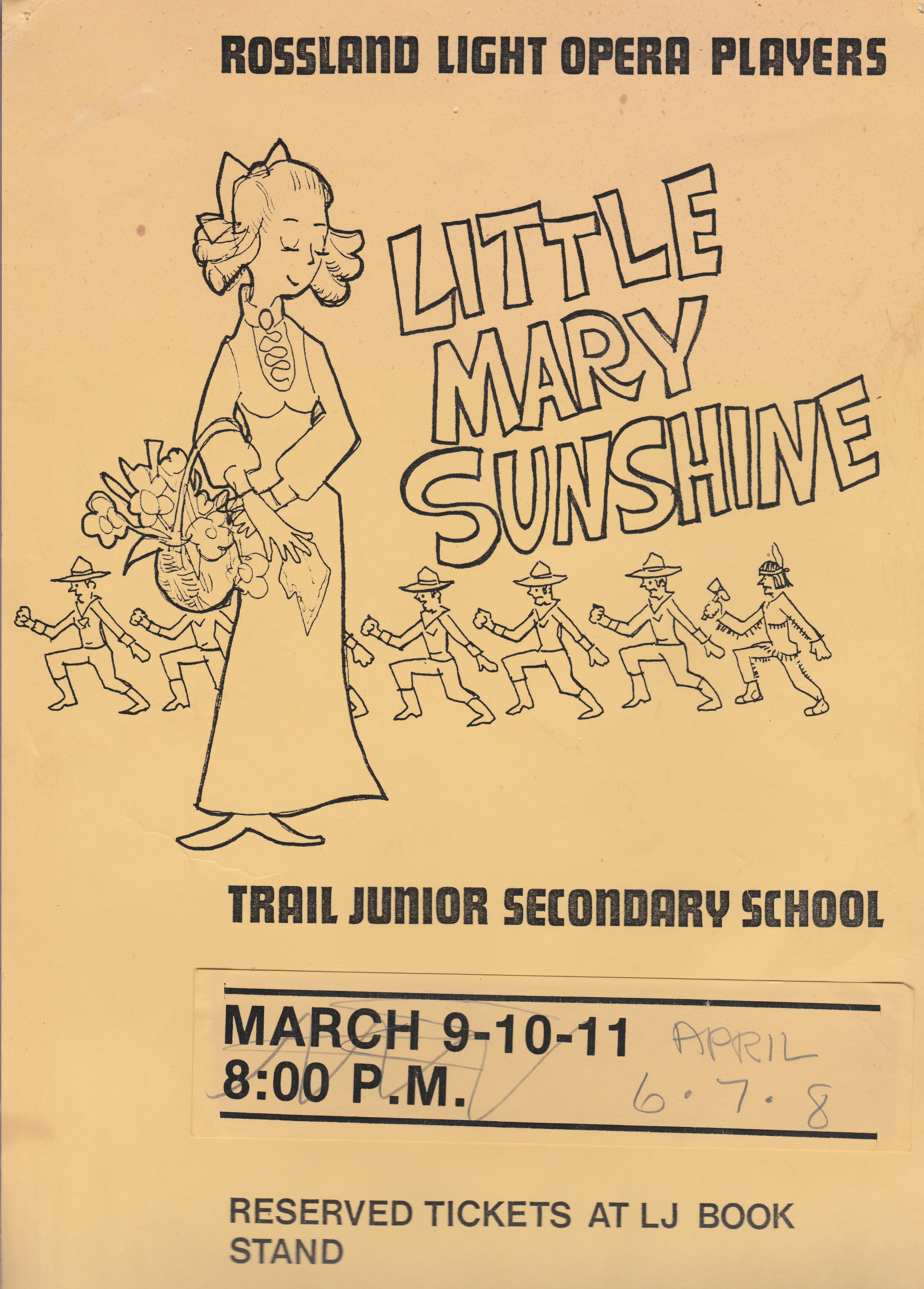
1978
This 1978 show was the first Rossland Light Opera Players production that I had the pleasure of performing in. I had two minor roles and was in the chorus, along with George.
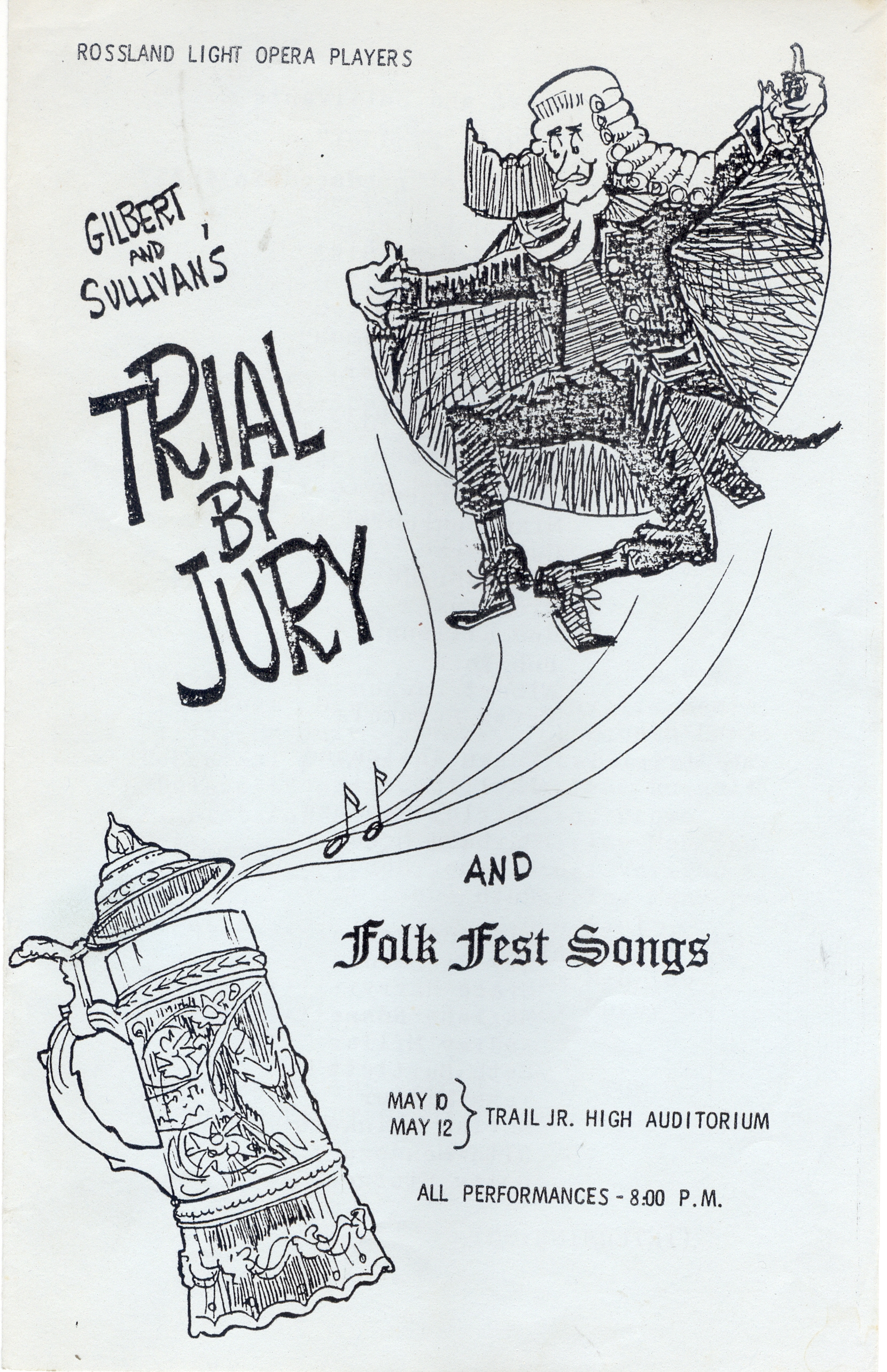
1979
This show came soon after “Little Mary Sunshine”. George played the lead role as Judge, and I was a member of the jury. As “Trial By Jury” is about half as long as a regular production, the second half of the performances featured singing of rousing German Beer Hall-style songs. 1978.
1980
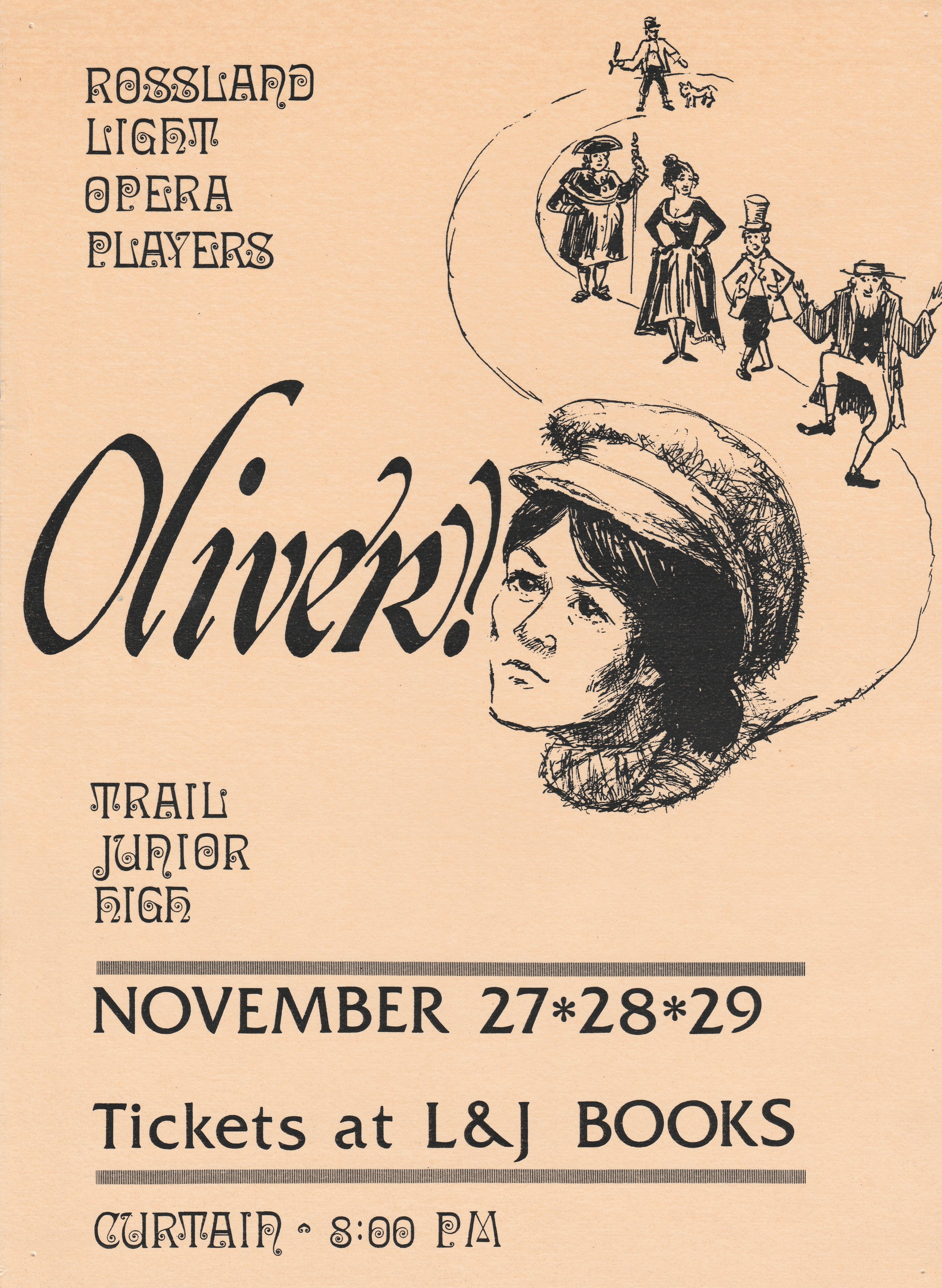
RLOP’s production of Lionel Bart’s hit musical “Oliver” (based on the story of Dickens’ Oliver Twist) was a big hit with local audiences in 1980 and great fund-raiser for RLOP finances. George played Mr. Bumble, whose songs included “Boy for Sale”, while I had a couple of secondary roles. What stands out in my memory of the show is the stellar performances of two local boys — Dean Cristofoli as Oliver and Bobby Gardiner as the Artful Dodger. Dean’s father Ed Cristofoli was a member of the the famous Trail Smoke Eaters hockey team that won the world championship in 1961.
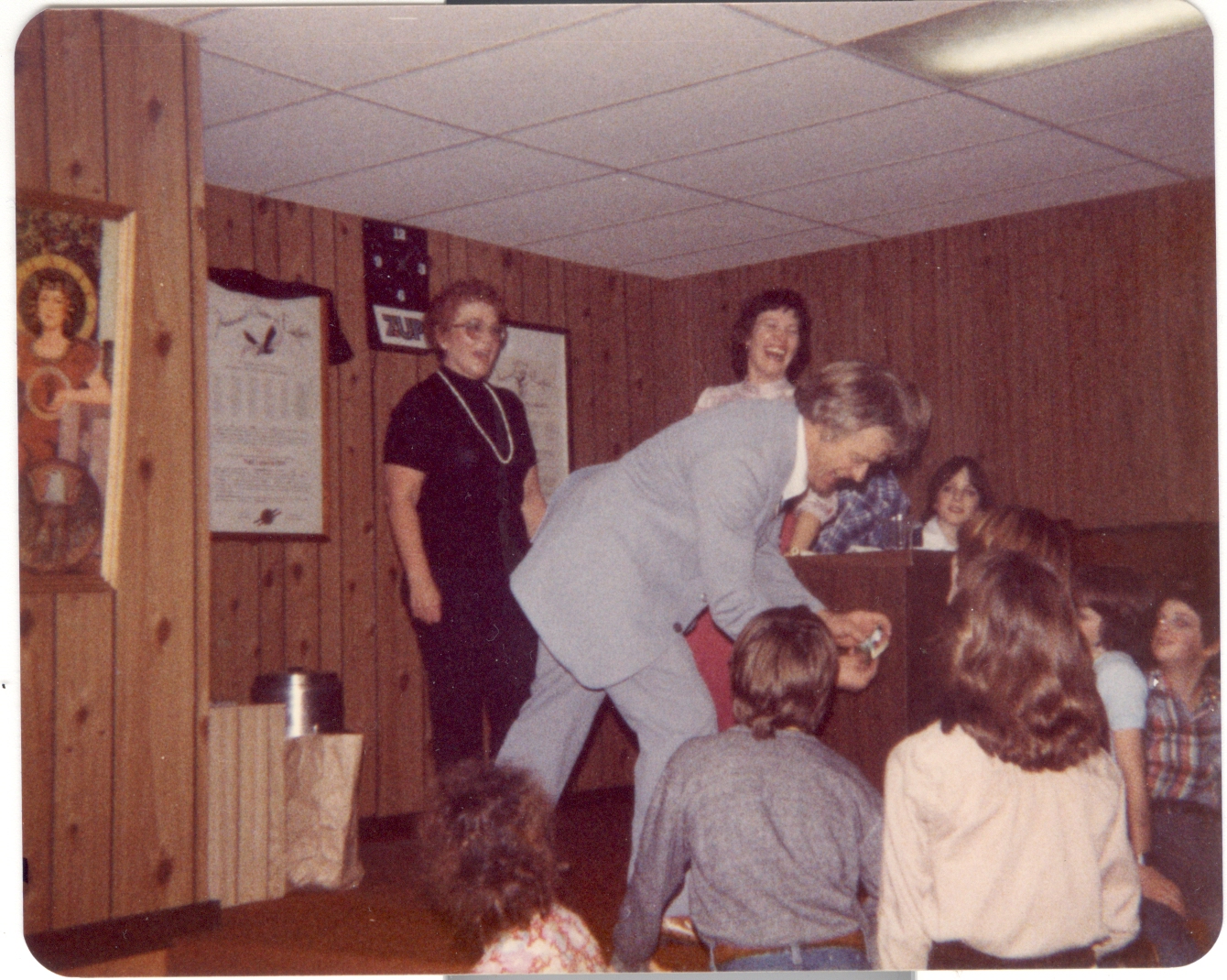
George Bourchier (in blue suit) makes a fun presentation at the cast party following the performances of the musical “Oliver” in 1980. George played the role of Mr. Bumble in the RLOP production, including a memorable solo “Boy for Sale”.1981
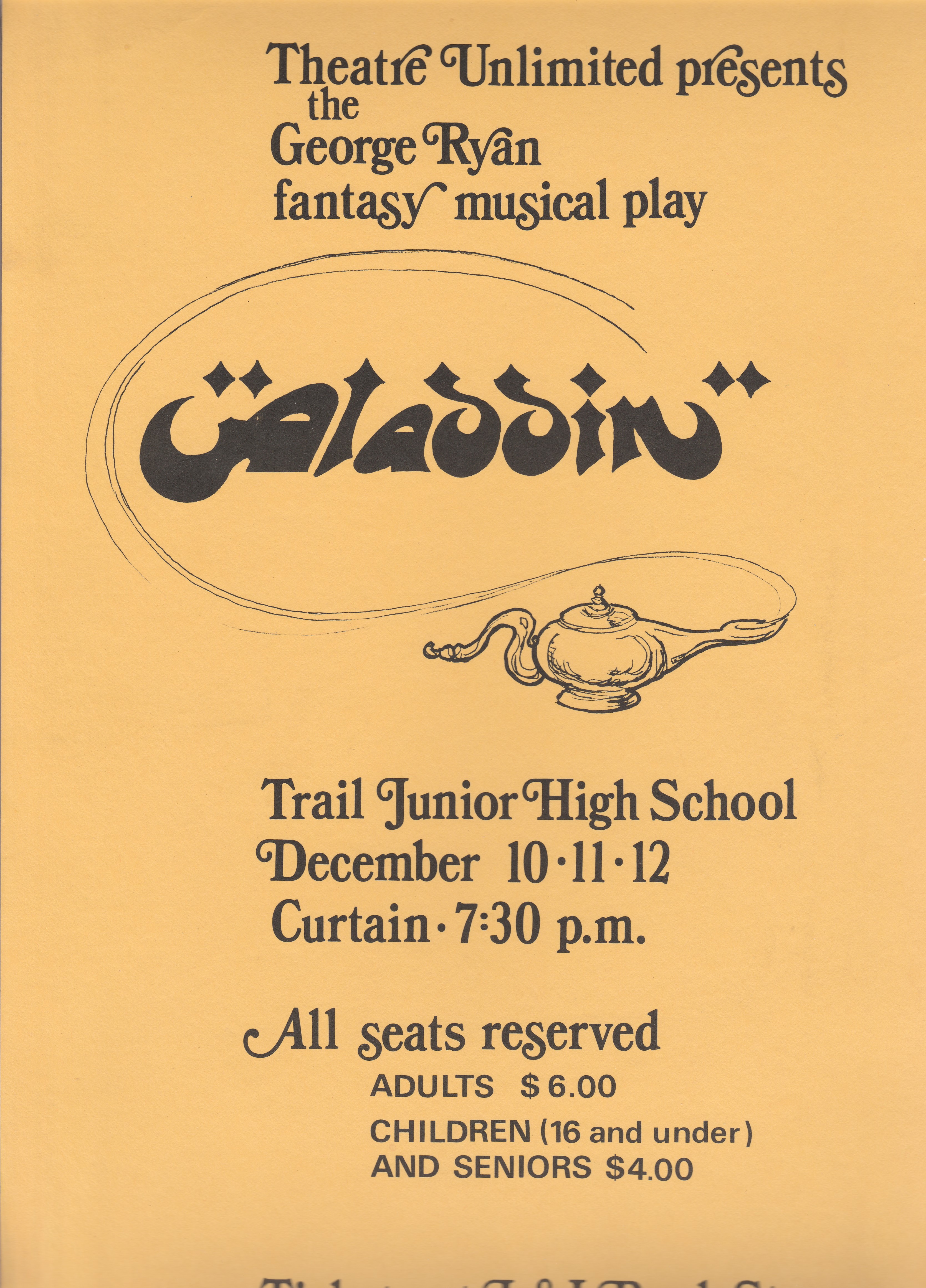
Circumstances resulted in this 1981 show being produced by Trail Theatre Unlimited, with original music by George Ryan. Aside from once again producing great artwork for the posters and programs, George was not a stage performer in this show. I had a couple of minor roles as well singing in the men’s chorus.
1981
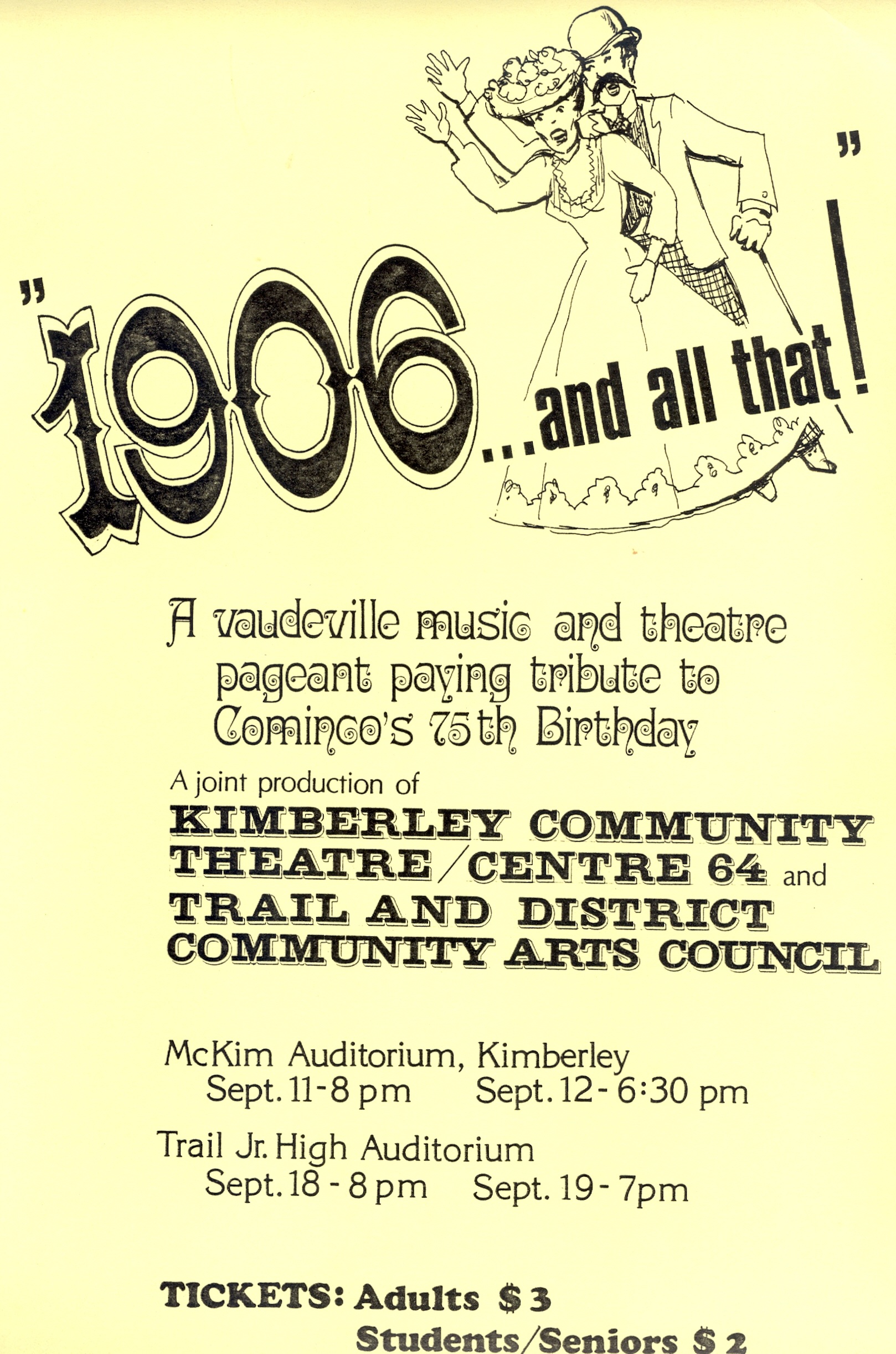
This was a special show by arts and theatre enthusiasts in Trail and Kimberley performed in celebration of Cominco’s 75th anniversary in 1981. I played Cominco’s founding president, Walter Aldridge. At this time, there were about 3,000 Cominco employees at the company’s Sullivan Mine in Kimberley, and 5,000 employees at the Trail Smelter, as the company was going through a very substation $500 million modernization and expansion program. The Sullivan Mine shut down in the year 2000, and Cominco’s Trail operations today have slightly more than 1,000 employees.
1982
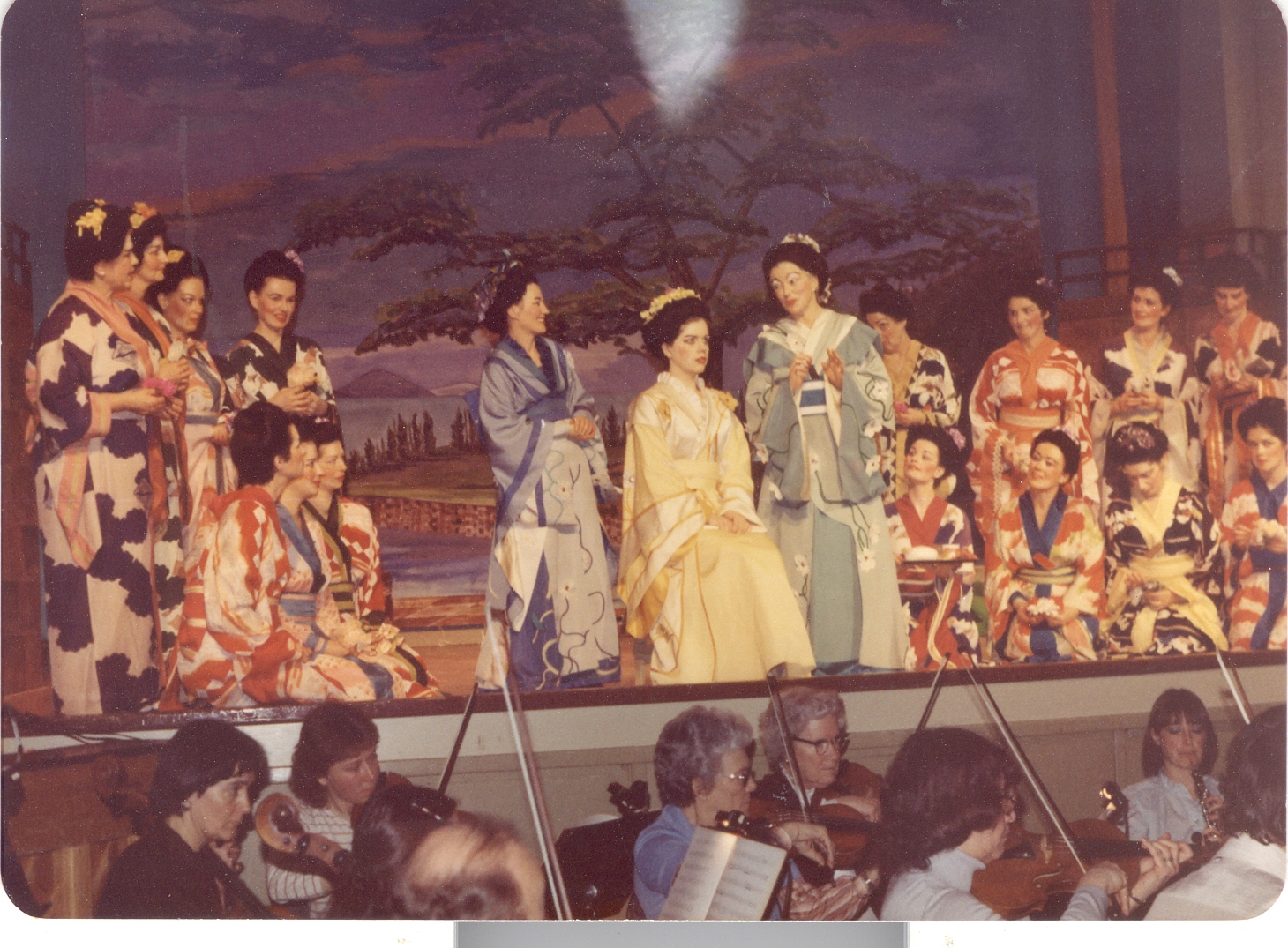
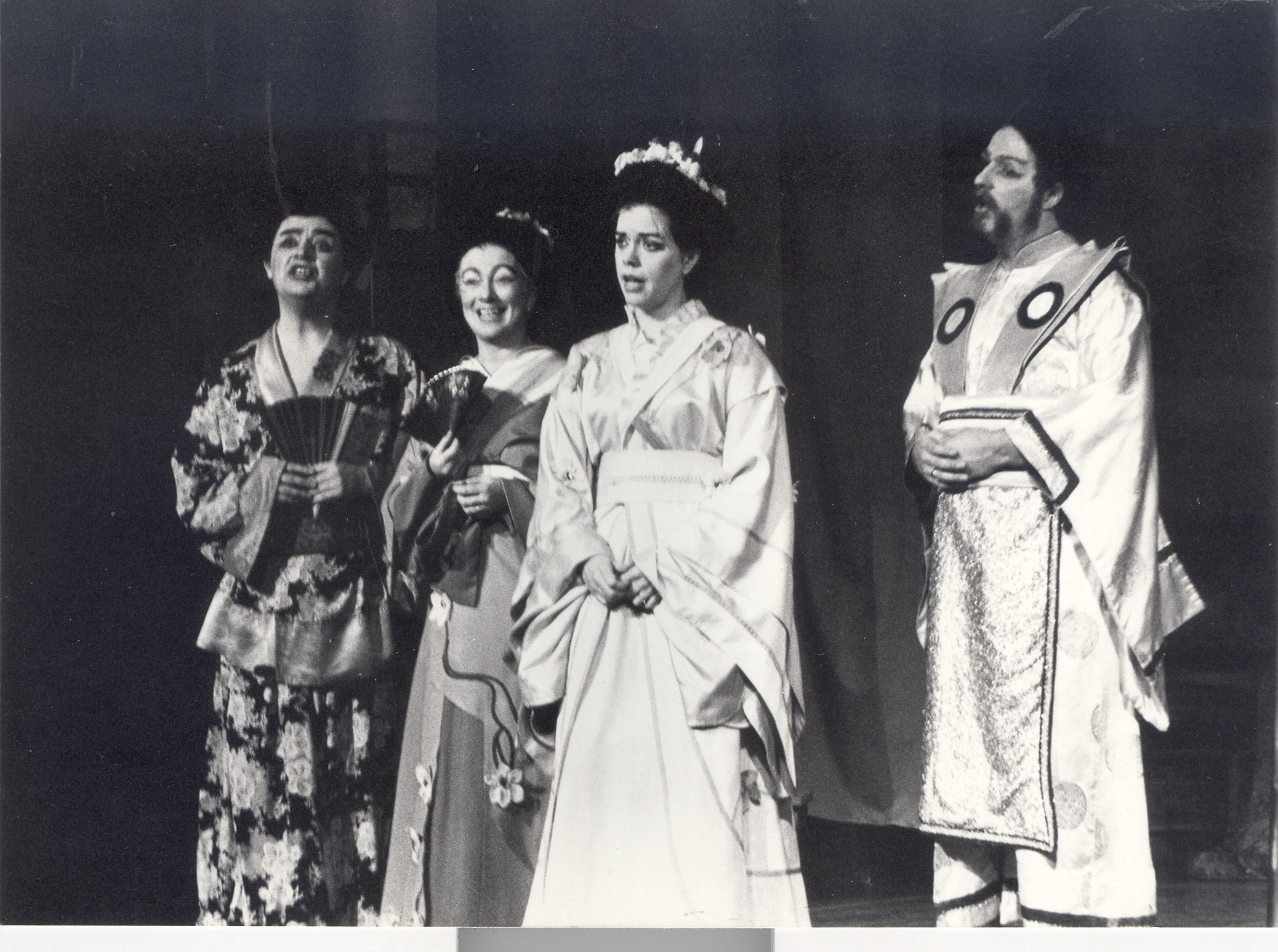
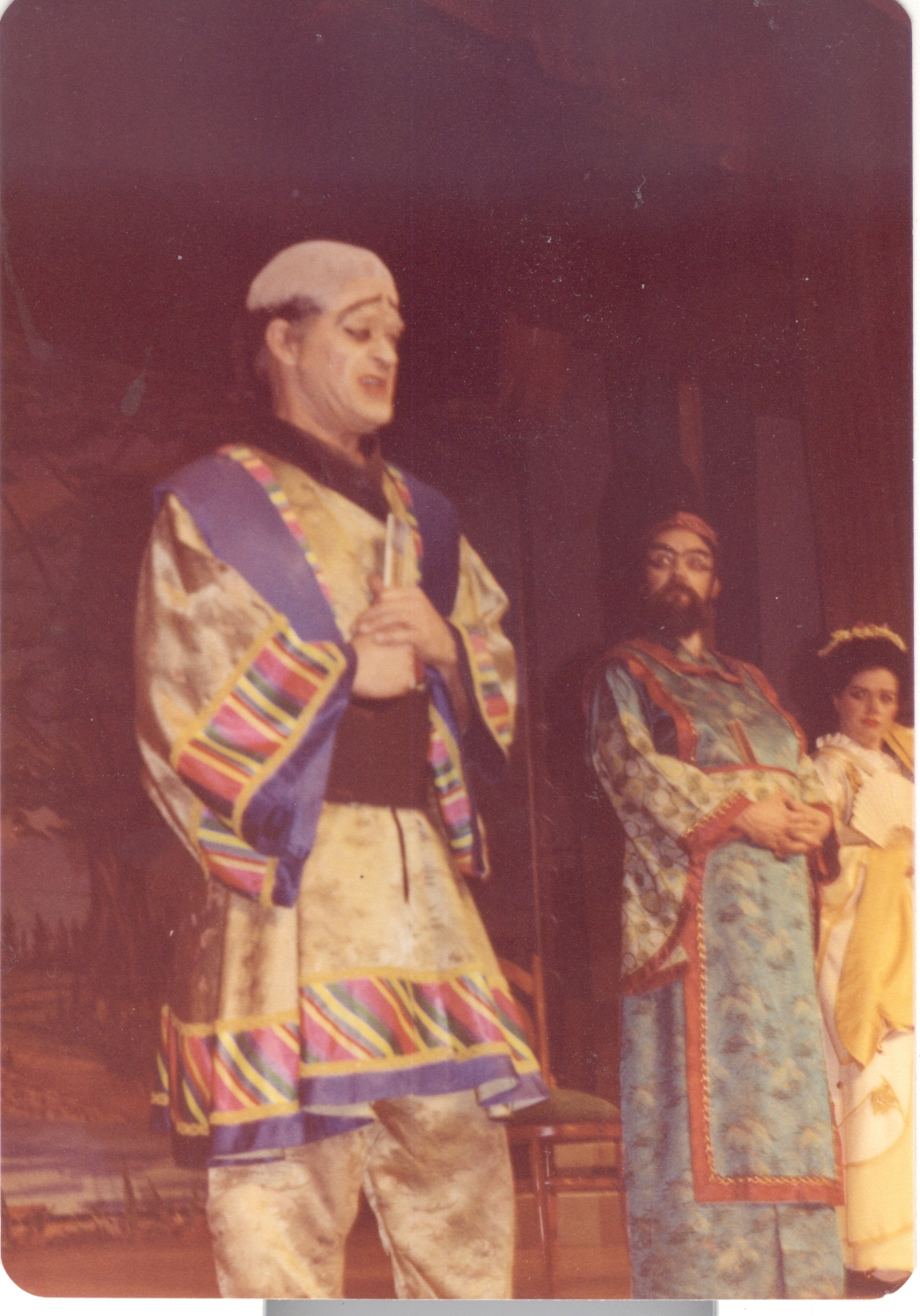
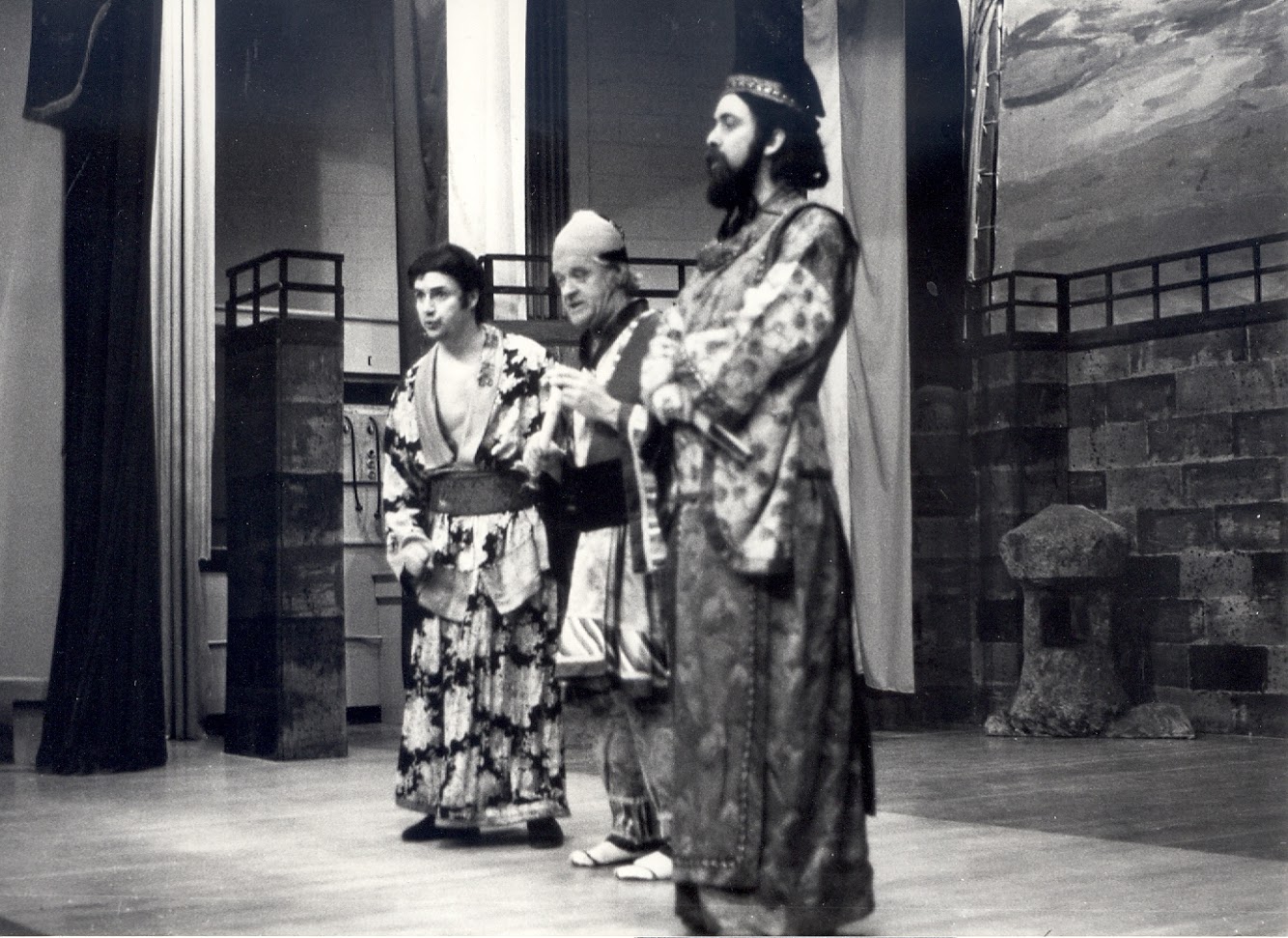
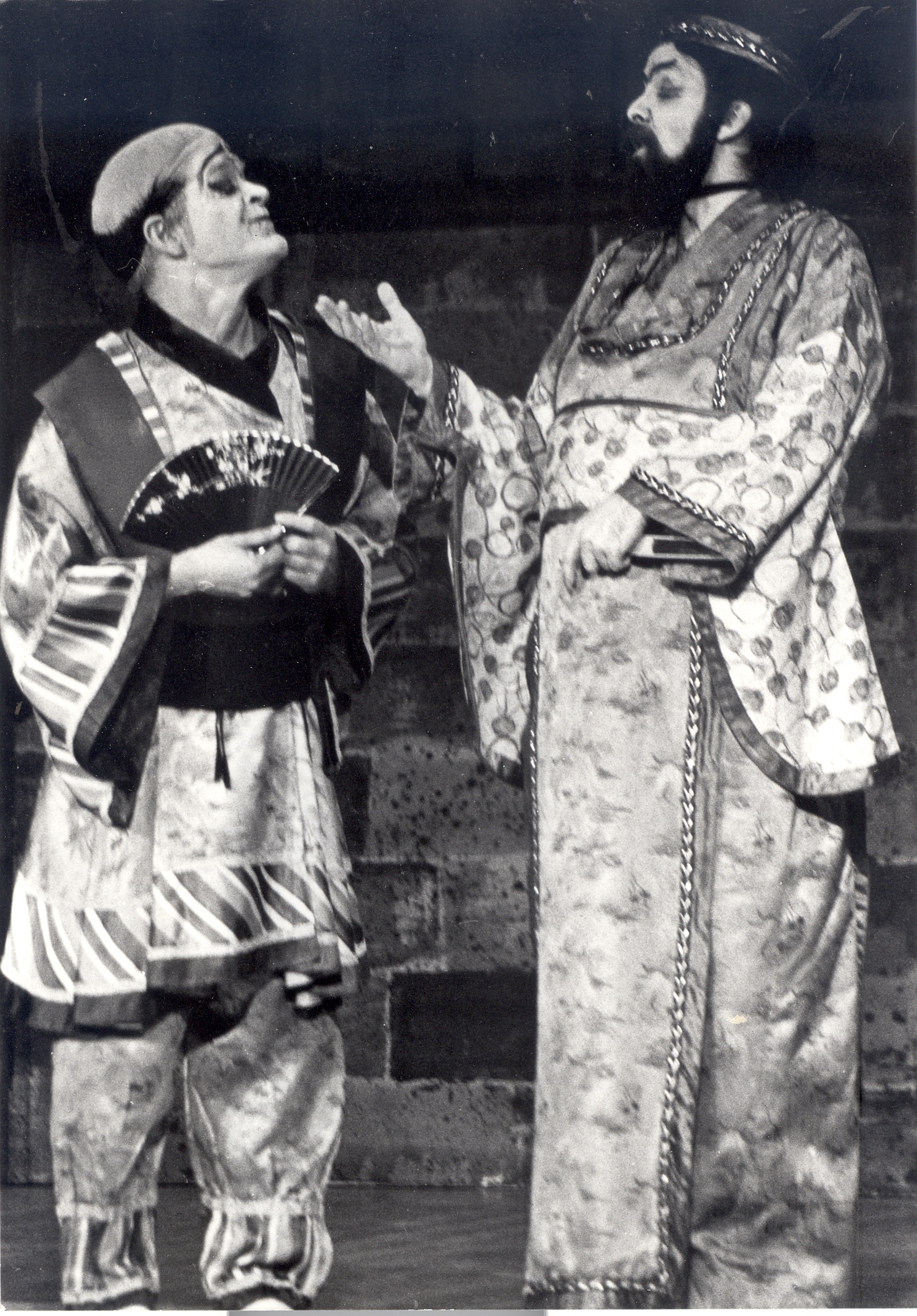
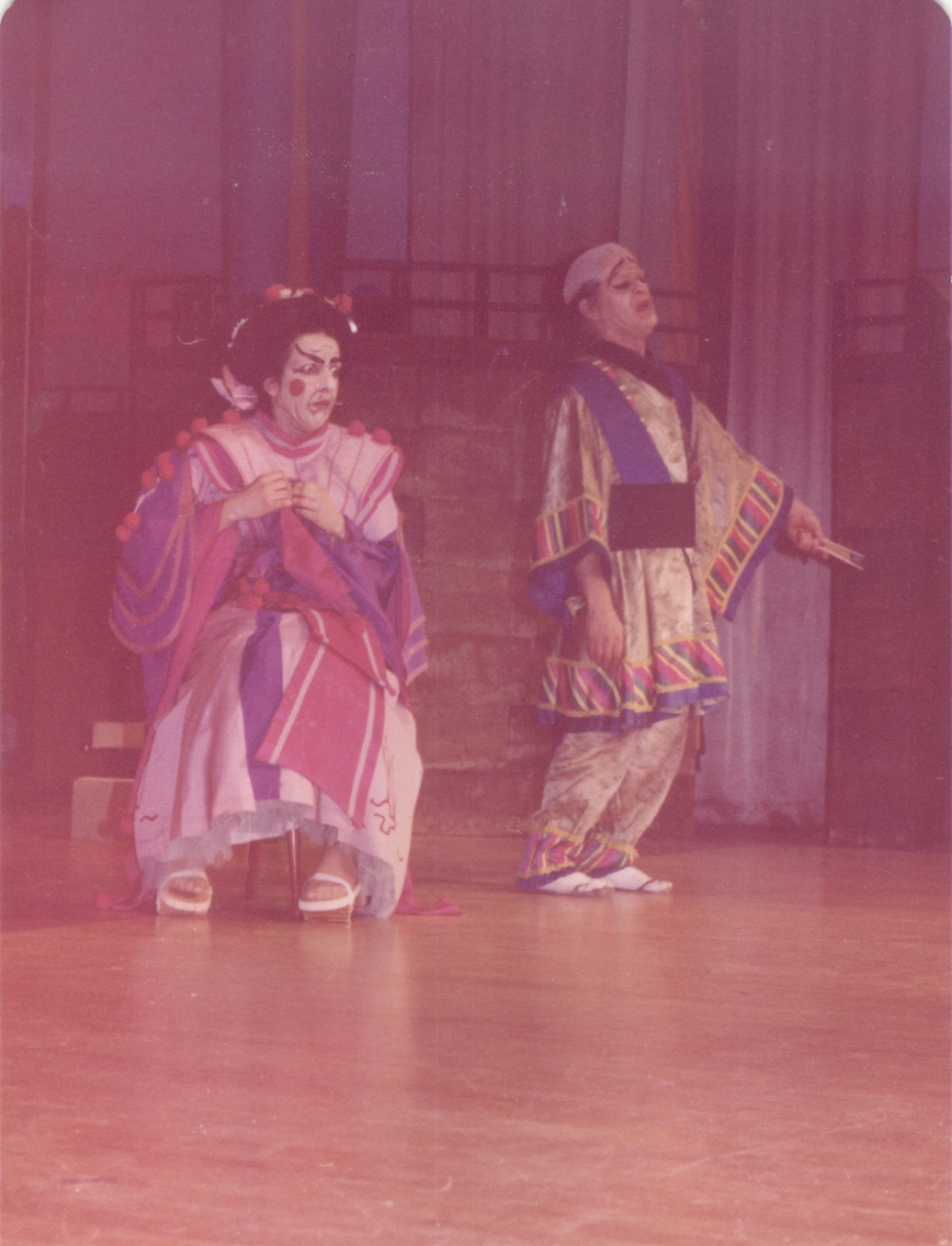
George Bourchier played the lead role of Koko in the 1982 production of “The Mikado”. I had a secondary role as Pish-Tush, which included one solo (“Our Great Mikado) and two trios, including “I am So Proud” with George Bourchier and Barry Glendinning. Here are some photos from the show. Babs Bourchier played Pitti-Sing, one of the Three Little Maids.
Above, in photo taken during the dress rehearsal for the 1980 “Mikado” production, are the Three Little Maids and members of the Ladies Chorus, with part of the orchestra in the foreground. The lead character Yum-Yum is seated in yellow, with Babs Bourchier as Pitti-Sing on her right, and Eleanor Honey as Peep-Bo on her left.From the RLOP “Mikado” show dress rehearsal. From left: Sam McBride as Pish-Tush, Babs Bourchier as Pitti-Sing, Rebecca Sims as Yum-Yum, and Brian Schroeder as Nanki-Poo.
George Bourchier as Koko in 1982 RLOP “Mikado” show. Beside him are Barry Glendinning as Pooh-Bah, and Rebecca Sims as Yum-Yum.
From the “I am So Proud” trio, from left to right, Sam McBride as Pish-Tush, George Bourchier as Koko, and Barry Glendinning as Pooh-Bah.
Another conversation between George as Koko and Barry as Pooh-Bah.
In one of the final scenes of the 1982 “Mikado” show, Koko takes on the formidable Katisha character, player by Yolanda McKinley.
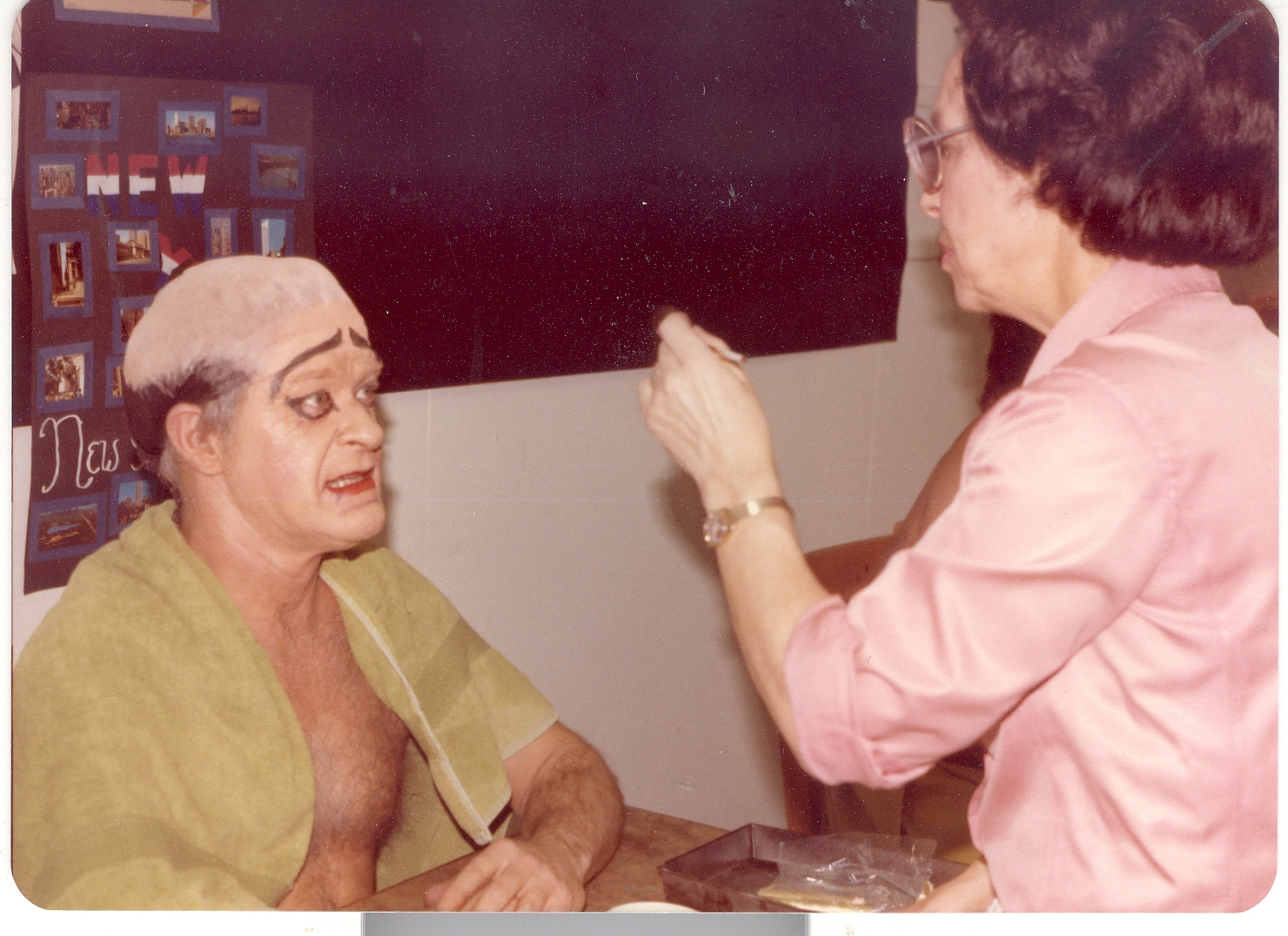
Audrey Millar doing George’s make-up for Koko in RLOP’s 1982 “Mikado” production.
UPDATE of posting, June 23. 2025: You can see George Bourchier as the Major General in RLOP’s 1990 production of “Pirates of Penzance”, which was filmed by Shaw TV. Go to You Tube at “Shaw 61 Pirates of Penzance Feb. 24, 1990”. His classic performance of “I am the Very Model of a Modern Major-General” begins at 48:10.
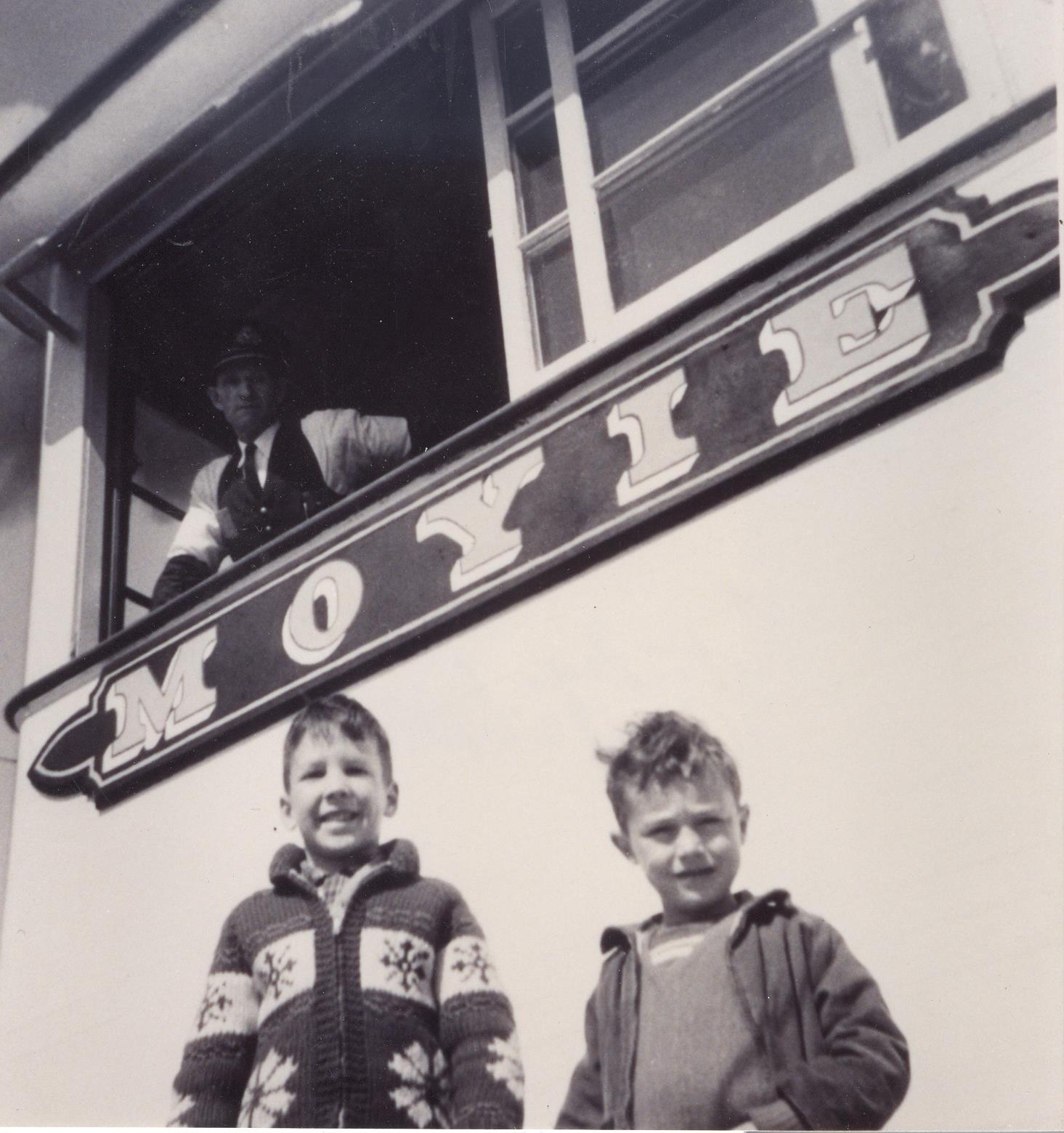
One of my favourite photos from childhood years was taken of me with my cousin Michael Allan (left) and SS Moyie Captain Norm MacLeod on April 23, 1957, in the second-to-last voyage of the Moyie on Kootenay Lake.
Our parents, who rode on the Moyie and other Kootenay sternwheelers many times themselves over the years, knew the trip would be a historic milestone marking the end of an era, which we would enjoy and remember. I remember it was a long day, as the ship went back and forth across the lake many times. It may have been a little shorter than the historic last trip of the last sternwheeler service on the lake on April 27, 1957, reported to have made 13 stops in nine hours. Michael remembers us running around the deck as kids do, probably getting yelled at a few times. Most memorable for me was the cheers and applause of crowds of people at each stop as we were arriving, and as we departed.
Sam McBride (right) , age 5, beside cousin Michael Allan, age 6, with Norman MacLeod at the wheel of the SS Moyie, during the venerable ship’s second-to-last run on Kootenay Lake on April 23, 1957. Photo taken by Michael’s mother Ruth Allan, who sent me a copy of the photo in the early 1990s.
Michael’s grandmother Lillian Maude Allan (1891-1962) frequently travelled on the SS Moyie for several years in the 1940s when she worked as a school teacher in Lardeau and Argenta — two communities at the north end of Kootenay Lake which at the time were not connected by road and could only be accessed by water. Lil was a younger sister of my grandmother Winnifred Mae McBride (1889-1960). Their parents were Jim Foote and Edith James Foote.
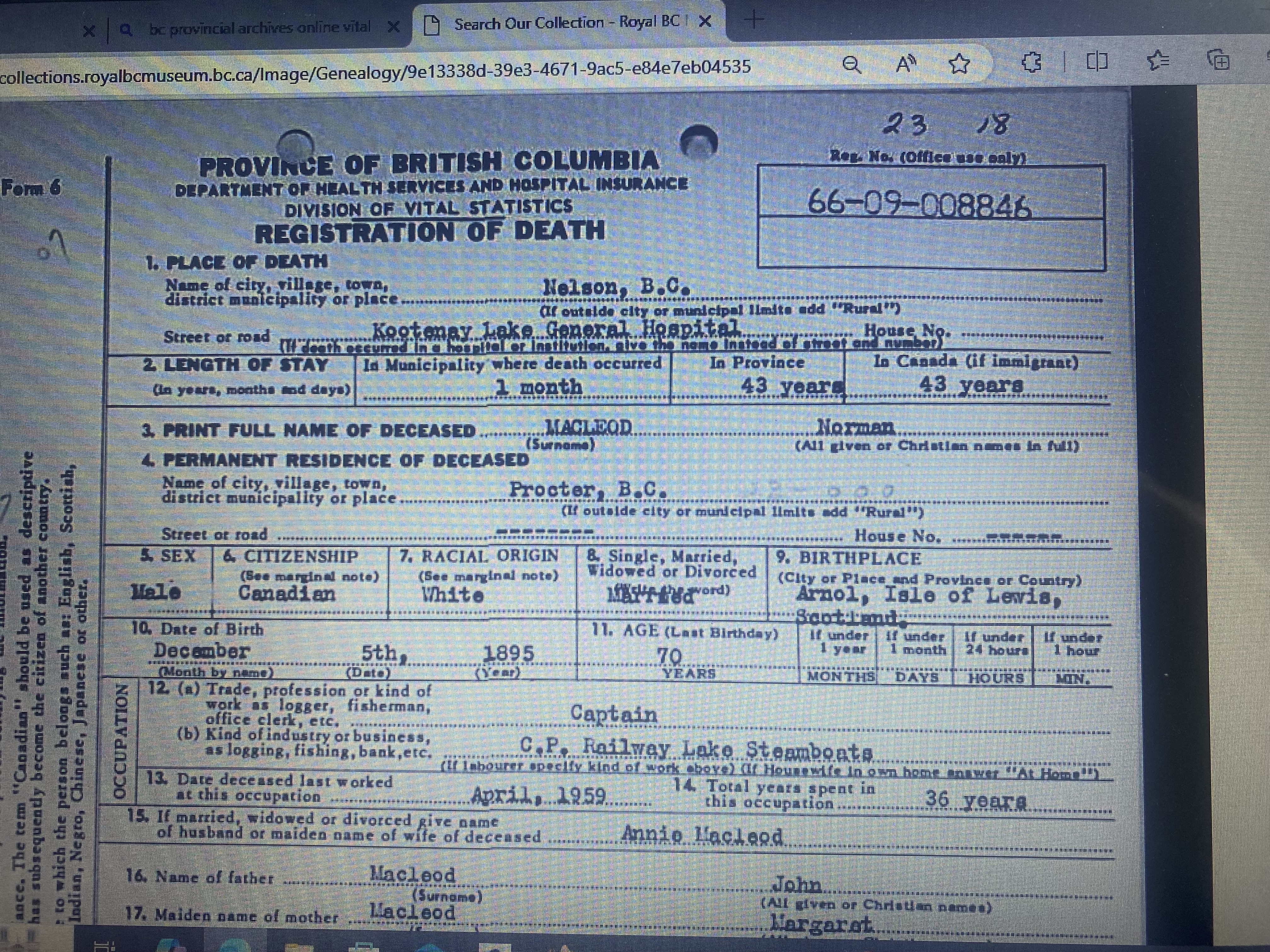
Someone asked me recently what I knew about the captain we posed with. I did not know much about him, so did some online research of provincial vital statistic records, and of the Nelson Daily News, as well as books and visitor information from the Kootenay Lake Historical Society. Other versions of the spelling of his last name are McLeod and Macleod.
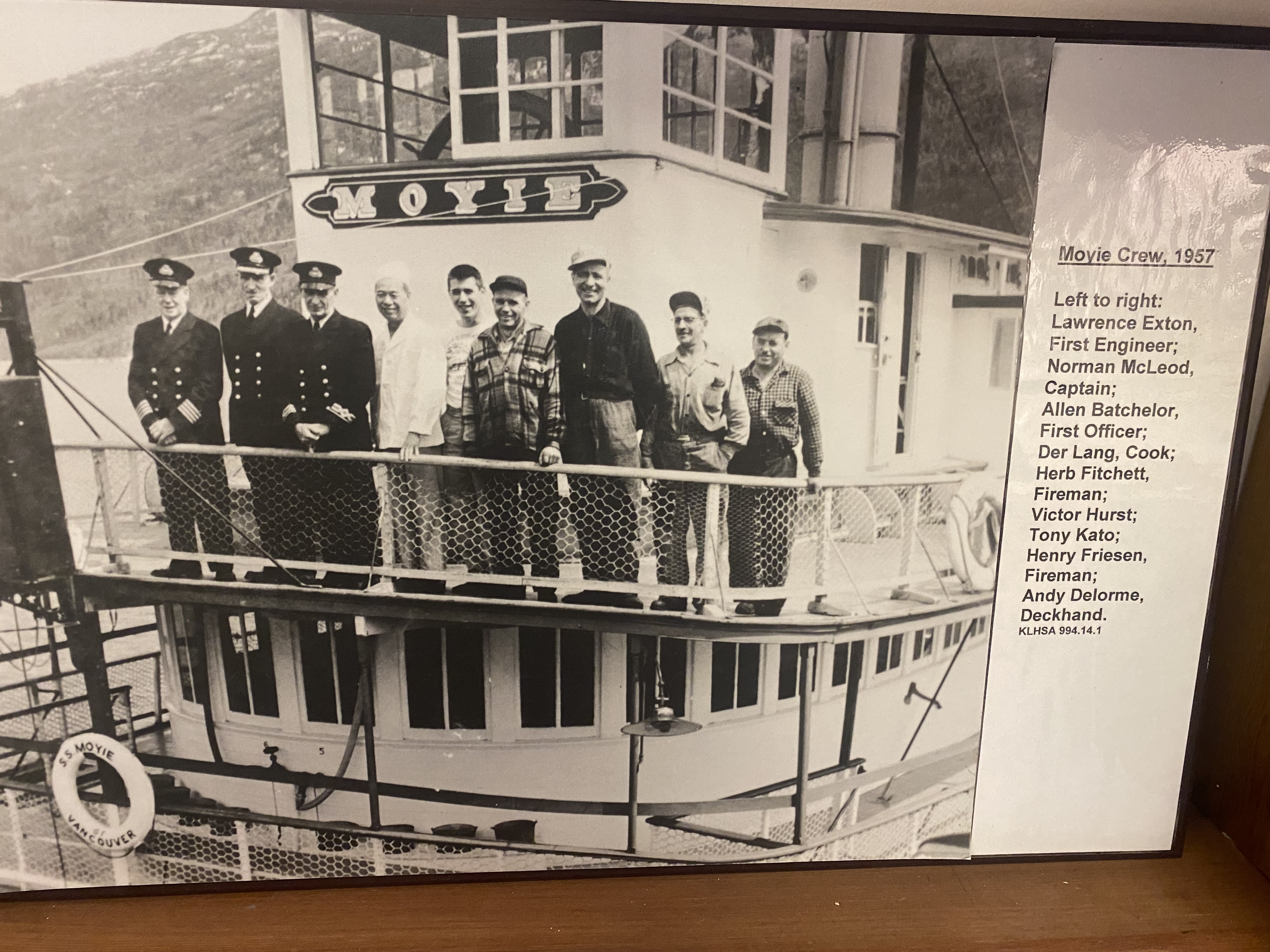
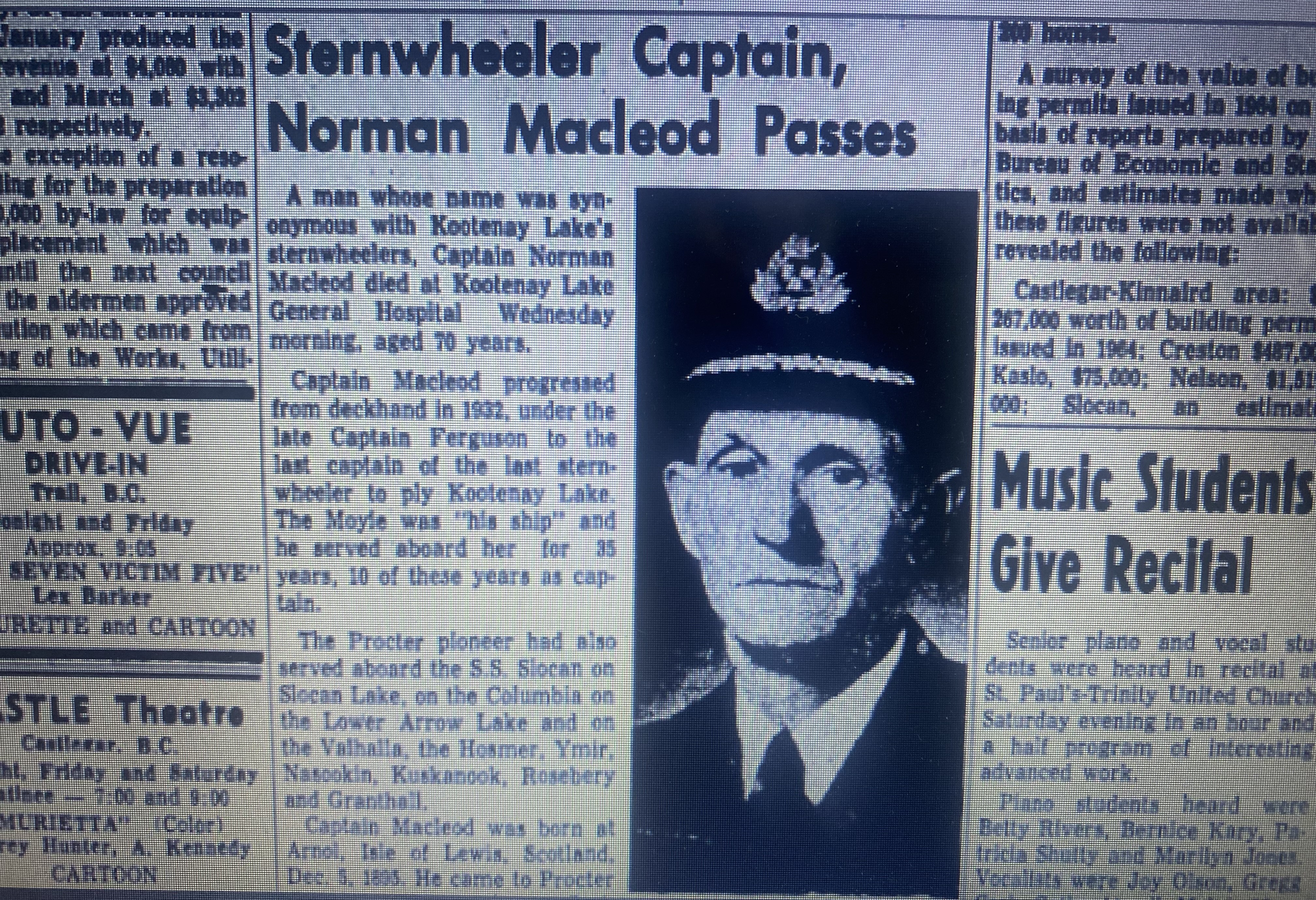
Fascinating to see that MacLeod served on the Moyie for 35 years, the last 10 as captain. He was born in 1895 in Arnol in the distant Isle of Lewis in the Hebrides off the northwest coast of Scotland. Both his parents were also born in Arnol. He served in the Royal Navy reserve in World War One, and came to Canada in 1923, settling in Procter, about 22 miles from Nelson, British Columbia on the West Arm of Kootenay Lake. He returned to Scotland in 1928 to marry Annie MacLeod, who returned with him to Procter, where they raised their family that would include son Donald Macleod and daughter Christine Macleod.
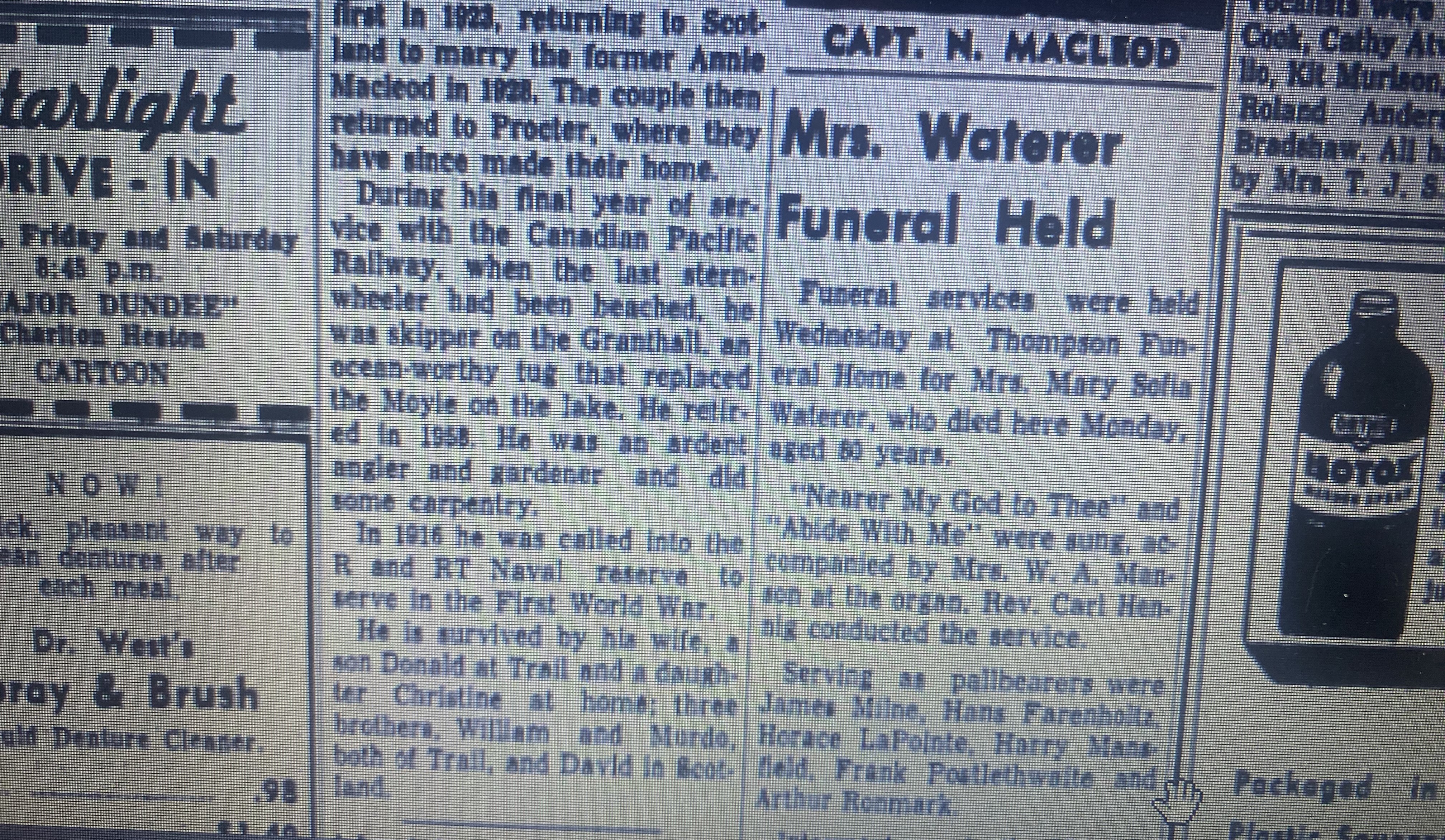
After the Moyie, Norman worked as captain of the tug Granthall before retiring from the CP Railway Steamboat Service in 1959. He died at age 70 in Kootenay Lake General Hospital in Nelson on June 8, 1966.
More details of his life are in the June 9, 1966 Daily News obituary story attached here. Also in “Kootenay Outlet Reflections: History of Proctor, Longbeach, Balfour and Queens Bay”, published 1988, and 2013 with updates.
Captain MacLeod tends to look quite glum in photos, but you can sense how much he loved the Moyie, and took pride in the ship’s remarkable record of reliability and safety through many decades.
The “Kootenay Outlet Reflections” local history book written in the late 1980s notes that three of Norman’s brothers and two of Annie’s brothers left Scotland to join them in Canada. Norman’s brother John MacLeod worked on the SS Nasookin when she was the B.C government ferry crossing Kootenay Lake between Fraser’s Landing near Balfour to Gray Creek on the east shore. After Nasookin was replaced as the lake ferry by MV Anscomb in 1946 John was Senior Captain of the Anscomb until retiring in 1956. Norman’s other brothers Murdo and Bill worked many years for the Consolidated Mining and Smelting Company (Cominco) in Trail. In this period Cominco with its giant smelting complex in Trail was majority owned by the CPR.
Annie’s brother Malcom MacLeod worked on the Moyie and some of the other boats before returning to Scotland. Her brother John MacLeod worked on the boats for a while and then was employed by Cominco in Trail until his retirement.
For many years members of the MacLeod clan in Trail were very active bagpipers in the Trail Pipe Band, keeping up the family’s Scottish heritage.
Born in 1929, Norman and Annie’s son Donald MacLeod moved to Trail, where he was proud to have worked for Cominco for 45 years. He died in Trail hospital on May 4, 2015. His sister Christine Peggy MacLeod was born in Nelson in 1940. For more than 25 years Christine was Procter’s post mistress, with the post office and boxes situated on the front deck attached to the MacLeod family home. She continued living in the family home in Procter until her health necessitated a move to Mountain Lakes Seniors Community in Nelson, where she died on September 8, 2020.
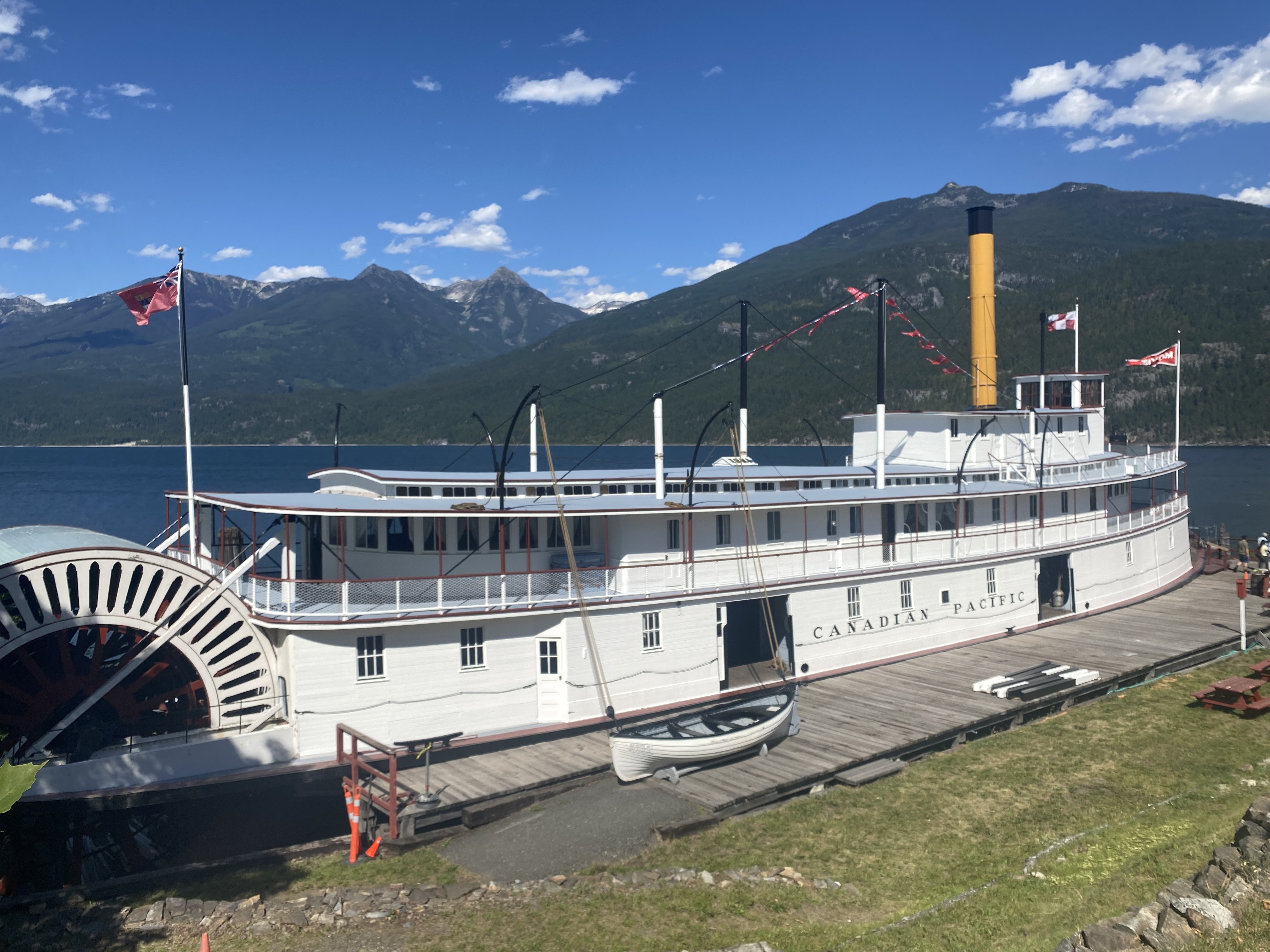
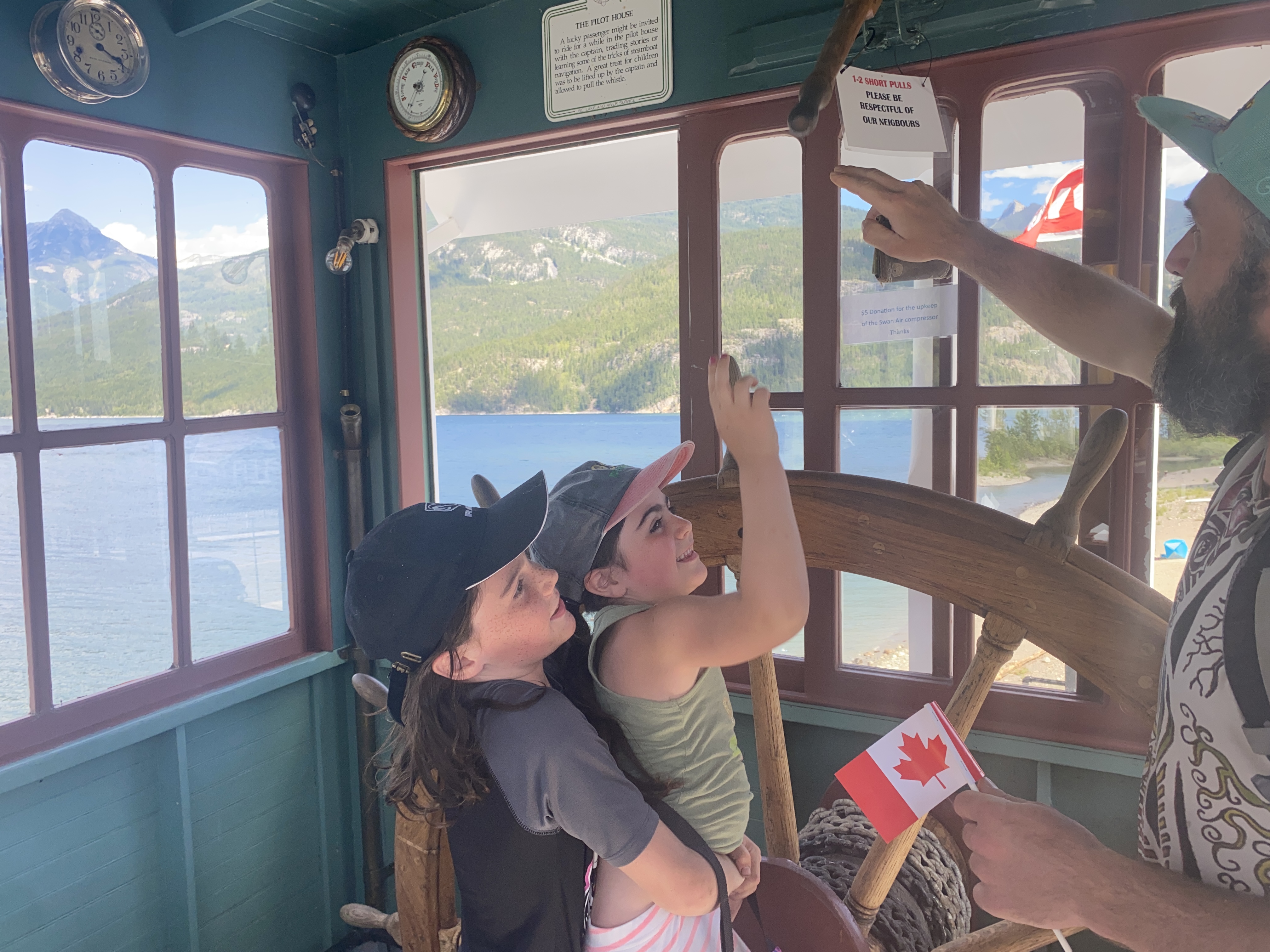
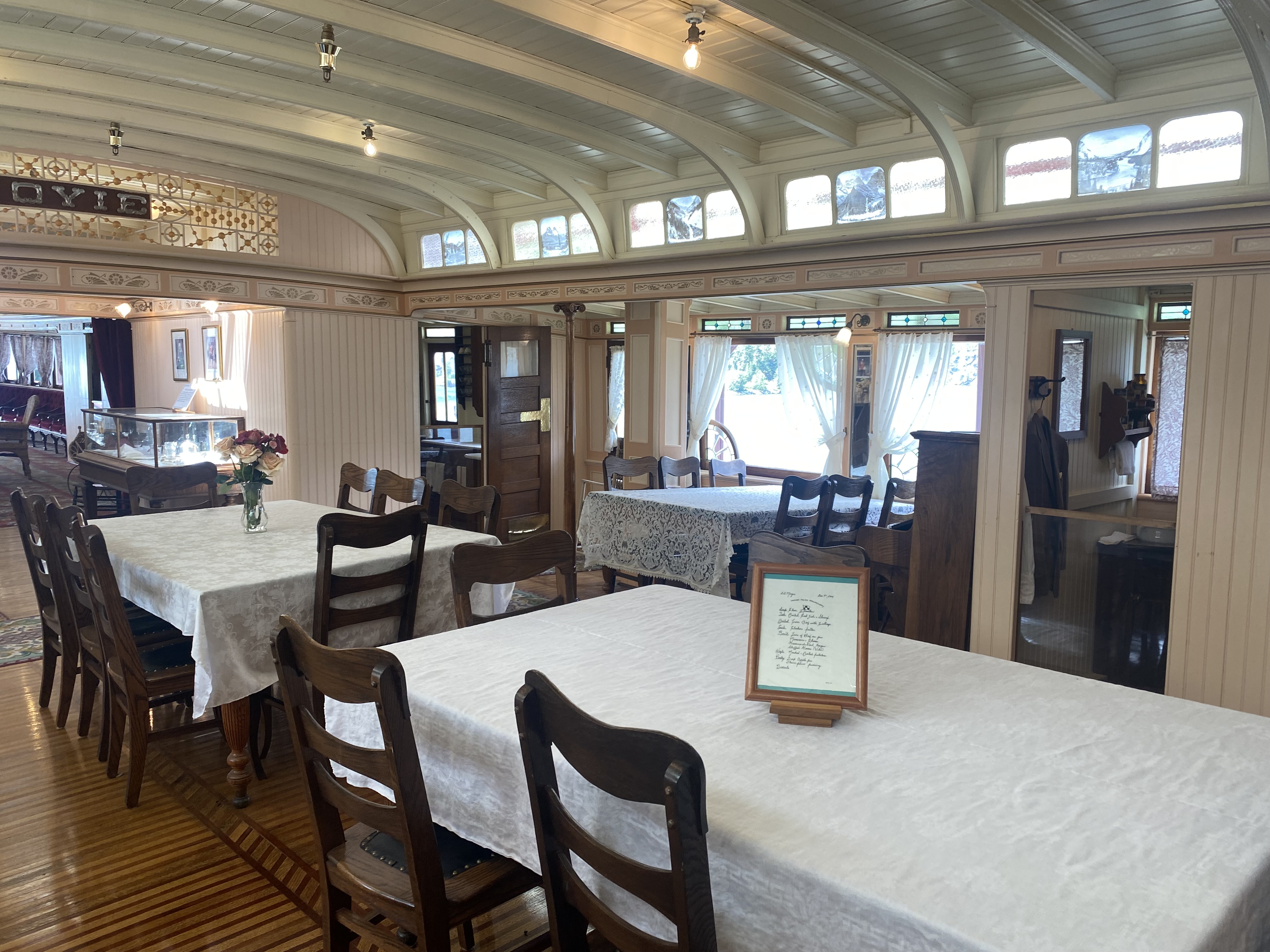
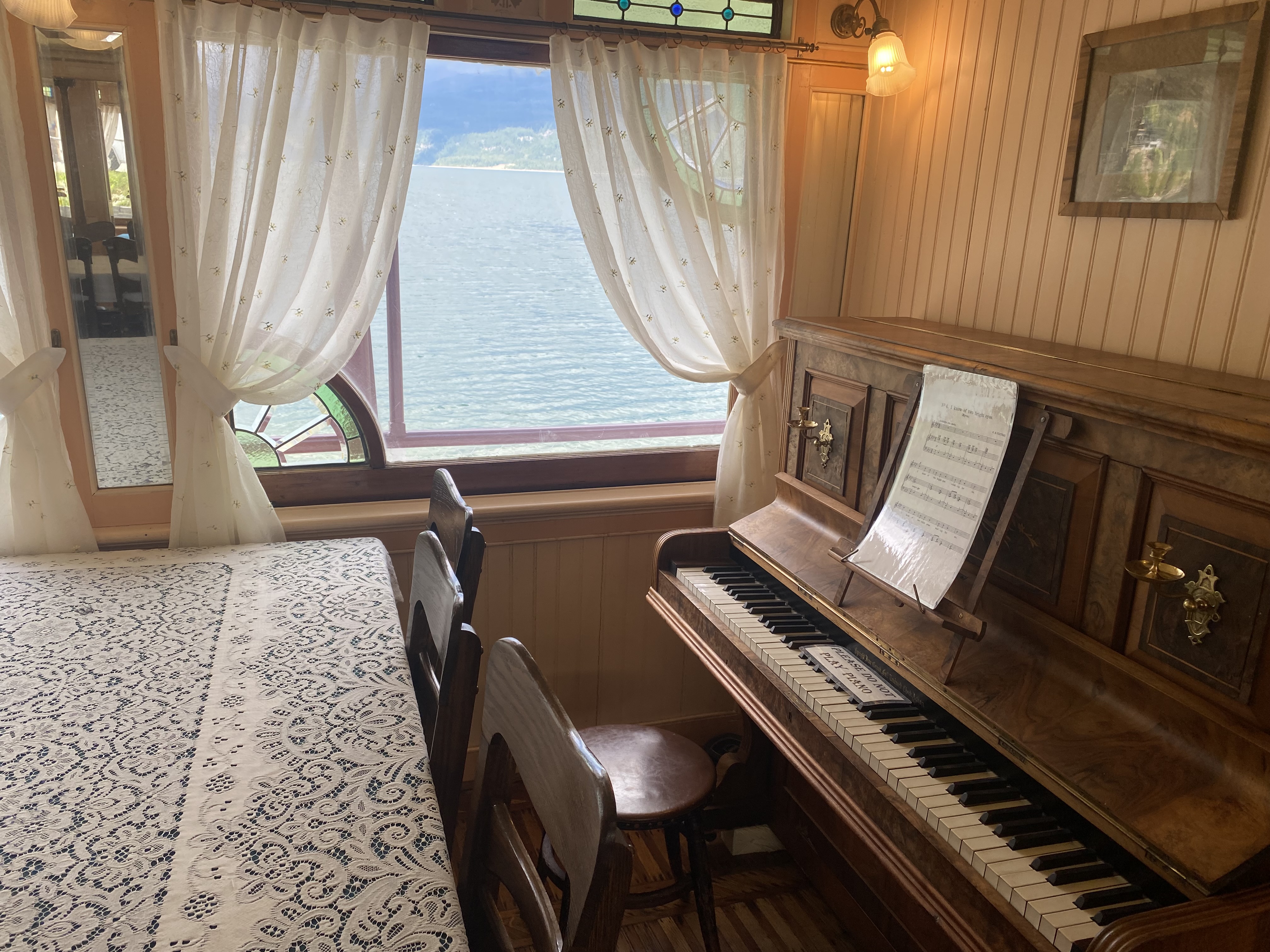
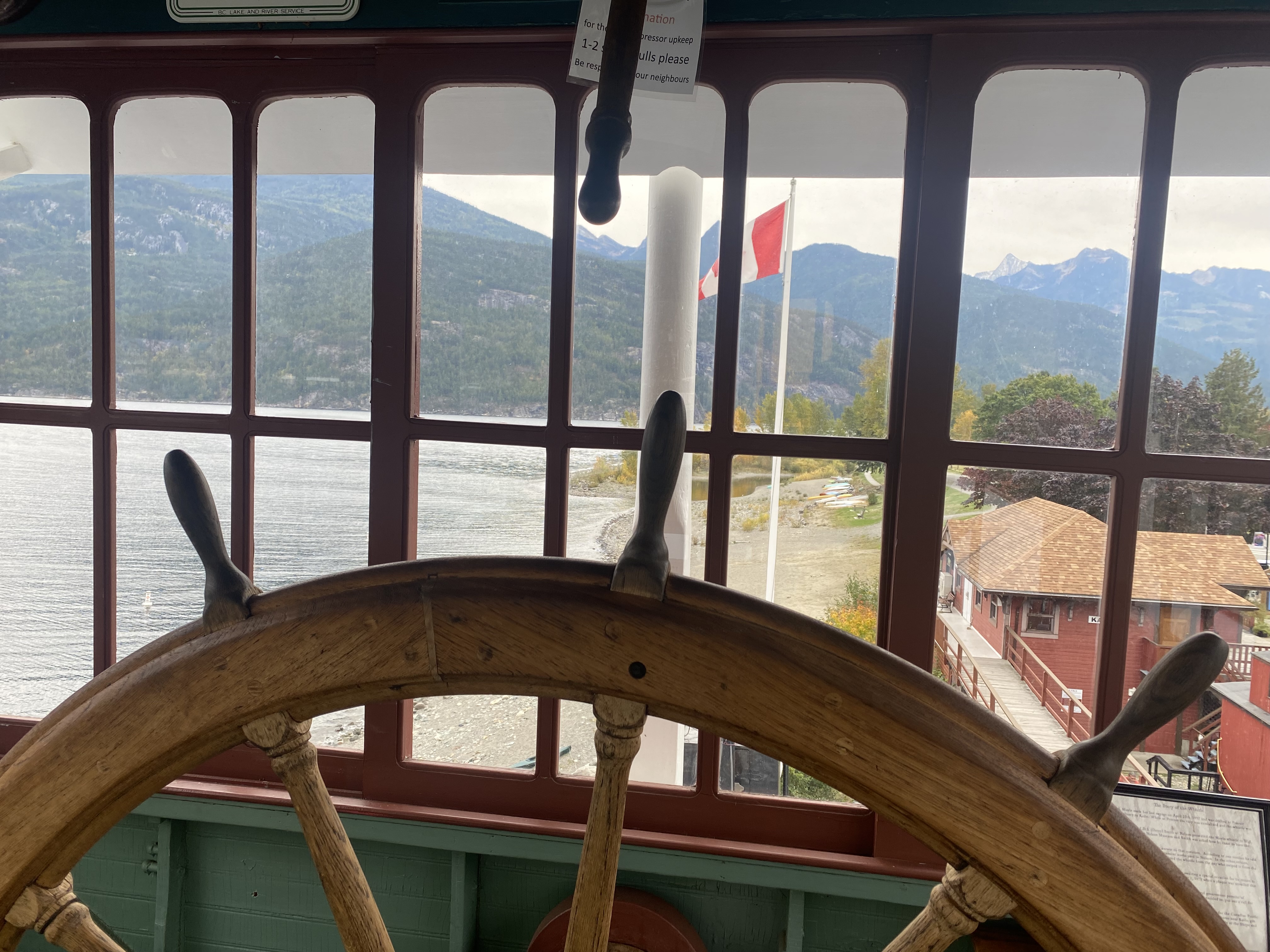
Information on Captain MacLeod in his 1966 death certificate.Nelson Daily News June 9, 1966 report on death of Capt. Norman MacLeod.Today the SS Moyie is a National Historic Site safely secured on the beach of Kaslo Bay. It benefits from ongoing programs of restoration and preservation.On Canada Day, July 1, 2024, this family was among the visitors to the Moyie wheelhouse, where Captain Norm MacLeod presided from the early 1930s until the Moyie concluded service in April 1957.The stylish interior of SS Moyie, July 1, 2024View out from the Moyie captain’s wheel. 2024.
In early January 1977 the Whitehorse Drama Club met to consider options for a spring production.
Someone suggested doing Agatha Christie’s “The Mousetrap”, as it was setting records as the world’s longest-running play in London. The group agreed that it would be a great show to put on, but it was thought unlikely that the performance rights would be available for an amateur club like ours. When we found out the play was unavailable in England, but available for rent in other countries, we got quite excited about doing it.
Having seen the show in London in ’75, I knew the show was do-able for us because there was only one set and eight characters.
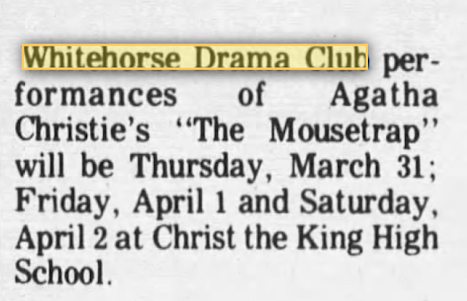
Whitehorse Star article on the production.
poster and program cover design forby Lottie Hutton for WDC’s “The Mousetrap”
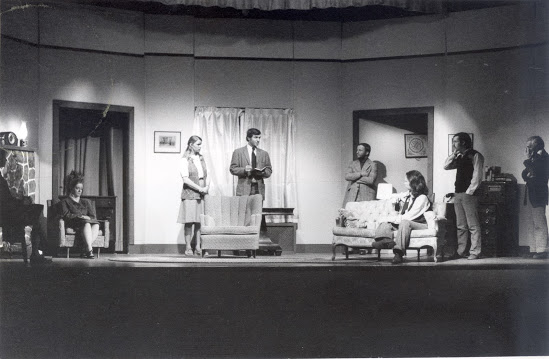
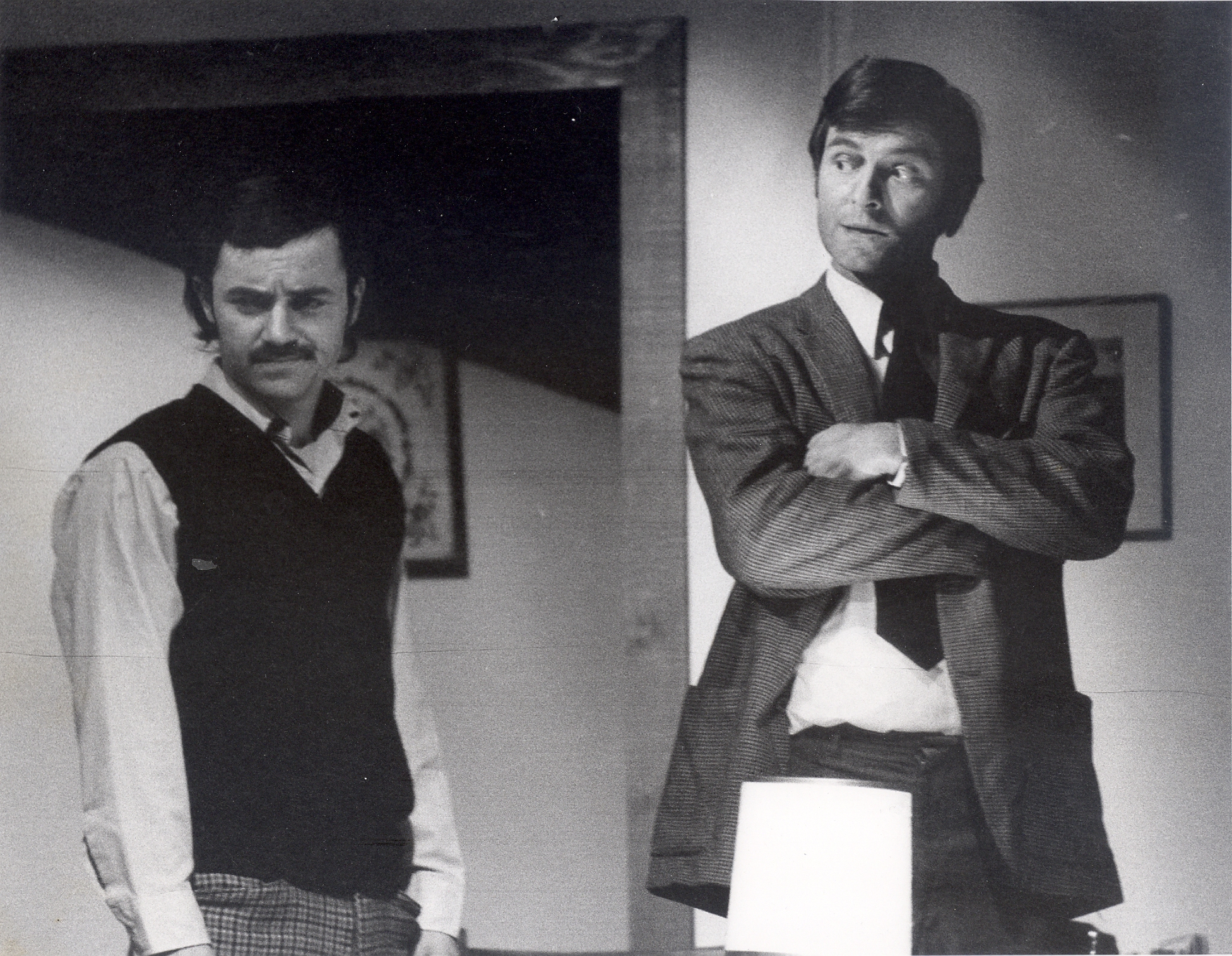
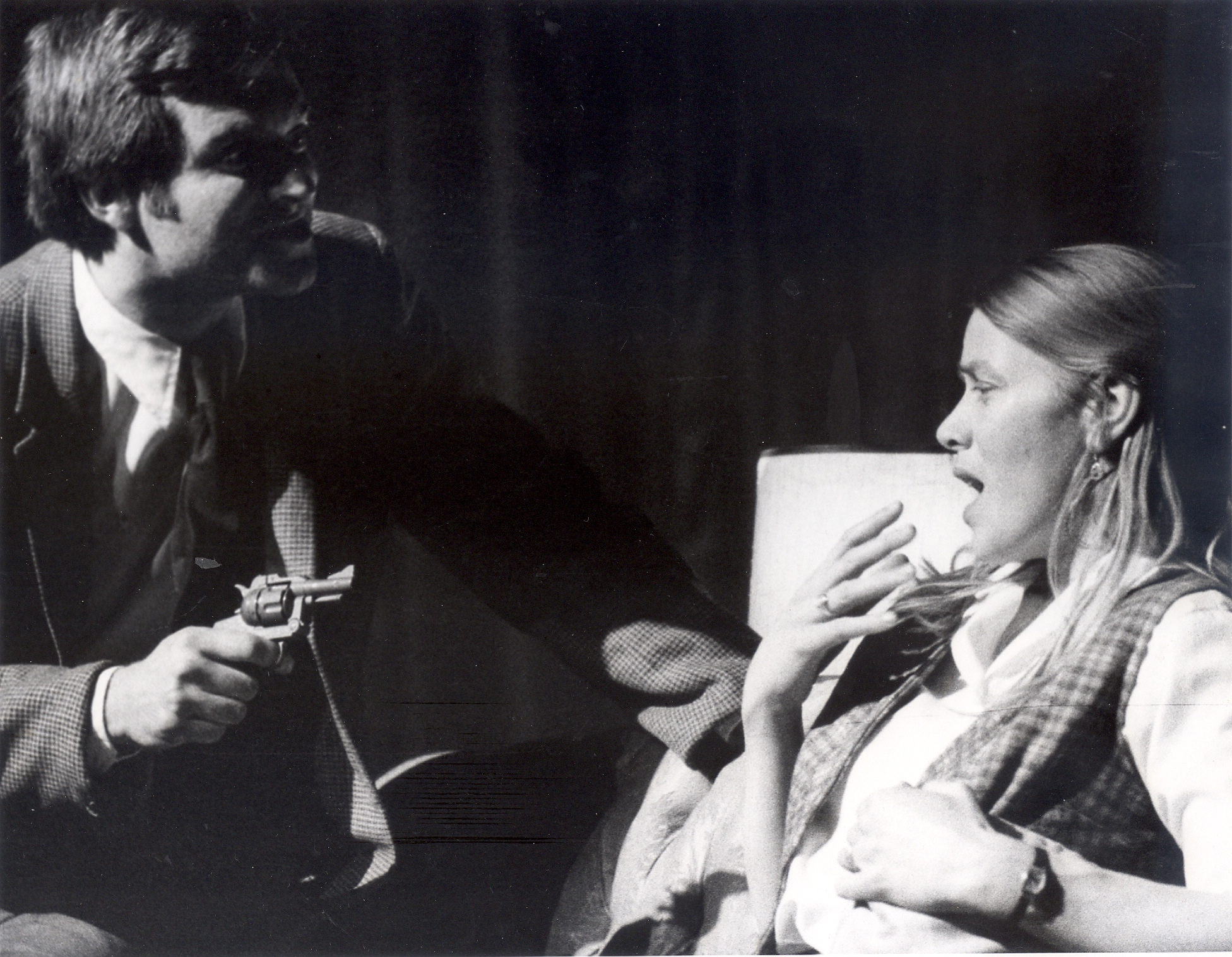
Scenes from our spring production of “The Mousetrap”.
Putting on “Mousetrap” was certainly a thrill for all of us at the Whitehorse Drama Club. There were large, enthusiastic and appreciative audiences for the three-show run.
A couple of months later I was offered a higher-level job by Cominco Ltd. in Trail, B.C., where my parents and large extended family lived, just an hour’s drive from my boyhood home of Nelson.
After presenting the dark, haunting “Veronica’s Room” with adult situations in October 1976, the Whitehorse Drama Club thought it would be good to do something kids would enjoy.
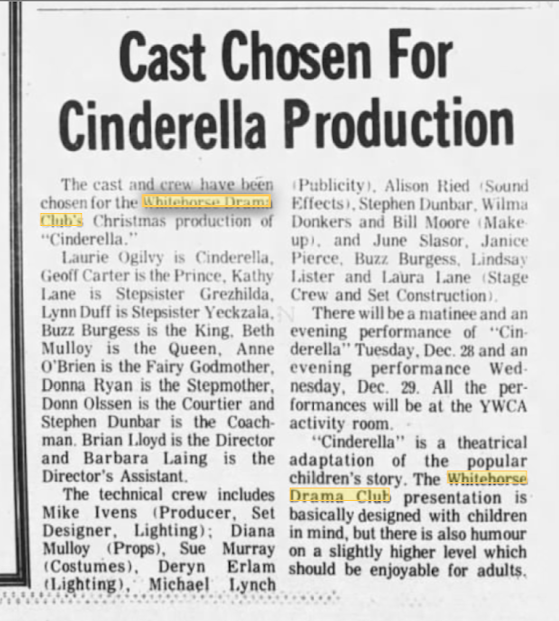
The idea came forward to do a Cinderella play as a Christmas show. Then we were surprised that we could not find a published Cinderella script that we could rent for use in the type of show we wanted to do. In desperation, I offered to try writing a script myself. Using my home typewriter and office typewriter for writing different sections of the play, I got a draft script. Other club members helped in re-typing it with revisions we decided on (this was about seven years before computerized word processing became available).
For the auditions, we welcomed the general public as well as local school students. I was very pleased that several of the F.H. Collins High School students who were in the Sourdough Rendezvous Mellerdrammer with me in early 1976 came out for the auditions, including Laurie Ogilvy, who took on the lead role of Cinderella.
I was not going to be able to participate in the performances of the show in December because I was scheduled to visit friends in England and Ireland over the Christmas holiday period. I watched a couple of early rehearsals of the play and was looking forward to seeing the opening night of the show before my vacation, but then I heard that my grandmother Helen Dewdney had died at age 89. She had lived with our family as a widow when I was growing up, and was like a second mother, so I was not going to miss her funeral in Trail. Being away from Whitehorse meant missing the pre-Christmas performance of the show, as well the two performances in the last days of December.
As a result, I never saw the show. And I did not keep a copy of the script. I heard later that the show came together well and the audiences — particularly children — really enjoyed it.
Laurie Ogilvy as Cinderella in scene with Lynn Duff as evil stepsister Yeckzala.
At about the same time, our club heard from CBC Whitehorse radio centre who said they had a script for a radio play, and would we be interested in participating in a recording of it. I remember going to the CBC studio with some other club members to do a one-act play called “The Price of Freedom is the Cost of Living”. I recall the writer/producer was Sally Halliday of CBC Radio, and I spoke the lines of a character named Uncle Tom. I don’t know if the show was ever broadcast, or if the script is in some archives somewhere. I have not found it in internet searches, but it was almost half a century ago. For us at the club, the experience was a fascinating change-of-pace from stage rehearsing and performance,
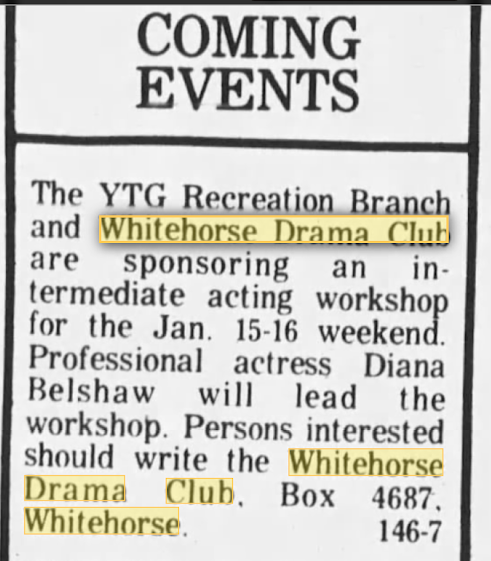
As noted in the newspaper ad above, another project of the drama club at the time was to get some professional training in acting. For this we partnered with the Yukon Territorial Government’s Recreation Branch to sponsor an intermediate acting workshop over a weekend in January. As it turned out, Diana Belshaw was tied up with theatre commitments in Vancouver and could not come. In her place, we were very pleased to benefit from the expertise of professional director and actress Kathryn Shaw.
In the summer of 1975 I was travelling across England and staying at youth hostels, but once I got to London I decided to stay there for a couple of weeks rather than exploring Wales and Scotland. The big attraction in London for me was the wide range of high quality, low cost live theatre productions in stylish old theatres. It was easy to line up tickets at the box offices in the morning, which made it possible to go to two or even three shows a day.
I returned to my parents’ home in Trail, B.C. in late August with a keen interest in live theatre. I began looking for a new job, as I had resigned from my work as a reporter for the Kamloops Daily Sentinel in the spring. One of the positions I applied for was Information Officer with the Yukon Territorial Government in Whitehorse. I flew up for an interview with the director of the department Ken Sillak, and was pleased to accept the job offer.
Starting the job in early November 1975, I had a lot to learn because it was my first PR-type job, and I knew very little about the Yukon. Looking for clubs or activities that I might want to participate in, I noticed in the Whitehorse Star newspaper an article about auditions for the annual “Sourdough Rendezvous Mellerdrammer”.
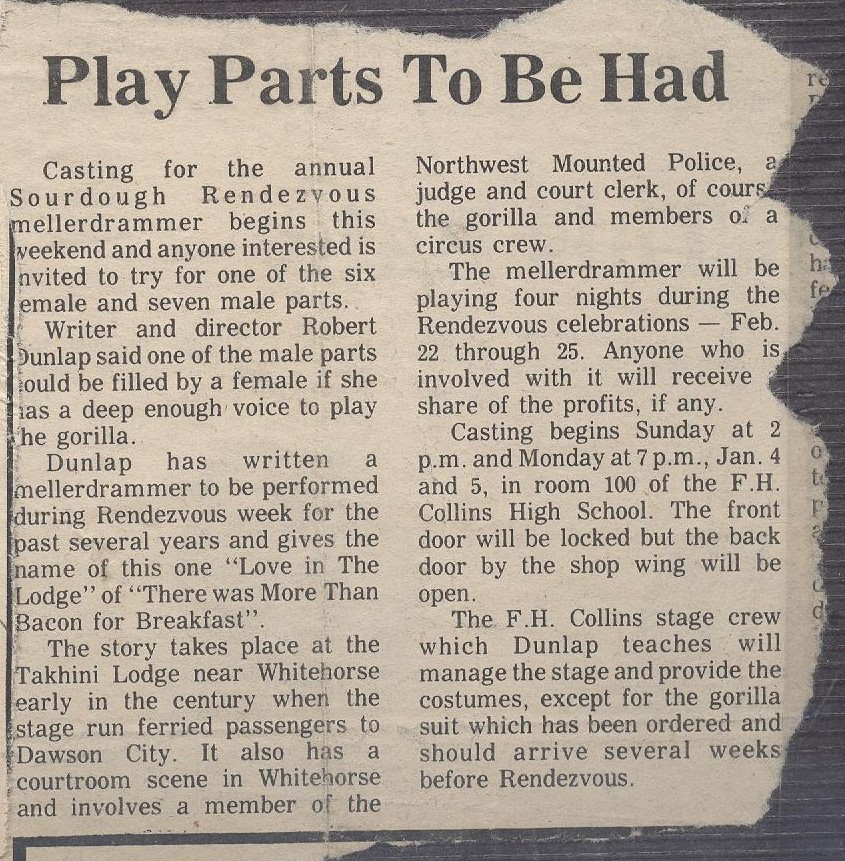
news story about the mellerdrammer auditions
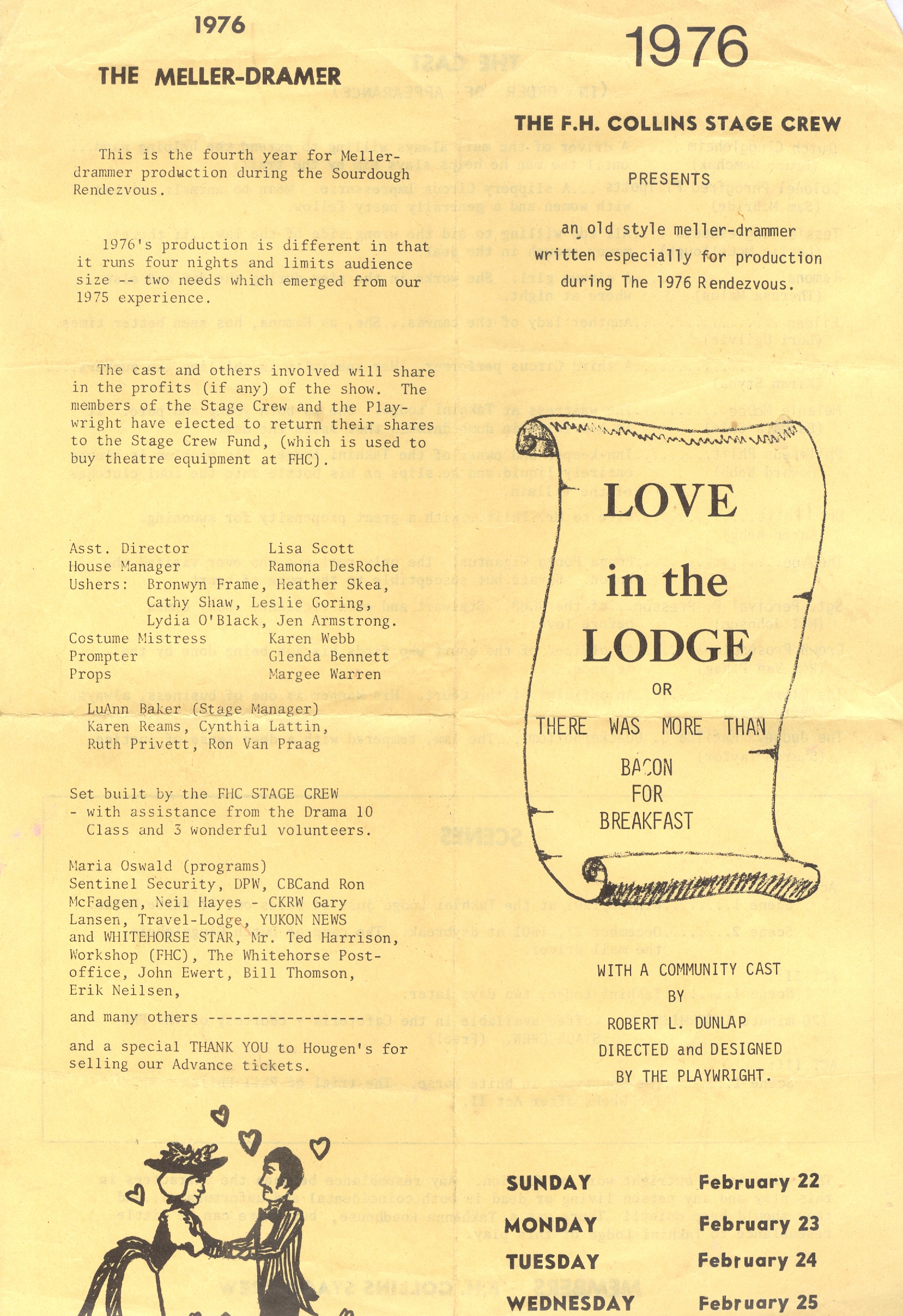
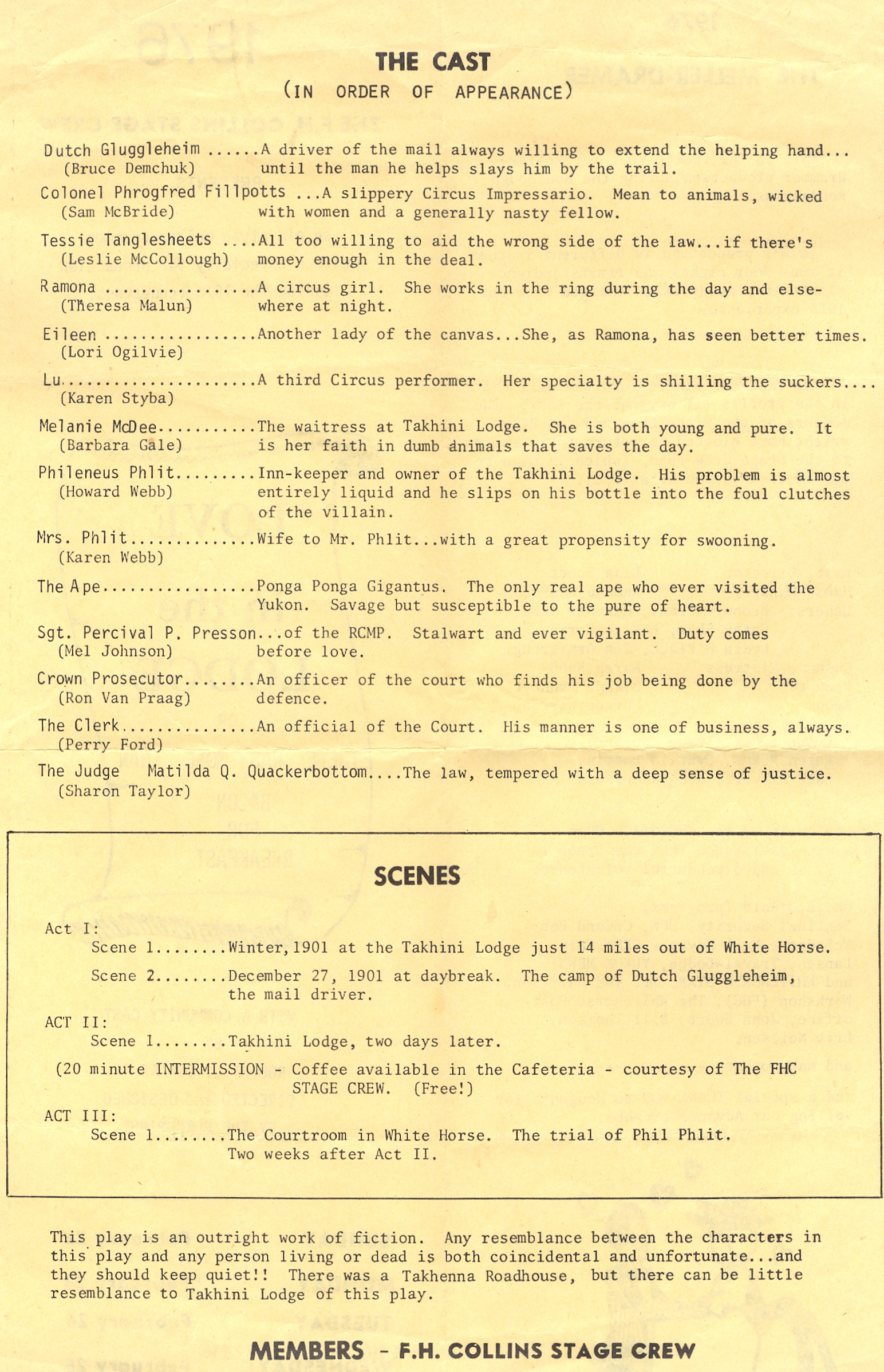
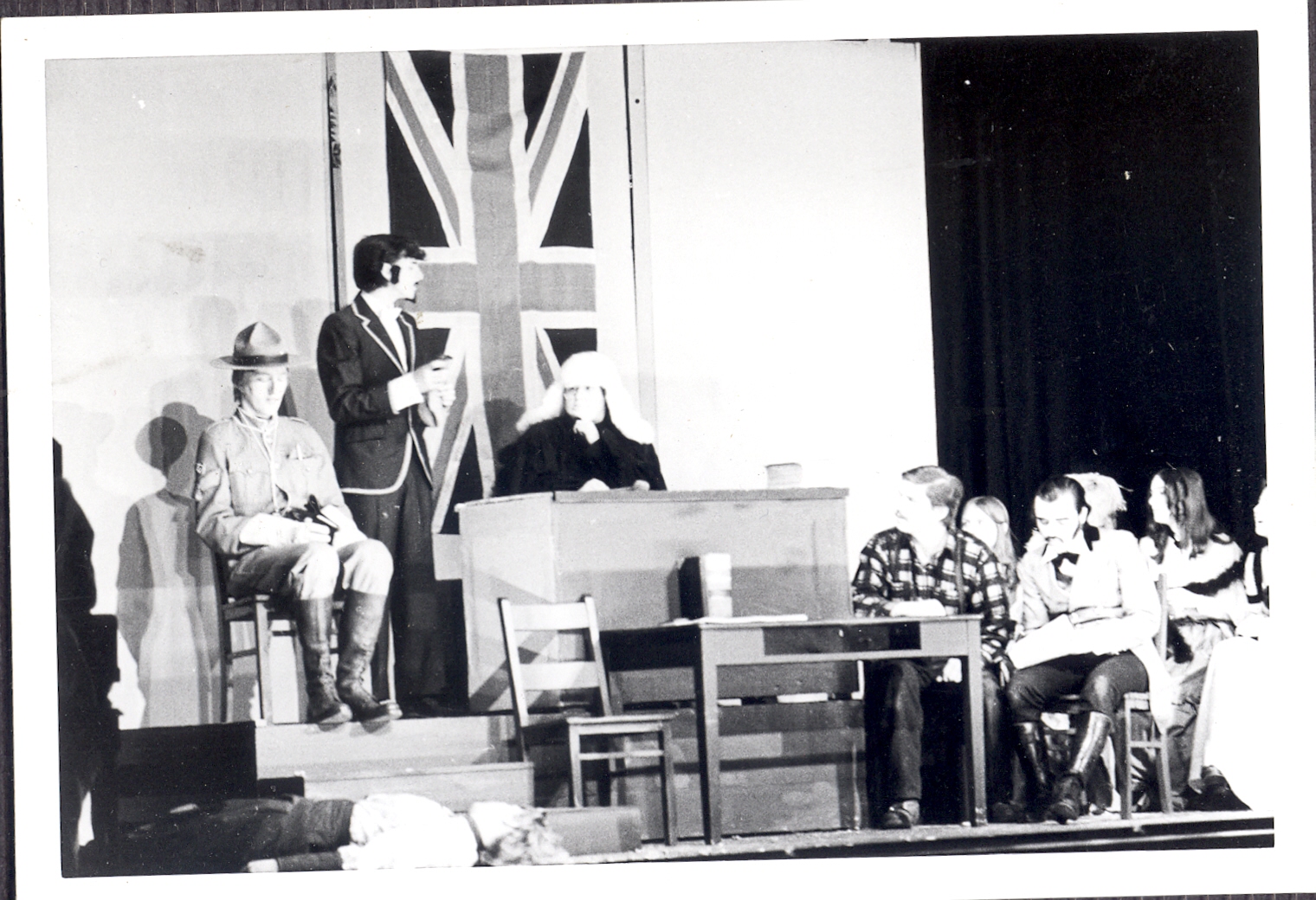
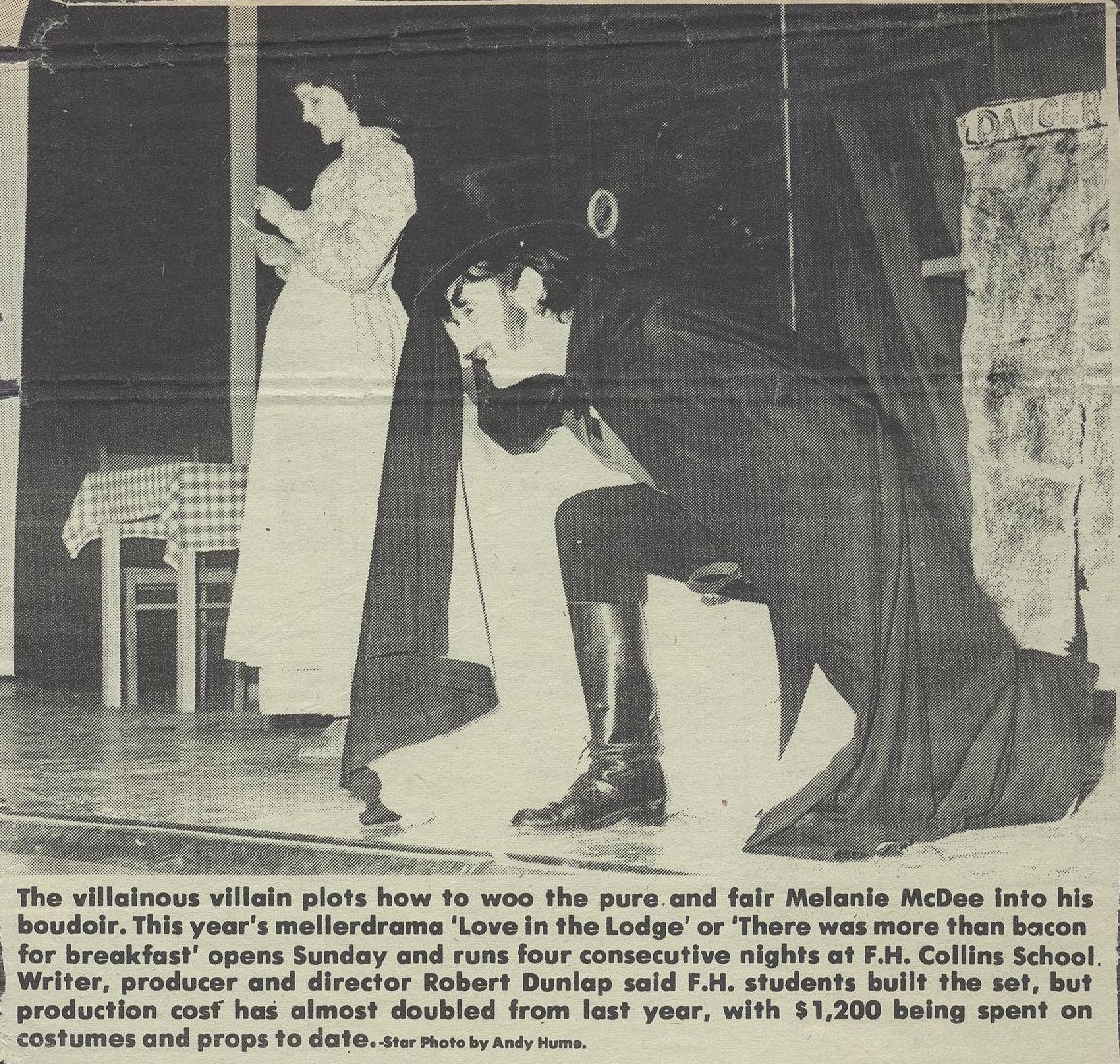
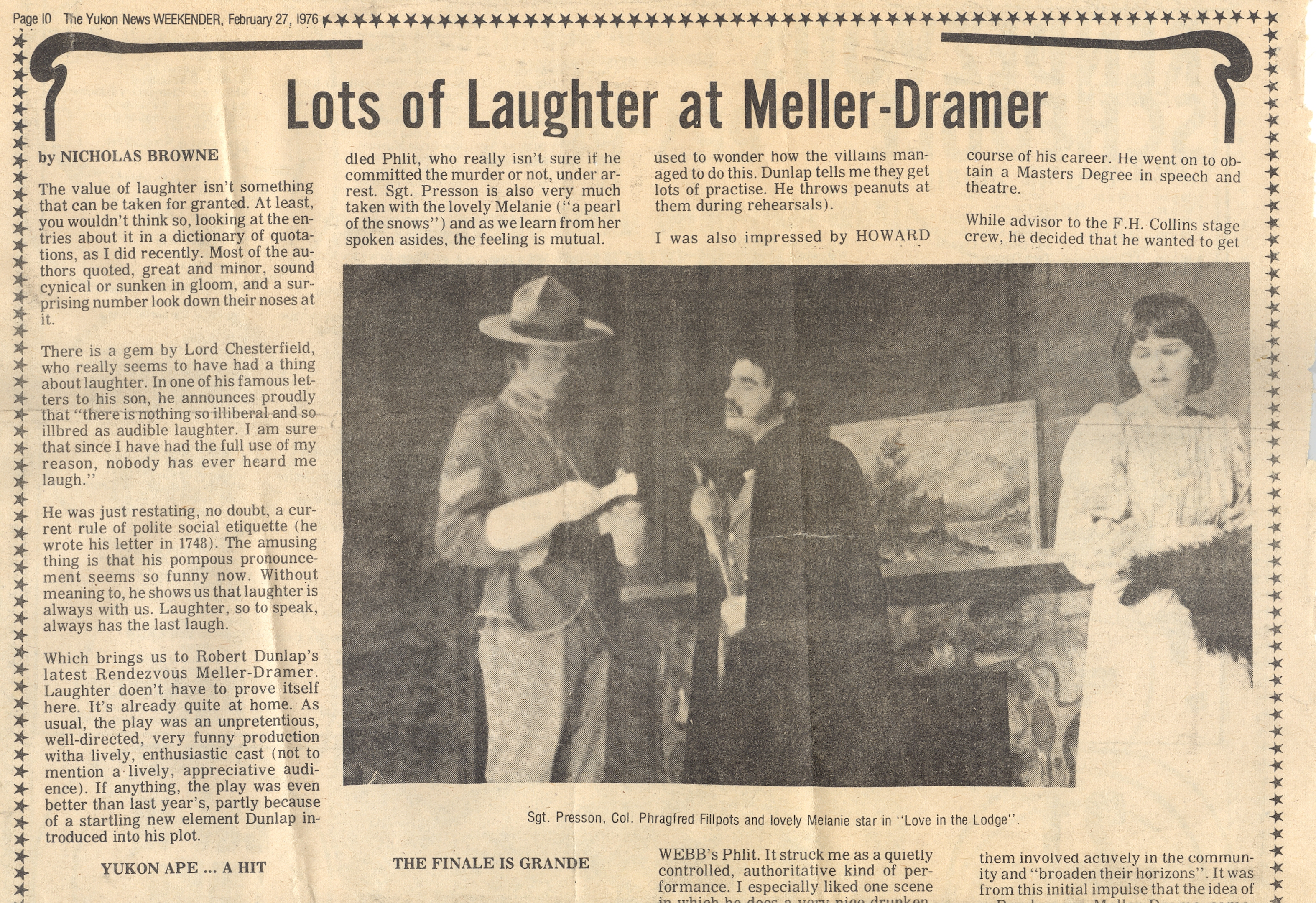
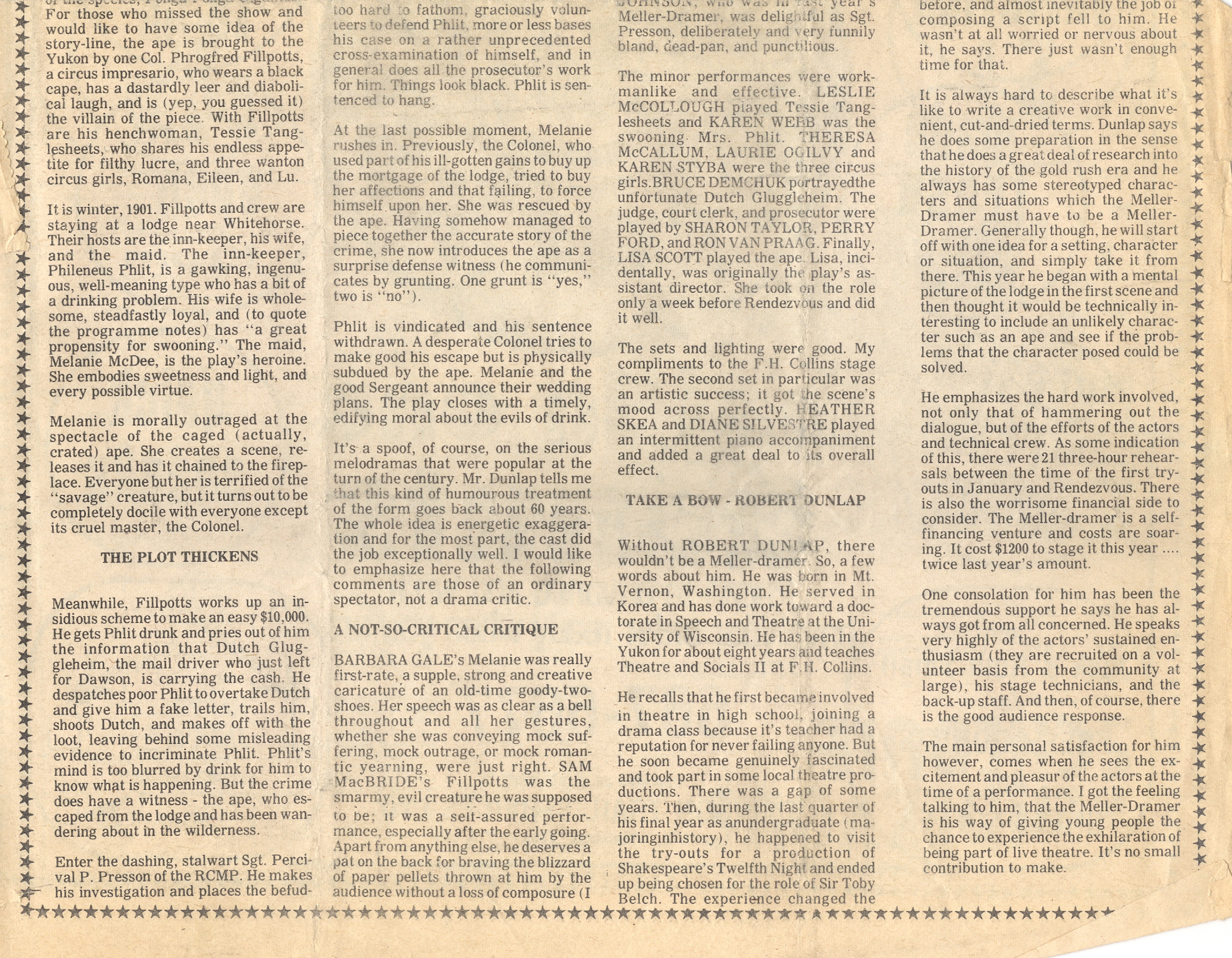
It was a production of the F.H. Collins High School, but adults in the community were invited to try out for one of the adult roles, or to help backstage for a show called “Love at the Lodge – Or There Was More Than Bacon for Breakfast”, written and directed by the school’s drama teacher Robert L. Dunlap. He had done annual shows like this for several years at the school, all of them written by him the previous summer. The shows were set in the 1890s era of the Klondike Gold Rush when Yukon was the centre of the world’s attention, in the style of good versus evil melodramas popular at that time.
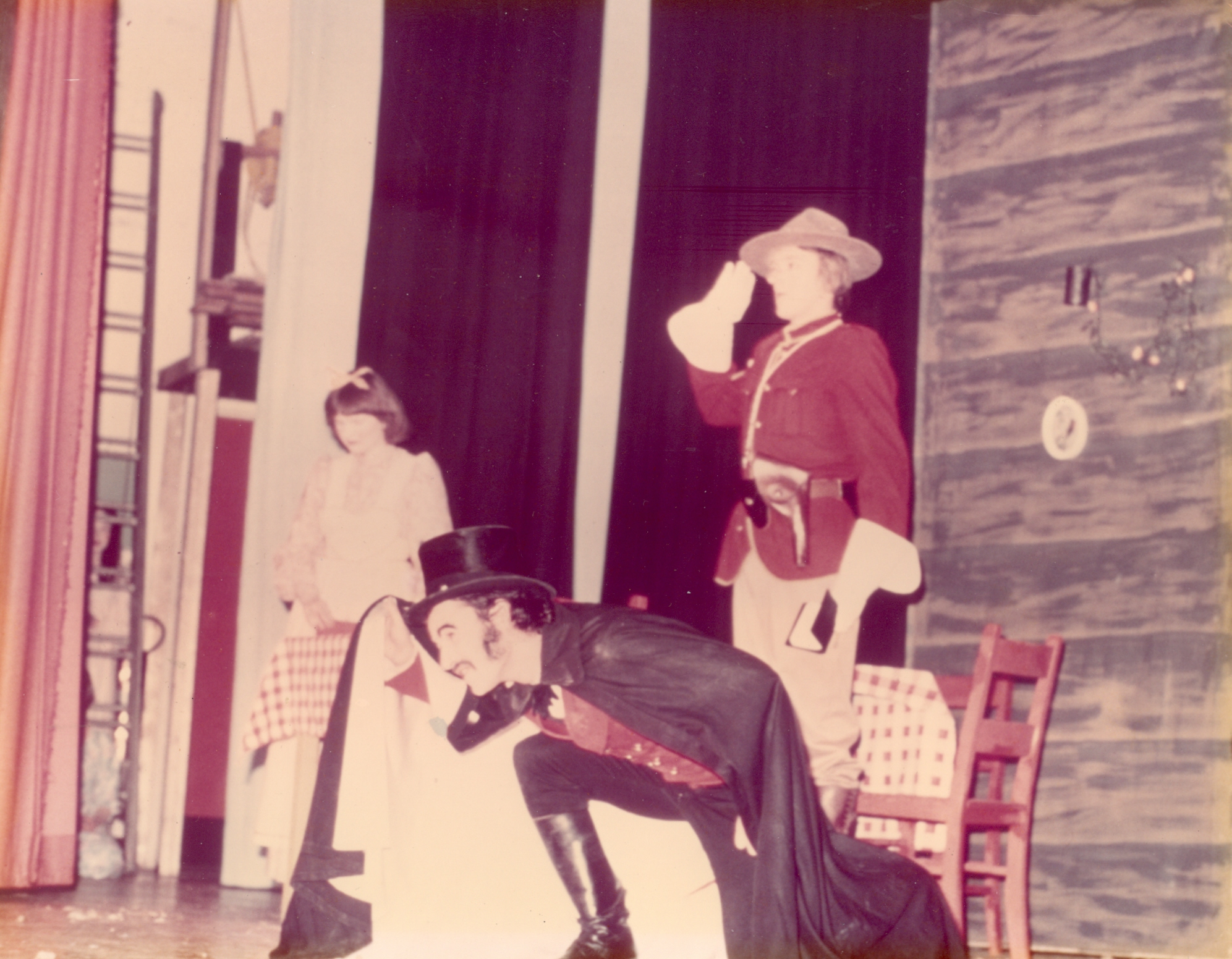
From my experience as a newspaper reporter, I thought I might be able to help publicize the show by writing news releases, so I went to the meeting to volunteer with publicity. Once there, the director Dunlap asked me to read some lines of the villain character Colonel Phrogfred Fillpotts. I was amazed that Dunlap offered me the part, as the only previous experience I had in theatre was as a 10-year-old in a non-speaking role in the Notre Dame University production in Nelson, B.C. of “The Trojan Women”. I found my experience as a member of the Nelson Boys Choir for several years helped with voice projection and breath control, which was particularly needed for doing villain-style evil laughs.
Remembering how much I enjoyed watching live theatre in London, I agreed to give it a try. I then found myself having to memorize hundreds of lines in the script, and going to three or more rehearsals a week for five weeks. While Dunlap was a hard taskmaster with both students and adults in the show, the rehearsals were usually quite enjoyable, among a fun group of participants. The three performances of the show were in the third week of February 1976, coinciding with Whitehorse’s annual winter festival known as Sourdough Rendezvous, which celebrated Yukon’s heritage memorialized in the works of poet Robert Service, such as “The Cremation of Sam Magee” and “The Spell of the Yukon”.
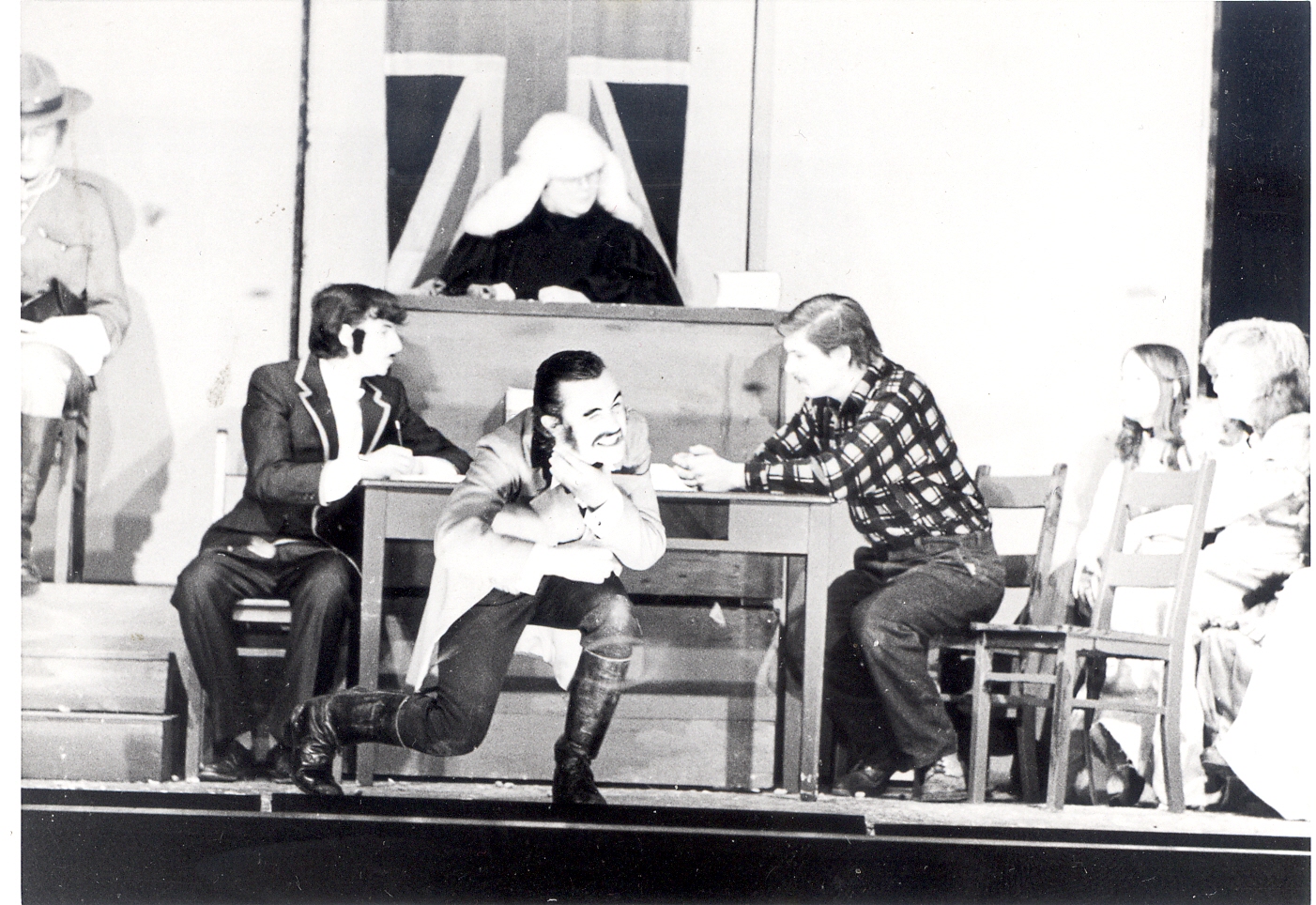
One special challenge with being the villain in a Dunlap show was that he gave out bags of peanuts at the performances and encouraged audience members to throw them at the villain – which they did, quite vigourously. I learned to squint while making asides to the audience, as I knew peanuts would be coming and did not want to be hit by one in an eye.
A few days before the performances our costumes arrived from the costume rental company. I mentioned to my mom in Trail that the top hat that came in for me to wear was way too small. She had a couple of top hats she had inherited from her father Ted Dewdney which she sent to me via Greyhound bus just in time for the shows. One of them, originally owned by our famous ancestor, the Hon. Edgar Dewdney, fit me perfectly so I used it rather than the rented hat.
The shows had some minor glitches, but were lots of fun for performers and audiences alike. I had put a lot of effort into memorizing the lines and movements, so I was not as nervous in the performances as I thought I might be. In fact, it was quite exhilarating, and really turned me on to community theatre. I did not try out for a part in the 1977 Mellerdrammer show because I was busy with the Whitehorse Drama Club’s production of “The Mousetrap”, which was one of the plays I saw performed by professionals in London.
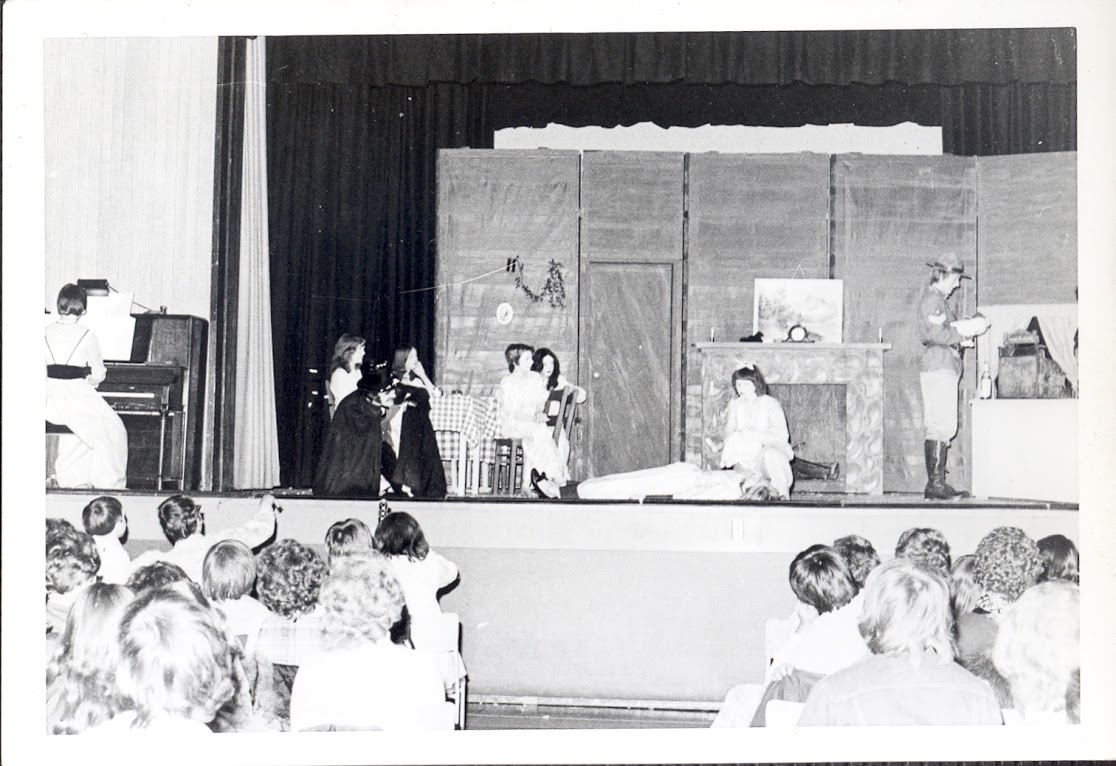
As a collector of memorabilia, I kept the program for the show, as well as news clippings and photos taken by my friend Mike Panchuk. Scanning them and posting them here helps tell the story of the experience better than my memory half a century later.
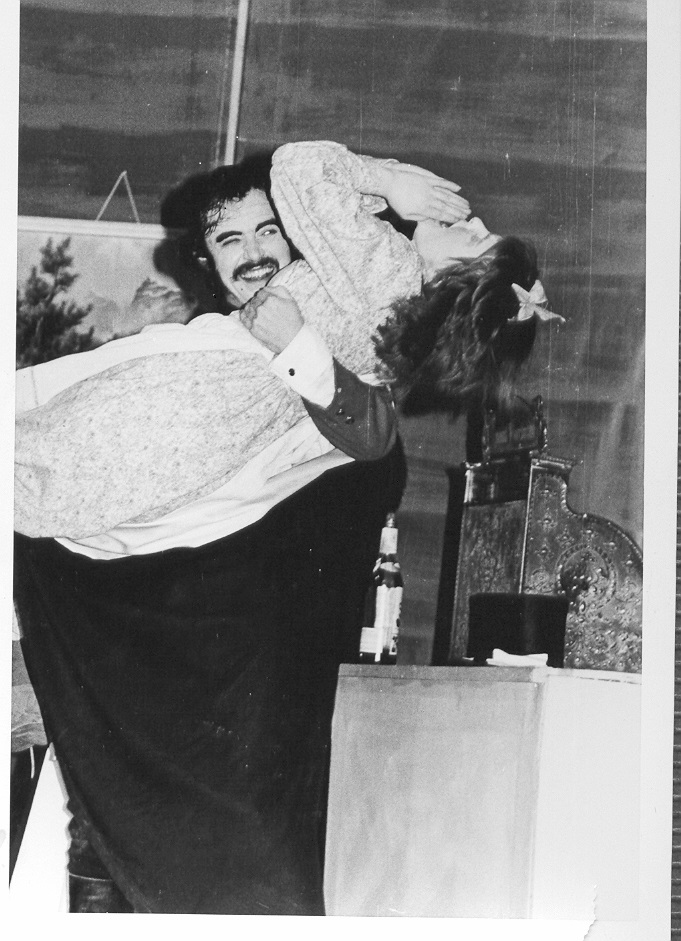
This is the only colour photo I have from the show, taken by my room-mate Mike Panchuk. I am the bad guy doing an “aside” to the audience. Behind me are the heroine Melanie McDee and the policeman.Court scene, as the villain has framed an innocent man who is being tried for the crime. This pic shows audience members throwing peanuts at the villain.villain capturing heroine.Villain about to carry off heroine — only to be foiled by an ape!The Yukon Ape has conquered the villain and saved the day. Notice all the peanuts on the stage, mostly thrown at me.











 thebravestcanadian