Interesting to hear that my old home town of Nelson, B.C’s Granite Pointe Golf Course is going to shut down for a couple of years to enable a half-billion dollar project of re-building the 18-hole course combined with course-side housing, with completion scheduled for 2027.
That got me thinking of the old 9-hole Nelson Golf and Country Club in that location from 1919 until the expansion to the Granite Point 18-hole course in early 1990s. My grandfather Roland Leigh McBride (1881-1959) was among the founding directors to the original course, and was very active as a member of the club executive for many years. His love of golf was inherited by his two boys, Leigh Morgan McBride (1917-1995) and Kenneth Gilbert McBride (1920-1944).
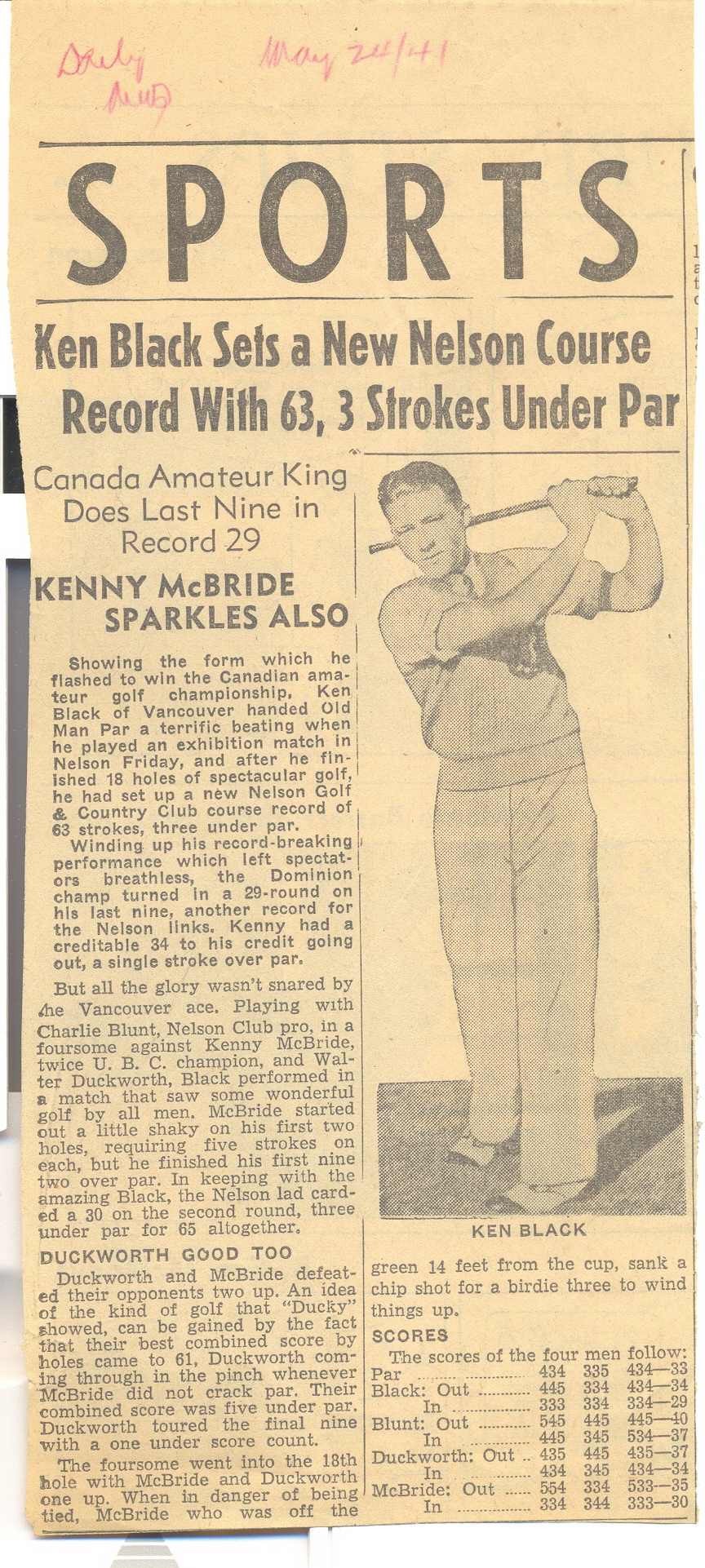
My grandfather Roland Leigh McBride hitting a drive at the scenic Nelson Golf Course. Date is unknown, but it is before the Nelson Bridge was built in 1957. Mats were used for tee boxes then because the terrain and weather made it difficult for maintaining good grass in tee areas.Nelson Daily News report of the superb golf played in an exhibition match at the Nelson Golf Course in May 1941, where Canadian Amateur Golf champion Kenny Black set a course record of 63 strokes, just two better that 21-year-old club champion Ken McBride
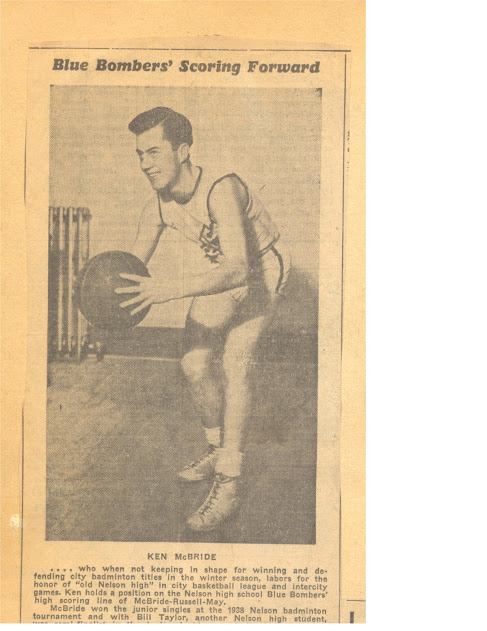
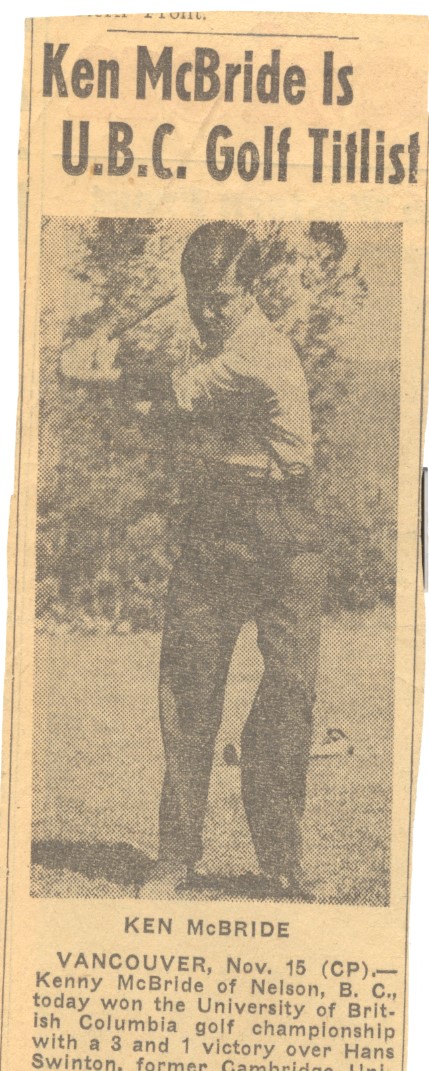
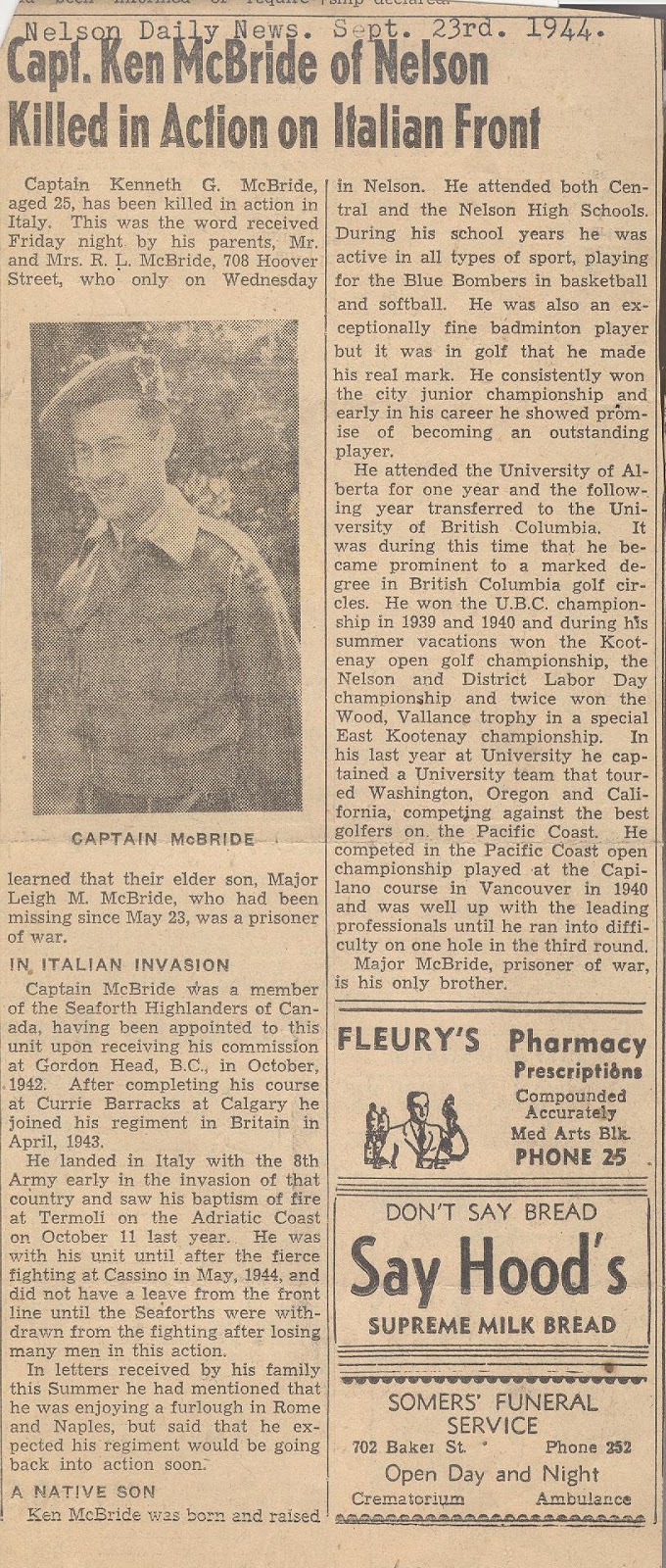
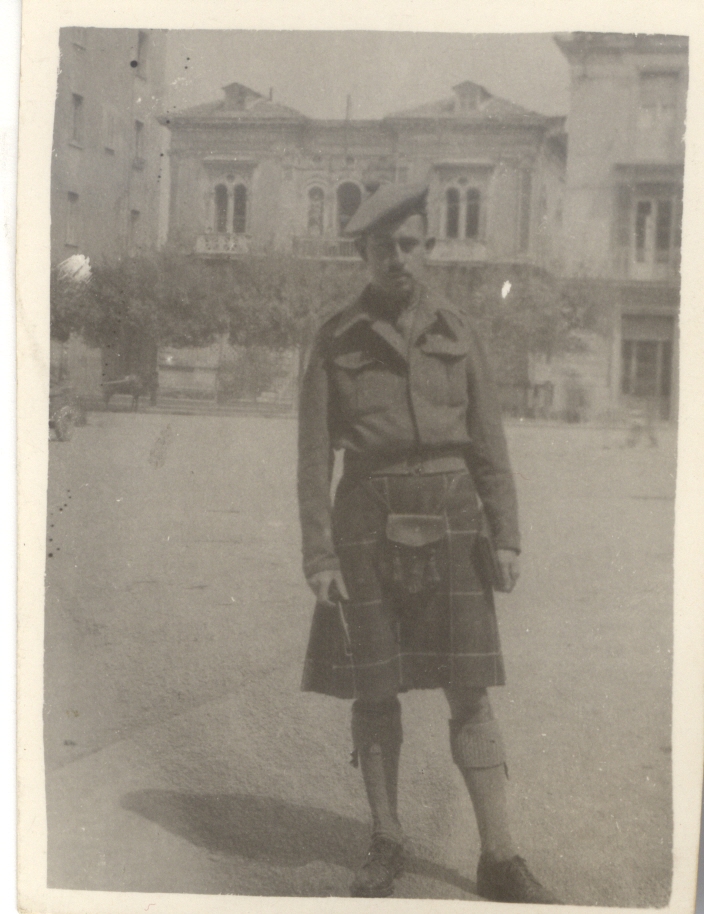
Both Leigh and Ken won Nelson and other Kootenay junior golf championships, and Ken went on to great success as captain of the UBC golf team that competed against the top American university teams, before joining Leigh as an officer with the Seaforth Highlanders of Canada regiment in 1942. Leigh rose to Major and was wounded on two occasions, including the loss of an eye and multiple body wounds in his last action on May 24, 1944, when he was found unconscious by German soldiers and taken to a German hospital for treatment and then a series of prison camps until returning to Canada in a wounded prisoner exchange in January 1945. While he was in a POW camp he heard that his brother Ken was killed in action near Rimini, Italy on September 16, 1944.
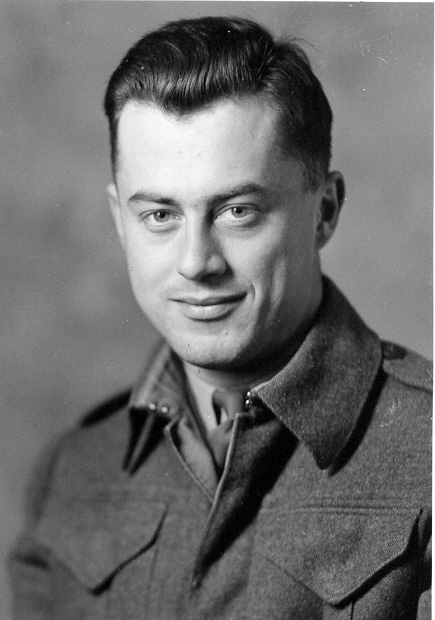
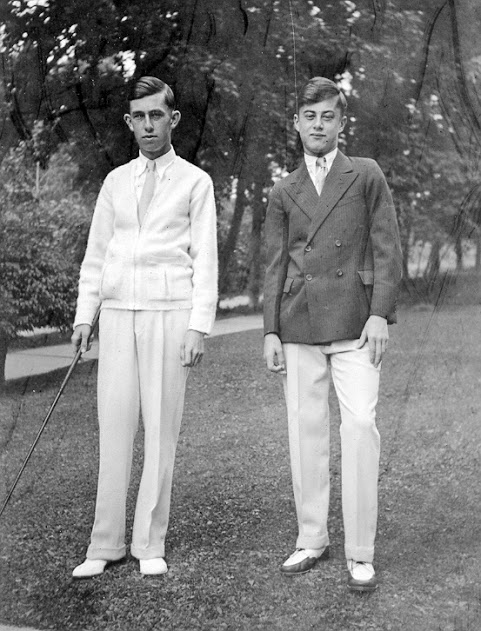
Ken McBride, in 1942.my uncle Ken McBride won the UBC Open in 1940 and 1941.From left: Leigh McBride and brother Ken McBride. Photo taken in about 1932 in the backyard of the McBride home at 708 Hoover Street, Nelson, B.C., Canada
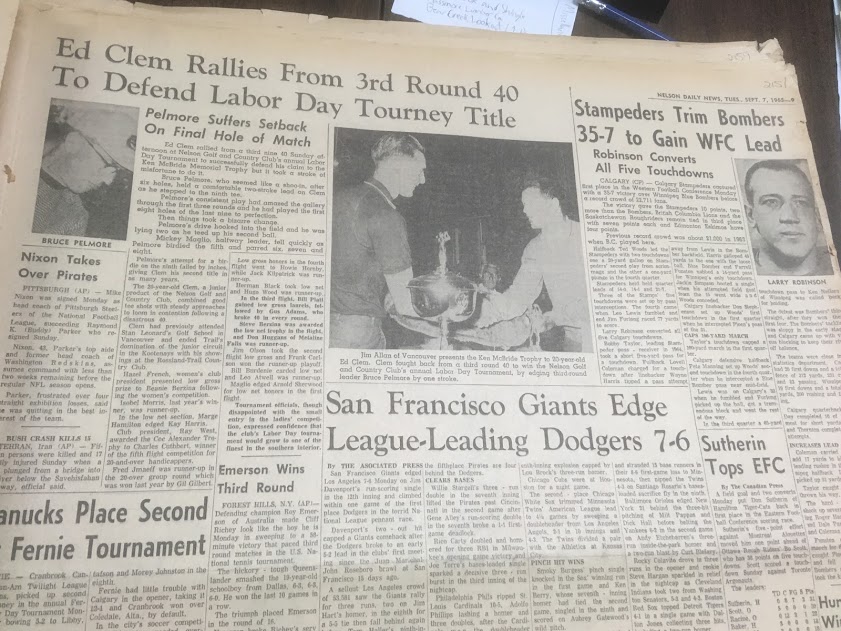
In Ken’s memory, the members of the Nelson Golf Club raised funds for the Ken McBride Memorial Trophy which was awarded to the winner of the annual Labour Day Club Championship from 1947 until 1977. Leigh often made the trophy presentation.
Among the mementos kept in family memorabilia is the scorecard of an exhibition match in May 1941 when the Canadian Amateur Champion Kenny Black of Vancouver came to Nelson and played a match on the course with the club champion Ken McBride, club pro Charlie Blunt, and another top local player Walter Duckworth. Black’s score of 63 set a club record, with Ken just two strokes back and the others playing well too.
Ken Black won the Canadian Amateur Golf Championship in Quebec in 1938. The event was cancelled from 1939 to 1945 due to WW2. He was runner-up when the event resumed in 1946. He had also been runner-up in 1936. He was inducted in the B.C. Sports Hall of Fame in 1966, the Canadian Golf Hall of Fame in 1987, and the B.C. Golf Hall of Fame in 2001. He died in 1995
I played the original nine-hole course often as a junior member of the club in the mid- and late-1960s. The course was short in yardage, but quite a challenge because of narrow fairways, small greens and difficult rough on almost every hole. As most players are right-handed, and high-handicap golfers tend to slice their shots to the right rather than hook to the left, the rough and woods on the right side of fairways claimed innumerable errant golf balls from me and many other players. Another problem with the course was that about half of the tee areas were mats rather than grass, which tends to be easier to hit from than the mats. The renovation and expansion of the course to Granite Point in the 1990s was a major step forward for Nelson golf.
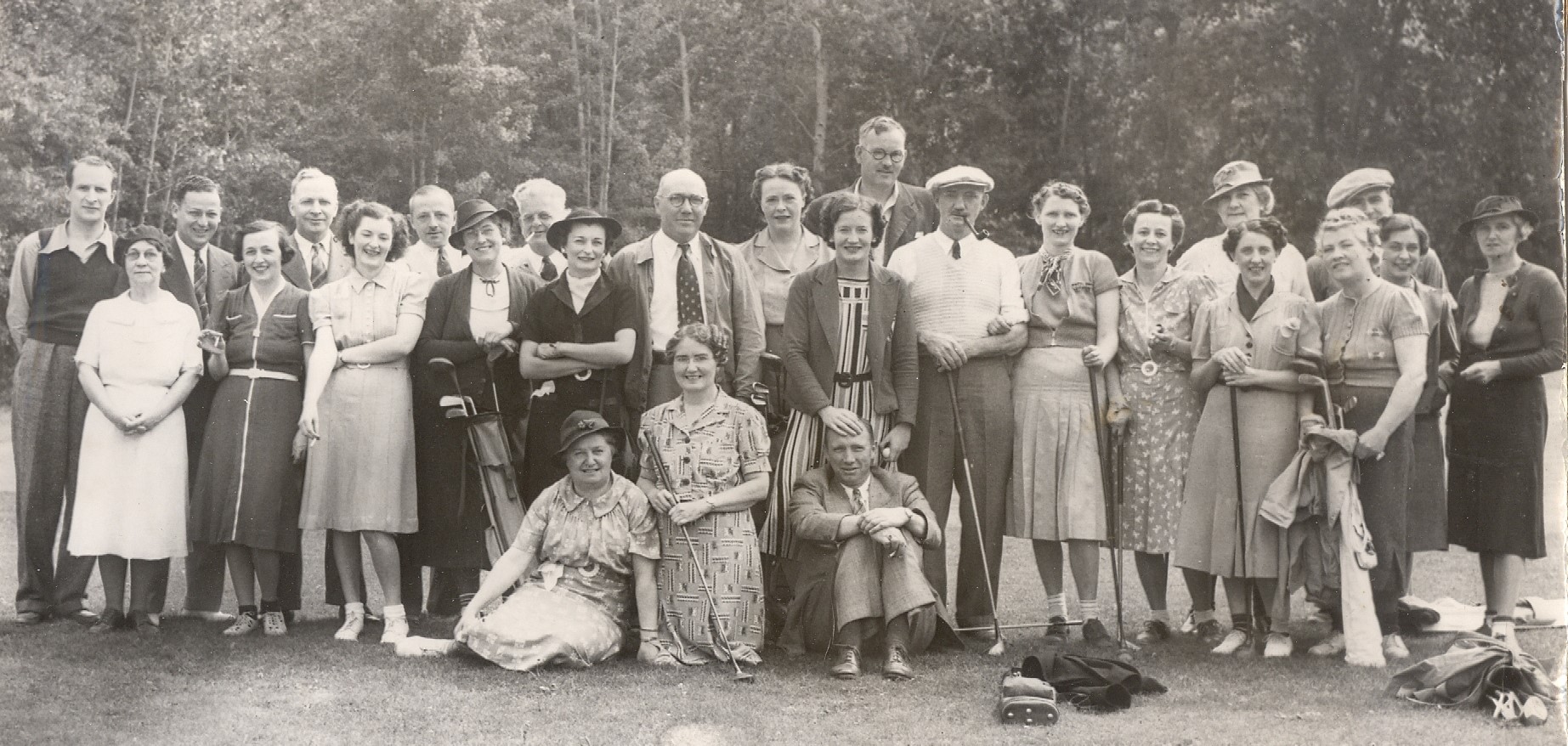
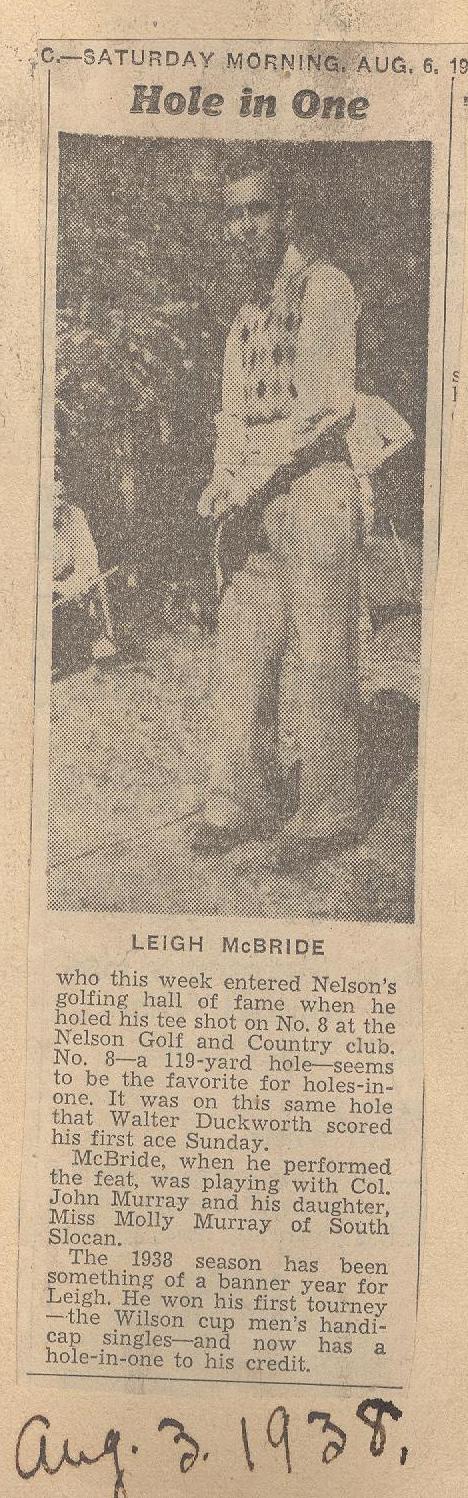
A group of members of the Nelson Golf and Country Club posed for this group photo in summer of 1939, shortly before the arrival of WW2. Kneeling at front left is Winnifred “Winnie” McBride, wife of long-time club director R.L. McBride and mother of Leigh and Ken.Nelson Daily News report of the first After an extraordinary career as an amateur golfer, Ken Black entered the Canadian Golf Hall of Fame in 1987.One of hundreds of newspaper clippings kept by my grandparents of family members making news on the golf links.Report of the 1965 Nelson Labour Day Tournament, in which Ed Clem won one of eight championships he would win before the trophy was retired in 1977.
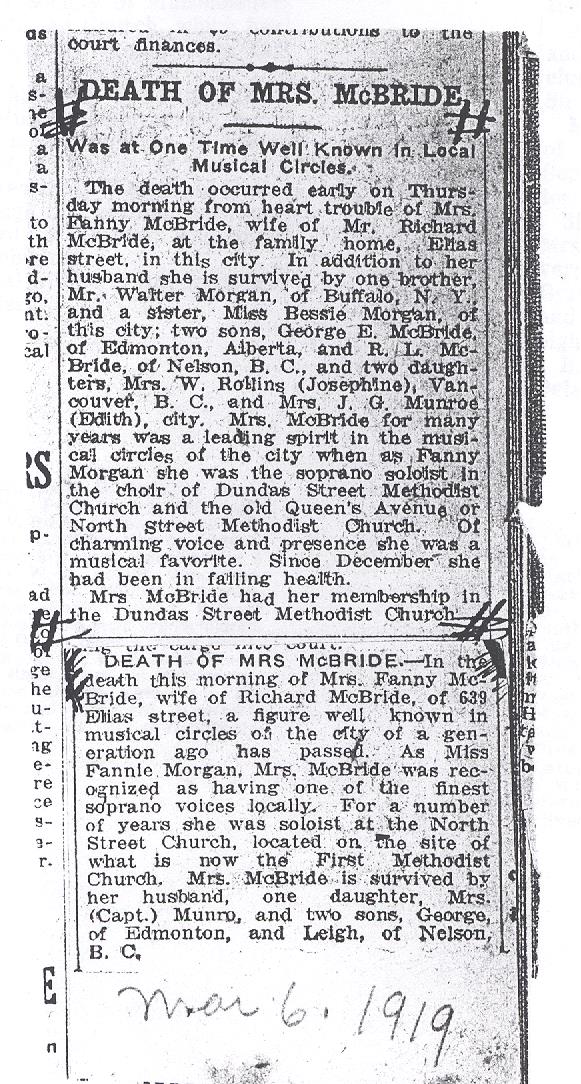
My great-grandparents Richard “Dick” McBride (1843-1921) and Fanny Morgan (1848-1919) were well-known and popular residents of London, Ontario for many years.
Dick was born in London, son of Samuel McBride and Elizabeth Webster, and lived there for the rest of his life, except for the final year when he lived with daughter Edith’s family in Montreal. Fanny was born in Abergavenny, Wales, eldest daughter of James Morgan and Margaret Hanbury. She arrived in London with her emigrating Morgan family in about 1850 as a toddler, and died there shortly after the end of World War One.
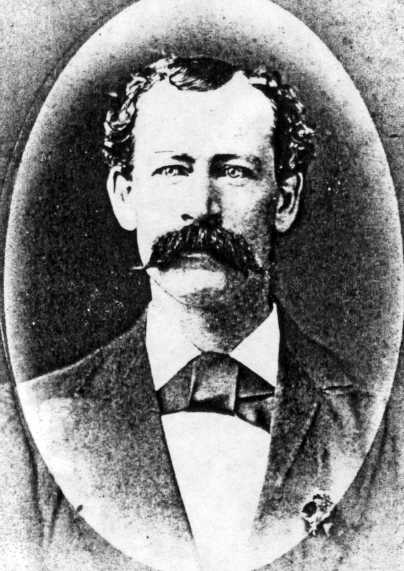
Richard McBride
Dick was a volunteer fireman in London for many years, before the city had its own fire department. His father Samuel McBride (1819-1905) trained him in his trade of tinsmith, and hired him to help with a stove-manufacturing business in London, Ontario. He served in the militia established in 1866 to protect the city against a feared invasion by Fenians – Irish-rooted veterans of the U.S. Civil War who demanded that Ireland be free of subjugation by Britain. As it turned out, the disorganized Fenians only made minor incursions into New Brunswick, and did not make it to London.
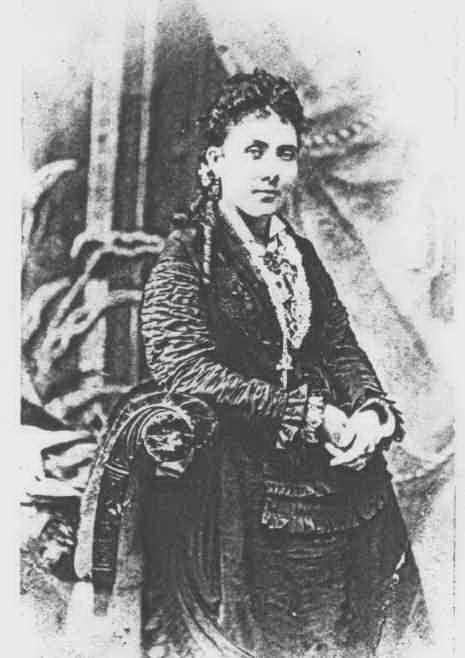
Fanny Morgan, at about the time of their wedding in London in 1876
Writing a family history in 1928, Dick’s cousin Harry Bapty of London noted that Dick “was a friend of everyone and a good-natured and lovable man”, – a “Hail Fellow, Well Met.” Based on this and other documents of the time, I get the feeling that Dick was recognized more for his friendliness and personality than for his work as a tinsmith or businessman.
Richard “Dick” McBride
In response to a request from his niece Edith McBride for memories of the family’s early days in London, her younger brother Walter Clement Morgan (1861-1940) of Buffalo, New York said in a letter that Fanny and eldest brother Fred went to a school on Hamilton Road in London, and it was either close to the Black Horse Tavern, or in it, while Walter and other younger siblings went to the Adelaide Street school between York and King. Fanny worked at times as a dressmaker, and as a concert singer. “She had innumerable admirers, and the house was cluttered up with them almost every evening,” according to Walter. Any man among them who was shorter than six feet in height was invariably referred to by Fanny as “Little So-and-so”, such as Little Fewings, Little Johnny Traher and Little Tommy Martindale. In contrast, she called the tall and handsome Richard McBride (her future husband) “The Lovely Dick”.
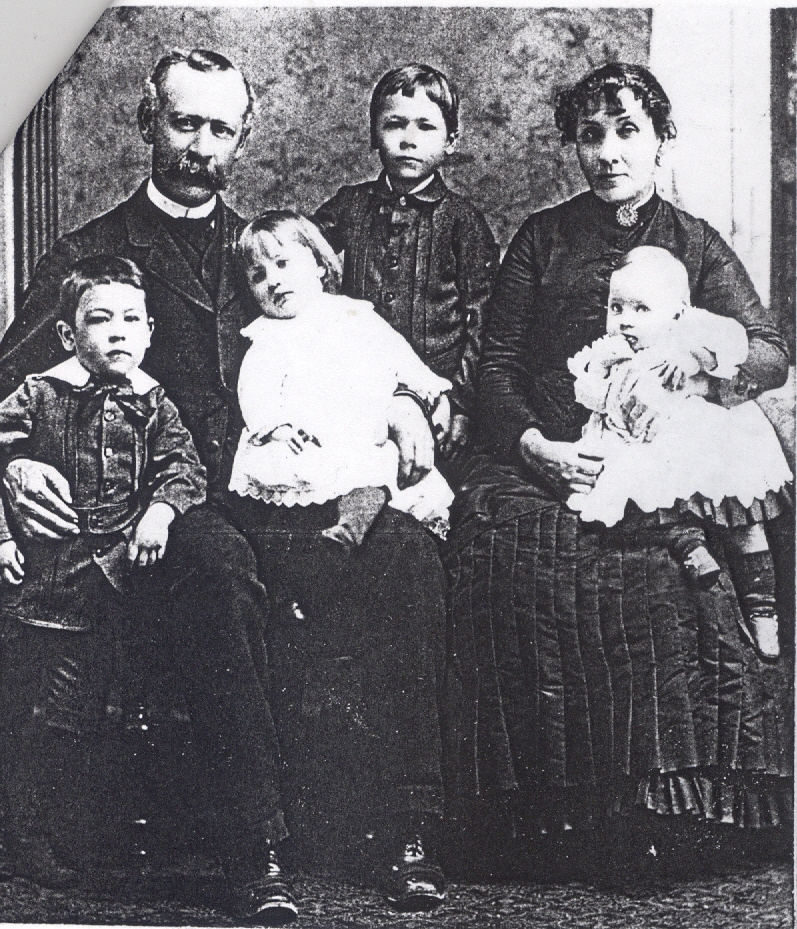
The McBride family in London, Ontario, circa 1887. Clockwise from top left: Richard, son George, wife Fanny, daughter Edith, daughter Josie, son Roland Leigh.
Fanny worked part-time as a dressmaker and was renowned for her superb soprano singing voice. Unfortunately, the society of the day had low regard for women who were professional entertainers, and she was discouraged from a professional career. Walter noted she was able to earn money for singing at certain events and occasions, such as the St. George’s, St. Andrews and St. Patrick’s Day celebrations for which she was paid an amount never less than ten dollars. She would also perform at nearby communities such as Wardsville, and Glencoe where she sang for a fee and expenses. “She was a great favourite,” Walter wrote, noting that John Mills gave him a job when he told him Fanny was his sister.
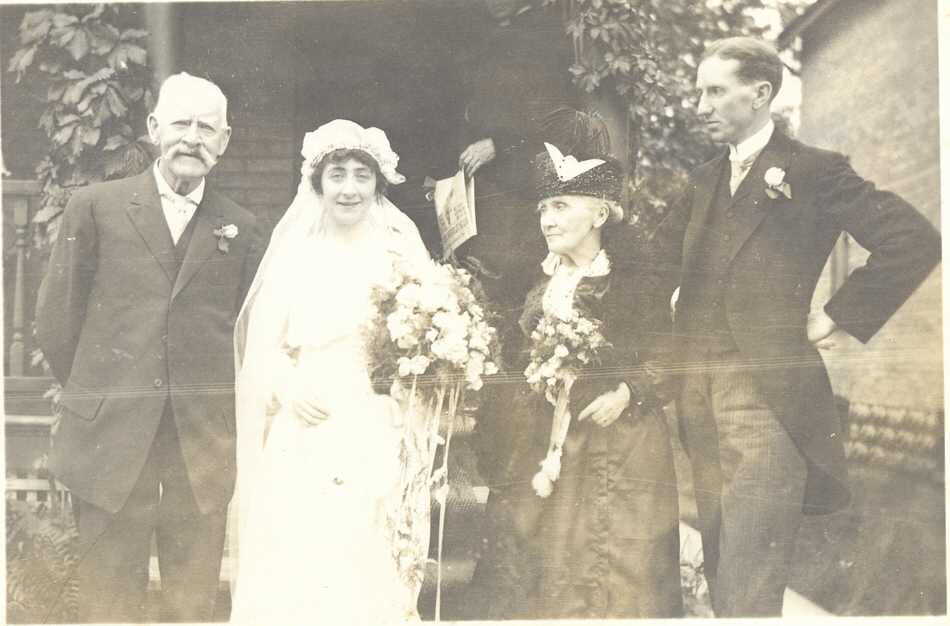
Fanny and Richard married on September 27, 1876 in London. The ceremony was at the Morgan residence, with Rev. James Graham presiding. Their children included George Everett McBride (1877-1954) who settled with wife Mabel Staples in Edmonton, Roland Leigh McBride (1881-1959), who settled with wife Winnifred Foote in Nelson, B.C., Josephine Fanny Rollins (1883-1965), who settled with husband William Rollins in Vancouver, B.C., and Edith Marjorie Monroe (1884-1965), who settled in London and later Quebec with husband Dr. Garfield Monroe.
At the wedding of daughter Edith McBride to Dr. Garfield Monroe are, from left: Richard McBride, Edith McBride, Fanny McBride and Garfield Monroe.
Both Fanny and Richard travelled once to my old home town of Nelson in the West Kootenay region of southeastern B.C. British Columbia where their son Roland Leigh McBride moved in 1904 and remained for the rest of this life. Fanny came to Nelson with daughter Edith and niece Ina in September 1911 for the wedding of R.L. McBride and Eva Mackay Hume at the Hume summer residence known as Killarney-on-the-Lake in what Eva’s sister Freeda described years later as “the social event of the year” in Nelson. Fourteen months later Eva died of childbirth complications at their home at 824 Mill Street. In the bedroom supporting her as she was dying were her sisters, husband and best friend Winnifred Mae Foote (1889-1960). Among her last words were encouragement for Winnie and R.L. to marry, which they did two years later, settling at 708 Hoover Street.
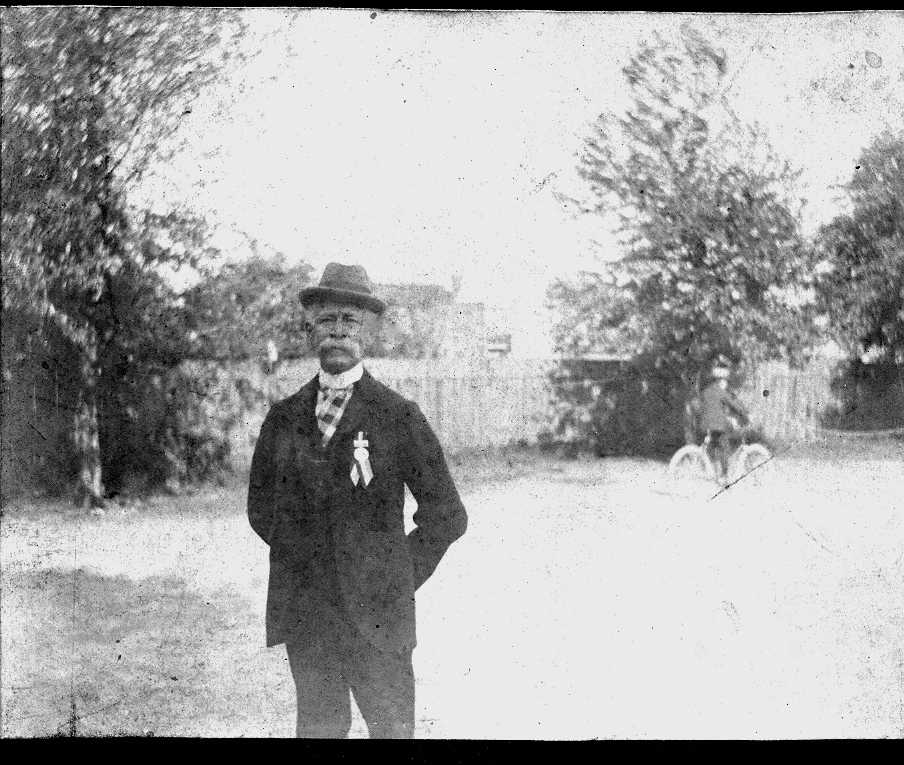
Dick McBride showing off a ribbon.
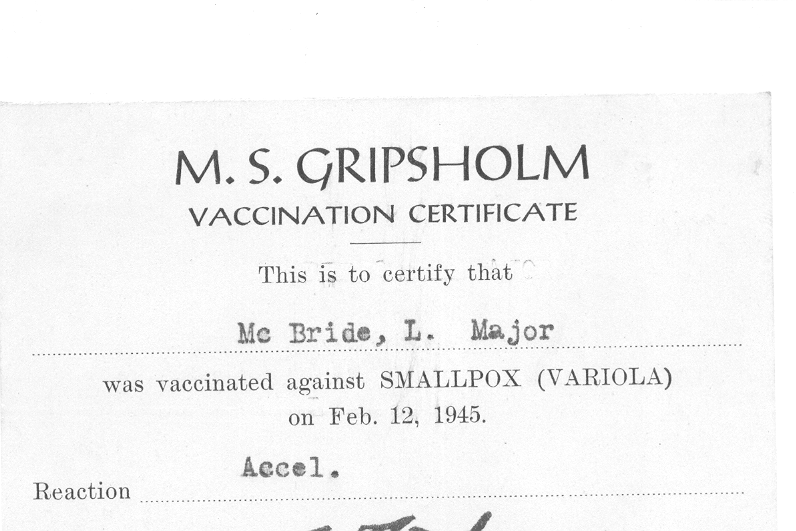
Richard travelled to Nelson some time after wife Fanny’s death in March 1919, and was photographed by Winnie beside Kootenay Lake with son R.L. and toddler grandson Leigh Morgan McBride (1917-1995). R.L. and Win’s other son would be Kenneth Gilbert McBride (1920-1944), who was an exceptional athlete and sportsman in Nelson and later at UBC before joining Leigh as an officer with the Seaforth Highlanders of Canada in 1942. Ken was killed in action on September 16, 1944 near Rimini, Italy. Leigh, who had been seriously wounded in the attack on the Hitler Line on May 24, 1944, including the loss of his right eye, was found unconscious by German troops and taken to a German hospital for medical treatment, and then to a succession of German prisoner-of-war camps before he returned to Canada in late January 1945 on the Swedish ship “Gripsholm” in a prisoner exchange. In 1948 Leigh married Rose Pamela “Dee Dee” Dewdney and they had sons Ken and Sam and daughter Eve.
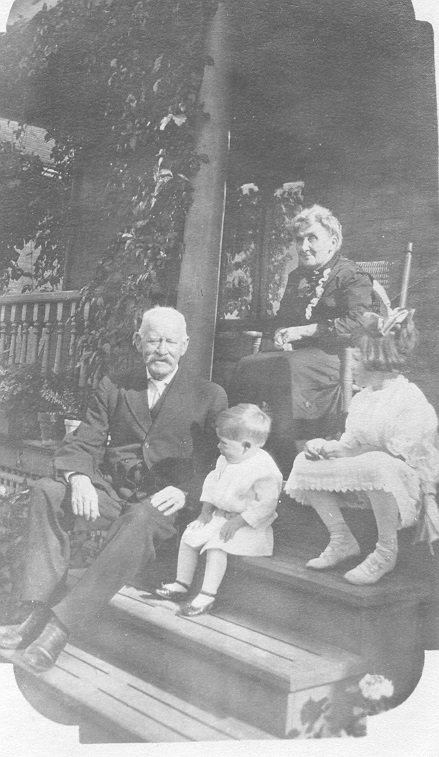
Dick and Fanny with grandchildren Jack McBride and Helen Jennejohn, whose parents were George and Mabel McBride. Circa 1916.
In their final years R.L. and Win enjoyed regular visits from Leigh and his family.
Dick with son R.L. McBride and his son Leigh Morgan McBride beside Kootenay Lake. Circa 1919.
When R.L. McBride was manager of the Wood Vallance Hardware Company in the 1920s he encouraged his cousins in London, Ontario Walter and Keith Kettlewell to move to Nelson and work for him. The other cousin to settle in Nelson was Helen Jennejohn, daughter of \George and Mabel McBride, who married Dr. Norman Jennejohn and they came to Nelson where he established a dental practice, and they had sons Bob, Bill and Bruce.
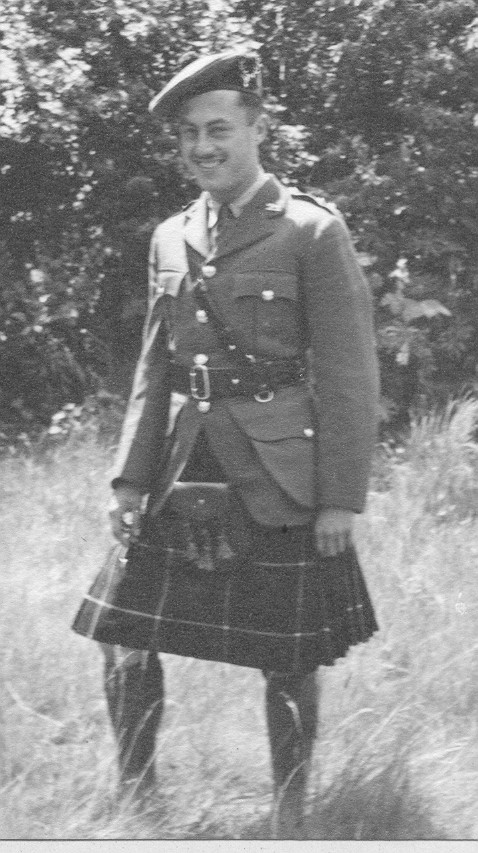
Eighty years ago my father Leigh Morgan McBride and his younger brother Kenneth Gilbert McBride were lieutenants of the Vancouver-based Seaforth Highlanders of Canada regiment in the thick of one of the fiercest battles of WW2, the Battle of Ortona (Dec. 20-28, 1943). Against all odds, the Seaforths were able to enjoy a very brief, but much appreciated, Christmas dinner in a church just a few blocks from the building-to-building and hand-to-hand fighting. It was one of the few “feel good” stories to come out of the war at that time.
1944 would be a tough year for the McBride family, as Leigh was seriously wounded and lost an eye from grenade shrapnel in the attack on the Hitler Line in May. Some German soldiers found him unconscious and took him as a prisoner for medical treatment. He was listed as “missing in action” for four months until word came from the Red Cross in September that he was alive and recovering at a hospital in Germany. His parents were in the middle of celebrating the good news about Leigh when a telegram arrived Ken and his driver were killed when their jeep ran over a road mine near Rimini. Leigh made it back to Nelson in a prisoner exchange in late January 1945.
Lieutenant Leigh Morgan McBride, one of the serving officers at the famous Christmas dinner in Ortona
After the war, Leigh made regular trips to Vancouver for treatment for his lingering injuries at the Shaughnessy Veterans Hospital. There was still some shrapnel left in his legs that years later would set off metal detectors at airports.
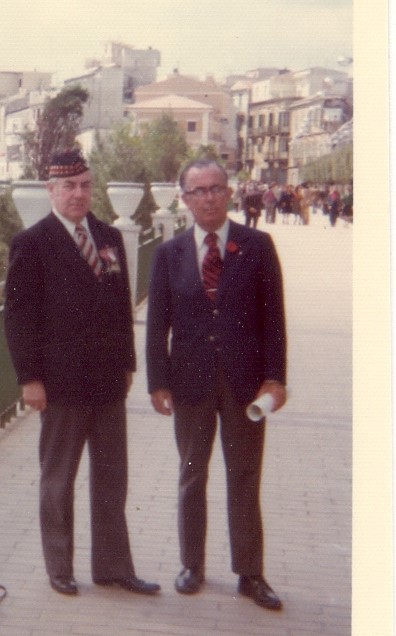
In 1975 Leigh was among 300 Canadian veterans to attend the 30th anniversary of the Italian Campaign led by Veterans Affairs minister Daniel McDonald, who himself was seriously injured in Italy, losing his left arm and leg in battle there. Leigh preferred to put the war behind him and normally did not participate in reunions, but was strongly encouraged by his Seaforth friends to go to this one, as it included a memorial ceremony at the Coriano Ridge cemetery which has Ken’s grave, which he had never visited.
Captain Kenneth Gilbert McBride (1920-1944), was a lieutenant along with his brother Leigh at Ortona in December 1943. He was killed in September 1944 near Rimini by a roadside mine.
The two-week-long reunion would be Leigh’s last visit to the battlefields and cemeteries in Italy, but the experience led him to take a great interest in Italian art and architecture, which would be — along with golf — his hobby for the rest of his life.
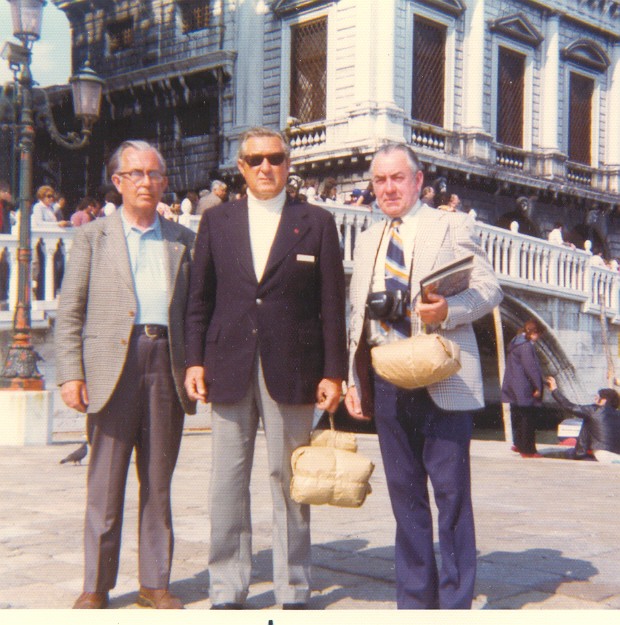
Leigh Morgan McBride (second from right) with fellow Seaforth Highlanders of Canada veterans in April 1975 at the 30th anniversary of the Canadians in Italy, as they were vigourously thanked by a local resident.Leigh McBride (right) with Seaforth pal Borden Cameron during the return to Ortona on April 29, 1975. Cameron was quartermaster who came up with the supplies for the famous Christmas dinner.From left, Leigh McBride, Bert Hoffmeister and Borden Cameron, as they took a side trip to Venice after the 30th anniversary ceremonies.Leigh and Seaforth comrades at Coriano Ridge cemetery where his brother Ken G. McBride is buried.Ravenna parade that was part of the Canadians in Italy 30th anniversary reunion.
I remember my mother insisting when I was a young boy in Nelson that I must take the Red Cross swimming lessons. She said Kootenay Lake, while wonderful for swimming and boating, was hazardous for anyone who was not a proficient swimmer.
For one thing, unlike many of the lakes in Alberta, Kootenay Lake started to get deep very close to shore. Also, the lake was notorious for sudden storms and squalls. She said there had been many terrible stories over the years of local children drowning.
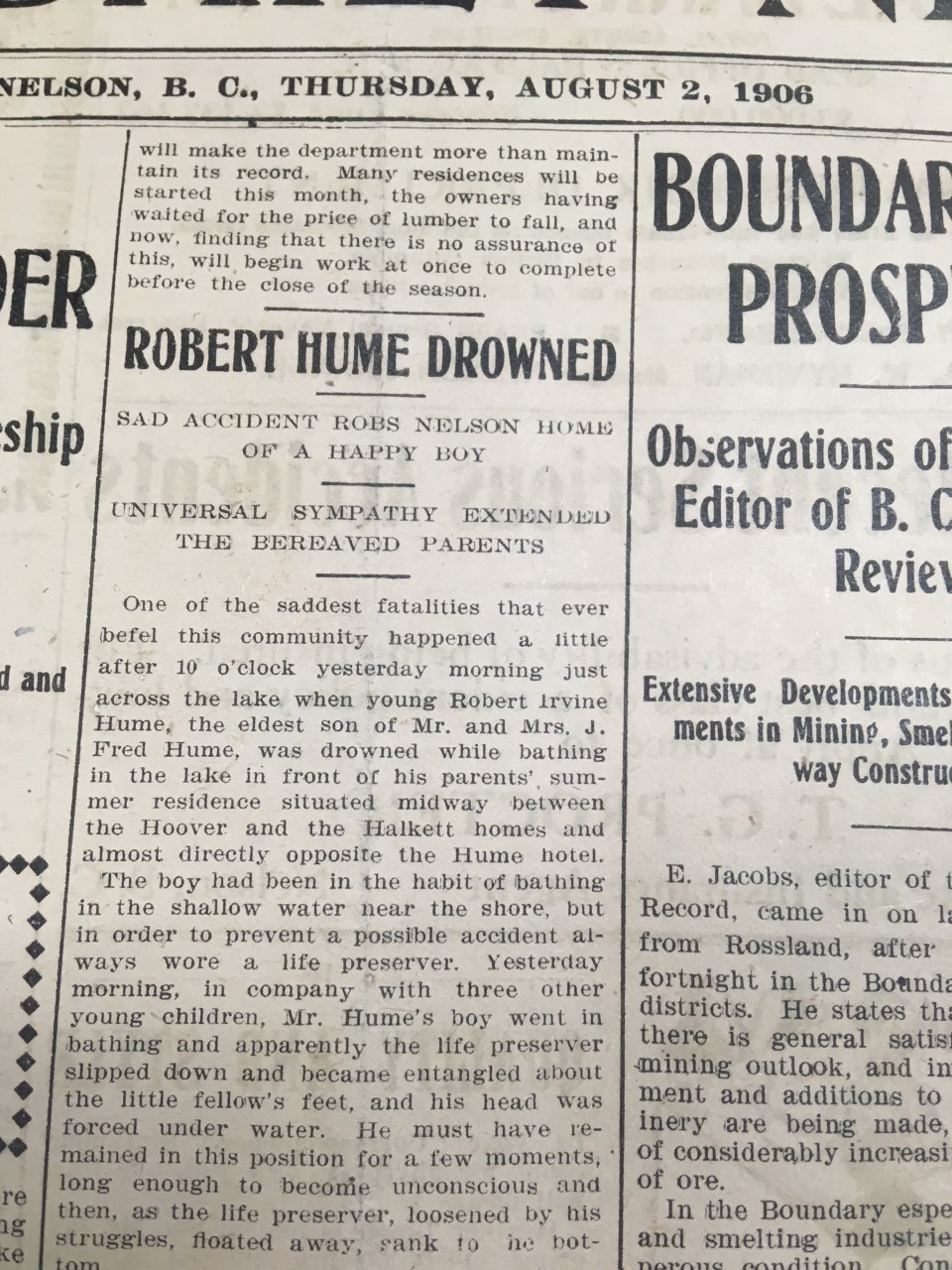
She didn’t mention the Robert Hume drowning specifically (it was before her time), but in retrospect it was among the highest-profile drownings in Nelson history, as the parents J. Fred and Lydia Hume were well-known and highly respected. From the Nelson Daily News reports, the whole city was heartbroken.
It happened at about 10 am on Wednesday, August 1, 1906 in the water near the dock of the Hume’s summer residence across the lake from downtown Nelson, known affectionately as Killarney-on-the-Lake. While playing near the shore with two chums Robert’s life jacket apparently got tangled in the wooden dock. When the playmates noticed he had disappeared they yelled for help. The first adult to arrive was CPR conductor Andrew Halkett, who was at his next-door residence. He dove in the water looking for Robert, but had difficulty finding him. Fred Hume rushed down from the house and dove in as well. They found Robert lying on the lake bottom and brought him to shore. While Fred worked on resuscitation, Andrew went to get medical assistance. Dr. Hall came to help, but after much effort realized Robert was beyond saving. Fred took the body up to the house where Robert was privately mourned by family members.
The Daily News report said Robert was “an exceptionally bright little chap, known the city over… a joy to his parents, a manly little fellow beloved by all his playmates.” He was described as a great favorite among guests at the Hume Hotel, and his passing “was the sole topic of sympathetic utterances, not only around the hotel, but in every home in the city.”
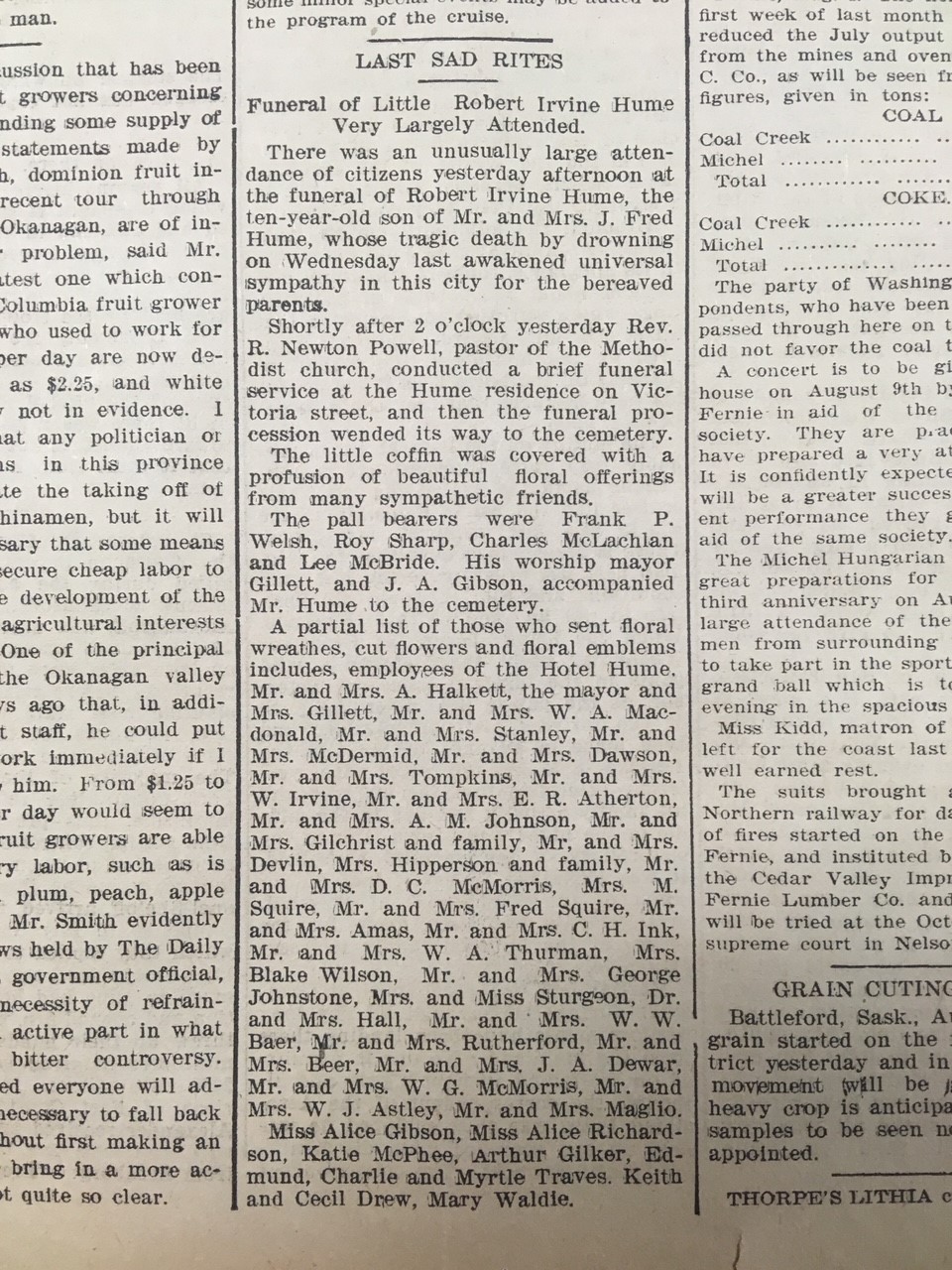
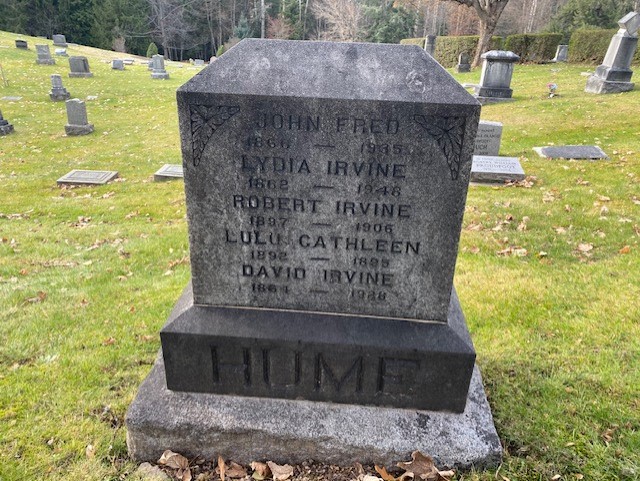
The next day there was a funeral service for Robert at the family’s house on Victoria Street conducted by Rev. R. Newton-Powell, pastor at the Methodist Church. This was followed by a solemn procession up to the cemetery, where he was laid to rest in the Hume plot in the Oddfellows section where 11 years earlier the Hume’s three-year-daughter Lulu Kathleen Hume was buried after dying from diphtheria. In November 1912, another sister, 27-year-old Eva Hume McBride (first wife of my grandfather R.L. McBride, who had been a pallbearer at Robert’s funeral), died from premature childbirth complications. Eva is buried next to R.L. and Winnifred McBride in the nearby Mason section of the cemetery.
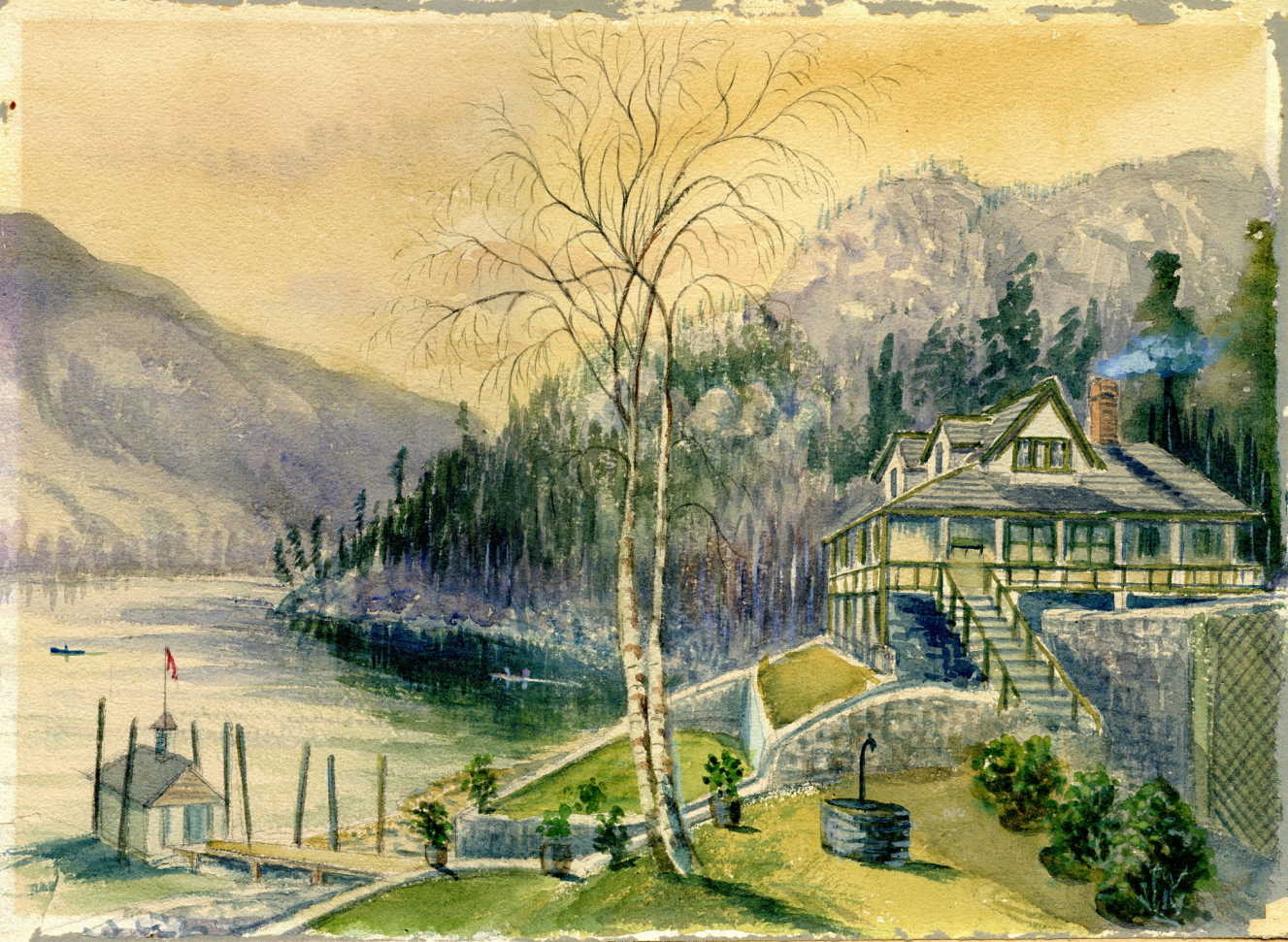
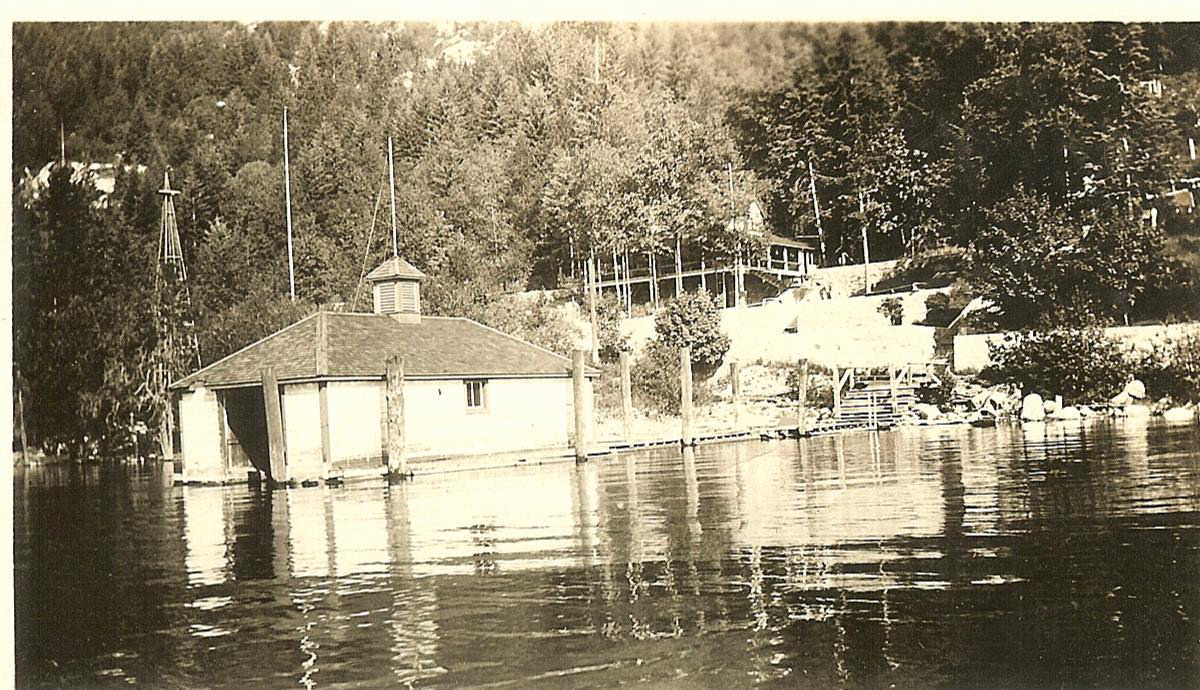
The picturesque Killarney-on-the-Lake summer residence of the Hume family in early 1900s, across the lake from downtown Nelson. The picturesque Killarney-on-the-Lake summer residence of the Hume family in early 1900s, across the lake from downtown Nelson.Boathouse and dock in front of the Killarney-on-the-Lake summer residence of the Hume family. Date of photo not known.Hume family stone at Nelson Memorial Park. Located in the Oddfellows section (J. Fred Hume had been an active member of the I.O.O.F. for many years.
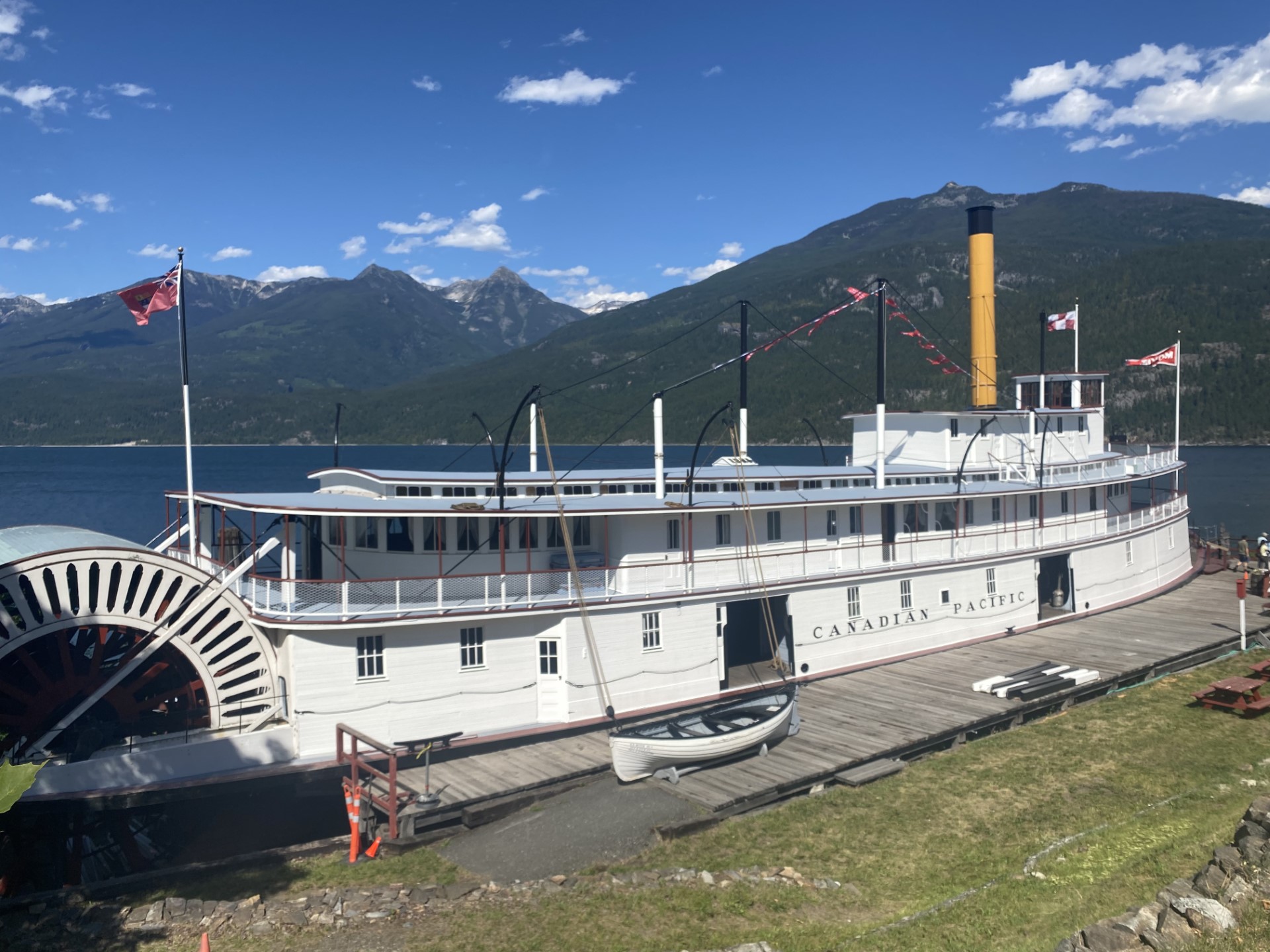
This year marks the 125th anniversary of the S.S. Moyie, the oldest intact passenger sternwheeler in the world, which is lovingly preserved and protected in Kaslo as a National Historic Site. Now that many of the pioneer-era local newspapers are available online, I thought I would take a look at what was being reported back in 1898 when she launched.
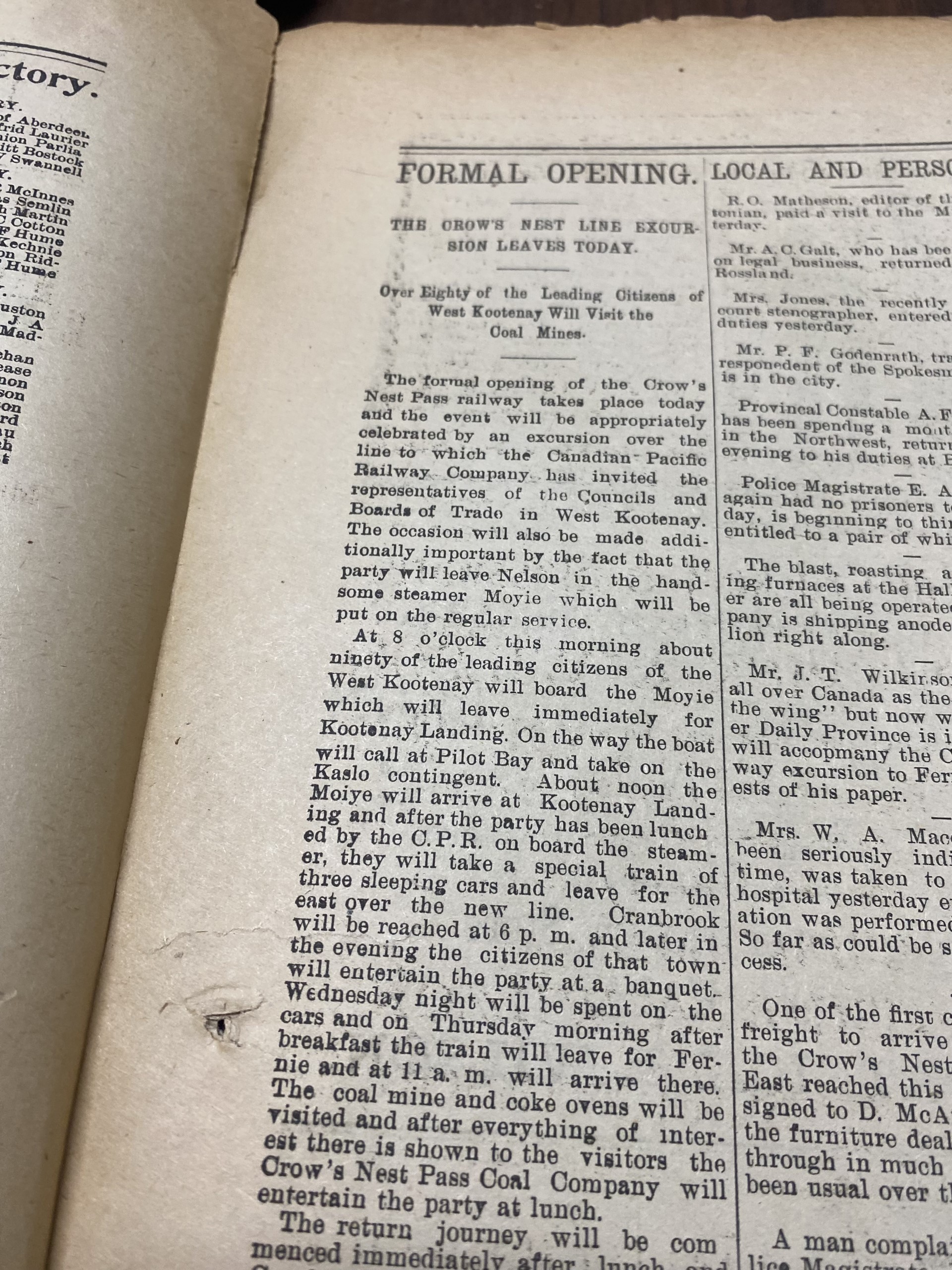
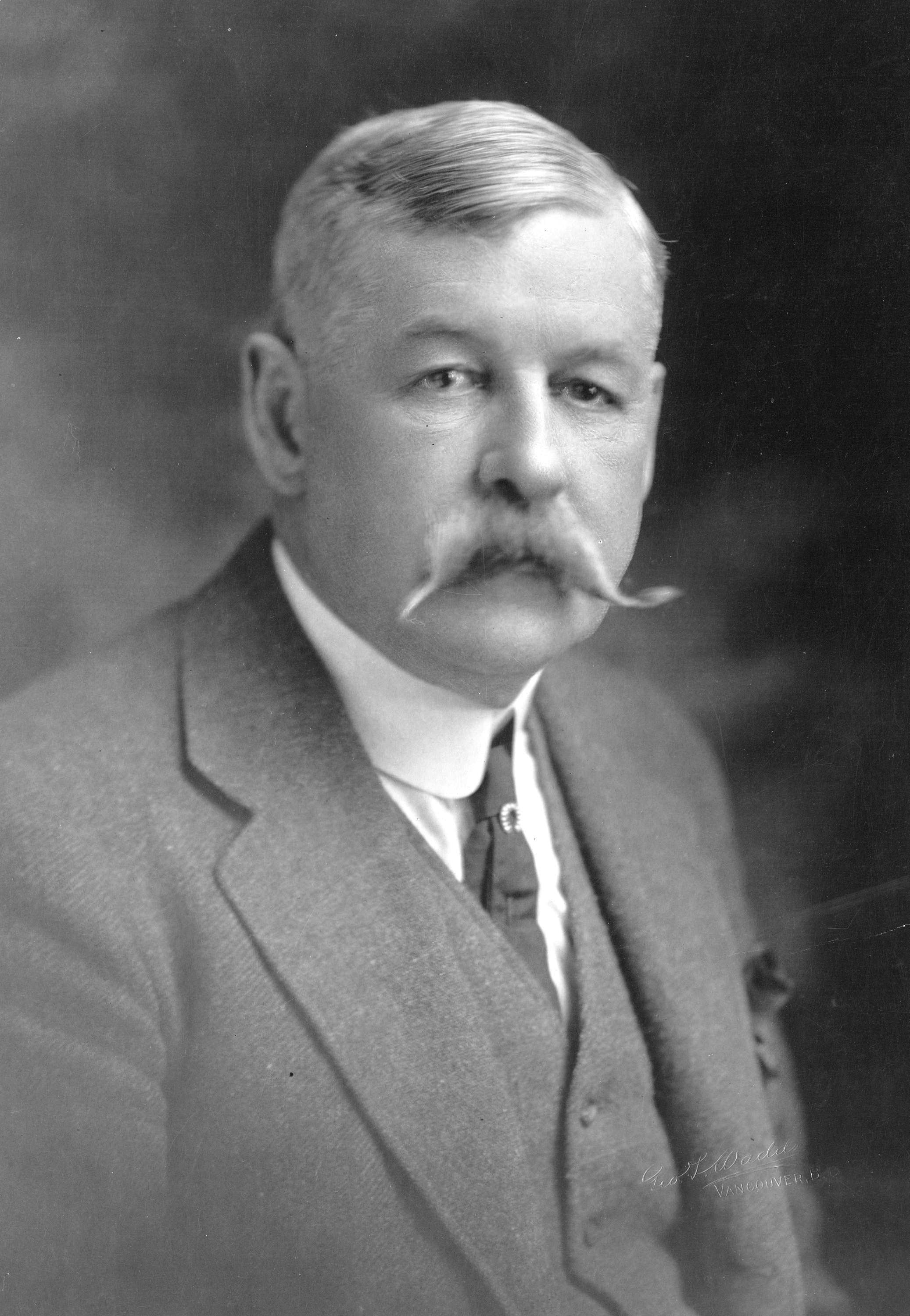
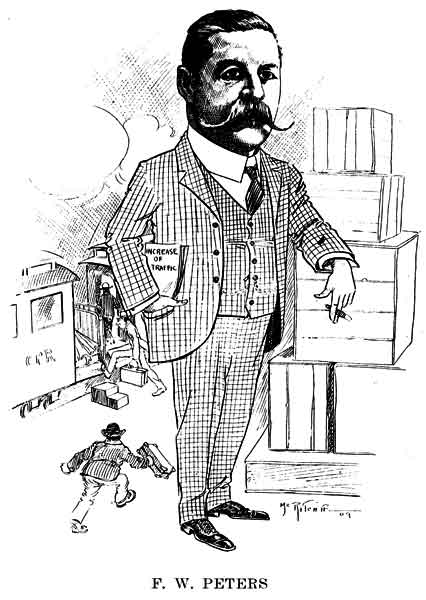
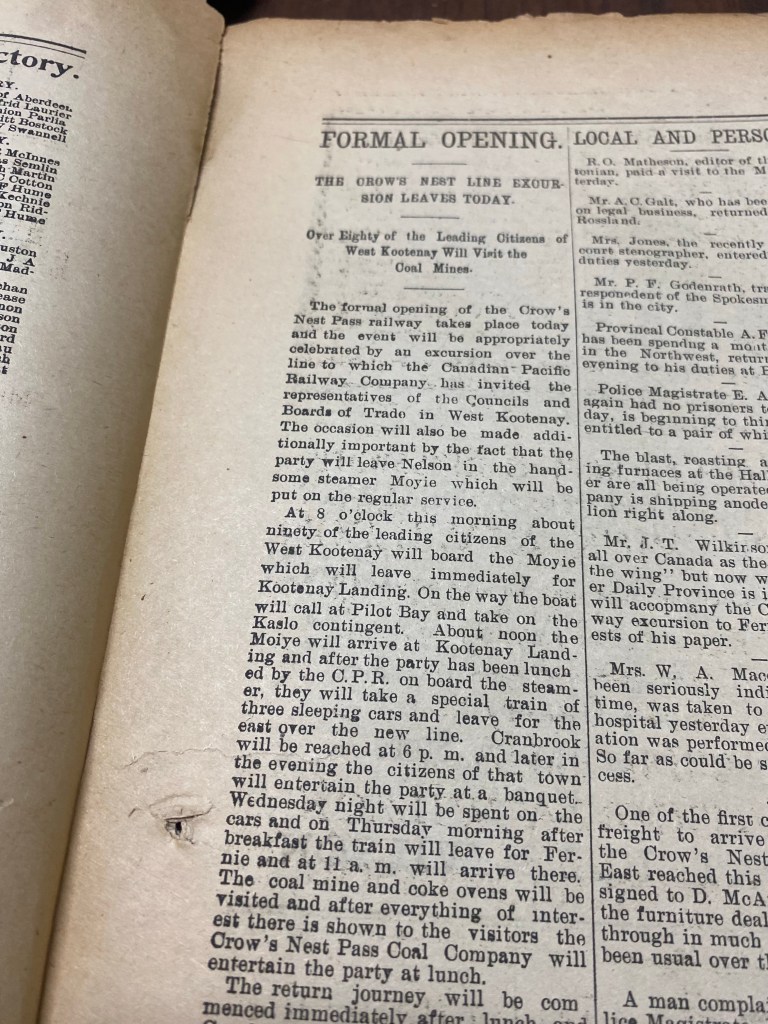
I was interested to see that the ship’s “maiden voyage” was part of a special excursion organized by the Canadian Pacific Railway (CPR) for West Kootenay community leaders that included train trips on the CPR’s brand new Crowsnest Railway. The CPR official in charge of the excursion was its Kootenay district freight agent Francis White “Frank” Peters, assisted by Captain James Troup, who had a large role in the building of the Moyie and was in charge of CPR’s lake fleet, and several other company officials.
Invitations were sent out to members of West Kootenay municipal councils and Boards of Trade as well as press in the region and further afield. That drew an enthusiastic response, as there was intense interest in this new transportation link that dramatically improved access to and from Canadian markets. The Moyie and its sister sternwheelers were essential to the new route, as the end-of-rail was at Kootenay Landing at the south end of Kootenay Lake.
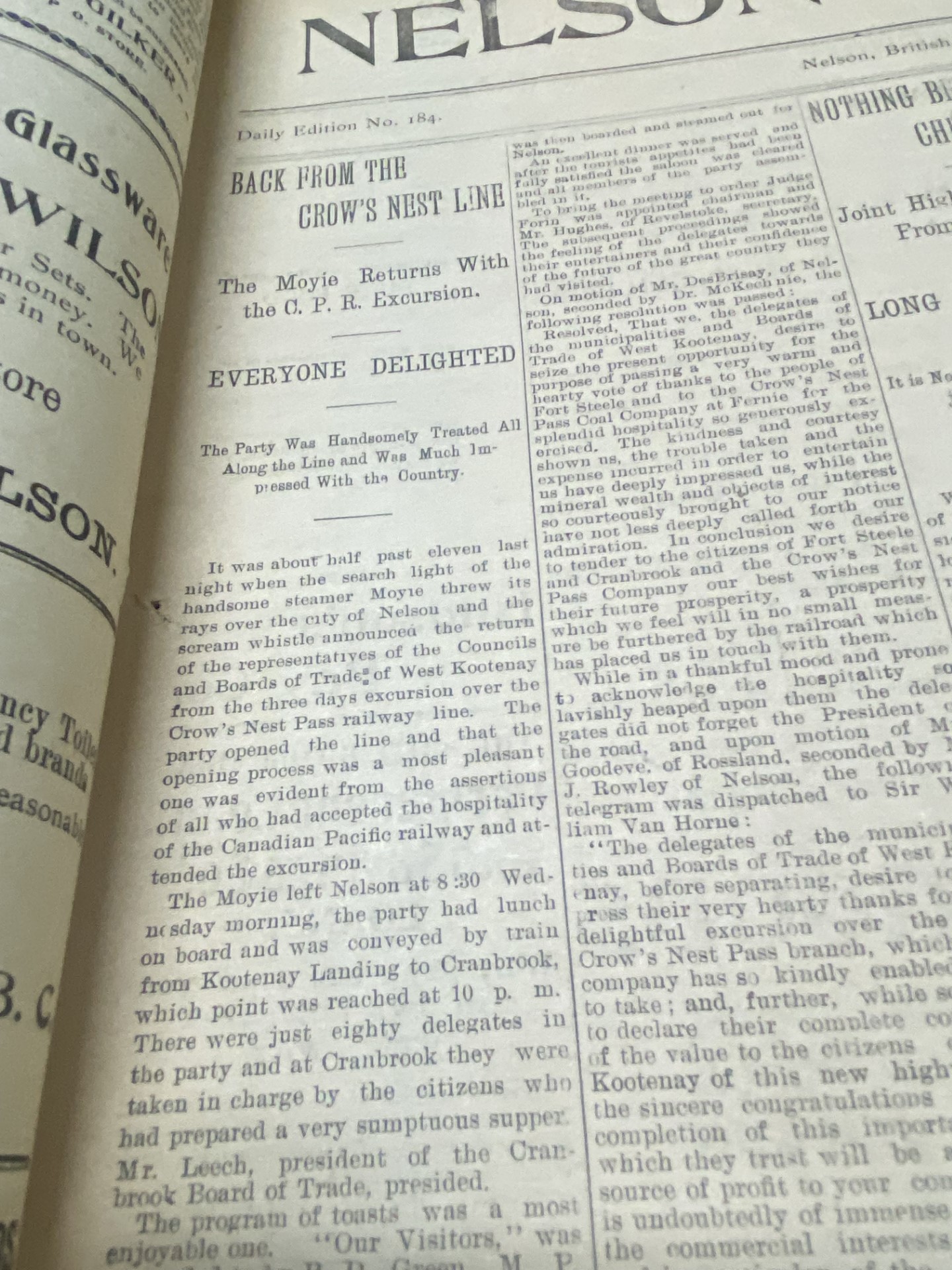
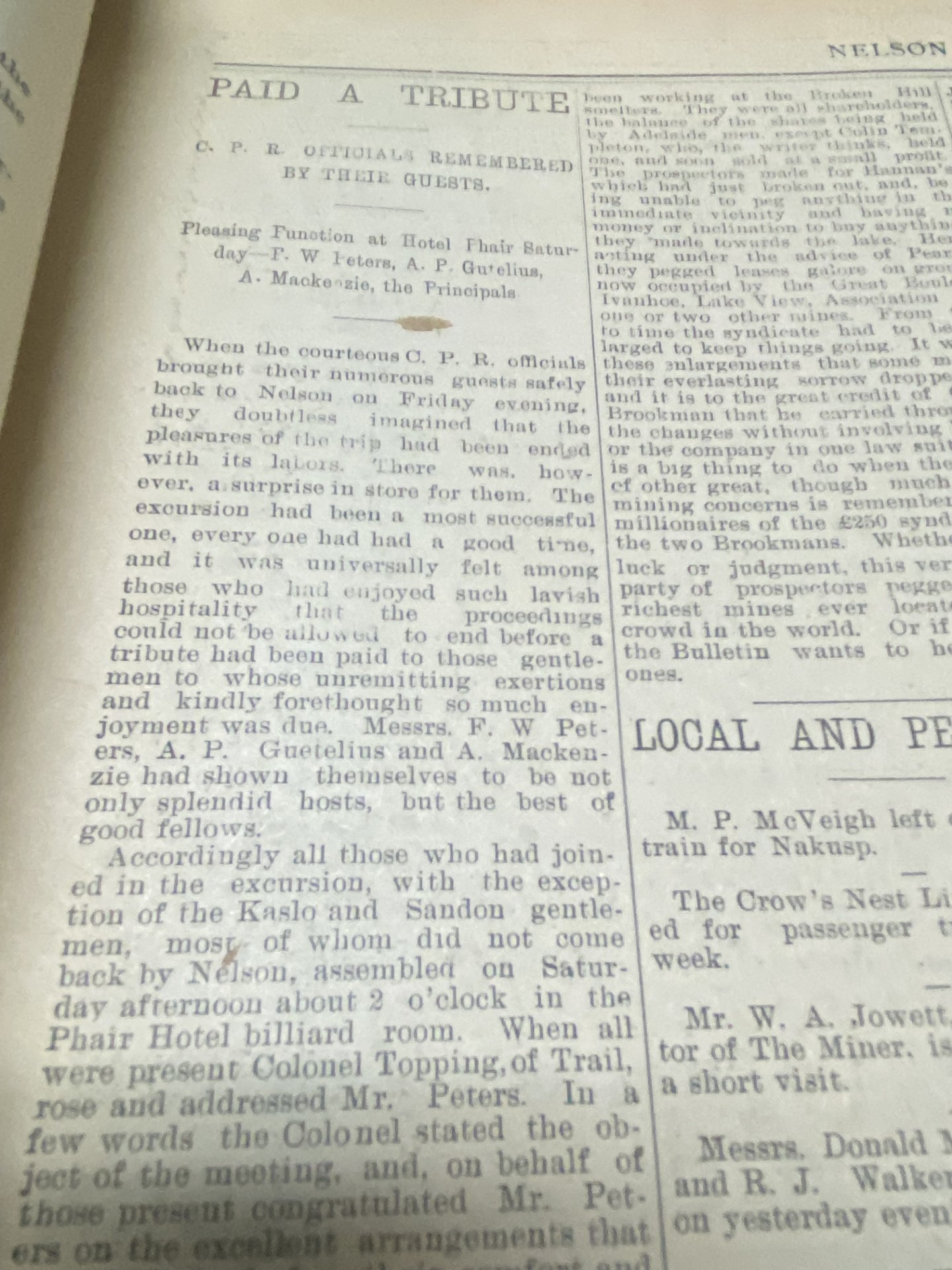
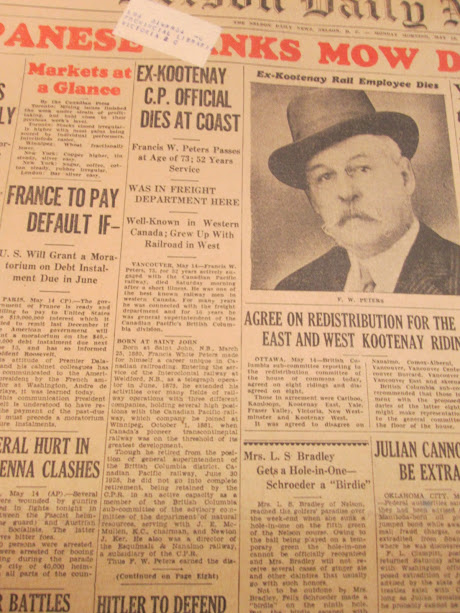
S.S. Moyie seen overlooking Kaslo Bay in September 2023.front page story in Dec. 7, 1898 issue of Nelson Daily MinerFrancis White “Frank” Peters (1860-1933), who was in charge of the VIP excursion.from December 8, 1898 Nelson Daily Minerfrom December 11, 1898 Nelson Daily Miner
The excursion participants included prominent names from West Kootenay history, such as Colonel E.S. Topping from Trail, J.S.C. Fraser and John Kirkup from Rossland, G.O. Buchanan and G.T. Kane from Kaslo, J.M. Harris from Sandon, and Judge Forin and Frank Fletcher from Nelson. You wonder how often – if ever — these leaders from that era would be together like this, with a chance to interact and get to know each other.
According to various accounts, there were between 80 and 105 guests on the excursion. It began with the Moyie leaving Nelson shortly after 8 am on Wednesday, December 7, 1898. At about 11 am the ship had a quick stop at Pilot Bay to pick up guests from the north part of Kootenay Lake and Slocan Valley who had come from Kaslo on the S.S. Kokanee to join the excursion. Landing at Kootenay Landing at about 4 pm, they transferred to a special train that included three sleeping cars with porters, which took them to Cranbrook at about 7 pm, where they were greeted by a delegation of Cranbrook businessmen led by lumber merchant Archibald Leitch. (Note from Nelson history: five years later, on April 29, 1903, the same Archie Leitch rushed from Cranbrook on a special CPR recovery train to the site of the Frank Slide disaster to pick up three nieces who miraculously survived the slide, while their parents and four brothers were killed. The family decided that the youngest of the nieces, Marion Leitch, would stay in Cranbrook and be brought up by Archie and his family, while her older sisters went to Manitoba to live with other relatives. With Archie and his wife as legal guardians, Marion went through school in Cranbrook, then studied music in Vancouver, and decided to settle in Nelson B.C., where she would be a prominent teacher of piano lessons from the mid-1920s until retiring in 1971.)
The Cranbrook Board of Trade sponsored a banquet for the visitors that included numerous toasts of thanks and congratulations back and forth. At that early stage of the new railway there were no dining cars or other food facilities on the trains, so meals were arranged off the train at stops.
After the event wrapped up towards 2 am, the visitors retired to their sleeping cars on the train. Continuing noise from excited passengers made it hard to get much sleep. In the morning the train headed to Fernie, with stops along the way to tour coal mines and coke ovens, as smelters in Trail and elsewhere in the region needed a good supply of coke for their operations. Returning west, the train stopped at about 4 pm at Doris (near Cranbrook), where two-horse and four-horse sleighs would take them about ten miles to Fort Steele, where the local board of trade hosted a banquet at the Vanoster Hotel featuring more toasts, speeches and another ample feast.
Several of the passengers in the horse-drawn sleighs encouraged their drivers to race against other sleighs, just for fun. Unfortunately, two Rossland guests suffered injuries when their sleigh overturned. The problems getting to Fort Steele were a reminder that it was the big loser in the routing of the Crowsnest Railway, as the CPR decided late in the project to save money by bypassing the long-established Fort Steele community in favour of the small settlement of Cranbrook where land costs were much lower. There was talk of a spur line being built to Fort Steele, but that never happened. By the early 1900s it was a ghost town, destined to become a restored and rebuilt tourist attraction in the 1960s.
Based on the comments during and after the excursion, the participants appreciated it as a learning experience with lots of fun and camaraderie. According to the Cranbrook Herald, the most popular dinner speaker at the Fort Steele banquet was Reverend Frew, pastor of the Presbyterian Church in Nelson. He joked that he had taken on the role of chaplain of the travellers, guiding their spiritual and moral protection through the tour. Frew drew a great round of laughter when he said he found the married men to be the most difficult to handle, and “if I succeeded in keeping them from breaking the whole Ten Commandments my mission was not in vain.” His estimate that “just one or two” of the men were not total abstainers from liquor was obviously a gross underestimation, based on the great number of toasts by the revellers.
On Friday the 9th there were further tours for the group during its homeward travel on the rail line to Kootenay Landing, and then sailing the Moyie through the lake to Nelson, stopping at Pilot Bay to drop off Kaslo-bound guests for another boat so they didn’t have to come all the way back north from Nelson. It was less than two weeks since five lives were lost in the sinking of the S.S City of Ainsworth near Pilot Bay in a fierce storm, so that disaster was likely a topic of conversation for all onboard.
On Saturday, December 10, a meeting was held in the Phair Hotel billiard room in Nelson where organizers and participants reflected on the tour. On behalf of the participants, Colonel Topping (known as the Father of Trail) presented excursion leader Frank Peters with a silver punch bowl and tea set as a token of appreciation. Unfortunately, Captain Troup was unable to attend and receive his gift, but three other CPR officials were also honoured with gifts from the travellers.
In 1931 the expensive construction of the rail line from Kootenay Landing through difficult terrain on the west side of Kootenay Lake towards Nelson was completed. This substantially reduced travel time on the Crowsnest line. My dad Leigh was among about a dozen students from Nelson who travelled on the Crowsnest Railway many times in the 1930s and later to get to and from the University of Alberta in Edmonton. At the same time, his brother Ken and other Nelsonites were taking the CPR’s Kettle Valley Railway west to UBC.
Sadly, sternwheeler transport on Kootenay Lake ended with the last voyage of S.S. Moyie in April 1957.
Peters continued his work as freight agent, which included working out new schedules of rates. In the summer of 1900, outside of his CPR work he served as the first president of the Nelson Electric Tramway company, which provided much-needed streetcar service for the hilly community. He was also a member of the exclusive Nelson Club, and active in the Masons as well as curling and other sport associations.
In 1900 the new Nelson streetcar company, known as the Nelson Electric Tramway Company, was having difficulty getting financing from European investors who were wary of investing in such a small, far-away community. Knowing that Europeans had high regard for the CPR and its amazing achievement of the cross-Canada railway, Frank Peters was elected as the first president of the Nelson Electric Tramway company. He presided over the official opening of the streetcar service and the development of what would later be known as Lakeside Park, meant to increase ticket revenue for the streetcar company. Peters’ duties in Nelson ended in late 1900 when the CPR transferred him back to Winnipeg. He reached executive ranks in the company in 1913 with his appointment as general superintendent of B.C.
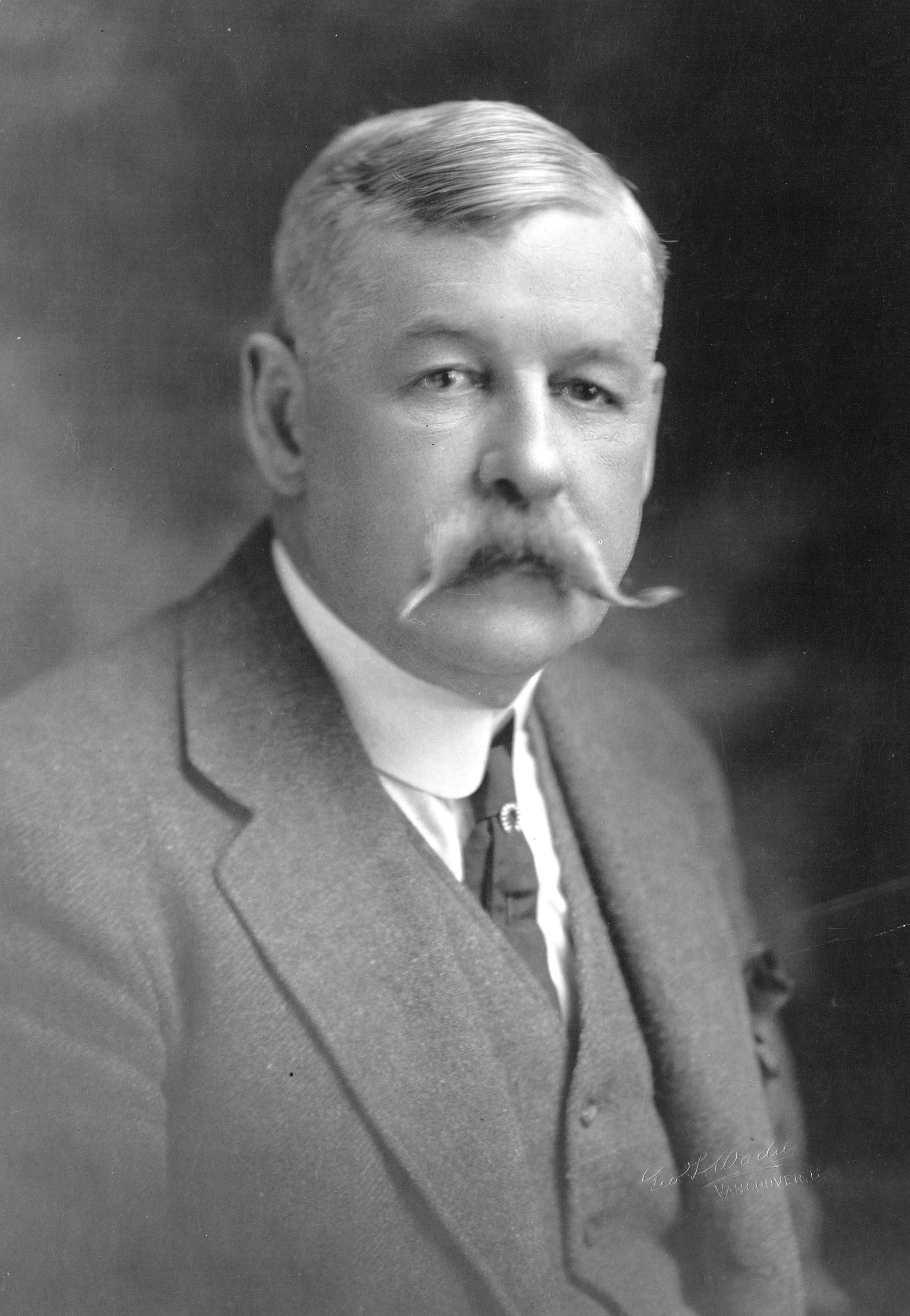
Peters began a long railroading career at age 13 in his native Saint John, New Brunswick as a telegraph operator with the Intercolonial Railway. After gaining experience with a couple of U.S. railroads in the Great Lakes region, he joined the CPR in Winnipeg in 1881 shortly after its incorporation. He reached executive rank with the company in 1910 with his appointment as B.C. Superintendent in Vancouver. While in Nelson he was an active member of the Nelson Club as well as the Masons lodge and several sports organizations.
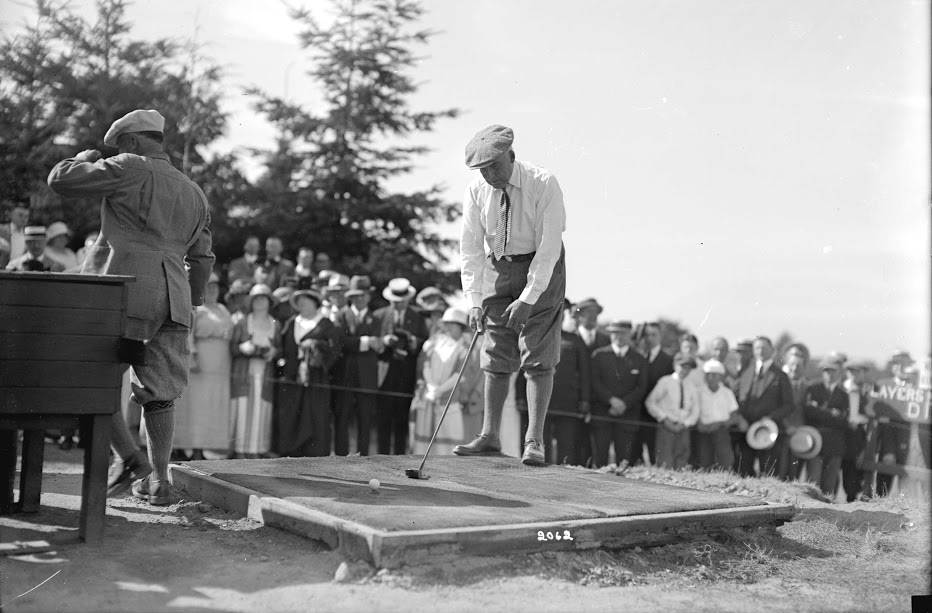
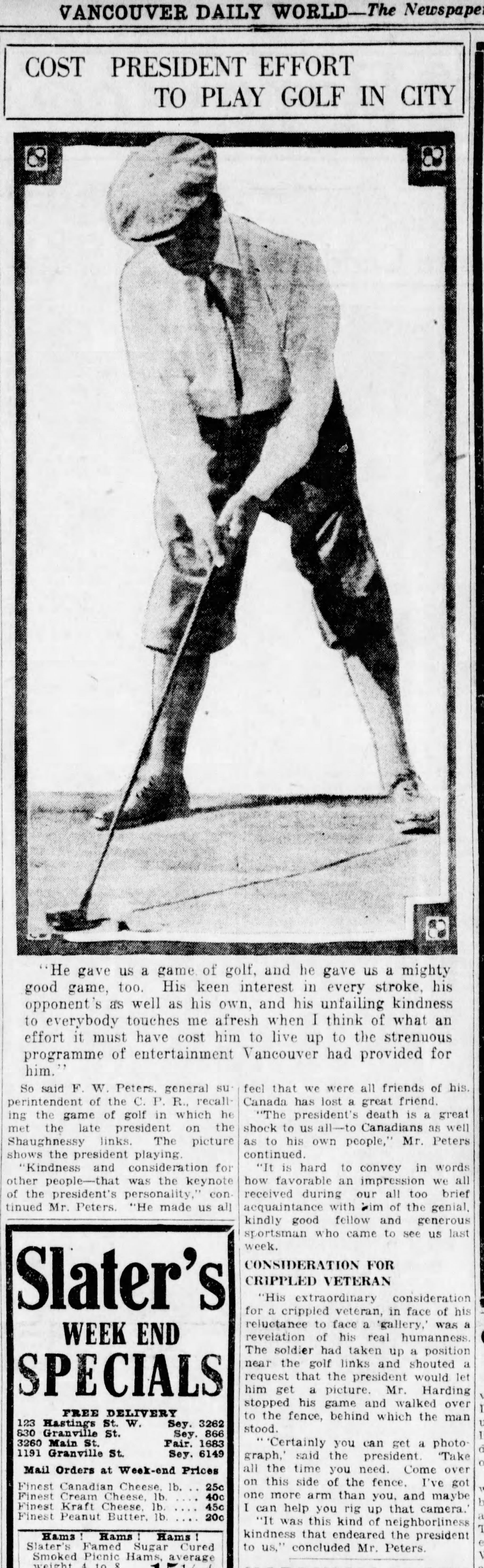
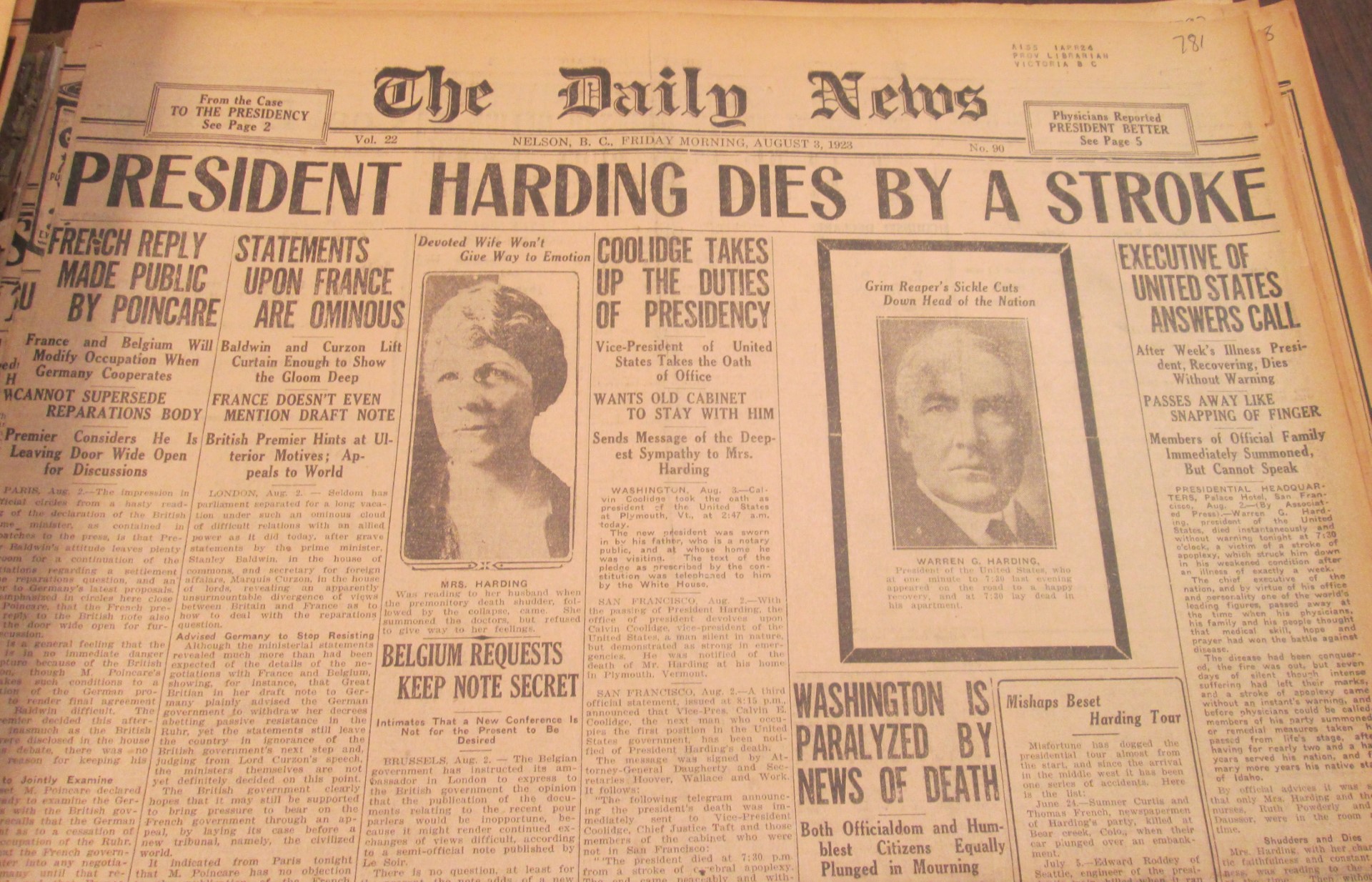
He enthusiastically took up golf in Vancouver and was president of the prestigious Shaughnessy Golf Club in 1922, and a year later was part of a Shaughnessy golf foursome that included visiting U.S. President Warren Harding, exactly one week before the president’s death from a stroke while visiting San Francisco.
Peters retired from the CPR in 1927 after 46 years with the company, while continuing to serve as a director of the CPR subsidiary Esquimalt and Nanaimo Railway. He died in 1933 after 60 years in the railroad business, and was known as the Grand Old Man of Canadian Railroading. .
Francis White “Frank” Peters (1860-1933) shows up on my family tree as a second cousin of my great-grandfather Frederick Peters (1852-1919), the premier of Prince Edward Island who moved west to Vancouver Island in 1897-98. Their common ancestors were their great-grandparents, the United Empire Loyalists James Peters and Margaret Lester who left New York for Saint John in the future Canadian province of New Brunswick in 1783.
As was common with boys of his era, Frank Peters was fascinated by trains and railways. He got his start in the industry at age 13 in 1873 as a telegraph operator with the Intercolonial Railroad in his hometown of Saint John. From there he went to the United States and worked for two railroads in the Great Lakes area, before joining the Canadian Pacific Railway (CPR) in Winnipeg in 1881, shortly after its incorporation.
Frank W. Peters in about 1910. Vancouver Archives
One of his difficult jobs in the next few years was to visit construction camps that were building Canada’s first coast-to-coast railroad, and explain why the cash-poor CPR company would be late in getting their pay to them. In November 1885 he joined his colleagues in celebrating the driving of the last spike of the CPR trans-Canada line. He gained expertise in freight logistics, which led to his transfer to Nelson, B.C. in 1895 as district freight agent.
While based in Nelson he worked with miners, loggers and fruit farmers towards getting their product to markets by rail. Newspaper reports of the time show that Frank was energetic, hard-working and popular with customers and the community.
In 1898 he was staff support for the CPR’s purchase of the Trail smelter and associated rail lines and rights from entrepreneur Fritz Heinze, which led to CPR’s dominant role in the economy of Trail and region for more than 80 years.
The other major event of the year was completion of CPR’s Crowsnest Rail Line from Lethbridge through the Crowsnest Pass to Fernie and ultimately to Kootenay Landing at the south end of Kootenay Lake, where it linked with sternwheelers to reach destinations around the lake. For the first time, the rest of Canada was accessible to the West Kootenay, and vice versa.
On behalf of the CPR, Frank Peters organized events celebrating the arrival of the new rail service, including an orientation tour of the new line, where invitations were sent to West Kootenay municipal council members, board of trade delegates, as well as newspaper reporters and editors. On Wednesday, December 7, 1898 representatives from Nelson and Rossland regions boarded the brand new S.S. Moyie sternwheeler for the voyage to rail transfer at Kootenay Landing. They stopped at Pilot Bay to pick up representatives from Sandon and Kaslo who arrived on the S.S. Kokanee. A total of 82 men came for the tour, including names well-known in the region’s history like Colonel Topping, Frank Fletcher, G.O. Buchanan, Judge Forin, John Kirkup, J. Fred Hume, Col. Robert Lowery and Billy Esling.
The excursion arrived in Cranbrook for a festive dinner, and then three sleeper cars with porters were provided for the guests. The next day the group travelled to and back from Fernie, including tours of coal mines and coke ovens. That evening the banquet was in Fort Steele, which required wagon rides from Cranbrook in the snow, as the CPR had — very controversially—bypassed that established frontier community with its route. Two men suffered minor injuries when one of the four-horse wagons turned over. After dinner and many toasts of congratulations and thanks back and forth, the guests returned to Cranbrook for the evening in sleeping cars. The return trip to Kootenay Landing on Friday, Dec. 9th featured several tours of mines along the way.
Peters was once again the centre of attention in August 1900 when he was elected as the first president of the Nelson Streetcar company. There had been some hesitancy by European investors about the fledgling company, which led boosters to put the CPR man Peters forward as president, as CPR was highly-respected internationally at the time.
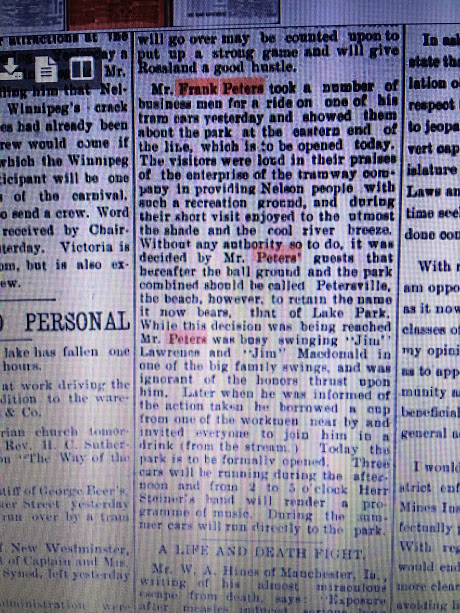
In September 1900 Peters presided at the official opening of the streetcar company, by depositing a coin in the pay slot as first customer. A month later, the city developed what is now known as Lakeside Park, to gain much-needed revenue for the streetcar company. In advance of the park opening, Peters conducted a tour for a group of local businessmen and the newspaper editor. He encouraged the men to relive their youth by pushing each other on the park’s swings. They had such a good time that they half-seriously put forward a recommendation that the new park be called Petersville. Instead, it was named Lake Park, and later was known as Lakeside.
In December 1900 the CPR transferred Peters back to its Winnipeg office as assistant to vice president. He continued to be recognized as the company’s “Kootenay Man” for special projects such as the Kootenay Lake Hotel at Balfour. He participated to in several meetings with boards of trade regarding the design and location of the new hotel.
In 1912 Peters joined CPR’s executive group in Vancouver when he was appointed to the new position of B.C. Superintendent. He became very active in the Vancouver business scene, serving as president of the Commercial Club and later as president of the Vancouver Club. Always keen on sports, he had been president of the Manitoba Curling Association, and while in Nelson he served as president of the B,C. Curling Association. In Vancouver he and his wife lived among other CPR executives in the exclusive Shaughnessy neighbourhood and he was an active member of the prestigious Shaughnessy Golf Club, serving as president of the club in 1922.
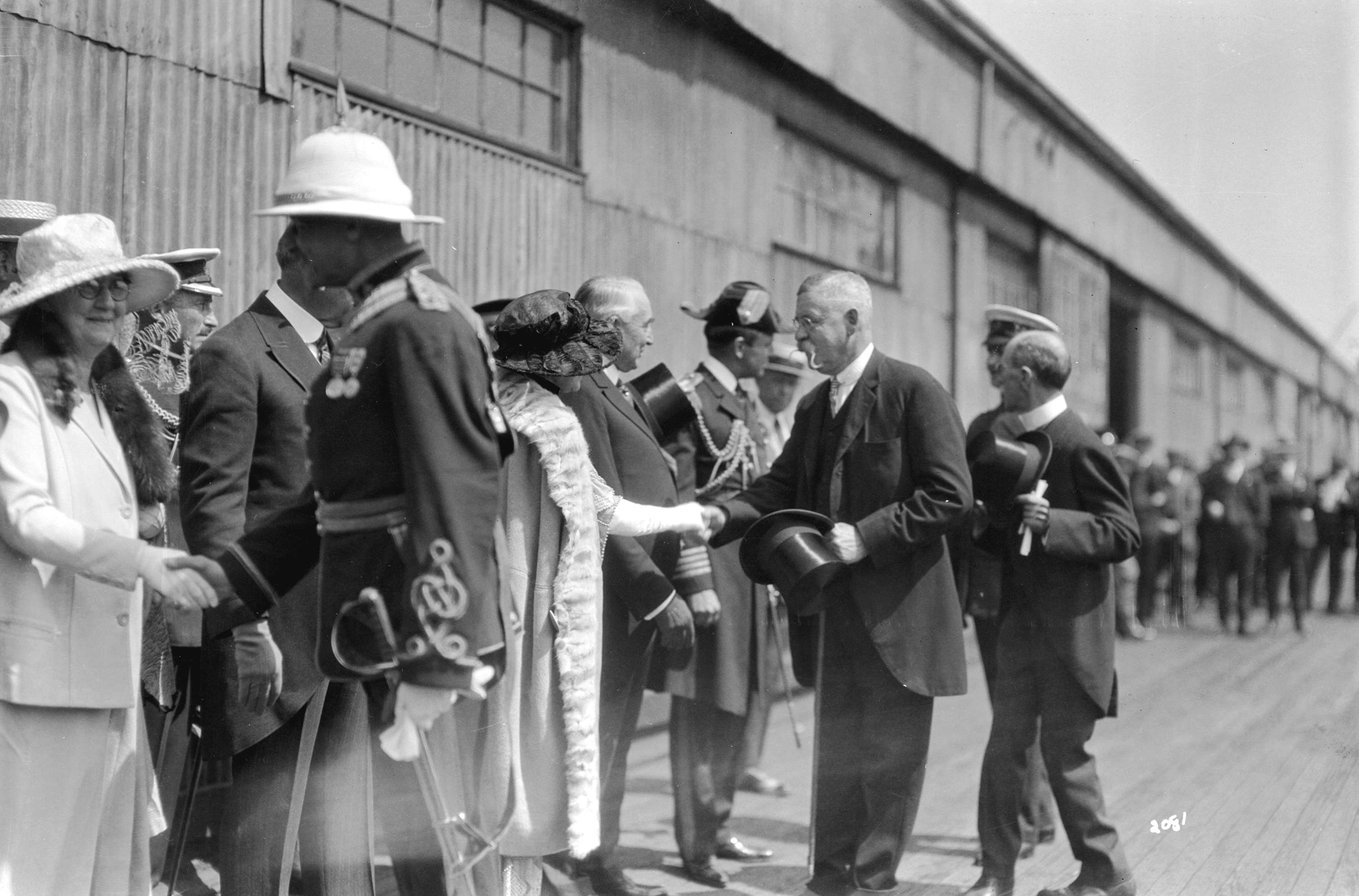
Frank Peters (with handlebar moustache) greets President and Mrs. Harding in Vancouver July 27, 1923.President Harding teeing off at Shaughnessy. Vancouver Archives.
In World War One Frank Peters was one of two Western Canadians appointed to the national Military Hospitals Commission, created to find or build facilities for treating the huge numbers of wounded soldiers on their return to Canada. Peters would be a driving force in establishing the highly-regarded Shaughnessy Veterans Hospital.
As he was well aware of the luxurious Kootenay Lake Hotel in Balfour sitting empty during the war, it may well have been him who suggested it could temporarily serve as a hospital. As it turned out, the hotel would be used as a sanitorium for tuberculosis victims, but this association with TB made it subsequently undesirable for tourists, which caused it to be closed permanently and dismantled for building materials in the late 1920s.
In July 1923 U.S. President Warren G. Harding was in the middle of a visit to Alaska when he advised aides that he wanted to stop in Vancouver on his way back to mainland U.S., and play golf at the Shaughnessy Golf Course, which he heard was exceptional. Arrangements were made at short notice, including playing partners for his round of golf. As the lieutenant governor was not a golfer, it was suggested that the jovial past president of the club, Frank Peters, be in the foursome, along with a local judge and the club pro. Peters was honoured to be asked, and gladly joined the presidential foursome. Harding came to the course after speaking to a crowd of 50,000 at Stanley Park. It was the first time a sitting American president visited outside his own country. Harding requested that no spectators be allowed on the course while they were playing, except at the 18th hole where the round finished.
According to a couple of the caddies years later, Harding asked his playing partners to stop for a break during play on about the seventh hole. He pleaded with them to never mention there was a problem with his health, as it would damage his presidency. The group rested, and then moved to about the 15th hole to continue play, as if there had been no interruption. They were greeted by a cheering crowd on the 18th green.
After leaving Vancouver, Harding continued his West Coast tour. Exactly a week later, on August 3, 1923, Harding died suddenly at age 56 in his hotel room in San Francisco. The death from a stroke would be front page news around the world. His wife Florence, who had been with him in the room, insisted that he be embalmed immediately, with no autopsy. This led to suspicion that she may have had something to do with his death, perhaps as revenge for the affairs he had with other women.
The press contacted Frank Peters for his reaction to the death of the president. He expressed his sorrow at the death of an outstanding man. He said he was an excellent golf playing partner, and made no mention of their game being stopped to give Harding time to recover.
Not long after Harding’s death, word emerged of major financial scandals during his administration, including the Teapot Dome Scandal of kickbacks to a cabinet minister for approving oil drilling rights.
The circumstances of his death continued to be cloudy, and were the focus of a 1930 book by former administration official Gaston Means titled “The Strange Death of President Warren G. Harding”.
Frank Peters continued as CPR’s B.C. Superintendent until retiring at age 67 in 1927. A joke at the time was that Peters couldn’t retire because he was the only person alive who understood Canada’s complex rail freight rates. In retirement, he continued to serve as a director of the CPR subidiary Esquimalt and Nanaimo Railway.
Peters died at age 73 in Vancouver in 1933, known as The Grand Old Man of Canadian Railroading.
Frank Peters death announced in Nelson Daily NewsNelson Daily Miner report of orientation tour of new CPR Crowsnest Line in December 1898, organized and led by freight agent Frank Peters.
Growing up in the small, relatively remote Kootenay city of Nelson, British Columbia in the 50s and 60s, I often thought that we Nelsonites would be on the sidelines as the world outside changed year by year.
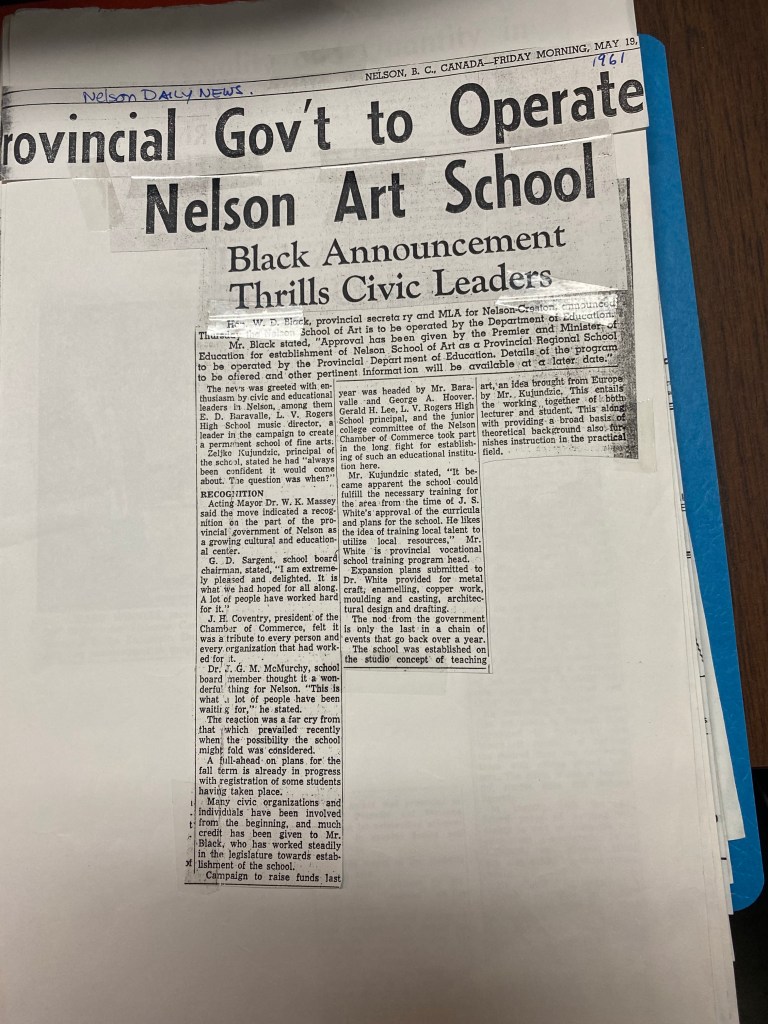
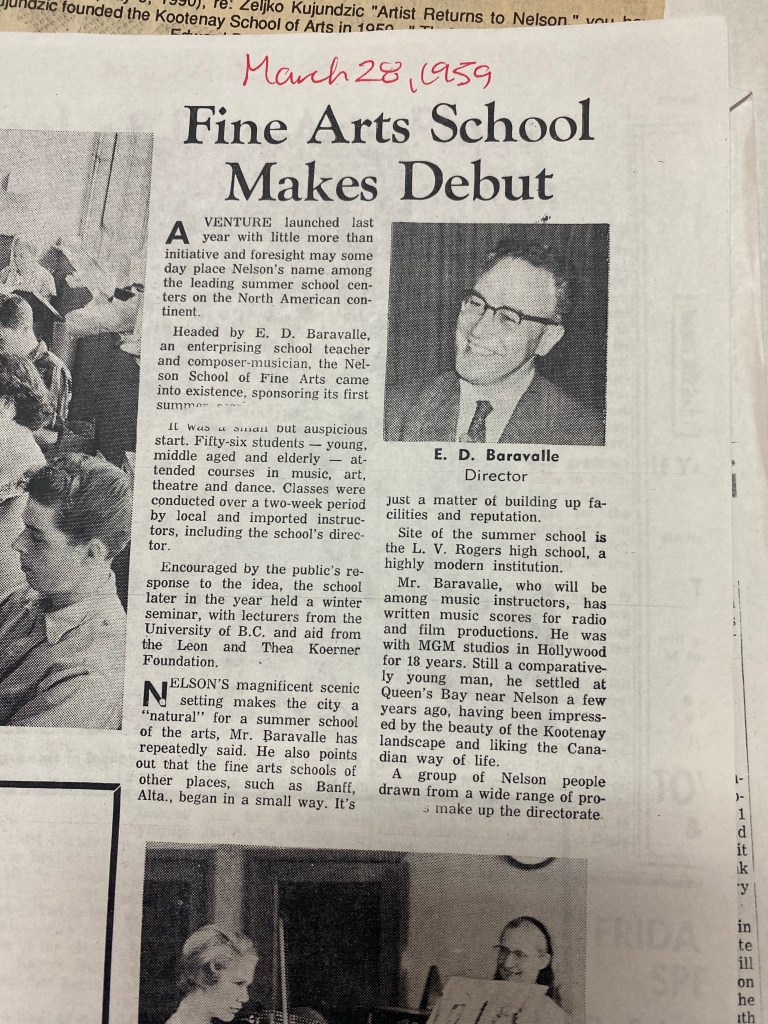
Then in the late 50s and early 60s I noticed there was a lot of excitement about Nelson becoming a centre for training in visual and performing arts. The names you often heard were Ed Baravalle, a veteran of numerous Hollywood movies as music editor, including “The Ten Commandments” in 1956. He came to Kootenay Lake for a visit, and loved the scenery and setting so much he made his new home at Queens Bay and was the driving force and first director of the Nelson Summer School of the Fine Arts. His right-hand man in this work was the dynamic painter Zelko Kujunzik from Europe.
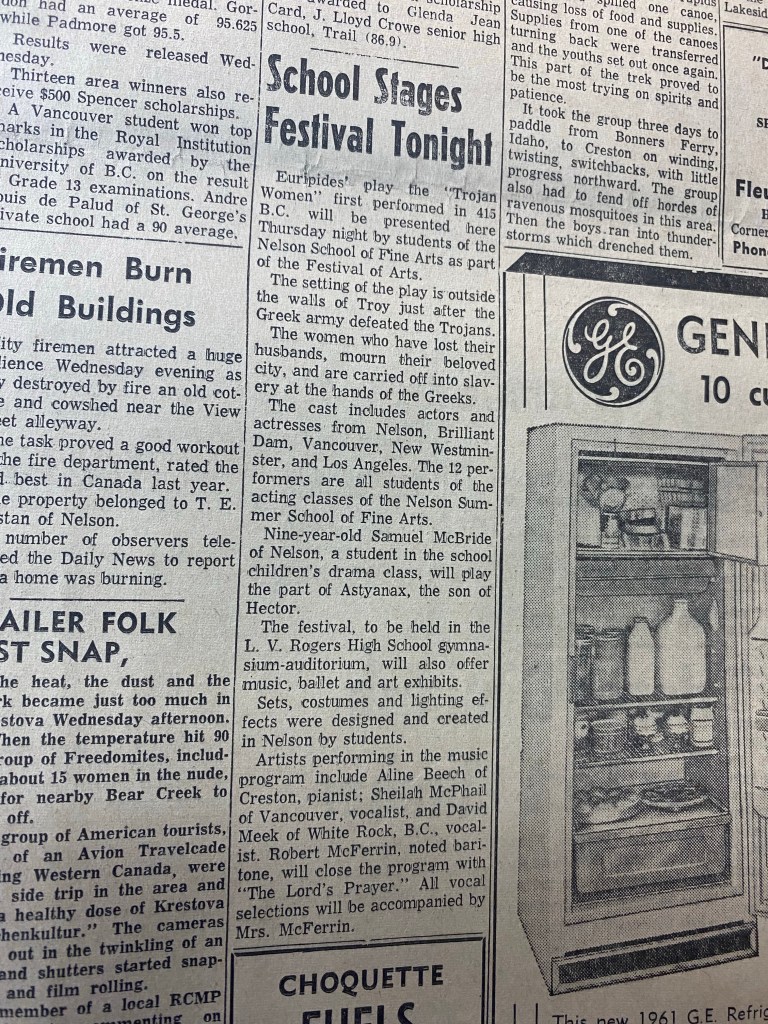
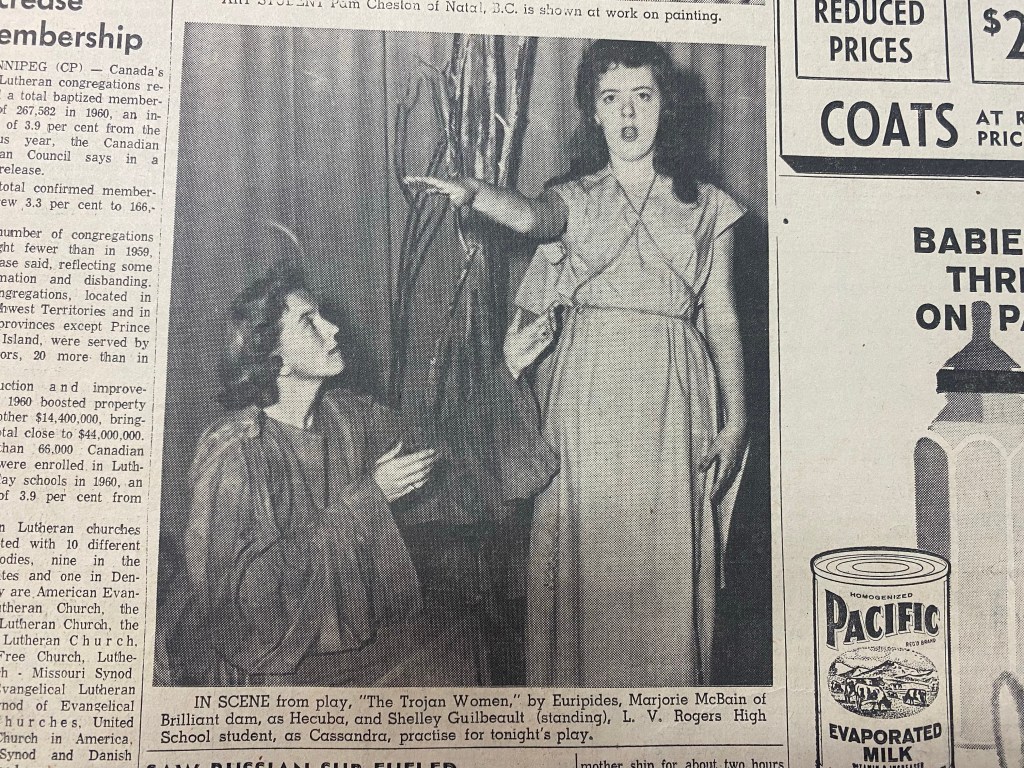
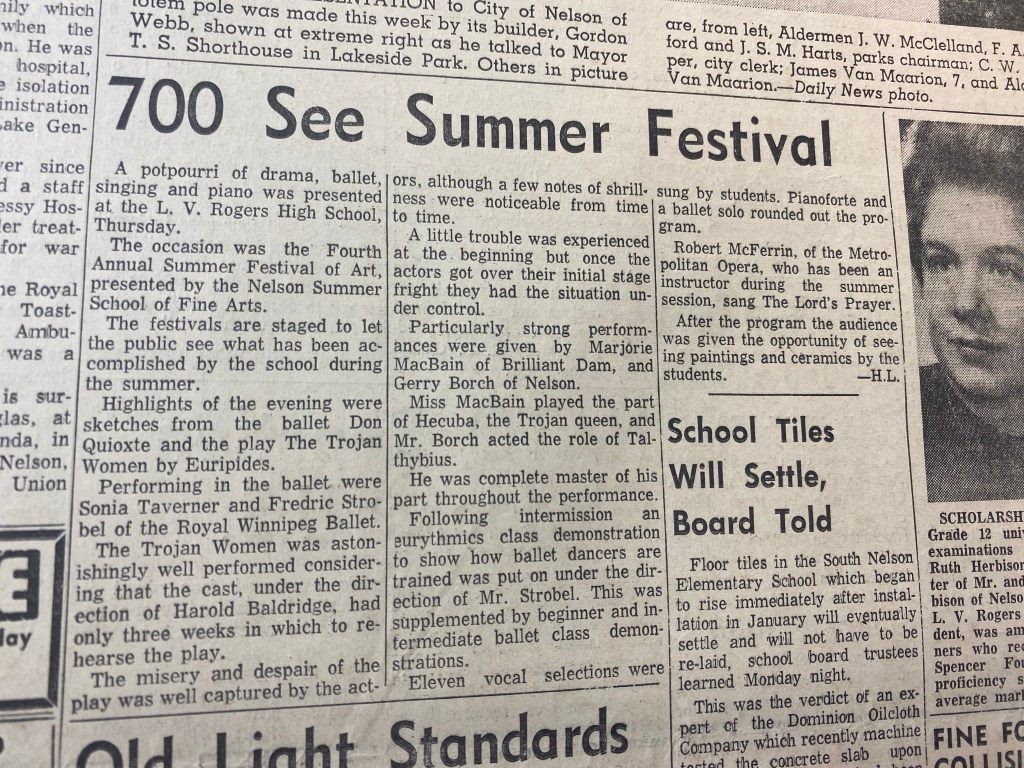
My mother Dee Dee, who had spent much of her youth learning and performing piano and voice, was thrilled to see her longtime home town become an arts centre, and volunteered at many levels to support. In the summer of 1961 she enrolled me in a children’s drama class that led to me performing the role of King Hector’s son in the play “The Trojan Women” which was part of a gala School of Fine Arts event on July 27, 1961 at the LV Rogers High School gym that also included dance and music presentations.
Article in July 27, 1961 Nelson Daily NewsFrom July 28, 1961 Nelson bc Daily News
A highlight of the evening was the singing of “The Lord’s Prayer” by renowned American baritone Robert McFerrin, accompanied on the piano by his wife Sarah. Robert had made a name for himself as a singer for Hollywood movies like Porgy and Bess, where his voice was dubbed into songs by Sidney Poitier playing Porgy.
My mother and many other Nelsonites regarded the years of the School of Fine Arts as a Golden Age for the city.
Very likely in the audience that night was the couple’s 12-year-old son Bobby McFerrin, who would become famous in his own right in the 1980s for his soothing song “Don’t Worry, Be Happy”.
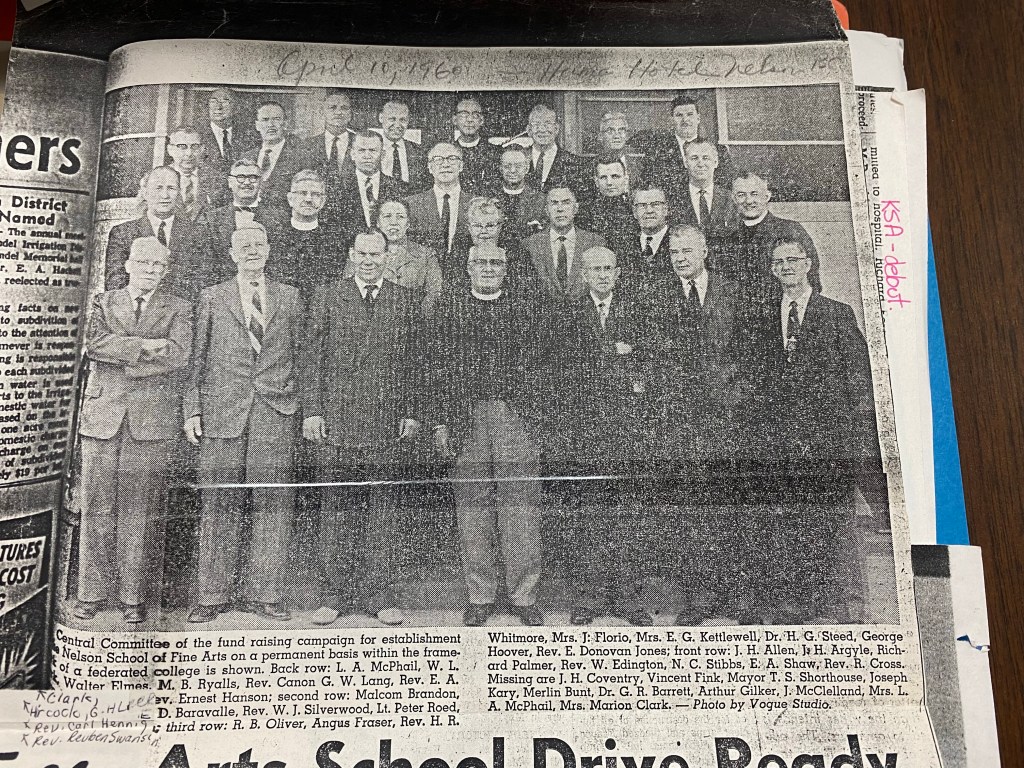
Here are some Nelson Daily News articles with information on the founding of the Nelson School of Fine Arts.
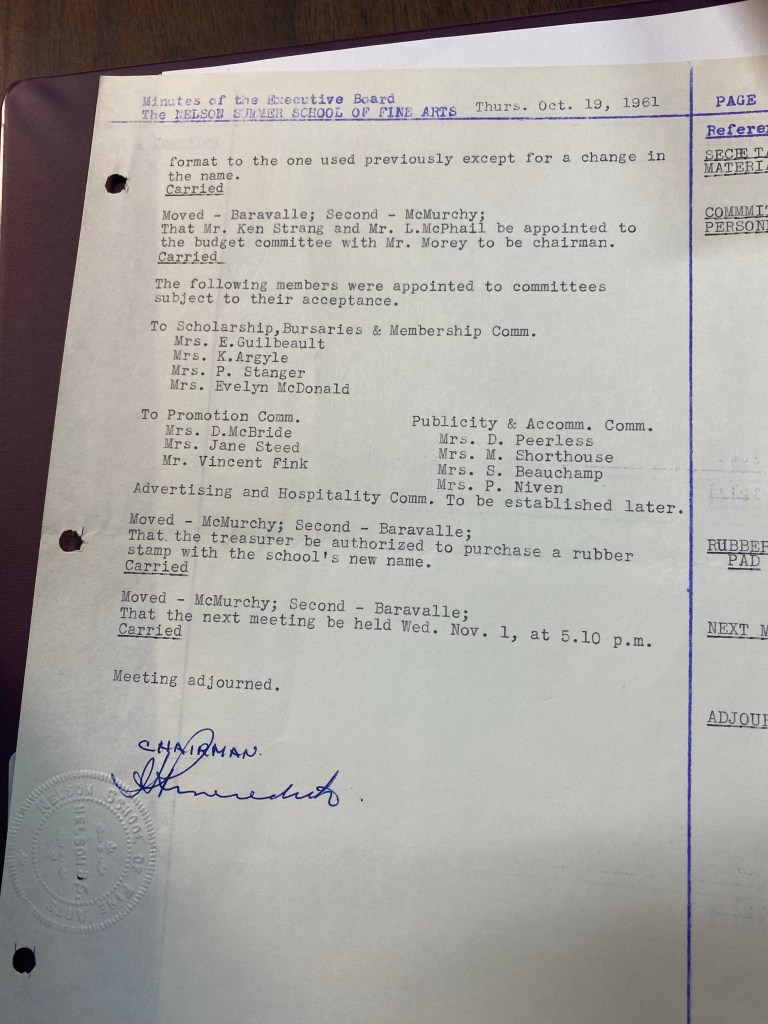
My mother Dee Dee McBride was on the School of Art’s promotion committee, as noted here in meeting minutes. Among the others doing committee work was her good friend Pauline Stanger.
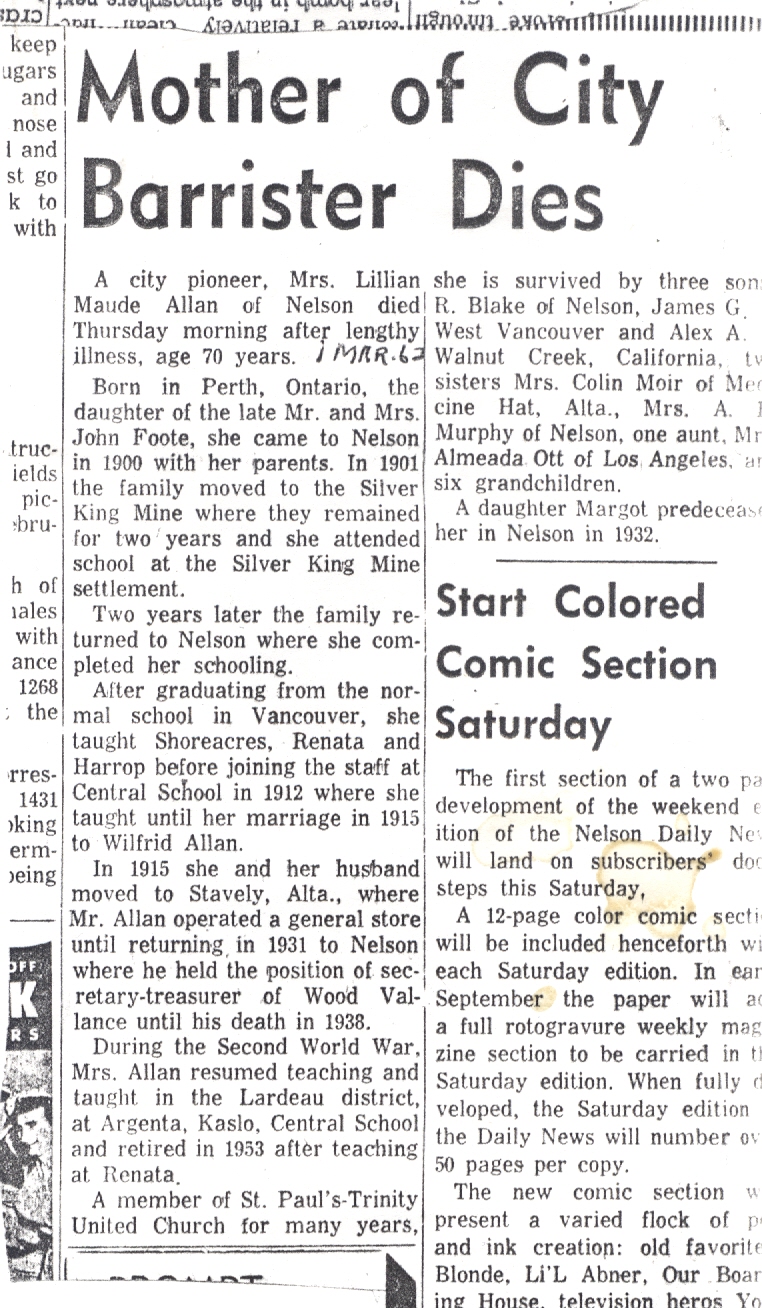
My great-aunt Lillian Allan (1891-1962) had two very different stretches of teaching in the far corners of the West Kootenay region of southeastern British Columbia, separated by 25 years as a wife raising children.
Born Lillian Maude Foote on April 23, 1891 in Perth, Ontario as the second child of Jim Foote and Edith W. James, she came west with the family in 1900 as her father had started a job as blacksmith at the then-famous Silver King Mine near Nelson, B.C. They lived in a rented cabin in the townsite next to the mine, about five miles from Nelson. She and her sisters Winnie Mae Foote (1889-1960) and Gladys Edith Foote (1894-1965) attended a one-room schoolhouse at the townsite along with about 10 other students, while younger sister Isabel Bessie Foote (1897-1988) stayed at home with her mother.
Two years later the family moved to Nelson when Jim got a job with the City of Nelson construction department. Lil, as she saw known to family and friends, loved learning and was an excellent student. Upon finishing school in Nelson she immediately went to Normal (teaching) school in Vancouver, and returned to her first teaching assignment in the Nelson area a year later.
According to her son, family historian Judge R. Blake Allan (1916-2009), Lil taught at Shoreacres, Renata and Harrop before joining the staff at Central School in Nelson where she taught until her marriage to Wilfrid Laurier Allan (1894-1938) in 1915. In 1916, the family, including baby Blake, moved to Stavely, Alberta where they ran the Allan family’s general store. They returned to Nelson in 1931 when Wilfrid took on the position of secretary-treasurer for Wood Vallance Hardware upon the retirement of Alex Leith.
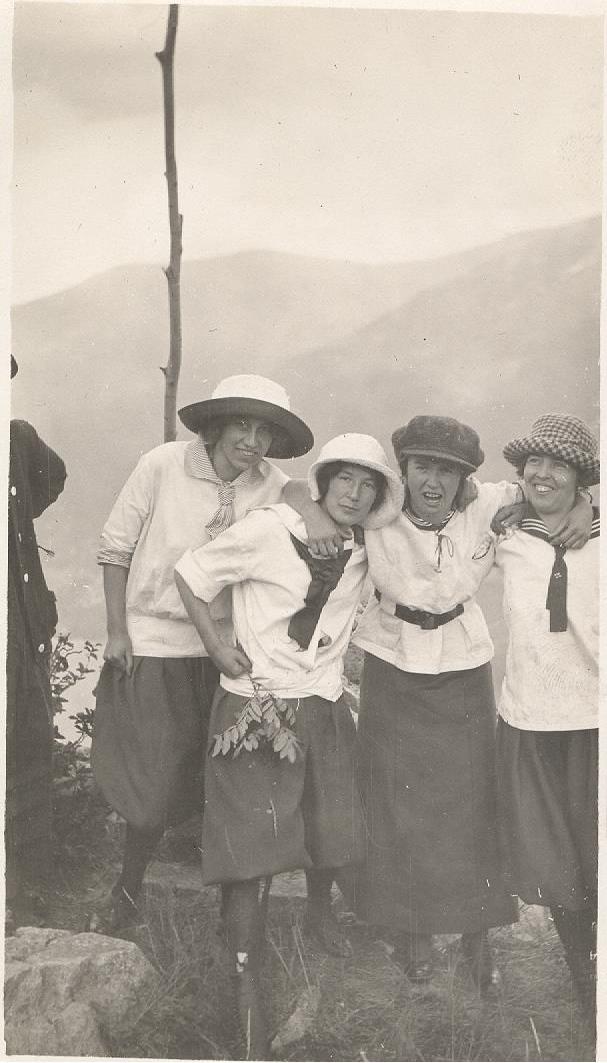
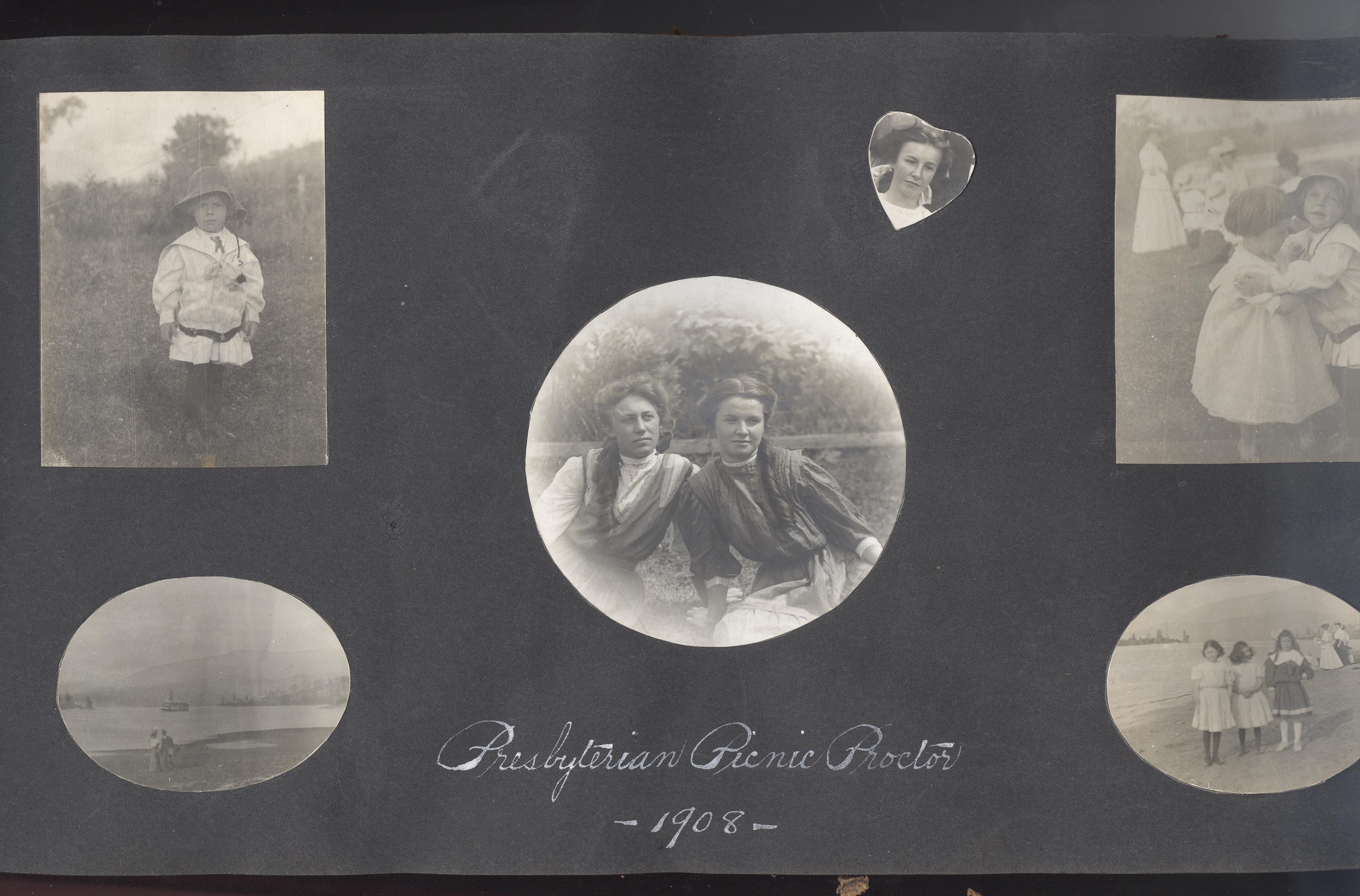
Lil (second from the right) enjoying a hike along one of the spectacular mountain trails near Nelson in about 1908. Second from left is sister Gladys Foote, and at right is friend Bessie Lillie, who would marry Dr. Wilmot Steed. Very likely taken by Winnie, who was a keen photographer and scrapbooker.This photo in Winnie Foote’s album shows Lil in the centre photo on the right at about age 17. Sister Glad is in the heart-shaped photo.
Son James Grant Allan was born in 1919, daughter Margo Francis Allan was born in 1921, and son Alexander Arthur Allan was born in 1925. Margo died in Nelson on May 16, 1932.
Wilfrid and Lil Allan at about the time of their wedding.
On September 22, 1938 Wilfrid died in Chicago while undergoing experimental treatment of lung cancer. His brother Alexander Hamilton Allan came from Nelson to assist Lil with funeral arrangements.
Lil proved to be an adept investor of the life insurance she received, and later with proceeds from selling the family home after the three sons were on their own, either at university or in the military. The economy was rebounding from the Depression due largely to increased government spending with war on the horizon. Lil was able to support her three sons through university, with Blake studying arts and law at University of Alberta, Jim in commerce at University of B.C., and Alex in commerce at Queens University.
With Canada at war, there was a shortage of teachers in the region because so many had signed up for military service. Lil thought she could serve her country and region by renewing her teaching career. The need appeared to be particularly pressing in isolated communities in the region which could only be reached by boat, as access roads did not exist in the mountainous terrain.
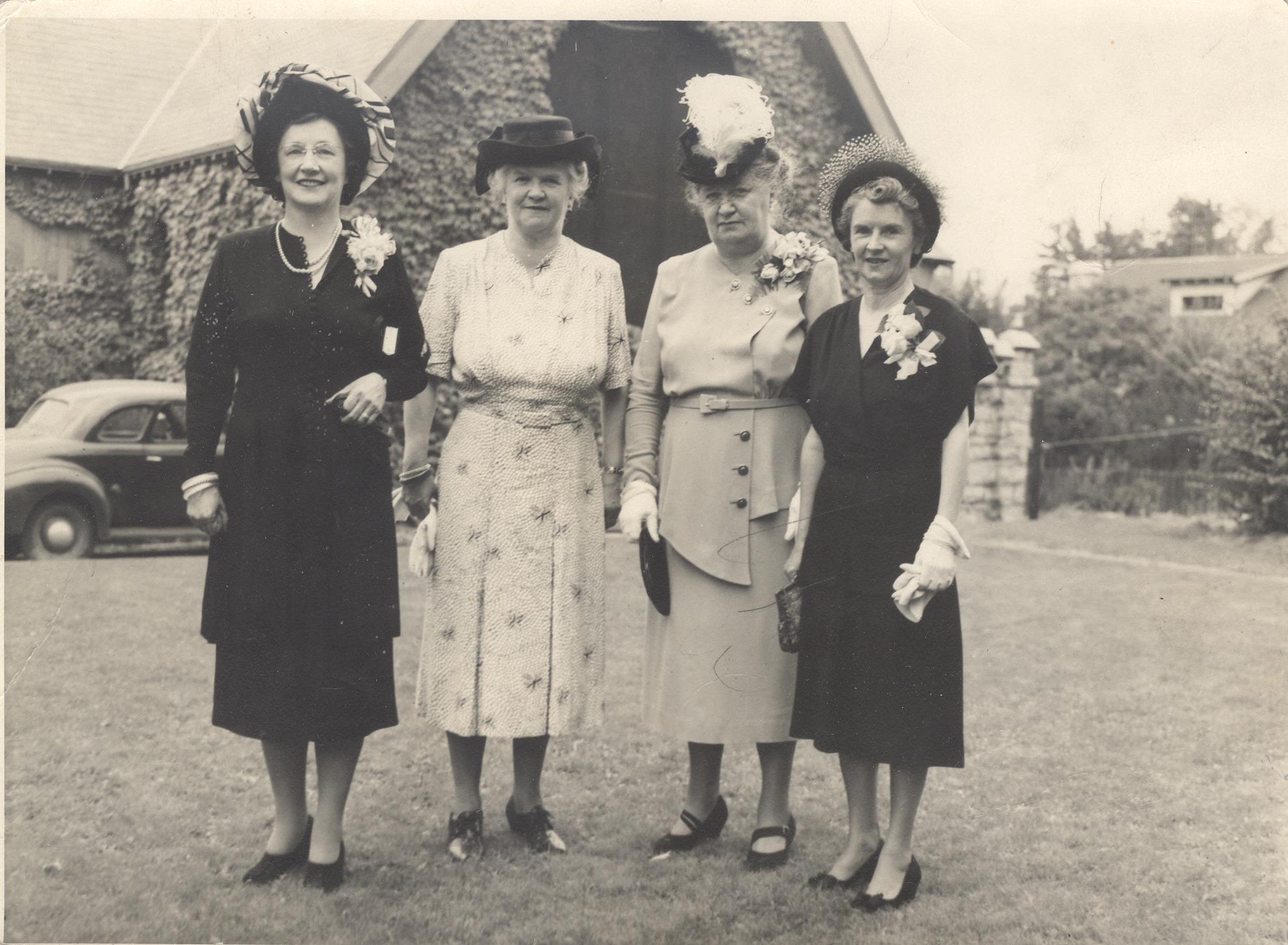
The four Foote sisters: from left, Glad Moir, Lil Allan, Win McBride and Isabel Murphy. I do not have a date for the photo but I think it was from the wedding of their nephew Leigh McBride to Rose Pamela “Dee Dee” Dewdney in September 1948. Lil on holidays at a resort in California.
Over the next dozen years she taught in the Lardeau district, Kaslo, Argenta, Central School in Nelson, and then retired after the 1953-54 school year at Renata (which saw its end as an Arrow Lakes settlement when it was flooded in the late 1960s by the Columbia River Treaty power projects).
Throughout her life Lil maintained her curiosity and love of learning, which led to extensive travels in Europe and North America. I last saw her in a visit with my father to her at the Willowhaven Nursing Home six miles north of Nelson.
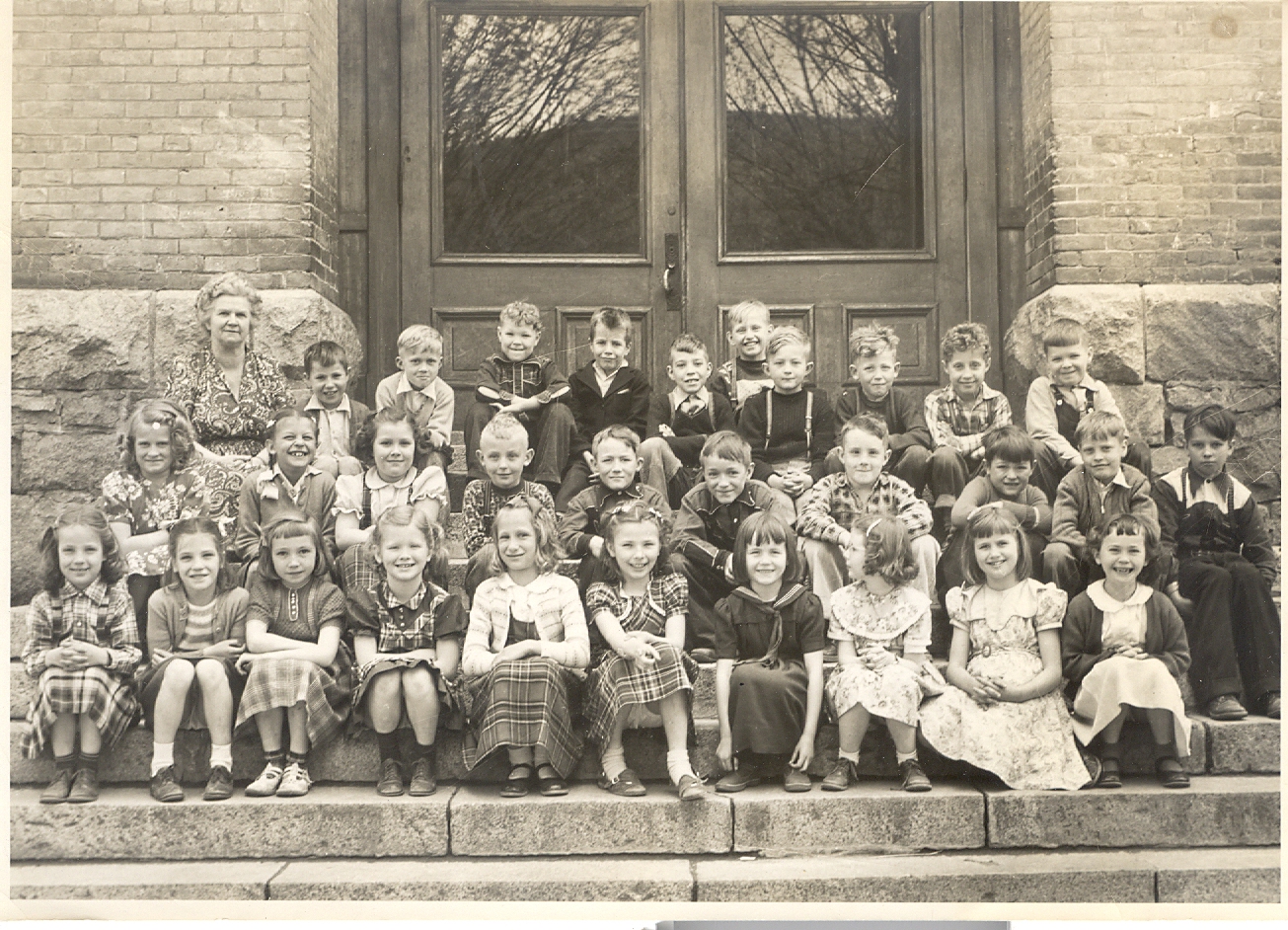
Lil at top left with students at Central School. After posting this photo on Facebook, I determined the year was 1951.
A Facebook group I regularly participate in is a forum for discussion and analysis of the content of old family photographs. Participants include people with knowledge of clothes, hairstyles and other clues to help identify the approximate year the photo was taken.
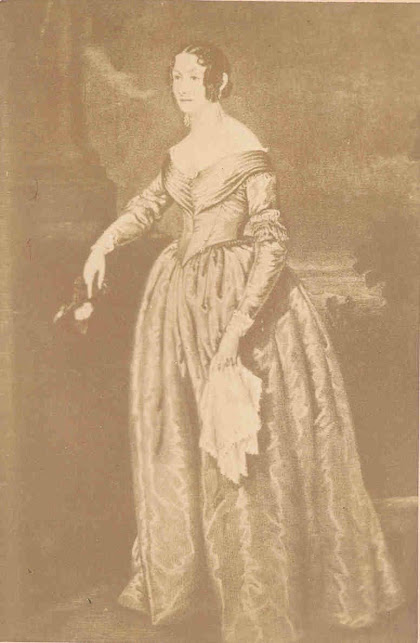
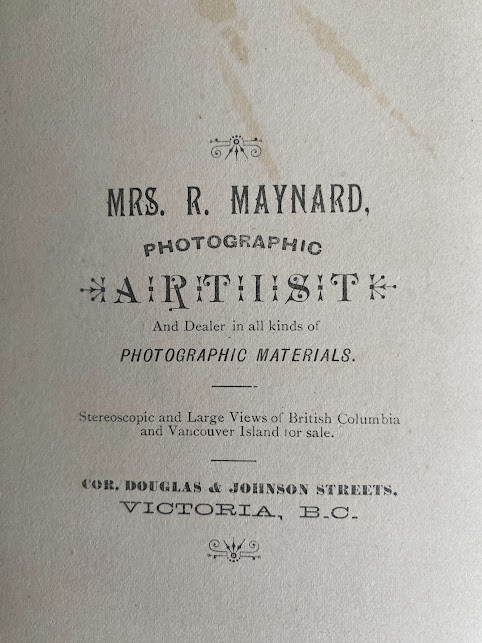
I have long been curious about a photo that was in my grandfather E.E.L. “Ted” Dewdney’s memorabilia with no identification except information on the back of the print saying it was taken at a Victoria, B.C. studio. I checked online and saw that the studio was in operation periodically between the 1860s and 1890s.
\above: unidentified lady in two copies of this photo that are among Ted Dewdney’s memorabilia. Below: back side of print shows the name and address of photographer
There were actually two copies of the printed photograph in Ted’s material, which led me to suspect the lady was of substantial importance to Ted. As his mother, Caroline Leigh Dewdney (1851-1885) died when Ted was just four years old, I thought the lady in the photo may have been her. I have no identified image of my great-grandmother Caroline, who was often referred to in family papers as “Carrie”. Her father William Leigh (1815-1884) was born in Warwickshire, England, and arrived in Victoria as an employee of the Hudson Bay Company in about 1855. His wife Matilida Capron accompanied him in the long journey from England to Panama, across to the Pacific, and sailing from there north to Victoria. Their four children with them included toddler Carrie. William worked as a builder and farm manager before working for the City of Victoria as city clerk for 20 years until his death in 1884.
After I submitted the photo for consideration by the Facebook group, the first comment was that the image looks more like a painting than a photograph. It was probably painted in full colour and photographed by the studio. Several other respondent expressed agreement that it is an image from a painting. Estimates of the year of the painting, based on clothes and hair, were in the 1840s, before Carrie was born. That led someone to suggest that perhaps the lady was Carrie’s mother Matilida, who I also have no identified images for. An intriguing thought. The lesson is to be careful not to go too far in assuming things in family history.
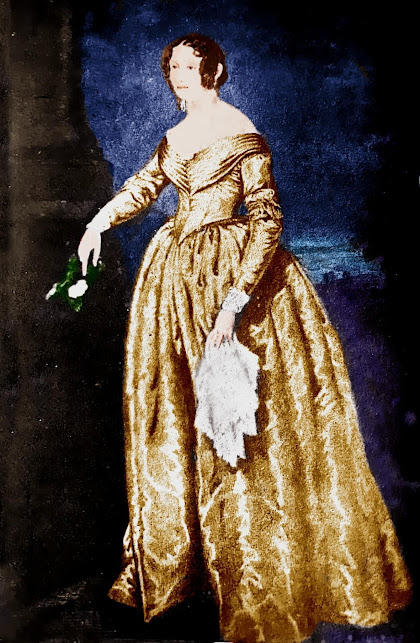
One of the Facebook commenters took the time to colourize the photo I posted. I have been hesitant to colourize or otherwise Photoshop my old family black and white photos because of concerns with authenticity, but I must admit this looks pretty good.
I was in Victoria for a vacation recently, and happened to be staying at a hotel on James Bay, close to Dallas Road where the Leigh and Dewdney families lived in the pioneer years of the city. I imagined the lady in the photo being on the same beaches and pathways you see there still today. And perhaps residing in, or visiting, one of the heritage houses that go back well into the 1800s.
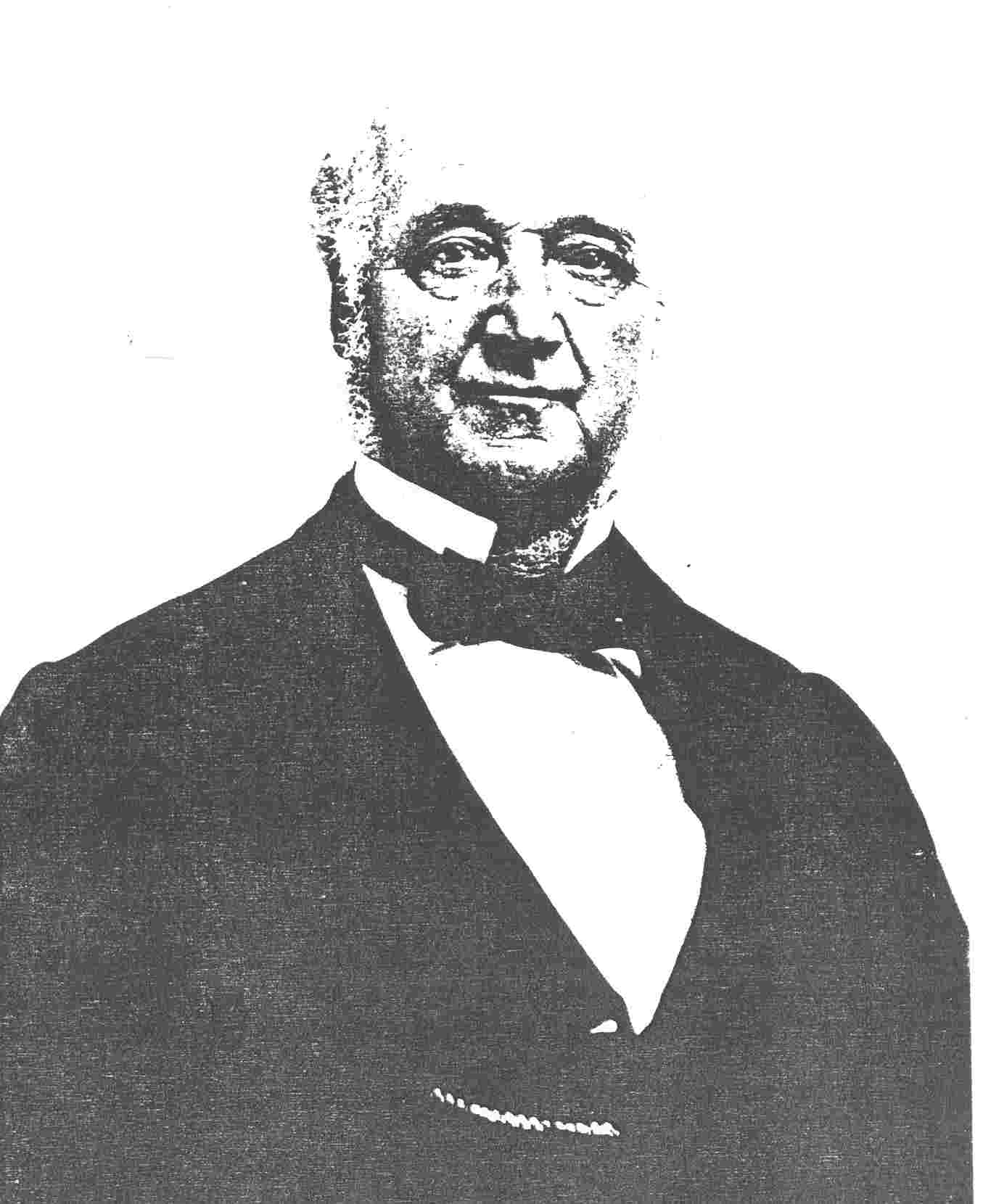
This is my great-great-grandfather William Leigh (1815-1884). My suspicion now is that the lady in my unidentified photos may be his wife Matilda Capron Leigh. Based on analysis of clothes and appearance, it is NOT his daughter Carrie Leigh Dewdney.
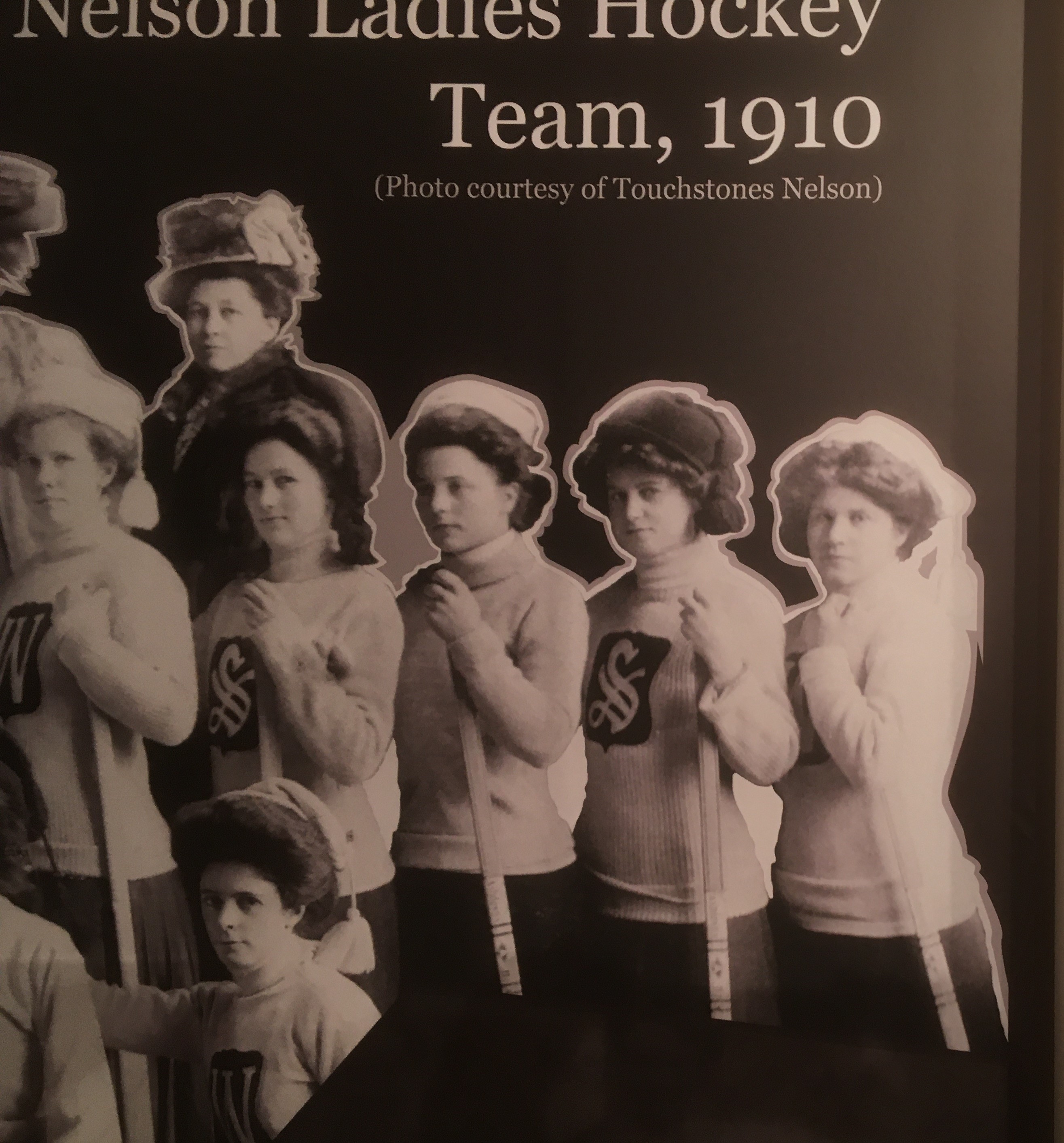
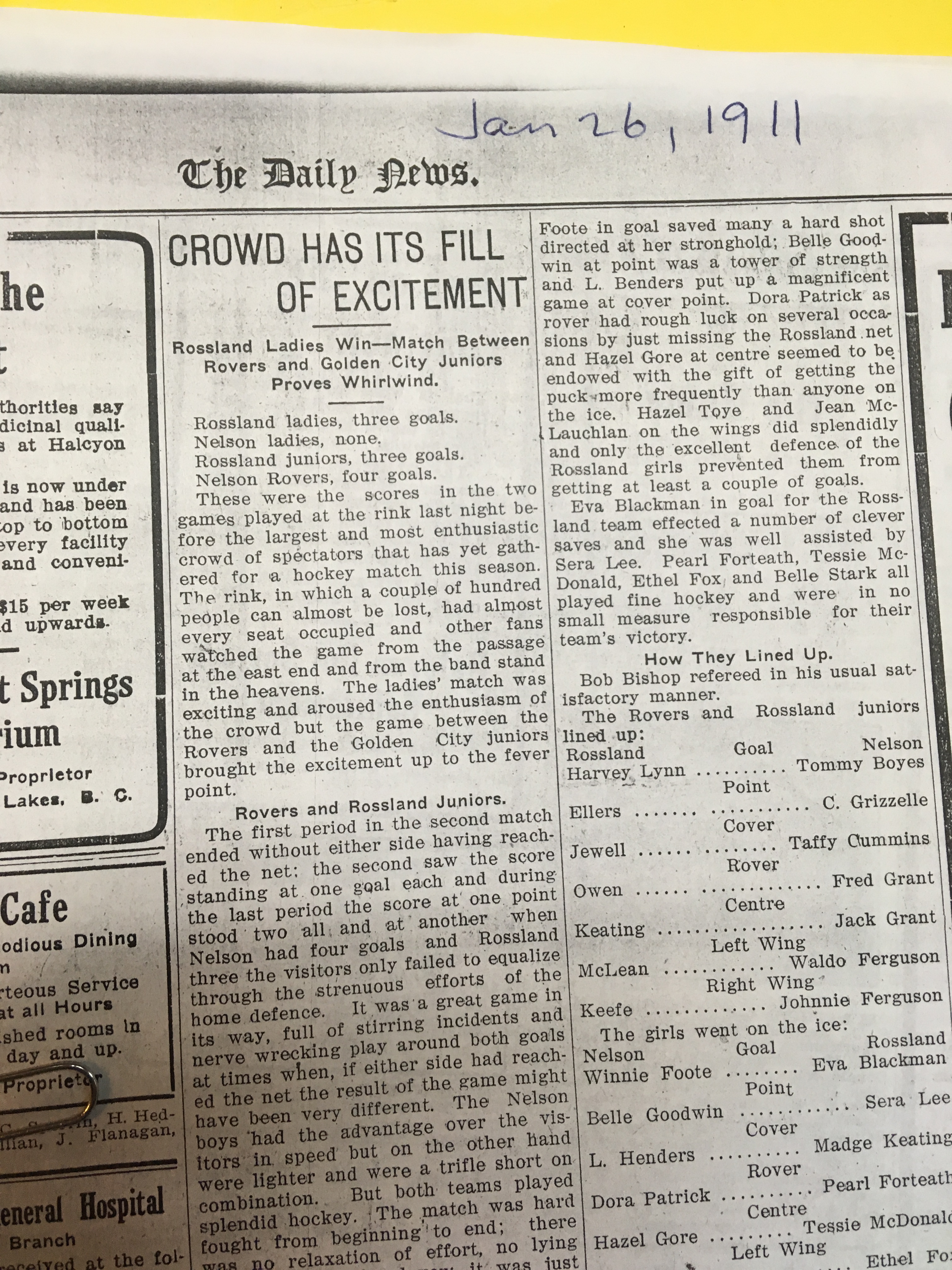
In more than 30 years of exploring my family history I have made some fascinating discoveries, but nothing tops finding out my grandmother Winnifred Mae McBride (1889-1960) was a pioneer in ladies ice hockey as a young lady in Nelson, British Columbia. I was even more surprised to learn that she alternately played forward and goalie positions on the 1911 Nelson Ladies Hockey Team coached by Lester Patrick, who, with his brother Frank, had a huge role in establishing professional hockey and the National Hockey League.
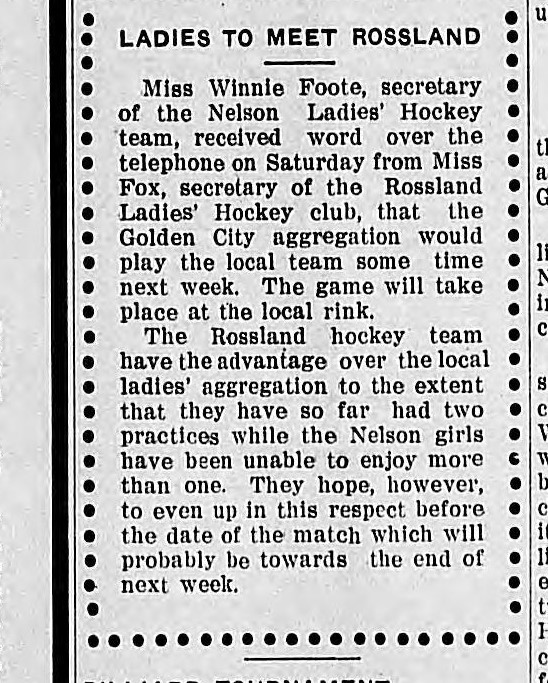
Known then as Winnie Foote, she also served as secretary-treasurer of the team, where her work included liaising with her counterpart in Rossland in organizing home-and-away hockey matches and social events between the Nelson and Rossland ladies hockey teams.
I don’t recall hearing my dad Leigh ever saying that his mother, who he referred to as “Win”, played hockey in her youth. These matches, often combined with games between men’s and junior teams, attracted hundreds of spectators and were a big winter event in the two communities. Two Patrick sisters, Dora and Cynda, were also on the Nelson team, with Cynda being team captain.
1910 Nelson Ladies Hockey team, coached by NHL legend Lester Patrick. Winnie Foote, 20, is second from right. Courtesy Nelson Archives
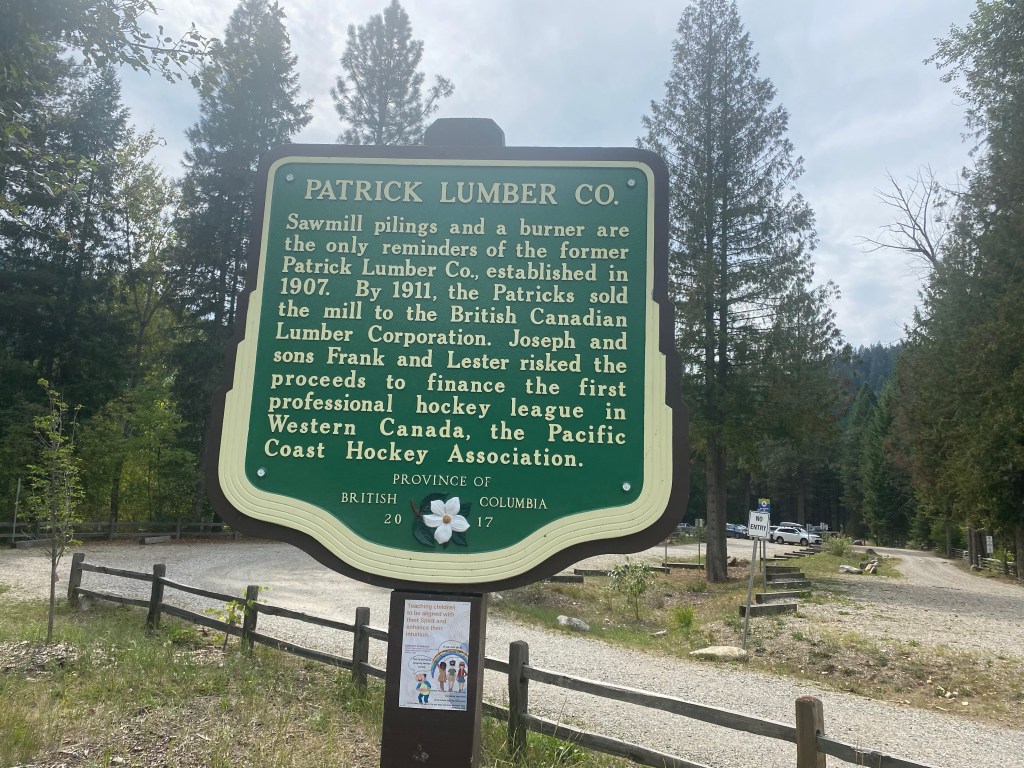
The Patricks came to Nelson in 1907 when their father Joe Patrick acquired a sawmill at South Slocan, near the junction of the Slocan River and Kootenay River, about half-way between Nelson and Castlegar. When not playing hockey in Nelson or elsewhere, Lester and Frank helped out at their father’s business called Patrick Lumber. Conveniently located next to rail service that took the products to market, Patrick Lumber proved to be a very profitable operation, despite a near disaster in June 1909 when spring flooding on the Slocan River broke a boom containing logs before processing, with a large number of logs floating away down the Kootenay and Columbia rivers. Lester and Frank were able to retrieve many of the loose logs, but quite a few were claimed by “finders-keepers” or went across the border into the U.S.
When the Patricks arrived in 1907 Nelson’s hockey arena located high uphill at Stanley and Houston streets had poor facilities for players as well as spectators. They became a leading part of a civic drive to build a new arena near the intersection of Hall Mines Road and Cottonwood Creek. Joe, Lester and Frank Patrick all served on the fund-raising committee, along with prominent local businessmen like J. Fred Hume, Wood Vallance Hardware manager Walter McBride and his nephew Roland Leigh McBride (1881-1959), who would marry Winnie in December 1914. The first Nelson Daily News report of the organization of the fund-raising committee said R.L. McBride was elected president of the committee, but a couple of days later the newspaper ran a correction notice saying Walter McBride was elected president, not his nephew. My guess is that the uncle thought it would be more appropriate for the higher-up Wood Vallance man to hold the position.
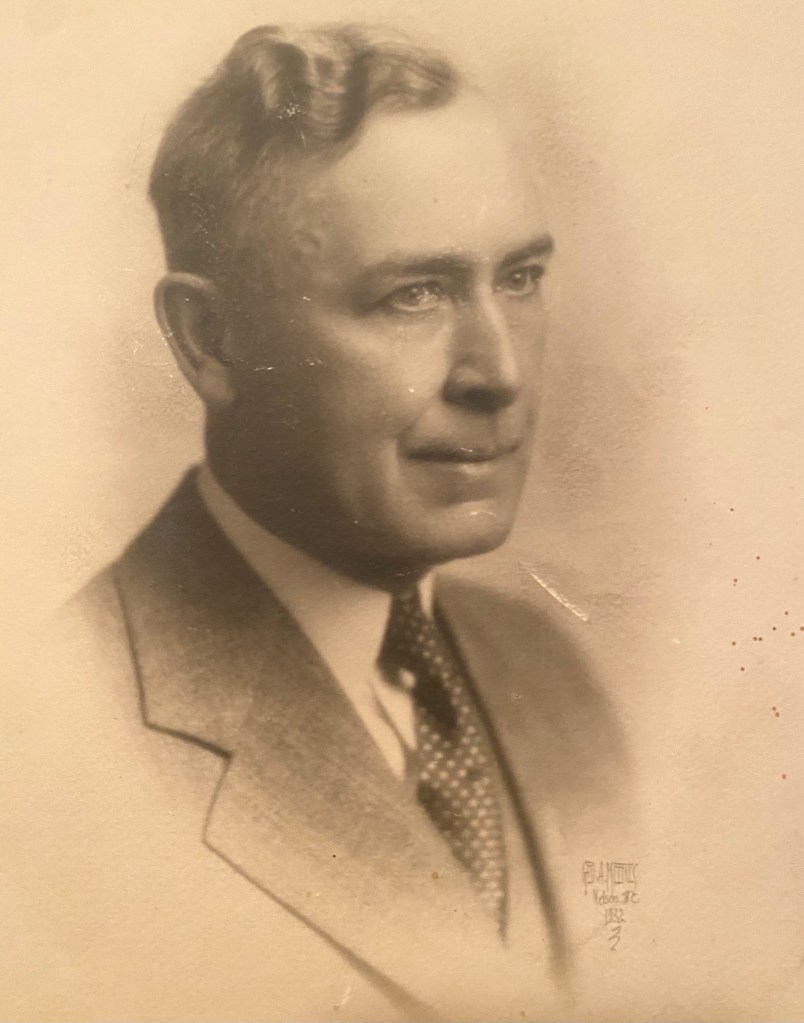
In any event, my grandfather R.L. McBride did most of the work and established a reputation for successful fund-raising for community projects, which later included local hospitals, the Nelson Golf Club and the Nelson Civic Centre, as well as bond sale drives in both world wars, particularly World War Two when his two sons Leigh and Ken served as officers with the Seaforth Highlanders of Canada regiment in the Italian campaign.
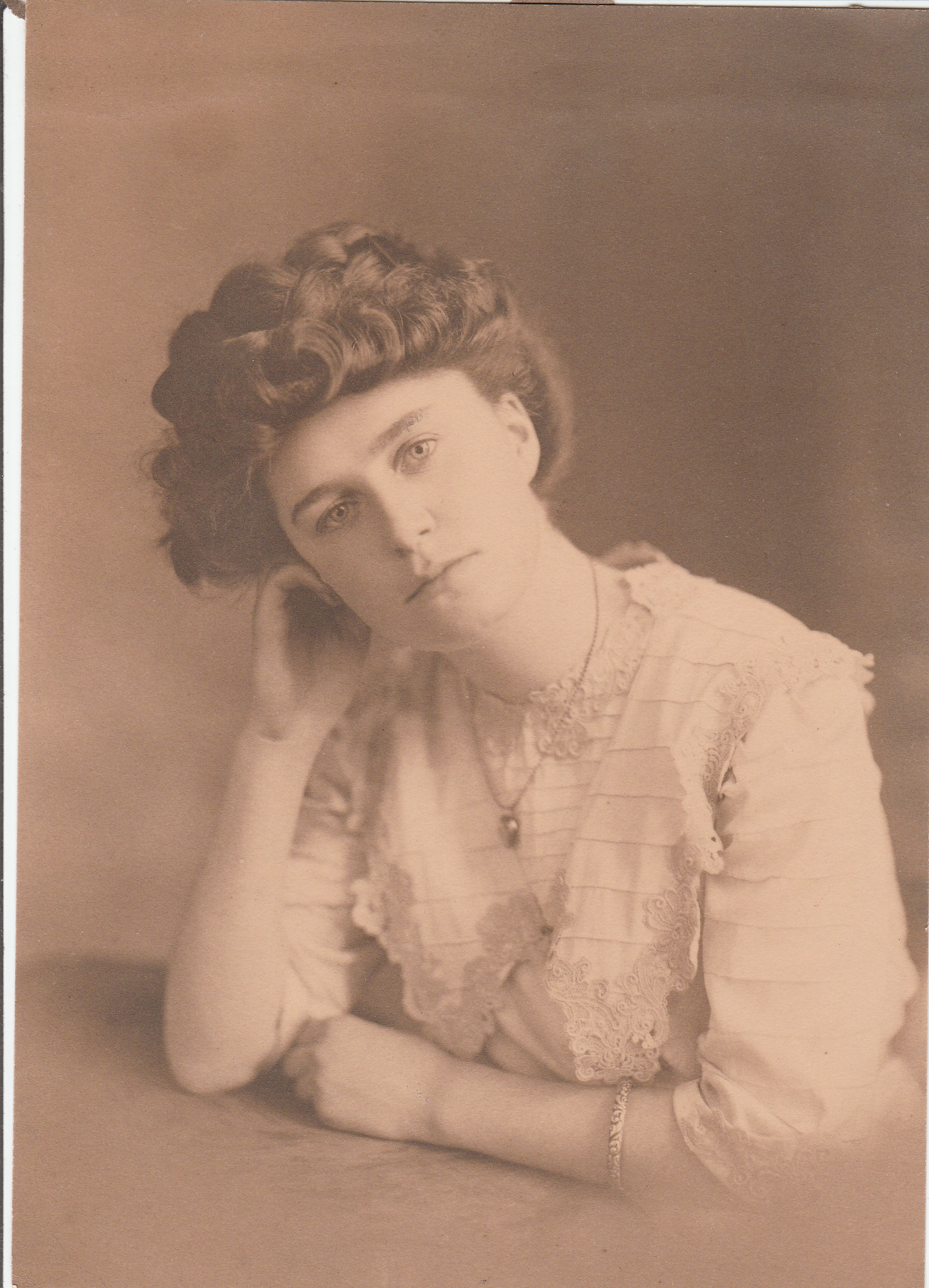
Roland Leigh McBride 1881-1959Winnifred “Winnie” Foote, c 1910
Originally from Perth, Ontario, the Foote family moved west to the Nelson area in 1900 when Win’s father Jim Foote began a job as blacksmith at the Silver King Mine. After living in the townsite next to the mine for two years, the family moved into Nelson in 1902 when Jim got a job with the City of Nelson construction department. Their home was a rented house also described as being near the the intersection of Hall Mines Road and Cottonwood Creek. While the terrain changed substantially due to the highway interchange work in the 1970s, the location today of the long-gone 1909 arena and Foote house is around the area where the Alpine Inn is located.
Nelson Daily News article January 9, 1911.
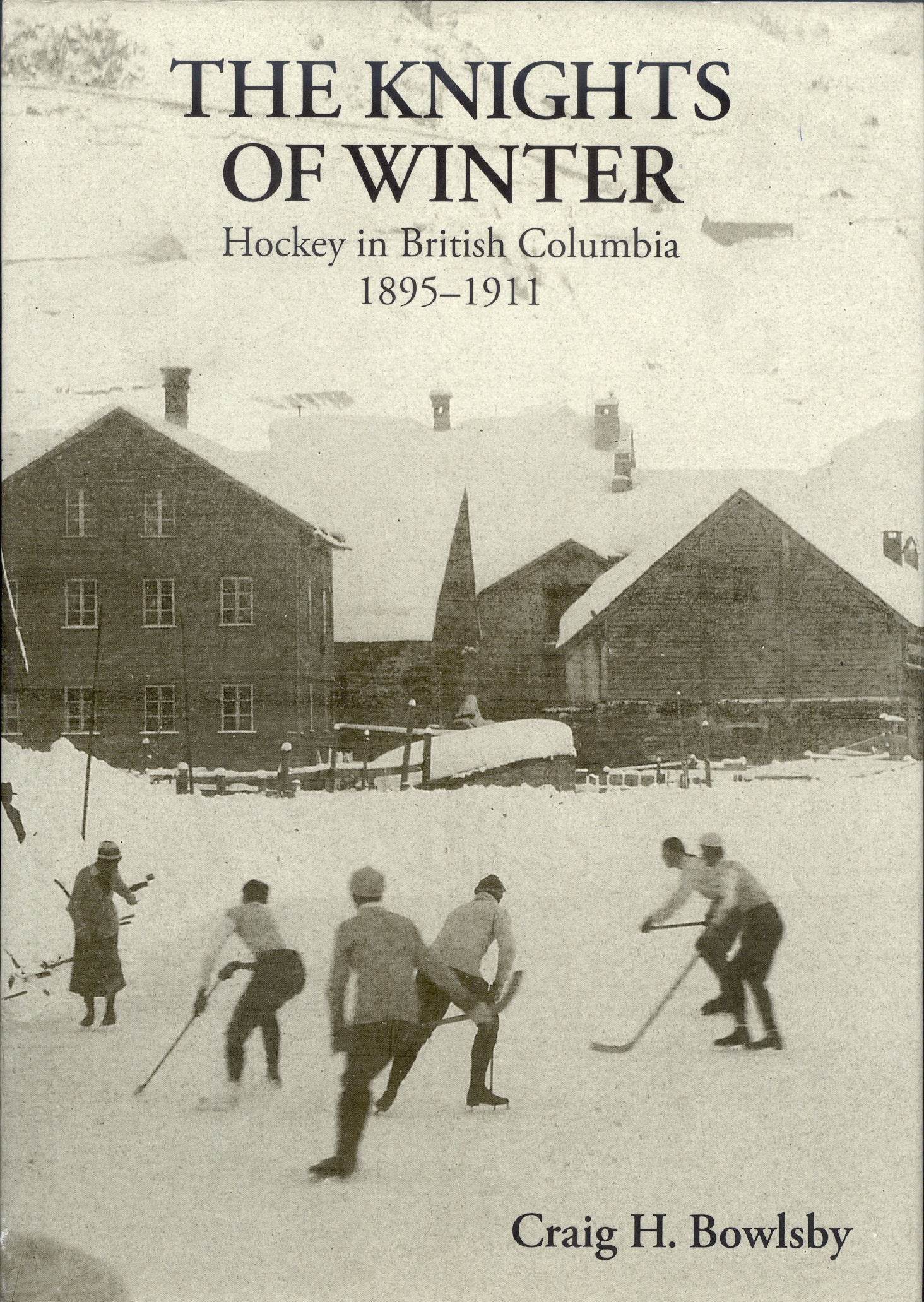
A great source of information on early men’s and ladies hockey in Nelson is the book “Knights of Winter: the History of Ice Hockey in B.C. Between 1895 and 1911” by Craig Bowlsby, which is based on information in local archives and newspapers of the time. He notes that Winnie Foote had also played for the Nelson Ladies Team in 1910, when the group photo of the team was taken in a Nelson studio. Her younger sister Gladys Edith Foote (1894-1965) also tried out for the Nelson team in 1911, but did not make the team. I remember hearing that “Glad”, as she was known, was an excellent ice skater.
A valuable part of Bowlsby’s book is an index of the names of everyone who was ever played hockey in B.C. up to 1911. The listings include R.L. McBride playing a couple of years for the Wood Vallance team in a Nelson industrial league. His cousin Chester McBride (son of Walter) is listed as being captain of several Rossland rep teams in the late 1890s. My other grandfather, E.E.L. “Ted” Dewdney is listed as playing several years in the early 1900s for the Bank of Montreal team in a league of teams of the banks in Rossland. While Ted was quite athletic, his sport was tennis, not hockey.
The newspaper reports of games between Nelson and Rossland ladies usually ended up with Rossland winning by one goal. The Daily News noted that Rossland with its higher elevation had an advantage over Nelson in hockey because their rinks were much less likely to get mushy due to periods of warm temperatures in the winter months.
Nelson Daily News article January 1911
I remember Win in her final years being in poor health. Rather than talking with her grandchildren about the past, she always wanted to play bingo with us. She never got over the shock of her younger son Kenneth Gilbert McBride (1920-1944) being killed in action in Italy. Her obituary in June 1960 mentioned several service organizations she belonged to, but, sadly, nothing about the her fun days with the Nelson Ladies Hockey Team.
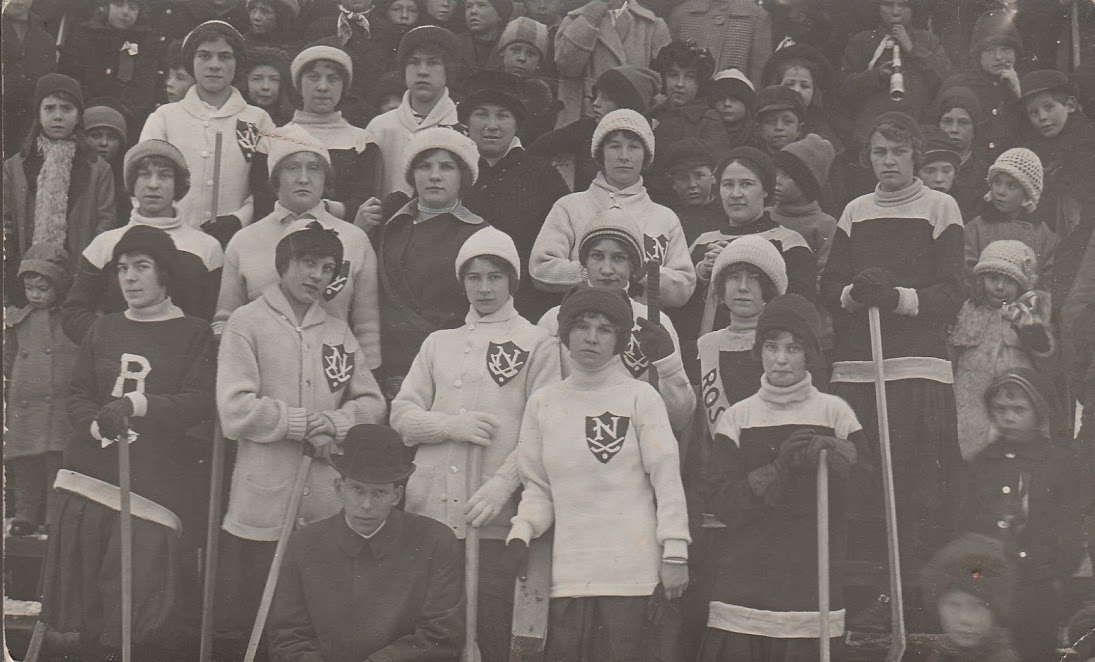
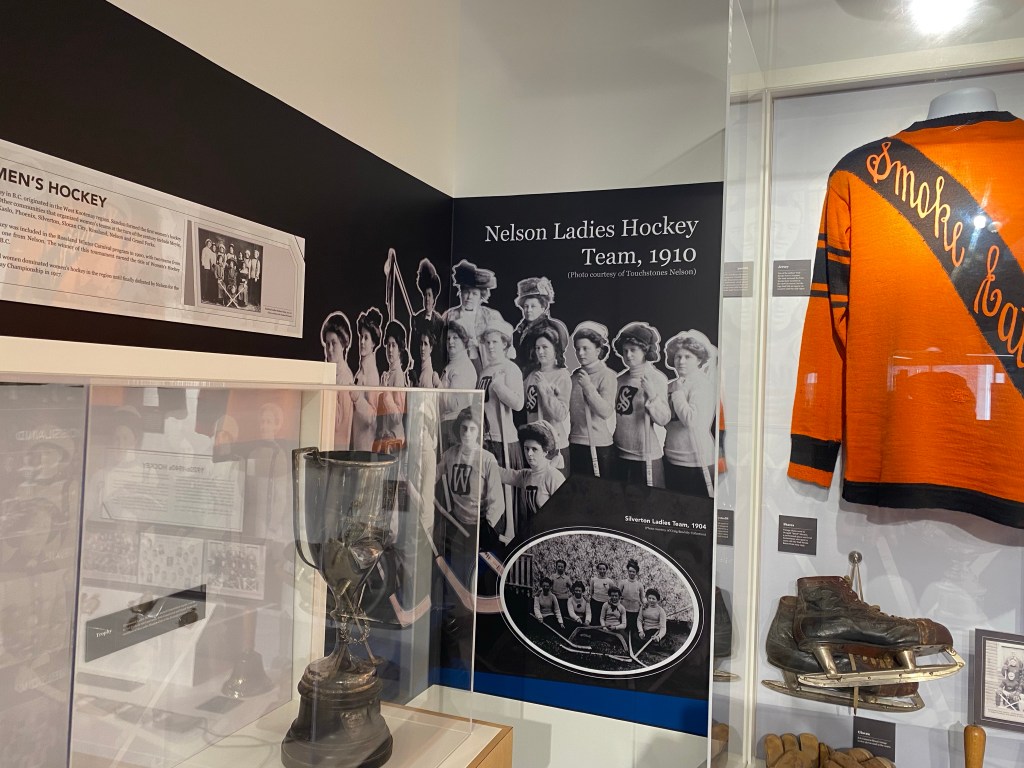
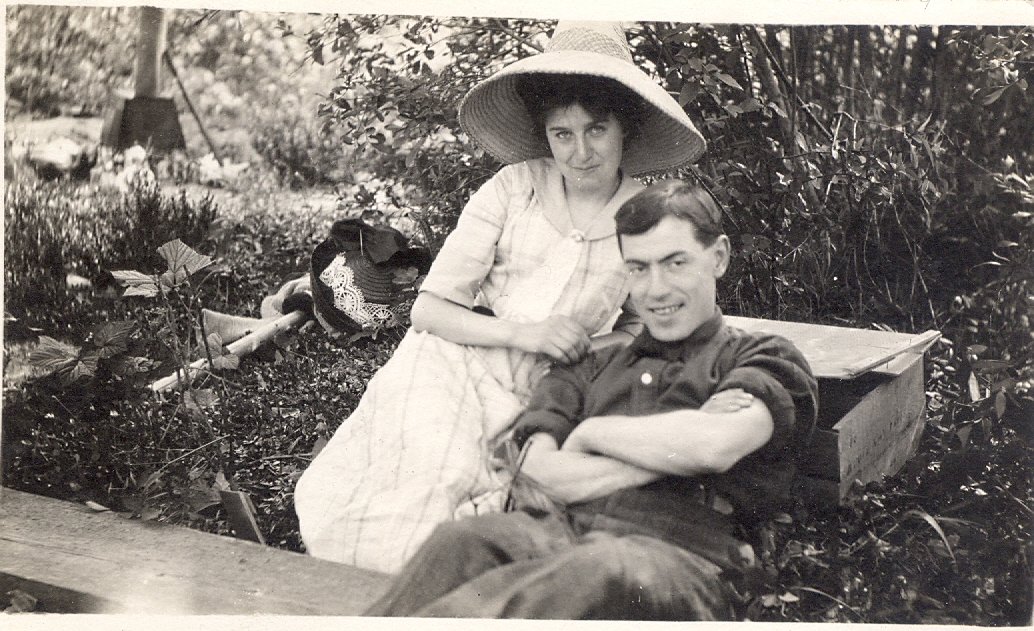
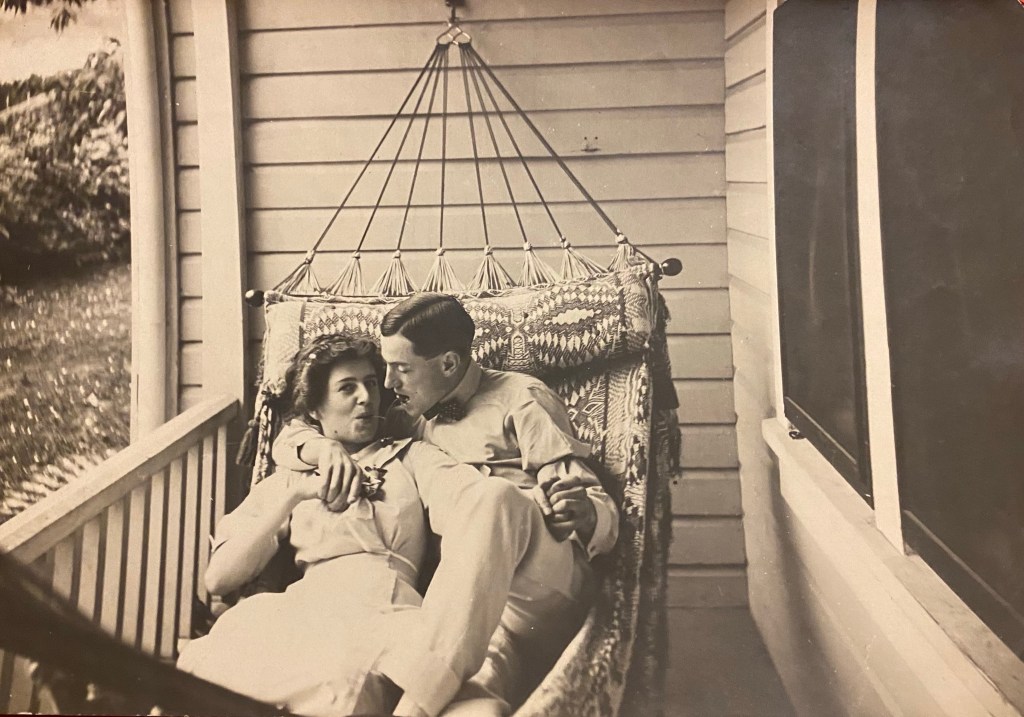
This photo in family files was likely taken by Winnie. It appears to be the “spares” of a Nelson-Rossland game together in the stands. The player in the middle of the photo with white toque is Winnie’s sister Glad Foote.Nelson Daily News article, early January 1911.Winnie Foote in about 1910. One of her hobbies was photography, and she often experimented with poses with friends who were also camera buffs. This wall projection in the Trail Riverfront Centre Museum of the 1910 Nelson Ladies Hockey Team shows Winnie Mae Foote (second from right) more closely.Longer view of pic and n Trail MuseumWinnie Foote with Dr. Wilmot Steed, c 1910. I don’t think they were ever a couple, but were part of a group of close friends in Nelson in the early 1900s who became lifelong friends. Something the Footes, Steeds and Lillies (the family of Wilmot’s future wife Elizabeth) all had in common was coming west from Perth, Ontario. His children Graeme Steed, Jack Steed and Edna Whiteley were good friends of the McBrides for many years.This book, based on information from archives and newspapers of the time, is a , so rce of information on early hockey in the West Kootenay region as well as B.C. as a whole.Winnie in a playful pose with friend Wilmott Steed. She loved to take photographs, and goof around with scenes like this. Lester Patrick when playing for Victoria, B.C. team, from Wikipedia
The park at South Slocan (approximately half way between Nelson and Castlegar) has information displays about the Patrick family that had a huge impact on the history of ice hockey. Also has fascinating structures that remain from the Patrick sawmill.
















 thebravestcanadian