by Sam McBride
In the summer of 1975 I was travelling across England and staying at youth hostels, but once I got to London I decided to stay there for a couple of weeks rather than exploring Wales and Scotland. The big attraction in London for me was the wide range of high quality, low cost live theatre productions in stylish old theatres. It was easy to line up tickets at the box offices in the morning, which made it possible to go to two or even three shows a day.
I returned to my parents’ home in Trail, B.C. in late August with a keen interest in live theatre. I began looking for a new job, as I had resigned from my work as a reporter for the Kamloops Daily Sentinel in the spring. One of the positions I applied for was Information Officer with the Yukon Territorial Government in Whitehorse. I flew up for an interview with the director of the department Ken Sillak, and was pleased to accept the job offer.
Starting the job in early November 1975, I had a lot to learn because it was my first PR-type job, and I knew very little about the Yukon. Looking for clubs or activities that I might want to participate in, I noticed in the Whitehorse Star newspaper an article about auditions for the annual “Sourdough Rendezvous Mellerdrammer”.
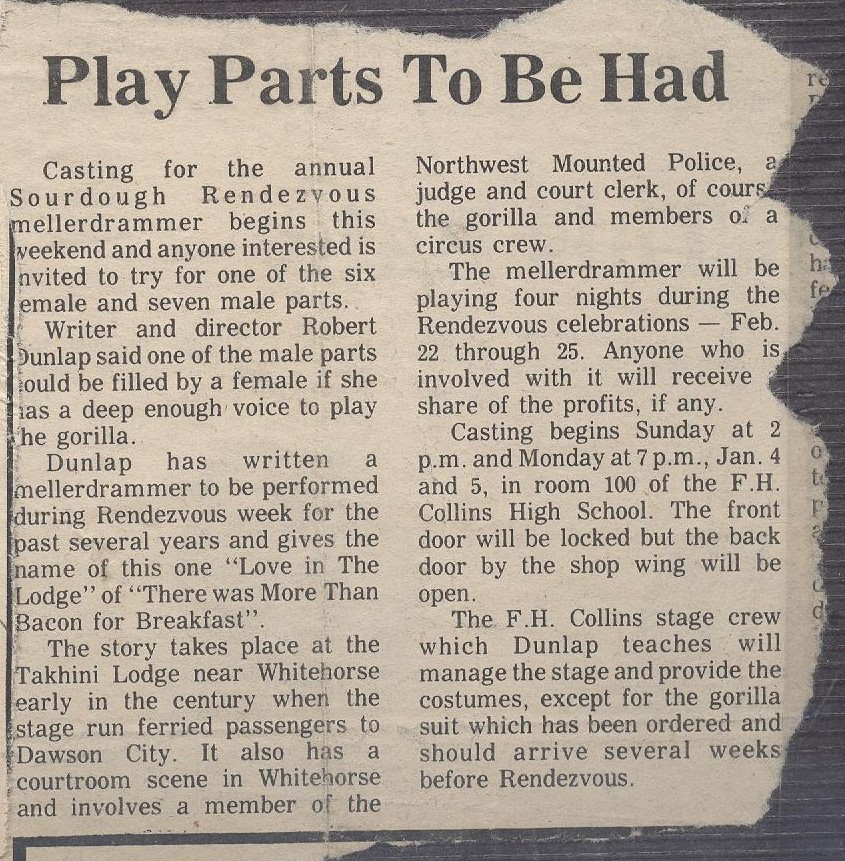
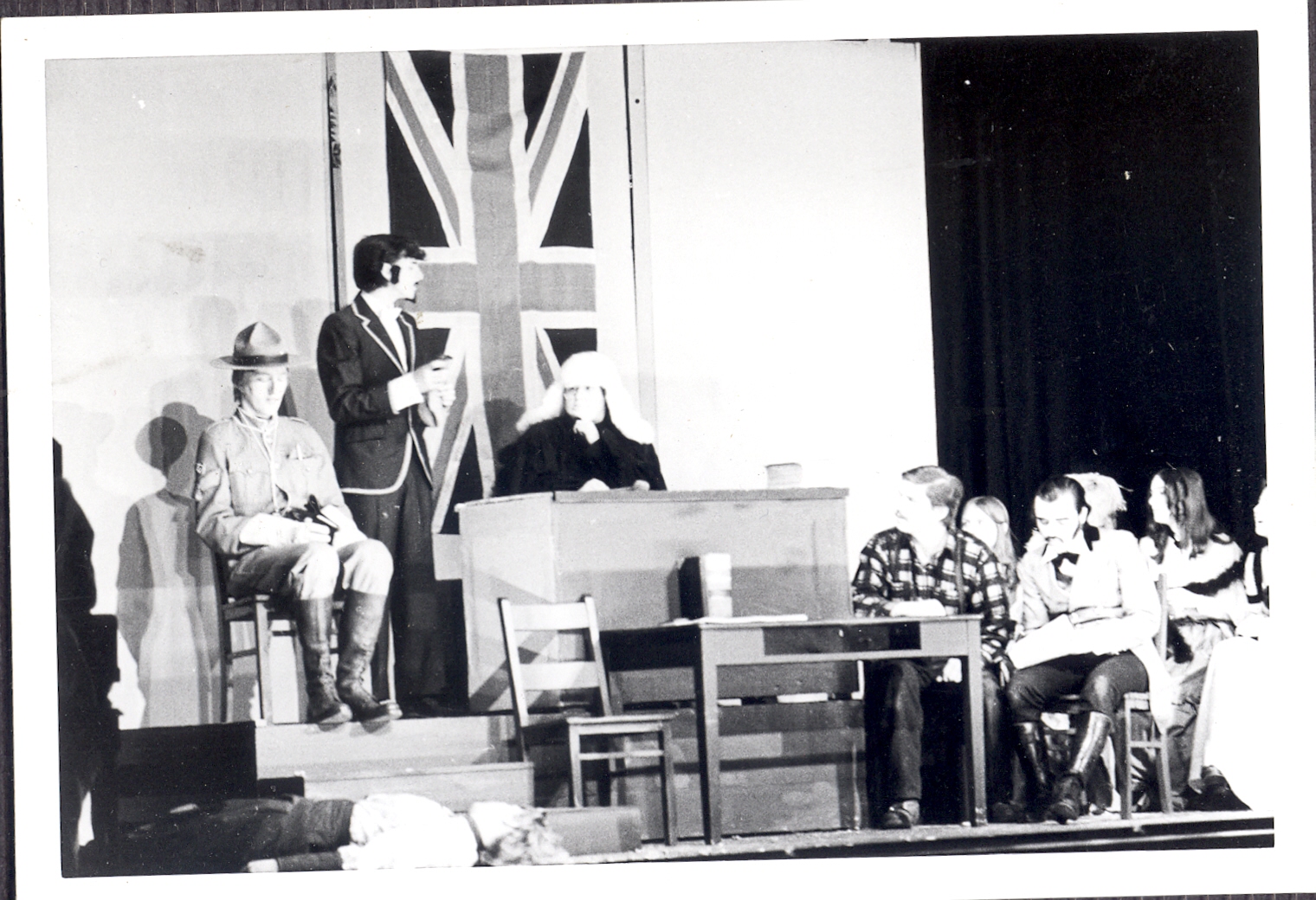
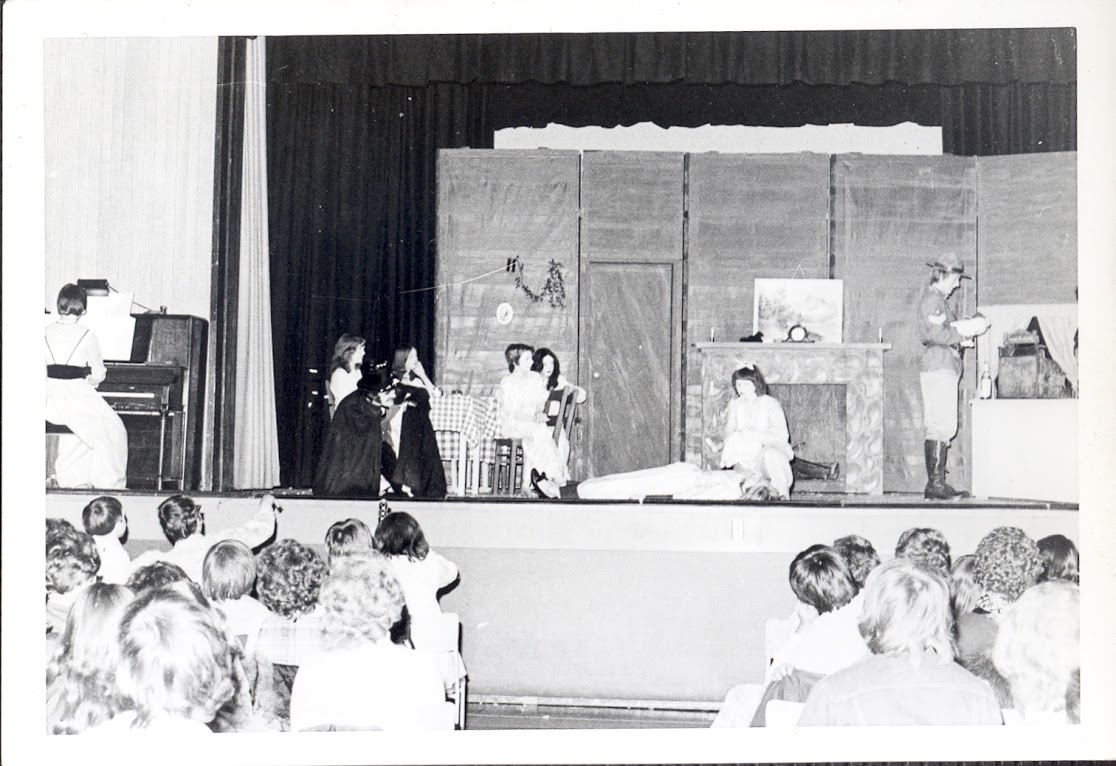
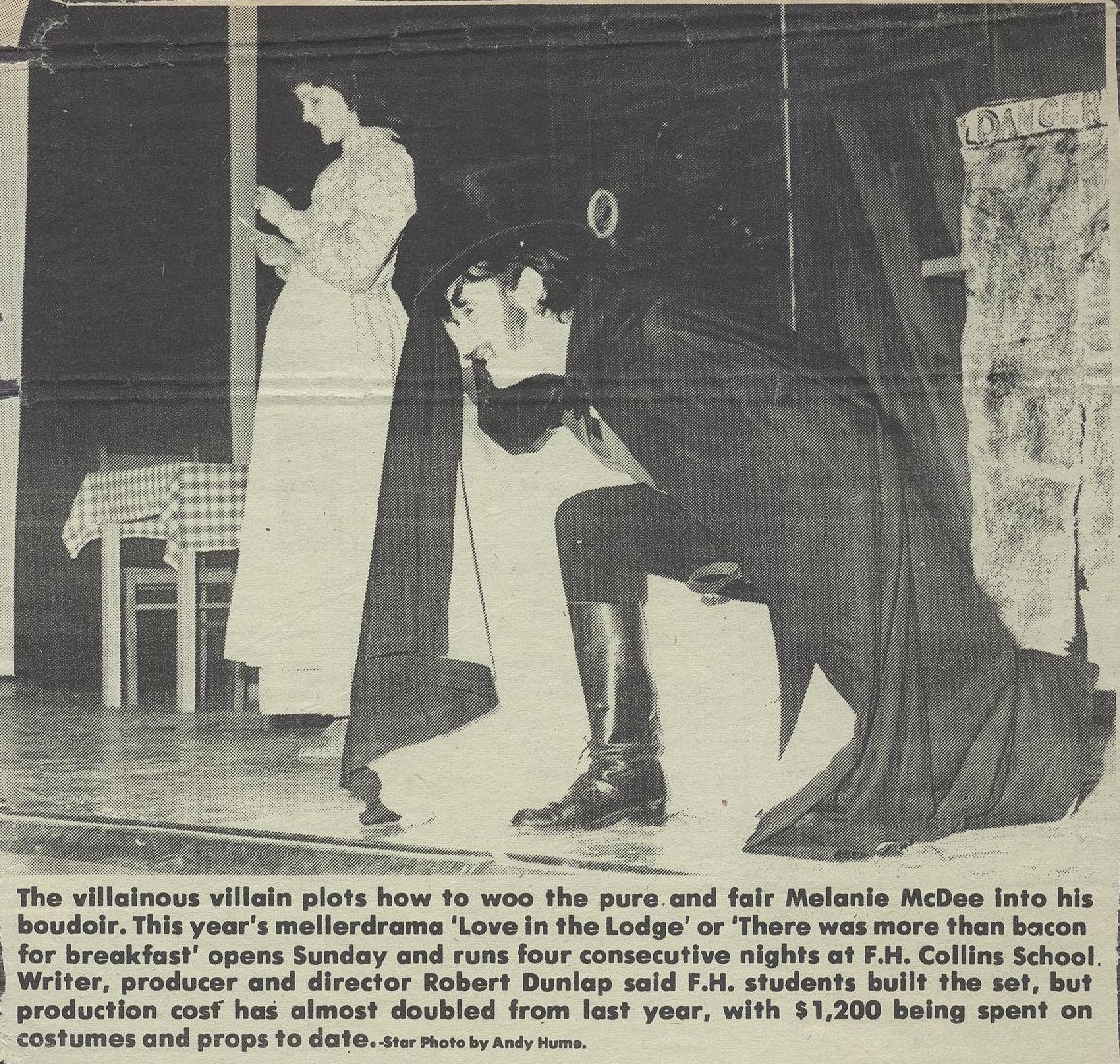
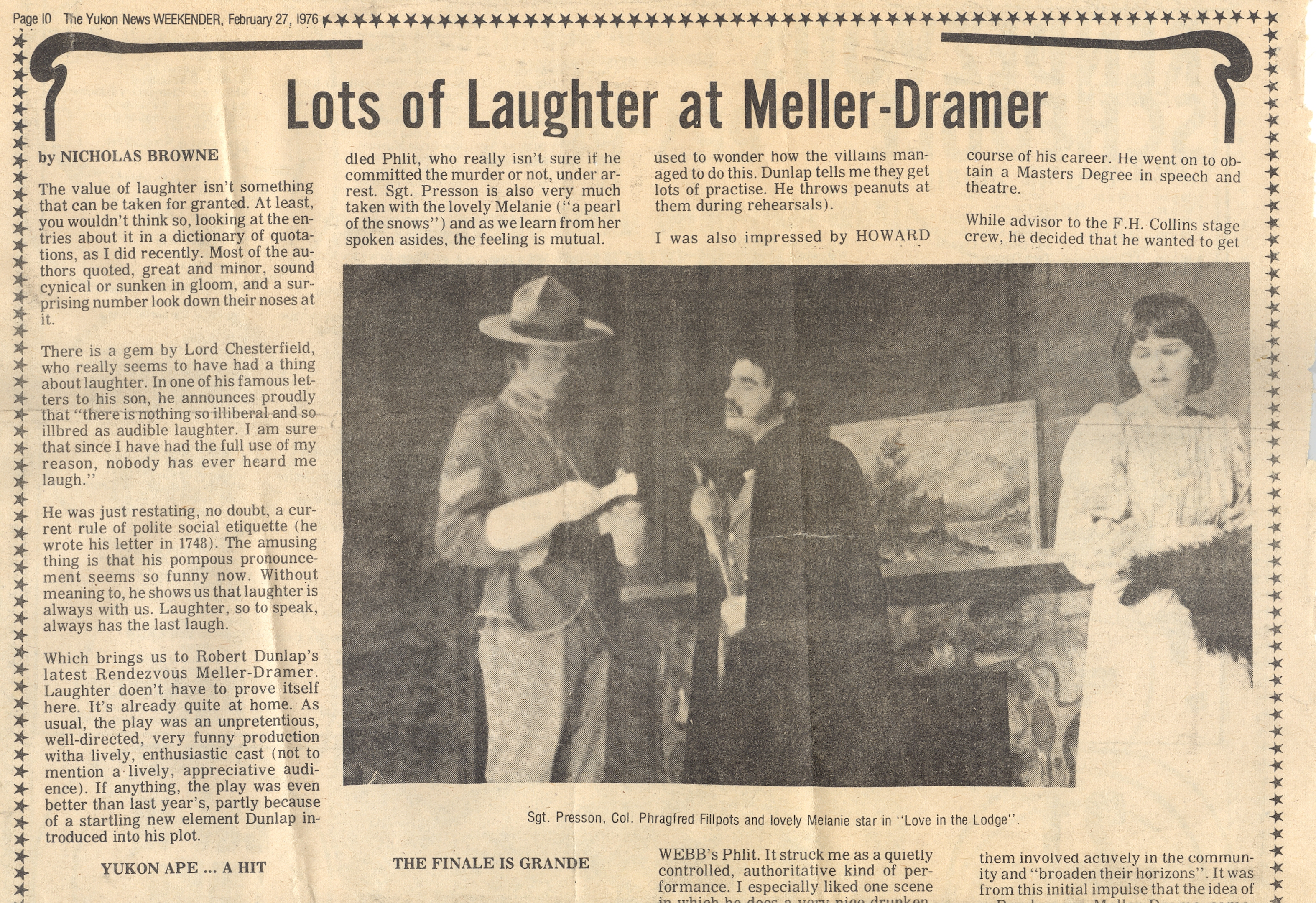
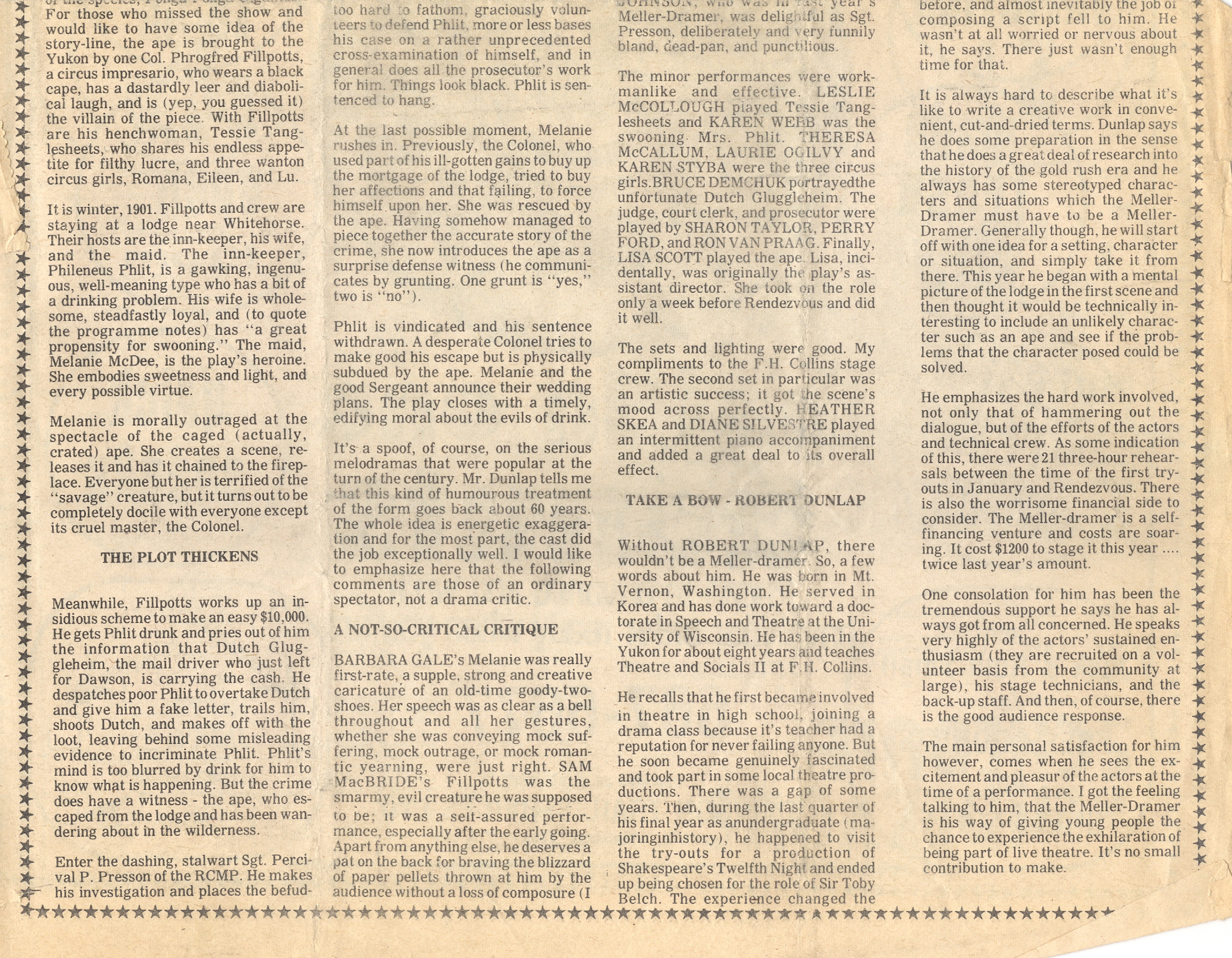
It was a production of the F.H. Collins High School, but adults in the community were invited to try out for one of the adult roles, or to help backstage for a show called “Love at the Lodge – Or There Was More Than Bacon for Breakfast”, written and directed by the school’s drama teacher Robert L. Dunlap. He had done annual shows like this for several years at the school, all of them written by him the previous summer. The shows were set in the 1890s era of the Klondike Gold Rush when Yukon was the centre of the world’s attention, in the style of good versus evil melodramas popular at that time.
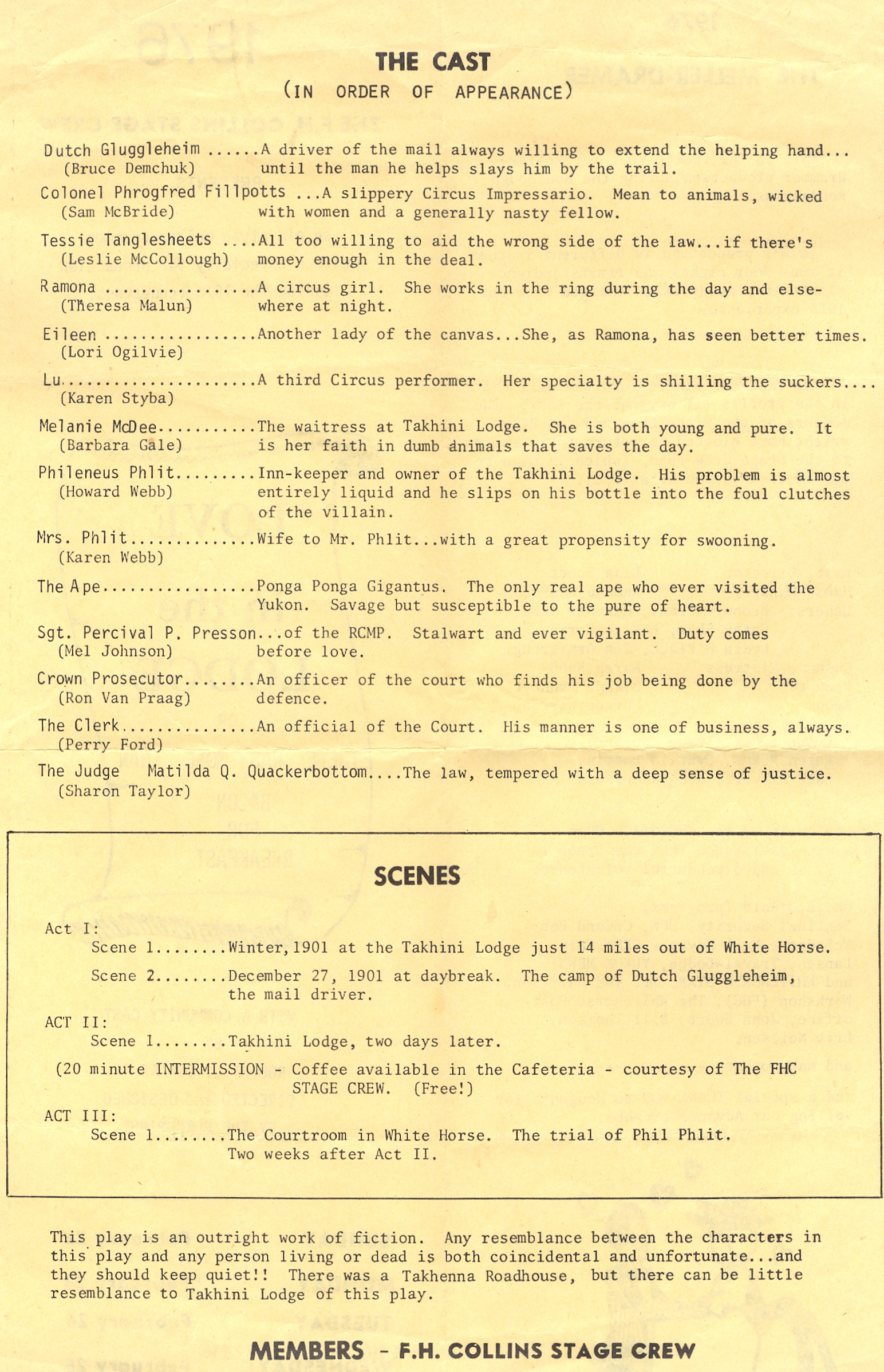
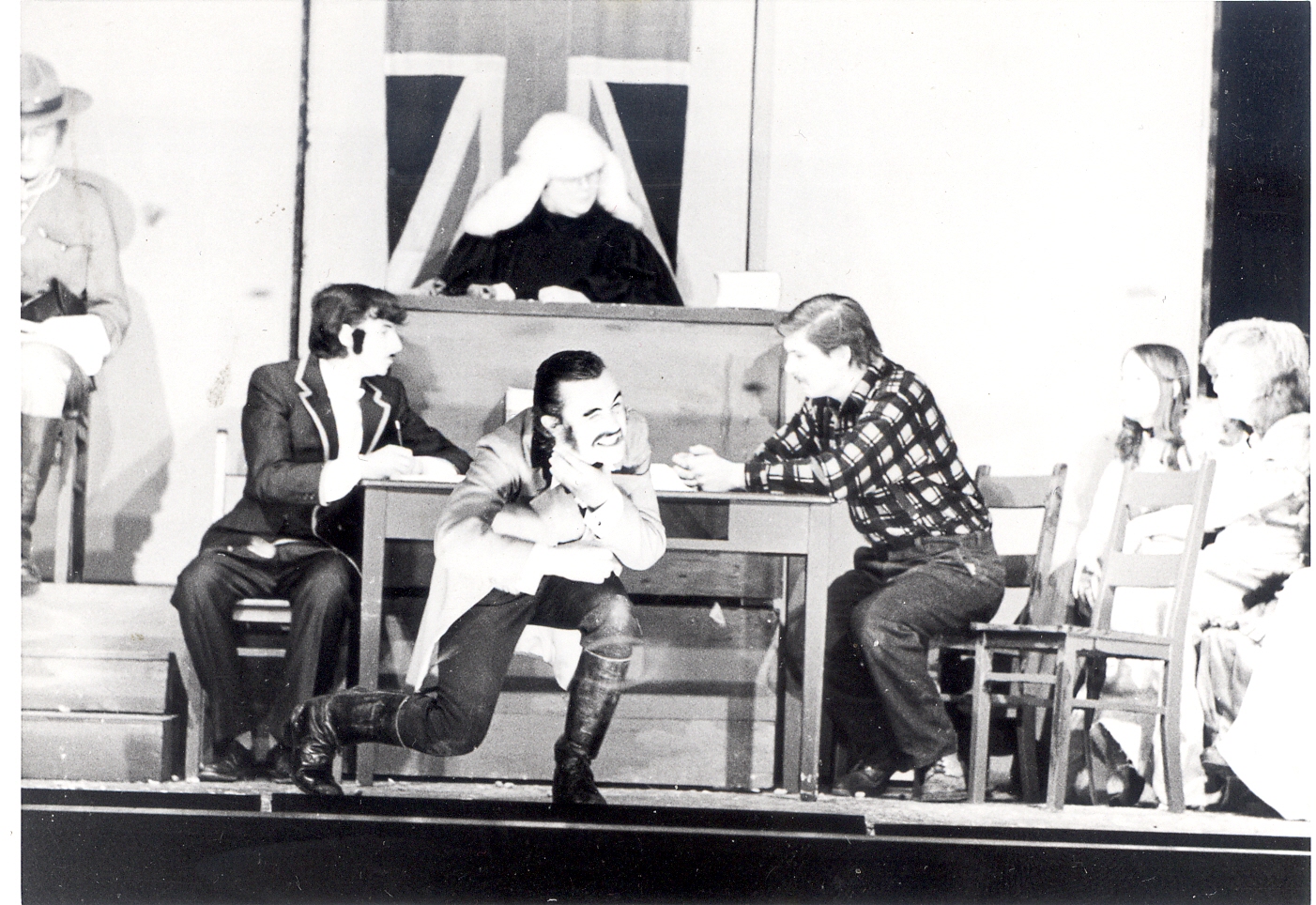
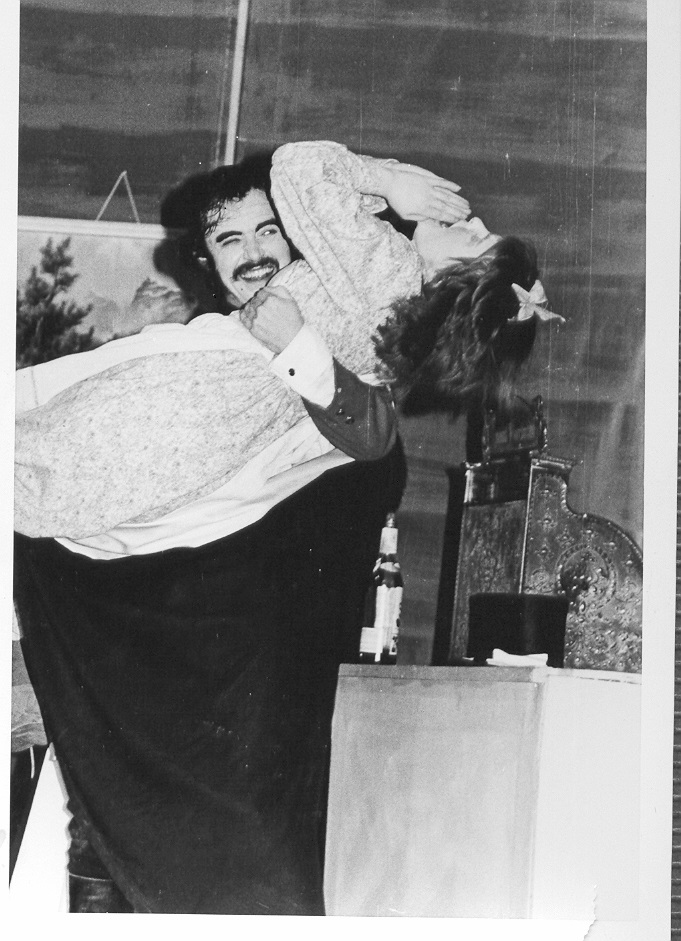
From my experience as a newspaper reporter, I thought I might be able to help publicize the show by writing news releases, so I went to the meeting to volunteer with publicity. Once there, the director Dunlap asked me to read some lines of the villain character Colonel Phrogfred Fillpotts. I was amazed that Dunlap offered me the part, as the only previous experience I had in theatre was as a 10-year-old in a non-speaking role in the Notre Dame University production in Nelson, B.C. of “The Trojan Women”. I found my experience as a member of the Nelson Boys Choir for several years helped with voice projection and breath control, which was particularly needed for doing villain-style evil laughs.
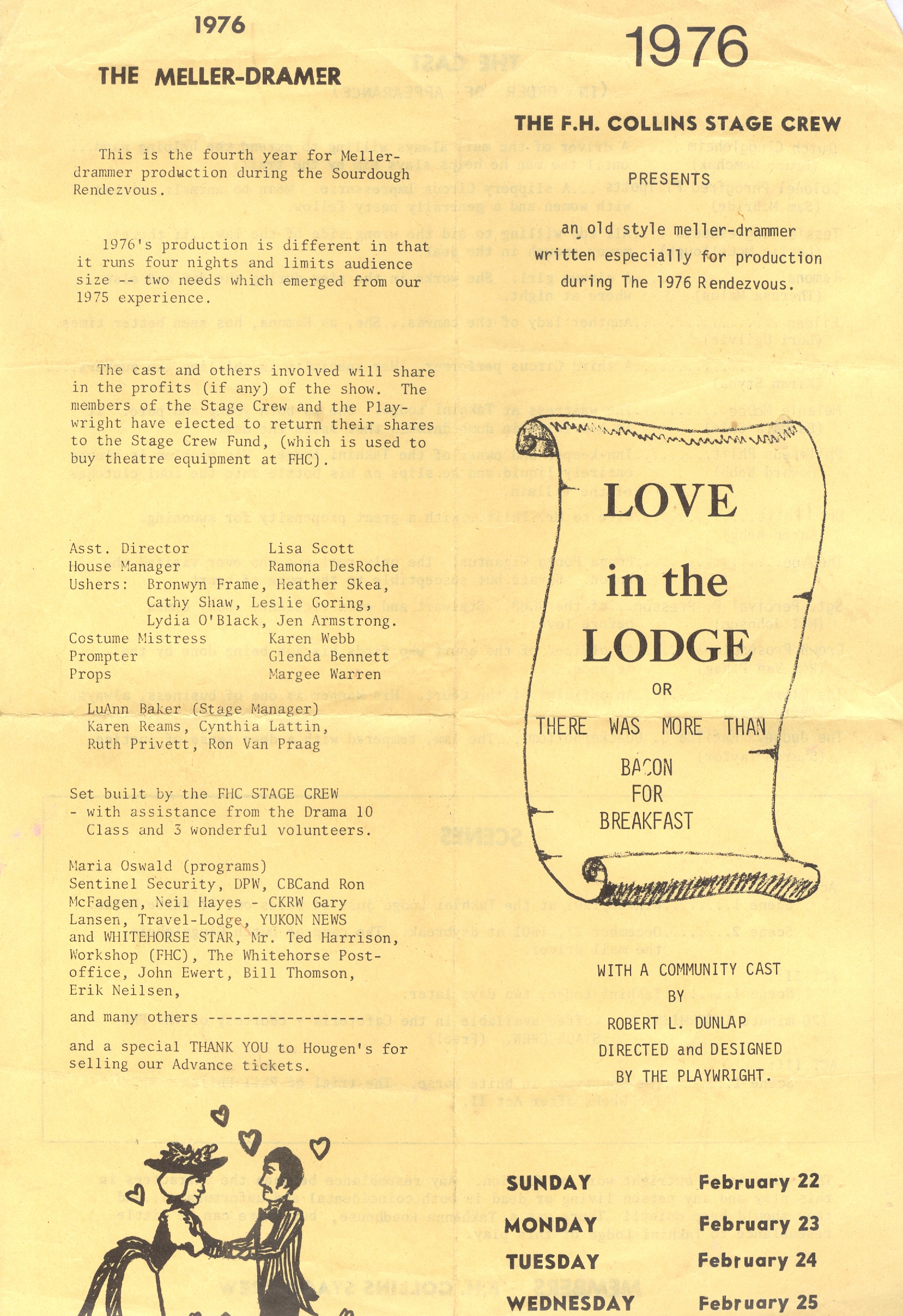
Remembering how much I enjoyed watching live theatre in London, I agreed to give it a try. I then found myself having to memorize hundreds of lines in the script, and going to three or more rehearsals a week for five weeks. While Dunlap was a hard taskmaster with both students and adults in the show, the rehearsals were usually quite enjoyable, among a fun group of participants. The three performances of the show were in the third week of February 1976, coinciding with Whitehorse’s annual winter festival known as Sourdough Rendezvous, which celebrated Yukon’s heritage memorialized in the works of poet Robert Service, such as “The Cremation of Sam Magee” and “The Spell of the Yukon”.
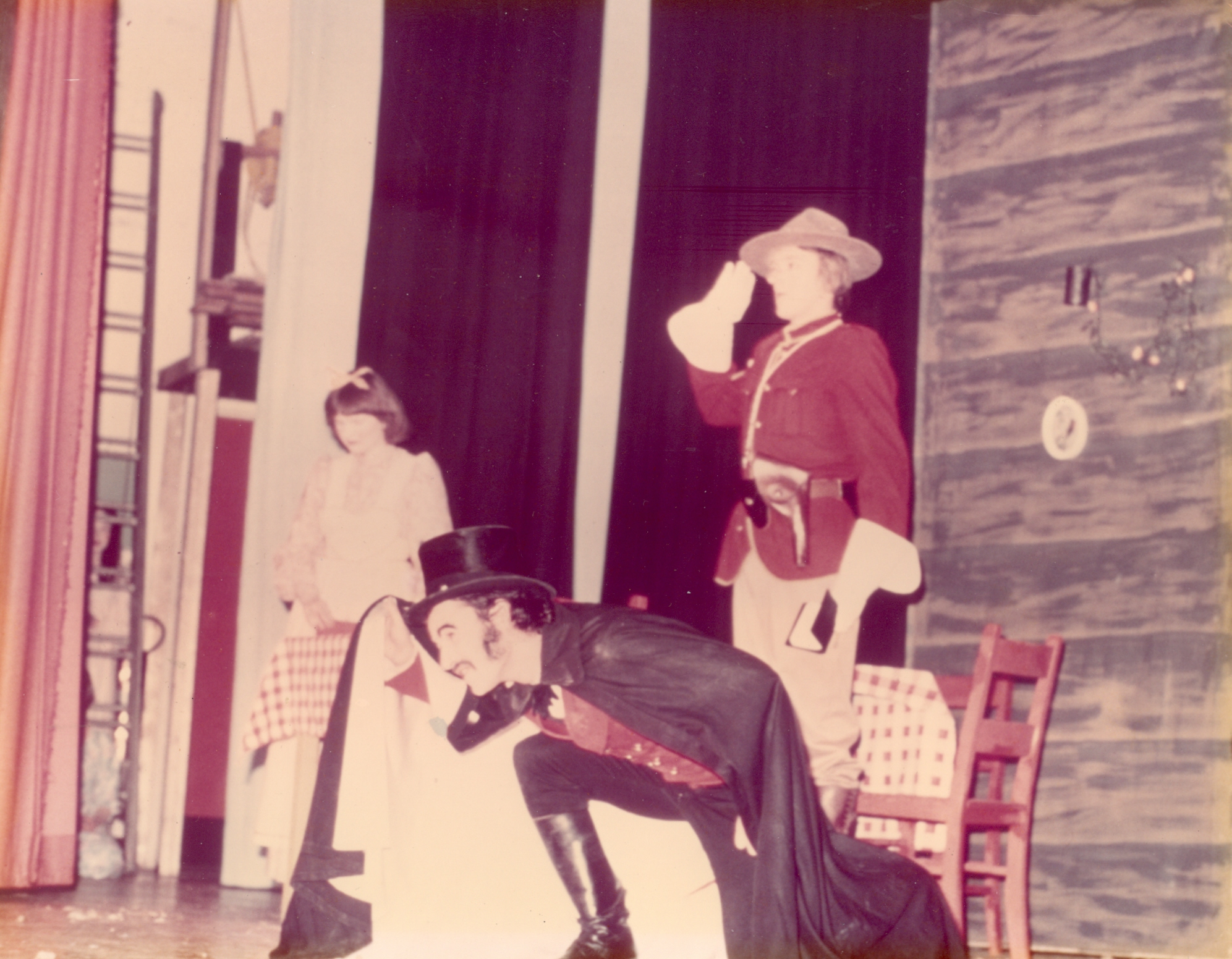
One special challenge with being the villain in a Dunlap show was that he gave out bags of peanuts at the performances and encouraged audience members to throw them at the villain – which they did, quite vigourously. I learned to squint while making asides to the audience, as I knew peanuts would be coming and did not want to be hit by one in an eye.

A few days before the performances our costumes arrived from the costume rental company. I mentioned to my mom in Trail that the top hat that came in for me to wear was way too small. She had a couple of top hats she had inherited from her father Ted Dewdney which she sent to me via Greyhound bus just in time for the shows. One of them, originally owned by our famous ancestor, the Hon. Edgar Dewdney, fit me perfectly so I used it rather than the rented hat.
The shows had some minor glitches, but were lots of fun for performers and audiences alike. I had put a lot of effort into memorizing the lines and movements, so I was not as nervous in the performances as I thought I might be. In fact, it was quite exhilarating, and really turned me on to community theatre. I did not try out for a part in the 1977 Mellerdrammer show because I was busy with the Whitehorse Drama Club’s production of “The Mousetrap”, which was one of the plays I saw performed by professionals in London.
As a collector of memorabilia, I kept the program for the show, as well as news clippings and photos taken by my friend Mike Panchuk. Scanning them and posting them here helps tell the story of the experience better than my memory half a century later.



 thebravestcanadian