125th anniversary of Launching of S.S. Moyie as part of CPR Crowsnest Railway Excursion for West Kootenay VIPs

Leave a comment

by Sam McBride

This year marks the 125th anniversary of the S.S. Moyie, the oldest intact passenger sternwheeler in the world, which is lovingly preserved and protected in Kaslo as a National Historic Site.  Now that many of the pioneer-era local newspapers are available online, I thought I would take a look at what was being reported back in 1898 when she launched.

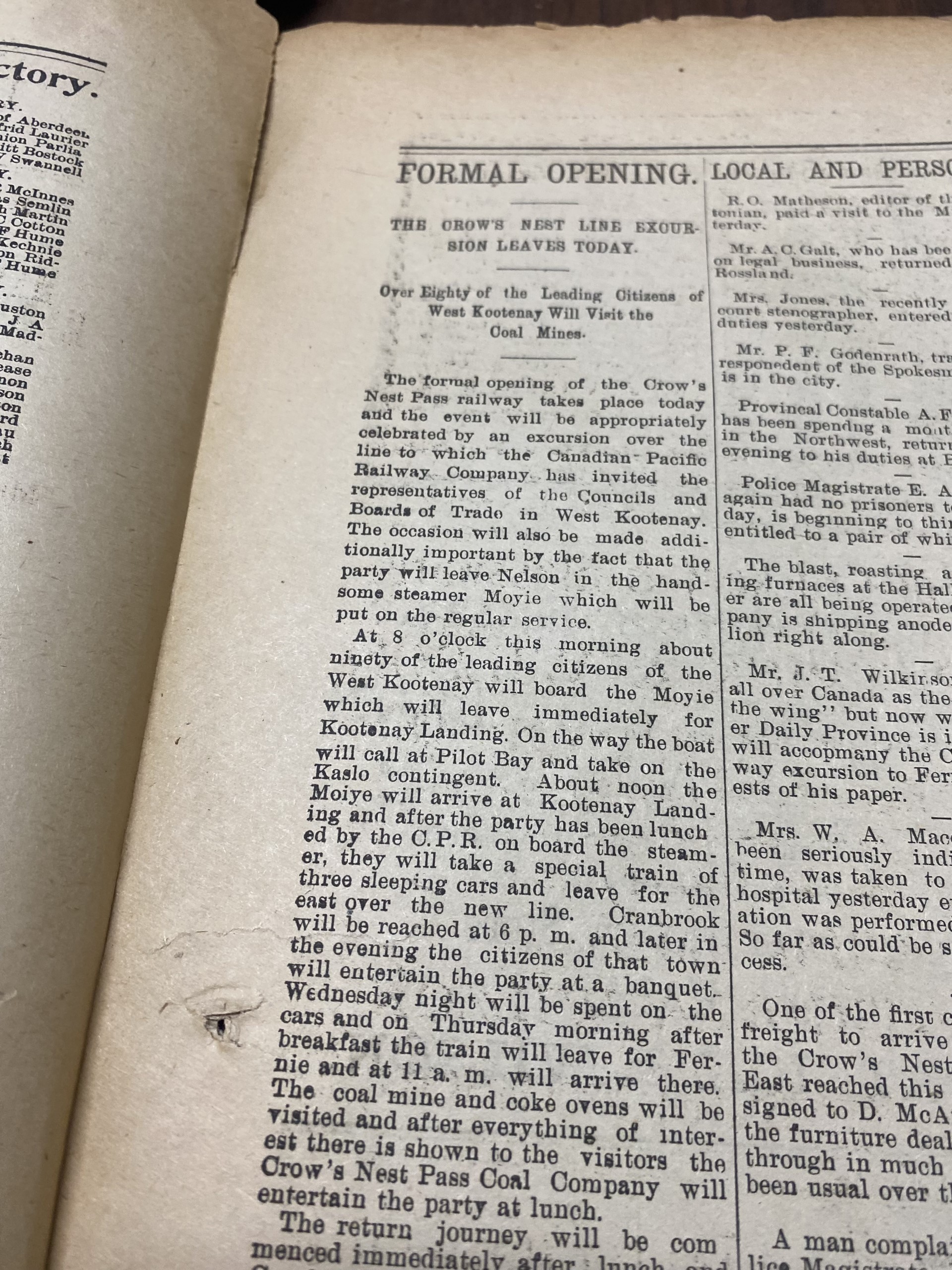
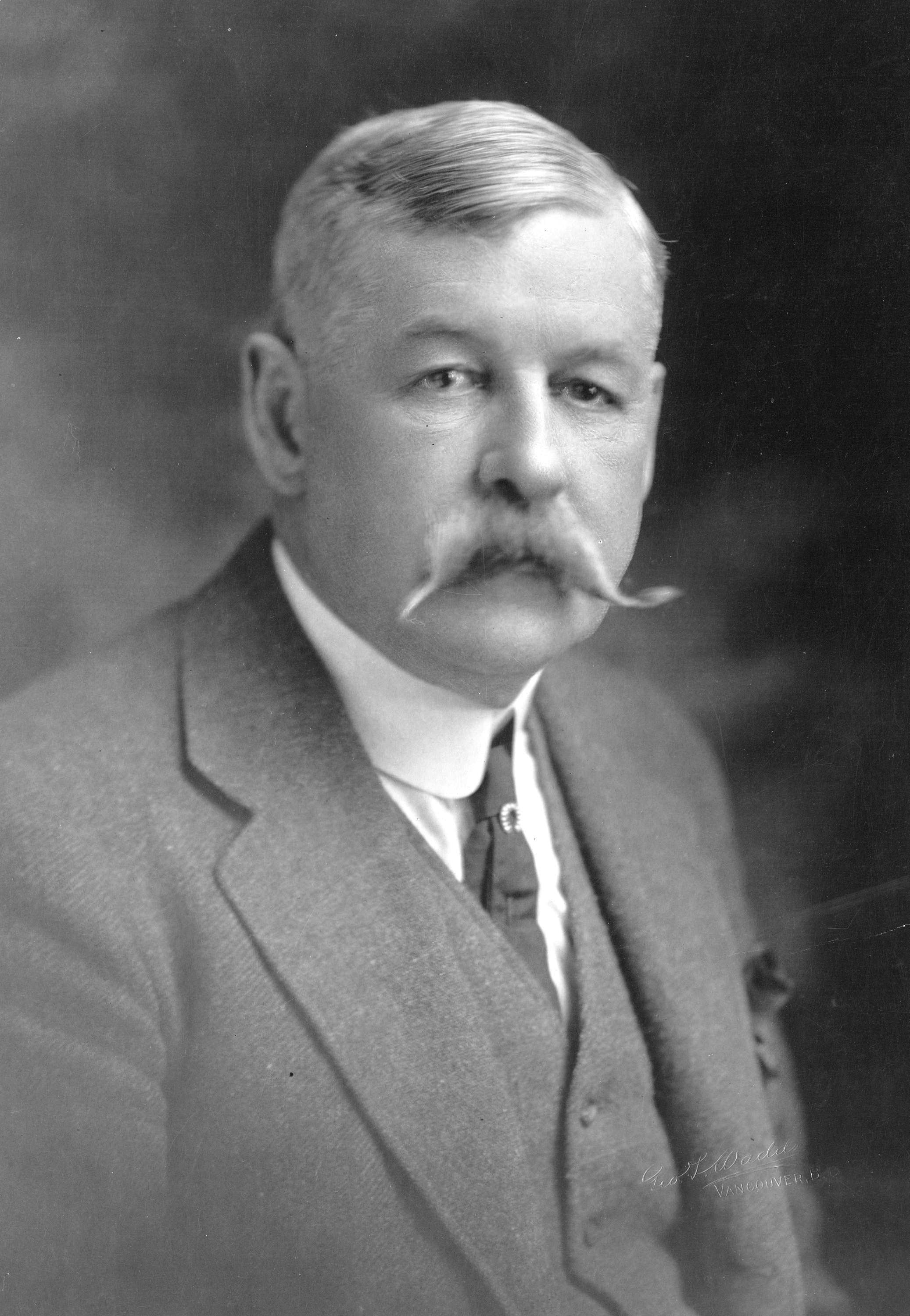
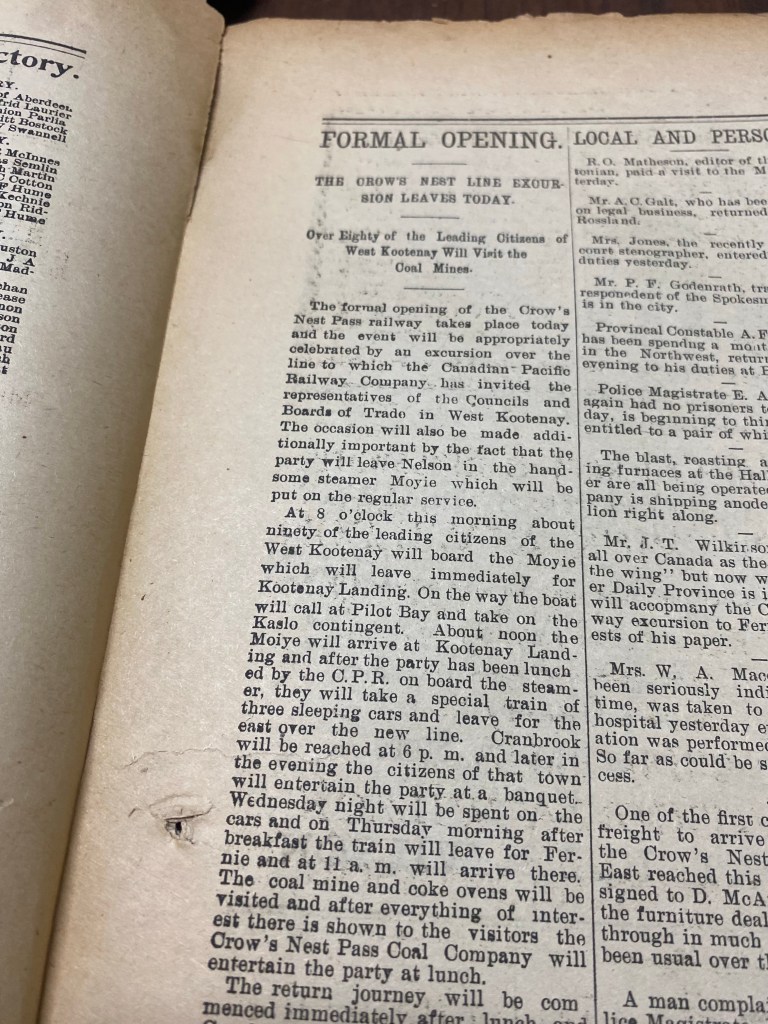
I was interested to see that the ship’s “maiden voyage” was part of a special excursion organized by the Canadian Pacific Railway (CPR) for West Kootenay community leaders that included train trips on the CPR’s brand new Crowsnest Railway.  The CPR official in charge of the excursion was its Kootenay district freight agent Francis White “Frank” Peters, assisted by Captain James Troup, who had a large role in the building of the Moyie and was in charge of CPR’s lake fleet, and several other company officials. 

Invitations were sent out to members of West Kootenay municipal councils and Boards of Trade as well as press in the region and further afield.  That drew an enthusiastic response, as there was intense interest in this new transportation link that dramatically improved access to and from Canadian markets.  The Moyie and its sister sternwheelers were essential to the new route, as the end-of-rail was at Kootenay Landing at the south end of Kootenay Lake.   
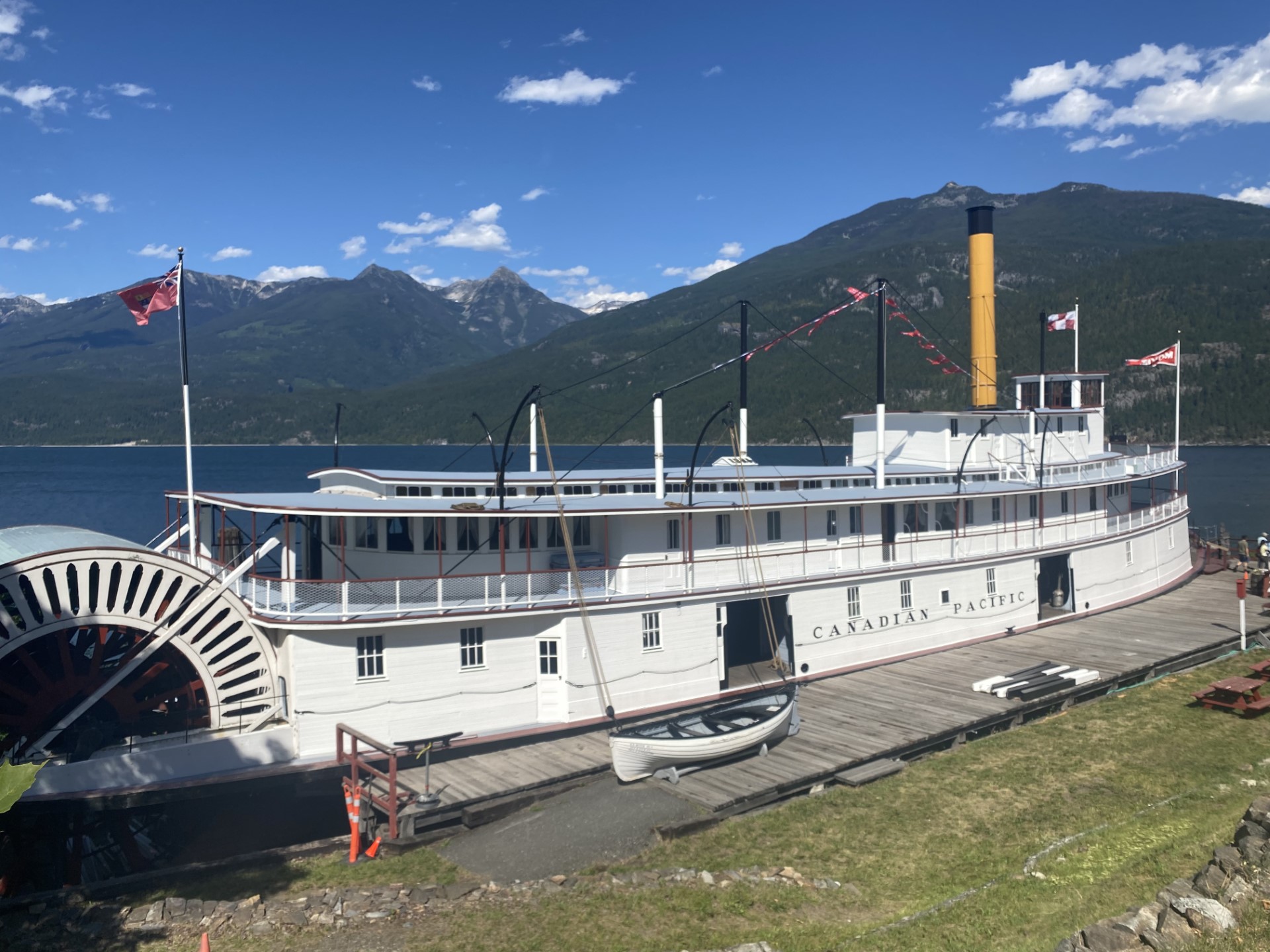
S.S. Moyie seen overlooking Kaslo Bay in September 2023.
front page story in Dec. 7, 1898 issue of Nelson Daily Miner
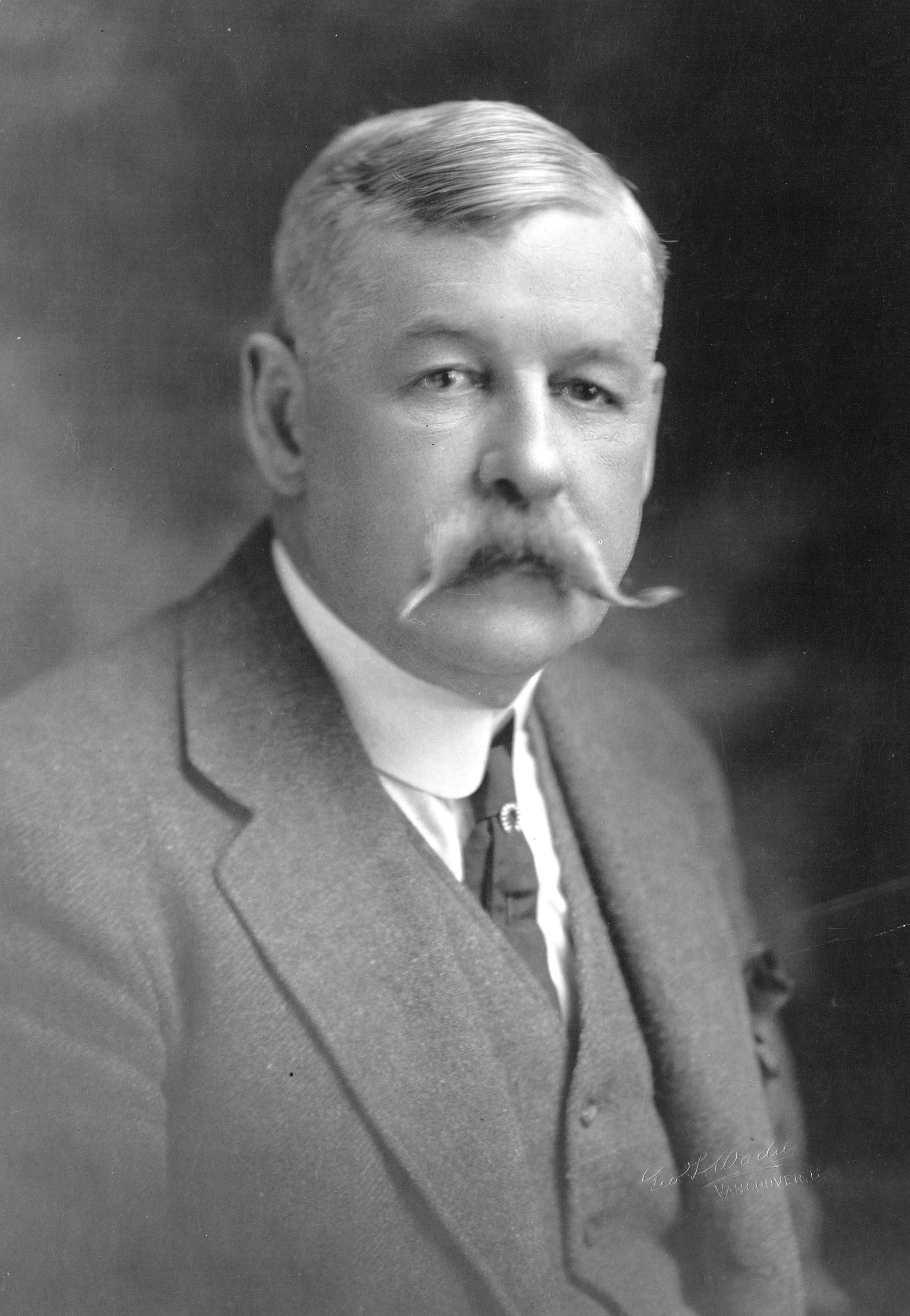
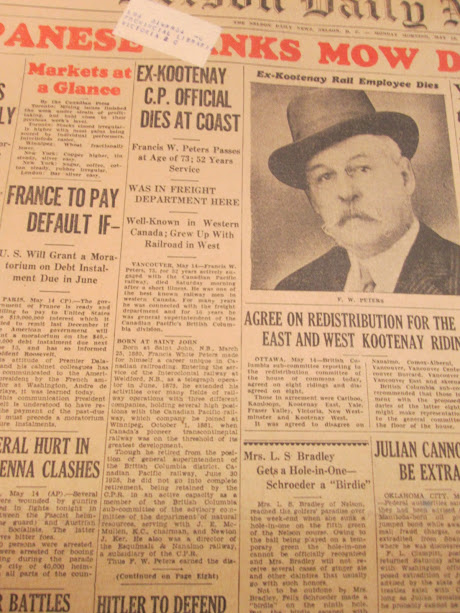
Francis White “Frank” Peters (1860-1933), who was in charge of the VIP excursion.
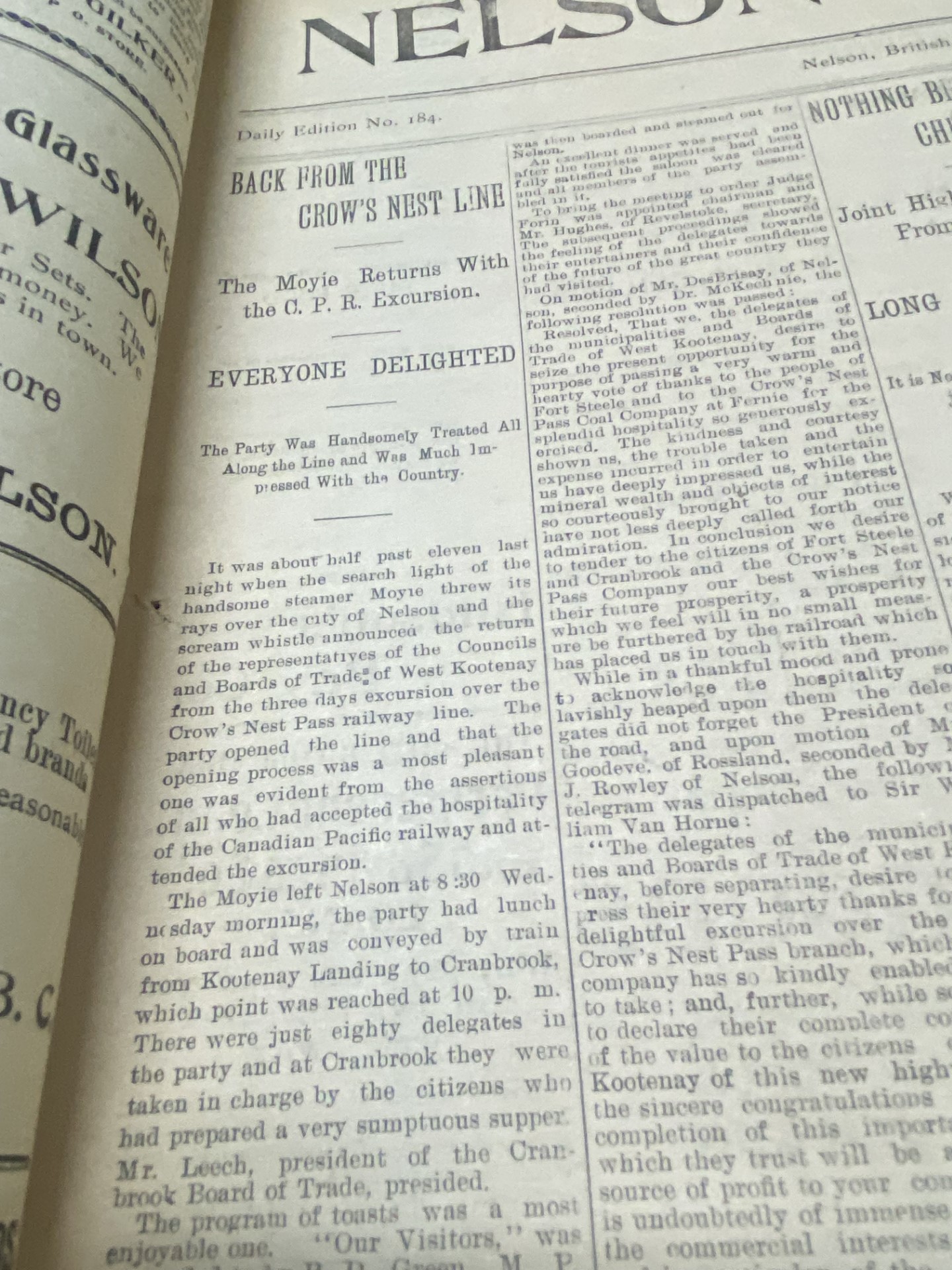
from December 8, 1898 Nelson Daily Miner
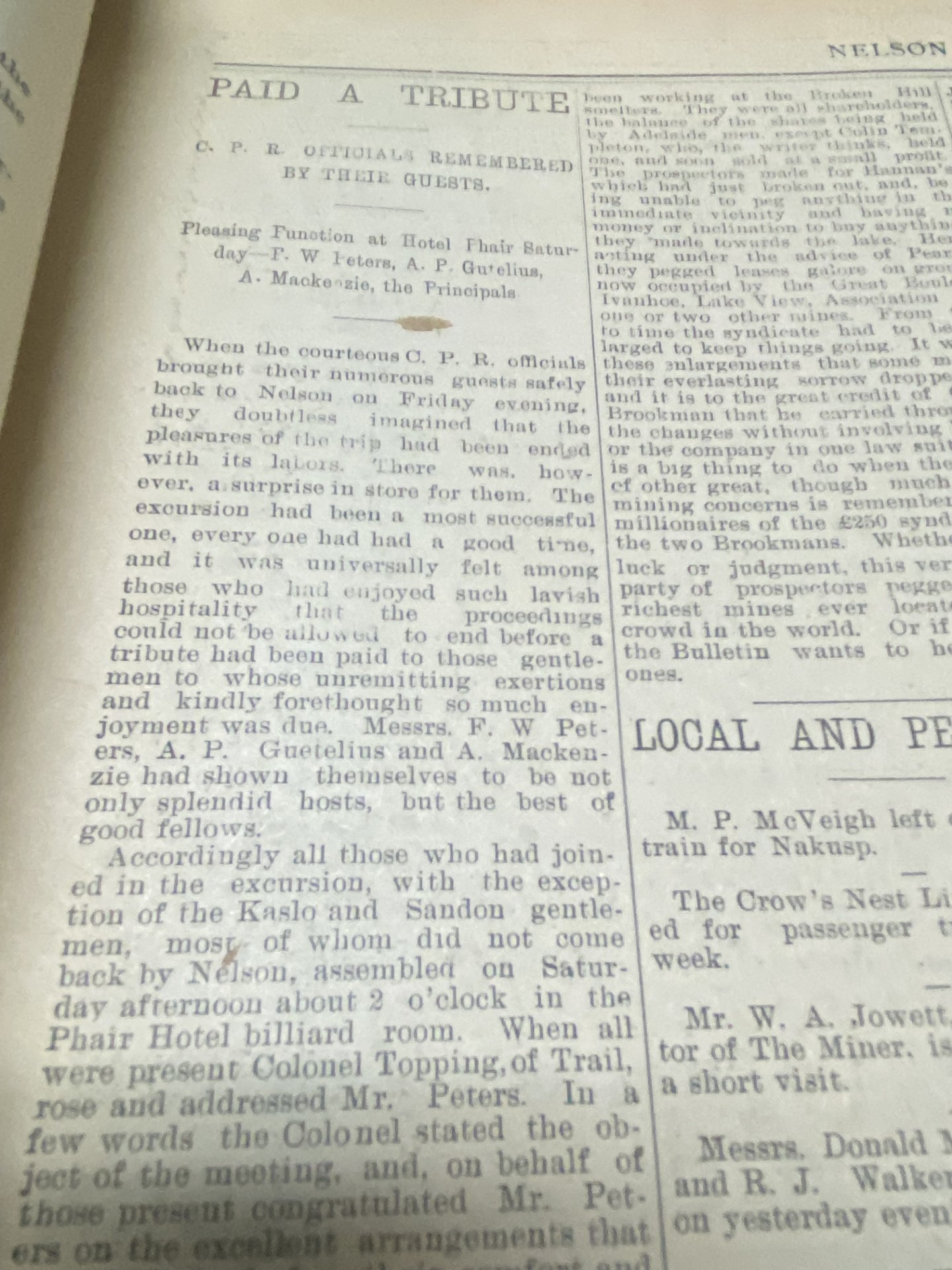
from December 11, 1898 Nelson Daily Miner

The excursion participants included prominent names from West Kootenay history, such as Colonel E.S. Topping from Trail, J.S.C. Fraser and John Kirkup from Rossland, G.O. Buchanan and G.T. Kane from Kaslo, J.M. Harris from Sandon, and Judge Forin and Frank Fletcher from Nelson.  You wonder how often – if ever — these leaders from that era would be together like this, with a chance to interact and get to know each other.

According to various accounts, there were between 80 and 105 guests on the excursion.  It began with the Moyie leaving Nelson shortly after 8 am on Wednesday, December 7, 1898.  At about 11 am the ship had a quick stop at Pilot Bay to pick up guests from the north part of Kootenay Lake and Slocan Valley who had come from Kaslo on the S.S. Kokanee to join the excursion.  Landing at Kootenay Landing at about 4 pm, they transferred to a special train that included three sleeping cars with porters, which took them to Cranbrook at about 7 pm, where they were greeted by a delegation of Cranbrook businessmen led by lumber merchant Archibald Leitch. (Note from Nelson history: five years later, on April 29, 1903, the same Archie Leitch rushed from Cranbrook on a special CPR recovery train to the site of the Frank Slide disaster to pick up three nieces who miraculously survived the slide, while their parents and four brothers were killed. The family decided that the youngest of the nieces, Marion Leitch, would stay in Cranbrook and be brought up by Archie and his family, while her older sisters went to Manitoba to live with other relatives. With Archie and his wife as legal guardians, Marion went through school in Cranbrook, then studied music in Vancouver, and decided to settle in Nelson B.C., where she would be a prominent teacher of piano lessons from the mid-1920s until retiring in 1971.)

The Cranbrook Board of Trade sponsored a banquet for the visitors that included numerous toasts of thanks and congratulations back and forth.  At that early stage of the new railway there were no dining cars or other food facilities on the trains, so meals were arranged off the train at stops.

After the event wrapped up towards 2 am, the visitors retired to their sleeping cars on the train.  Continuing noise from excited passengers made it hard to get much sleep.   In the morning the train headed to Fernie, with stops along the way to tour coal mines and coke ovens, as smelters in Trail and elsewhere in the region needed a good supply of coke for their operations.  Returning west, the train stopped at about 4 pm at Doris (near Cranbrook), where two-horse and four-horse sleighs would take them about ten miles to Fort Steele, where the local board of trade hosted a banquet at the Vanoster Hotel featuring more toasts, speeches and another ample feast.

Several of the passengers in the horse-drawn sleighs encouraged their drivers to race against other sleighs, just for fun.  Unfortunately, two Rossland guests suffered injuries when their sleigh overturned.  The problems getting to Fort Steele were a reminder that it was the big loser in the routing of the Crowsnest Railway, as the CPR decided late in the project to save money by bypassing the long-established Fort Steele community in favour of the small settlement of Cranbrook where land costs were much lower.  There was talk of a spur line being built to Fort Steele, but that never happened.  By the early 1900s it was a ghost town, destined to become a restored and rebuilt tourist attraction in the 1960s.

Based on the comments during and after the excursion, the participants appreciated it as a learning experience with lots of fun and camaraderie.  According to the Cranbrook Herald, the most popular dinner speaker at the Fort Steele banquet was Reverend Frew, pastor of the Presbyterian Church in Nelson.  He joked that he had taken on the role of chaplain of the travellers, guiding their spiritual and moral protection through the tour.  Frew drew a great round of laughter when he said he found the married men to be the most difficult to handle, and “if I succeeded in keeping them from breaking the whole Ten Commandments my mission was not in vain.”  His estimate that “just one or two” of the men were not total abstainers from liquor was obviously a gross underestimation, based on the great number of toasts by the revellers.

On Friday the 9th there were further tours for the group during its homeward travel on the rail line to Kootenay Landing, and then sailing the Moyie through the lake to Nelson, stopping at Pilot Bay to drop off Kaslo-bound guests for another boat so they didn’t have to come all the way back north from Nelson.  It was less than two weeks since five lives were lost in the sinking of the S.S City of Ainsworth near Pilot Bay in a fierce storm, so that disaster was likely a topic of conversation for all onboard.

On Saturday, December 10, a meeting was held in the Phair Hotel billiard room in Nelson where organizers and participants reflected on the tour.  On behalf of the participants, Colonel Topping (known as the Father of Trail) presented excursion leader Frank Peters with a silver punch bowl and tea set as a token of appreciation.  Unfortunately, Captain Troup was unable to attend and receive his gift, but three other CPR officials were also honoured with gifts from the travellers.  

In 1931 the expensive construction of the rail line from Kootenay Landing through difficult terrain on the west side of Kootenay Lake towards Nelson was completed.  This substantially reduced travel time on the Crowsnest line.  My dad Leigh was among about a dozen students from Nelson who travelled on the Crowsnest Railway many times in the 1930s and later to get to and from the University of Alberta in Edmonton.  At the same time, his brother Ken and other Nelsonites were taking the CPR’s Kettle Valley Railway west to UBC.

Sadly, sternwheeler transport on Kootenay Lake ended with the last voyage of S.S. Moyie in April 1957.

Peters continued his work as freight agent, which included working out new schedules of rates.  In the summer of 1900, outside of his CPR work he served as the first president of the Nelson Electric Tramway company, which provided much-needed streetcar service for the hilly community.   He was also a member of the exclusive Nelson Club, and active in the Masons as well as curling and other sport associations.

In 1900 the new Nelson streetcar company, known as the Nelson Electric Tramway Company, was having difficulty getting financing from European investors who were wary of investing in such a small, far-away community.  Knowing that Europeans had high regard for the CPR and its amazing achievement of the cross-Canada railway, Frank Peters was elected as the first president of the Nelson Electric Tramway company.  He presided over the official opening of the streetcar service and the development of what would later be known as Lakeside Park, meant to increase ticket revenue for the streetcar company.   Peters’ duties in Nelson ended in late 1900 when the CPR transferred him back to Winnipeg.  He reached executive ranks in the company in 1913 with his appointment as general superintendent of B.C.

Peters began a long railroading career at age 13 in his native Saint John, New Brunswick as a telegraph operator with the Intercolonial Railway.  After gaining experience with a couple of U.S. railroads in the Great Lakes region, he joined the CPR in Winnipeg in 1881 shortly after its incorporation.  He reached executive rank with the company in 1910 with his appointment as B.C. Superintendent in Vancouver.  While in Nelson he was an active member of the Nelson Club as well as the Masons lodge and several sports organizations. 

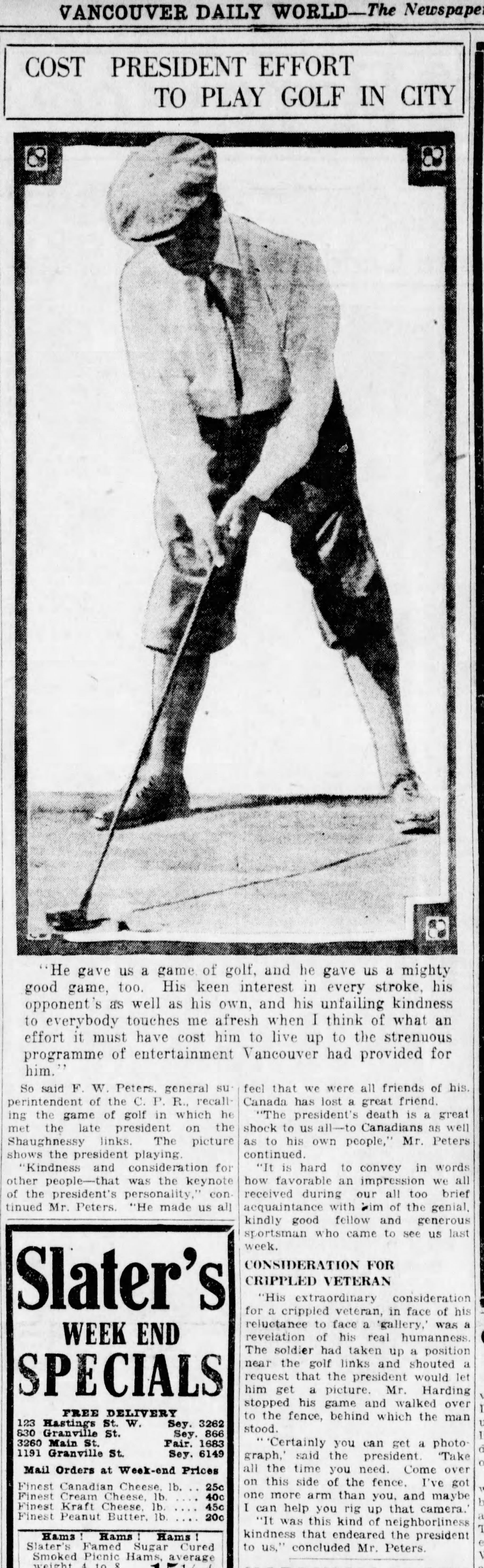
He enthusiastically took up golf in Vancouver and was president of the prestigious Shaughnessy Golf Club in 1922, and a year later was part of a Shaughnessy golf foursome that included visiting U.S. President Warren Harding, exactly one week before the president’s death from a stroke while visiting San Francisco.

Peters retired from the CPR in 1927 after 46 years with the company, while continuing to serve as a director of the CPR subsidiary Esquimalt and Nanaimo Railway.  He died in 1933 after 60 years in the railroad business, and was known as the Grand Old Man of Canadian Railroading.    .
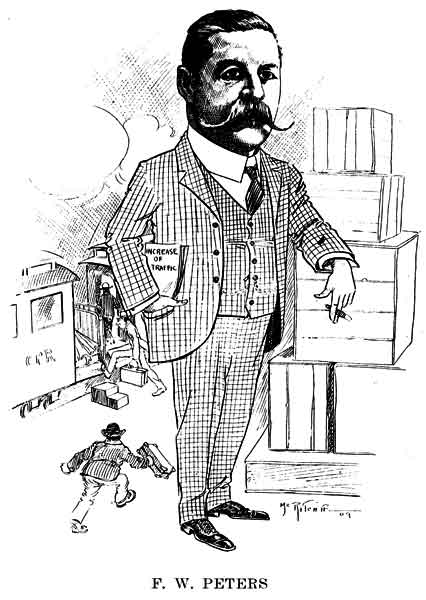
newspaper cartoon of Frank Peters, c. 1910

Francis White Peters was part of CPR history as well as West Kootenay history and U.S. Presidential history

Leave a comment

Francis White “Frank” Peters (1860-1933) shows up on my family tree as a second cousin of my great-grandfather Frederick Peters (1852-1919), the premier of Prince Edward Island who moved west to Vancouver Island in 1897-98. Their common ancestors were their great-grandparents, the United Empire Loyalists James Peters and Margaret Lester who left New York for Saint John in the future Canadian province of New Brunswick in 1783.

As was common with boys of his era, Frank Peters was fascinated by trains and railways. He got his start in the industry at age 13 in 1873 as a telegraph operator with the Intercolonial Railroad in his hometown of Saint John. From there he went to the United States and worked for two railroads in the Great Lakes area, before joining the Canadian Pacific Railway (CPR) in Winnipeg in 1881, shortly after its incorporation.

Frank W. Peters in about 1910. Vancouver Archives

One of his difficult jobs in the next few years was to visit construction camps that were building Canada’s first coast-to-coast railroad, and explain why the cash-poor CPR company would be late in getting their pay to them. In November 1885 he joined his colleagues in celebrating the driving of the last spike of the CPR trans-Canada line. He gained expertise in freight logistics, which led to his transfer to Nelson, B.C. in 1895 as district freight agent.

While based in Nelson he worked with miners, loggers and fruit farmers towards getting their product to markets by rail. Newspaper reports of the time show that Frank was energetic, hard-working and popular with customers and the community.

In 1898 he was staff support for the CPR’s purchase of the Trail smelter and associated rail lines and rights from entrepreneur Fritz Heinze, which led to CPR’s dominant role in the economy of Trail and region for more than 80 years.

The other major event of the year was completion of CPR’s Crowsnest Rail Line from Lethbridge through the Crowsnest Pass to Fernie and ultimately to Kootenay Landing at the south end of Kootenay Lake, where it linked with sternwheelers to reach destinations around the lake. For the first time, the rest of Canada was accessible to the West Kootenay, and vice versa.

On behalf of the CPR, Frank Peters organized events celebrating the arrival of the new rail service, including an orientation tour of the new line, where invitations were sent to West Kootenay municipal council members, board of trade delegates, as well as newspaper reporters and editors. On Wednesday, December 7, 1898 representatives from Nelson and Rossland regions boarded the brand new S.S. Moyie sternwheeler for the voyage to rail transfer at Kootenay Landing. They stopped at Pilot Bay to pick up representatives from Sandon and Kaslo who arrived on the S.S. Kokanee. A total of 82 men came for the tour, including names well-known in the region’s history like Colonel Topping, Frank Fletcher, G.O. Buchanan, Judge Forin, John Kirkup, J. Fred Hume, Col. Robert Lowery and Billy Esling.

The excursion arrived in Cranbrook for a festive dinner, and then three sleeper cars with porters were provided for the guests. The next day the group travelled to and back from Fernie, including tours of coal mines and coke ovens. That evening the banquet was in Fort Steele, which required wagon rides from Cranbrook in the snow, as the CPR had — very controversially—bypassed that established frontier community with its route. Two men suffered minor injuries when one of the four-horse wagons turned over. After dinner and many toasts of congratulations and thanks back and forth, the guests returned to Cranbrook for the evening in sleeping cars. The return trip to Kootenay Landing on Friday, Dec. 9th featured several tours of mines along the way.

Peters was once again the centre of attention in August 1900 when he was elected as the first president of the Nelson Streetcar company. There had been some hesitancy by European investors about the fledgling company, which led boosters to put the CPR man Peters forward as president, as CPR was highly-respected internationally at the time.

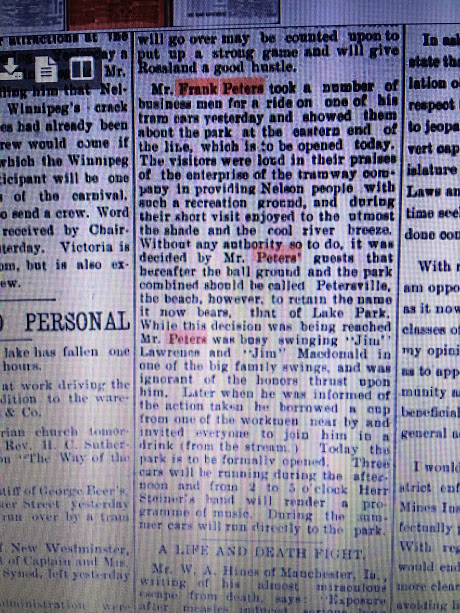
In September 1900 Peters presided at the official opening of the streetcar company, by depositing a coin in the pay slot as first customer. A month later, the city developed what is now known as Lakeside Park, to gain much-needed revenue for the streetcar company. In advance of the park opening, Peters conducted a tour for a group of local businessmen and the newspaper editor. He encouraged the men to relive their youth by pushing each other on the park’s swings. They had such a good time that they half-seriously put forward a recommendation that the new park be called Petersville. Instead, it was named Lake Park, and later was known as Lakeside.

In December 1900 the CPR transferred Peters back to its Winnipeg office as assistant to vice president. He continued to be recognized as the company’s “Kootenay Man” for special projects such as the Kootenay Lake Hotel at Balfour. He participated to in several meetings with boards of trade regarding the design and location of the new hotel.

In 1912 Peters joined CPR’s executive group in Vancouver when he was appointed to the new position of B.C. Superintendent. He became very active in the Vancouver business scene, serving as president of the Commercial Club and later as president of the Vancouver Club. Always keen on sports, he had been president of the Manitoba Curling Association, and while in Nelson he served as president of the B,C. Curling Association. In Vancouver he and his wife lived among other CPR executives in the exclusive Shaughnessy neighbourhood and he was an active member of the prestigious Shaughnessy Golf Club, serving as president of the club in 1922.

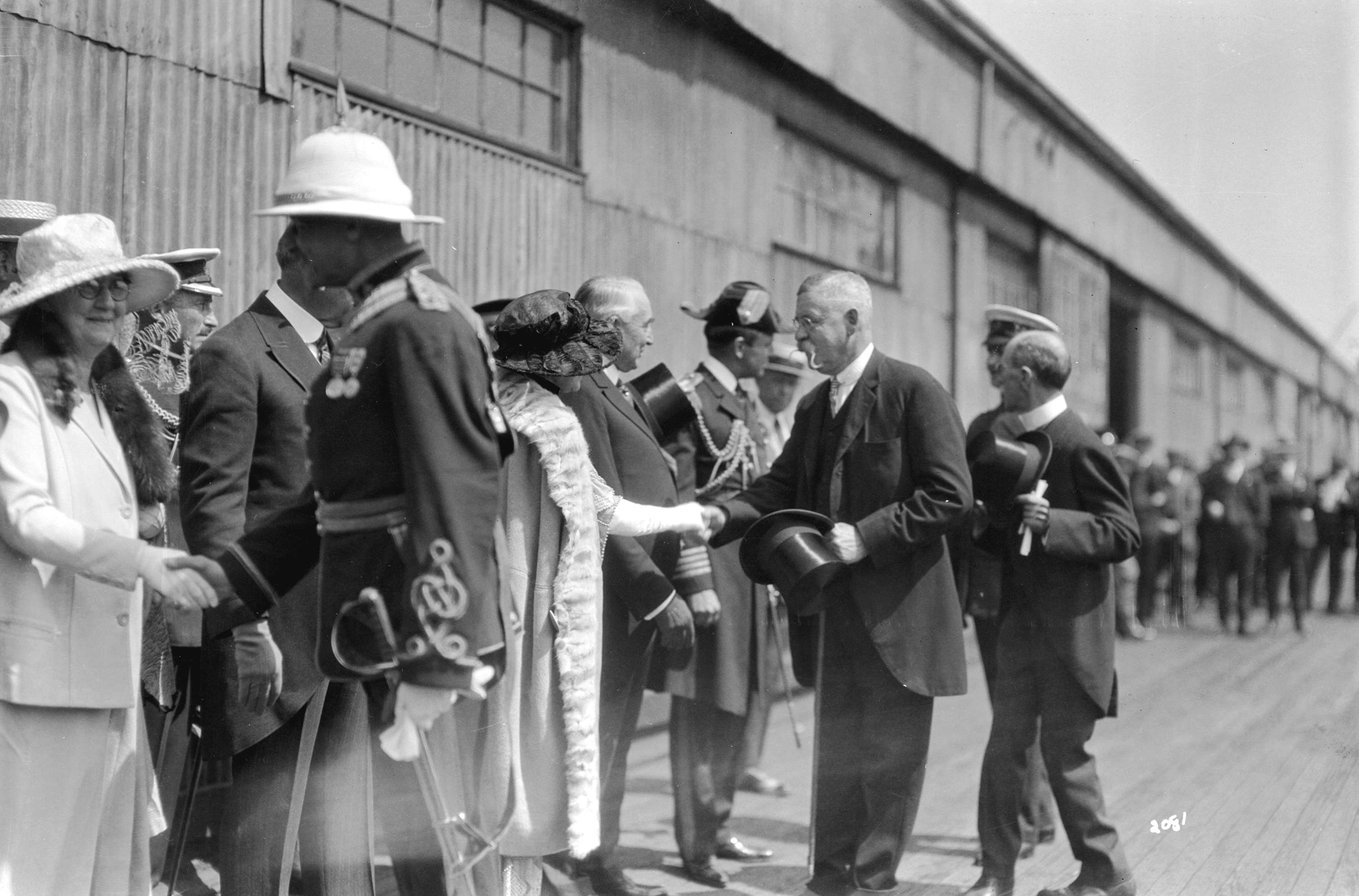
Frank Peters (with handlebar moustache) greets President and Mrs. Harding in Vancouver July 27, 1923.
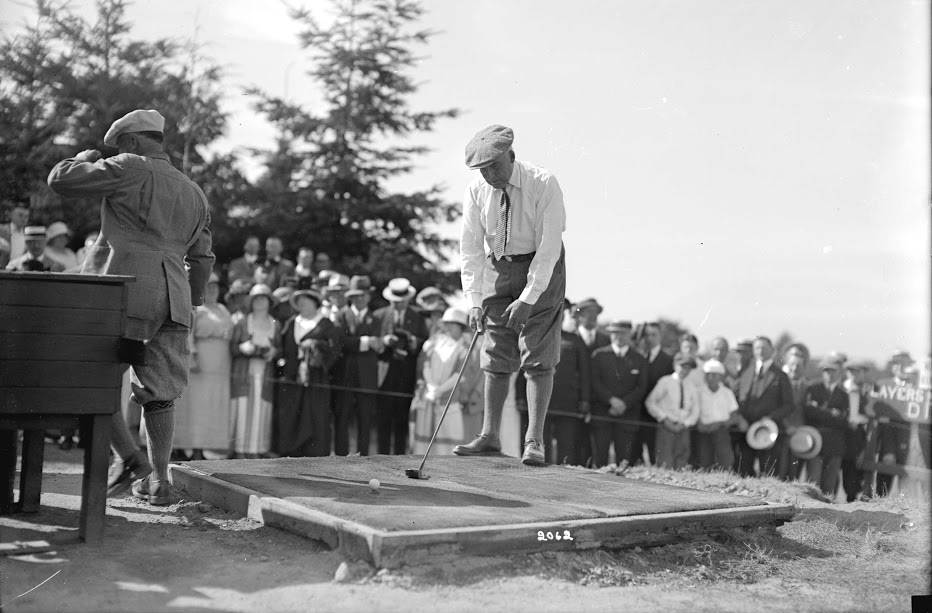
President Harding teeing off at Shaughnessy. Vancouver Archives.

In World War One Frank Peters was one of two Western Canadians appointed to the national Military Hospitals Commission, created to find or build facilities for treating the huge numbers of wounded soldiers on their return to Canada. Peters would be a driving force in establishing the highly-regarded Shaughnessy Veterans Hospital.

As he was well aware of the luxurious Kootenay Lake Hotel in Balfour sitting empty during the war, it may well have been him who suggested it could temporarily serve as a hospital. As it turned out, the hotel would be used as a sanitorium for tuberculosis victims, but this association with TB made it subsequently undesirable for tourists, which caused it to be closed permanently and dismantled for building materials in the late 1920s.

In July 1923 U.S. President Warren G. Harding was in the middle of a visit to Alaska when he advised aides that he wanted to stop in Vancouver on his way back to mainland U.S., and play golf at the Shaughnessy Golf Course, which he heard was exceptional. Arrangements were made at short notice, including playing partners for his round of golf. As the lieutenant governor was not a golfer, it was suggested that the jovial past president of the club, Frank Peters, be in the foursome, along with a local judge and the club pro. Peters was honoured to be asked, and gladly joined the presidential foursome. Harding came to the course after speaking to a crowd of 50,000 at Stanley Park. It was the first time a sitting American president visited outside his own country. Harding requested that no spectators be allowed on the course while they were playing, except at the 18th hole where the round finished.

According to a couple of the caddies years later, Harding asked his playing partners to stop for a break during play on about the seventh hole. He pleaded with them to never mention there was a problem with his health, as it would damage his presidency. The group rested, and then moved to about the 15th hole to continue play, as if there had been no interruption. They were greeted by a cheering crowd on the 18th green.

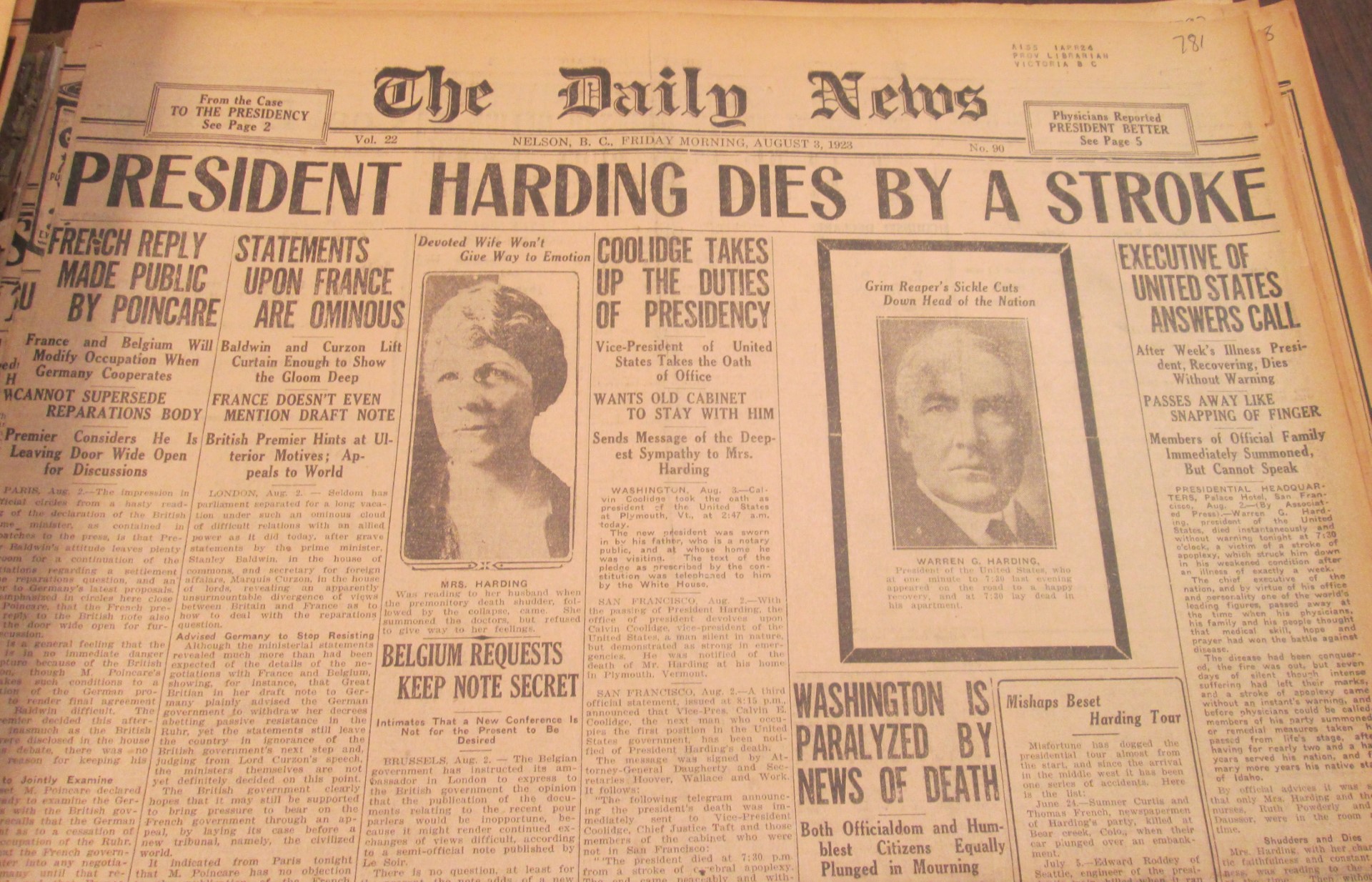
After leaving Vancouver, Harding continued his West Coast tour. Exactly a week later, on August 3, 1923, Harding died suddenly at age 56 in his hotel room in San Francisco. The death from a stroke would be front page news around the world. His wife Florence, who had been with him in the room, insisted that he be embalmed immediately, with no autopsy. This led to suspicion that she may have had something to do with his death, perhaps as revenge for the affairs he had with other women.

The press contacted Frank Peters for his reaction to the death of the president. He expressed his sorrow at the death of an outstanding man. He said he was an excellent golf playing partner, and made no mention of their game being stopped to give Harding time to recover.

Not long after Harding’s death, word emerged of major financial scandals during his administration, including the Teapot Dome Scandal of kickbacks to a cabinet minister for approving oil drilling rights.

The circumstances of his death continued to be cloudy, and were the focus of a 1930 book by former administration official Gaston Means titled “The Strange Death of President Warren G. Harding”.

Frank Peters continued as CPR’s B.C. Superintendent until retiring at age 67 in 1927. A joke at the time was that Peters couldn’t retire because he was the only person alive who understood Canada’s complex rail freight rates. In retirement, he continued to serve as a director of the CPR subidiary Esquimalt and Nanaimo Railway.

Peters died at age 73 in Vancouver in 1933, known as The Grand Old Man of Canadian Railroading.

Frank Peters death announced in Nelson Daily News
Nelson Daily Miner report of orientation tour of new CPR Crowsnest Line in December 1898, organized and led by freight agent Frank Peters.