As its second show, Trail Theatre Unlimited chose to present Trail and district audiences with performances of Agatha Christie’s “The Mousetrap”, which had the distinction of being the longest-running play in the history of London theatre.
The murder mystery play had been running continuously in London since opening in the West End in 1952. The 26-year string at the time far exceeded any other show at the time — and its momentum has continued 47 more years to today in 2025, aside from shutting down temporarily on March 16, 2000 due to the Covid virus which impacted live theatre around the world. The show resumed on May 17, 2021 and has been performed continuously at the St. Martin’s Theatre since then. As of 2002, the show was performed for its ten millionth audience member in London. The 30,000th performance on March 19, 2025 was the next cause for celebration.
In early January, 1978 the executive of Trail Theatre Unlimited met to plan for the club’s spring production. The consensus was that the group should build on the successful momentum of their debut show “Dirty Work at the Crossroads” with a spring show that was somewhat more serious than the farce-like melodrama “Dirty Work”. As a member of the executive of Theatre Unlimited, I had suggested to others that we do “something like” The Mousetrap, which I had watched in London in the summer of 1975 and then two years later performed in with the Whitehorse Drama Club in the Yukon. When we could not think of a good alternative, the decision was made to do “The Mousetrap”.
Several members of the club were surprised that such a popular professional show was available for amateur groups to perform, for a reasonable fee of about $50 for each performance. We looked into that, and saw that the rights holder (Agatha Christie’s grandson) had rules that no amateur productions could be done in the United Kingdom, but they were allowed outside the country. Another rule is that no film could be made based on the play until the London show closed, so no movies have ever been made.
Something that all productions — professional or amateur — have to do is live up to the tradition of keeping the identity of the killer secret, so as not to spoil it for future audiences. The actor playing the killer comes on stage after the curtain closes and asks the viewers to keep the secret to themselves, as much of the fun for the audience is trying to guess which of eight characters is the murderer — and Agatha Christie provided clues throughout the play that give you reason to suspect any one of the characters.
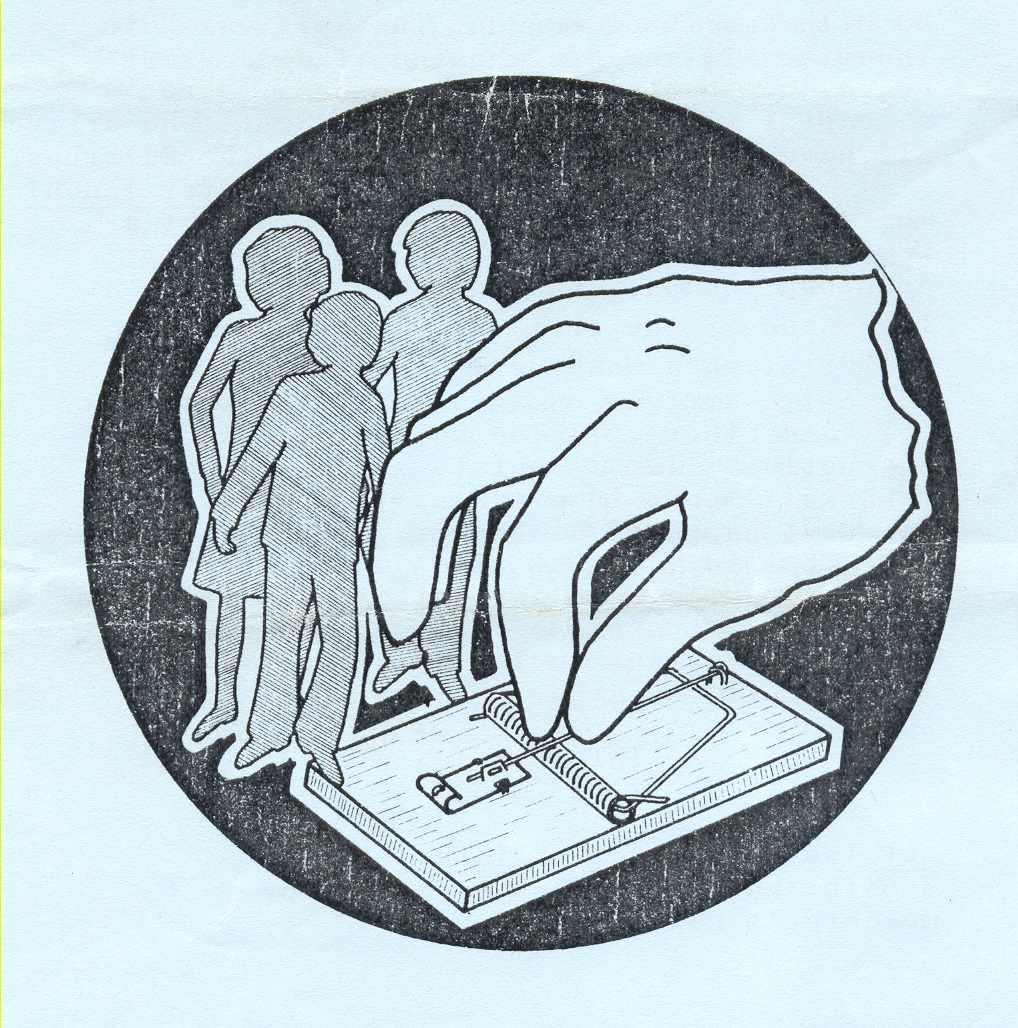
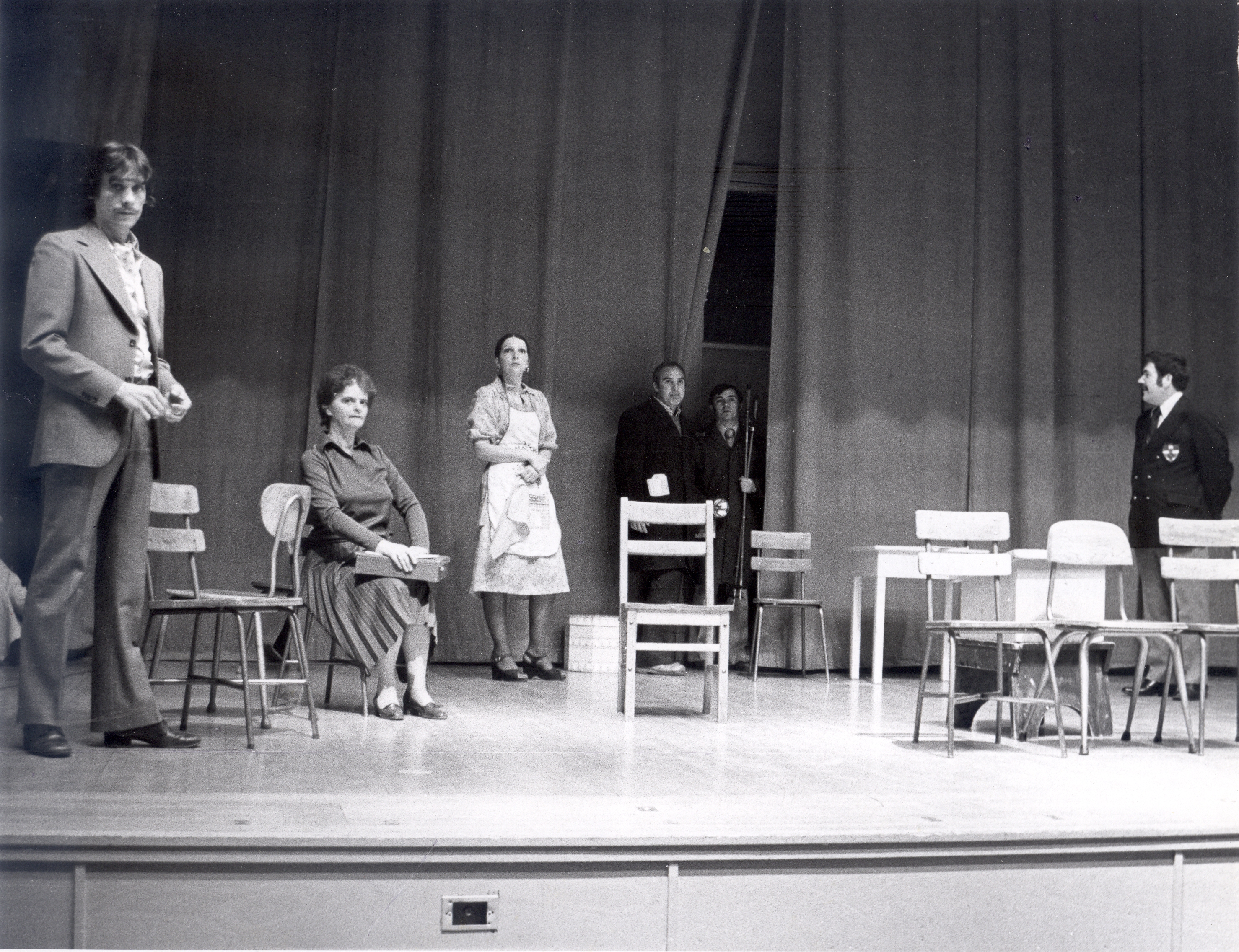
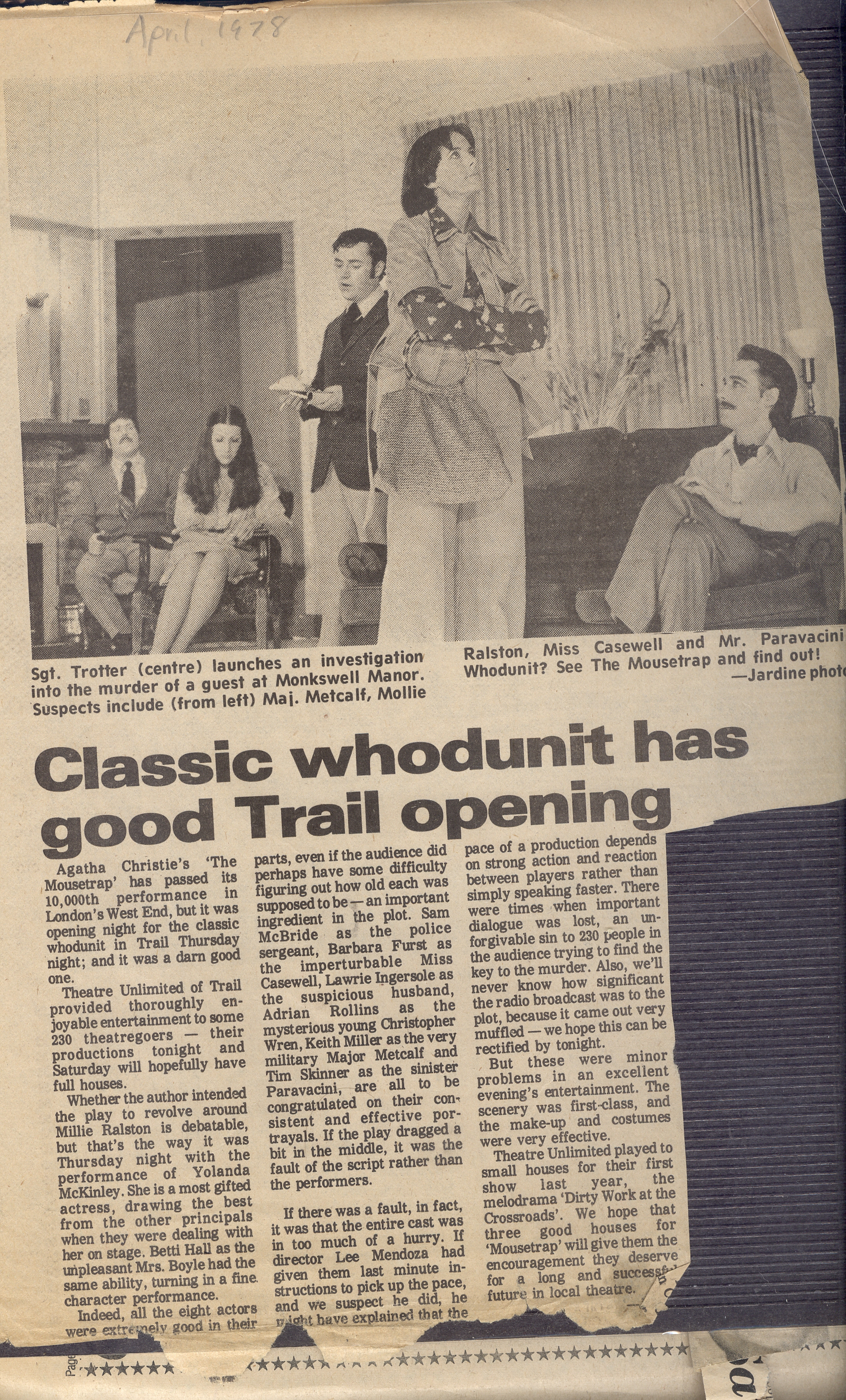
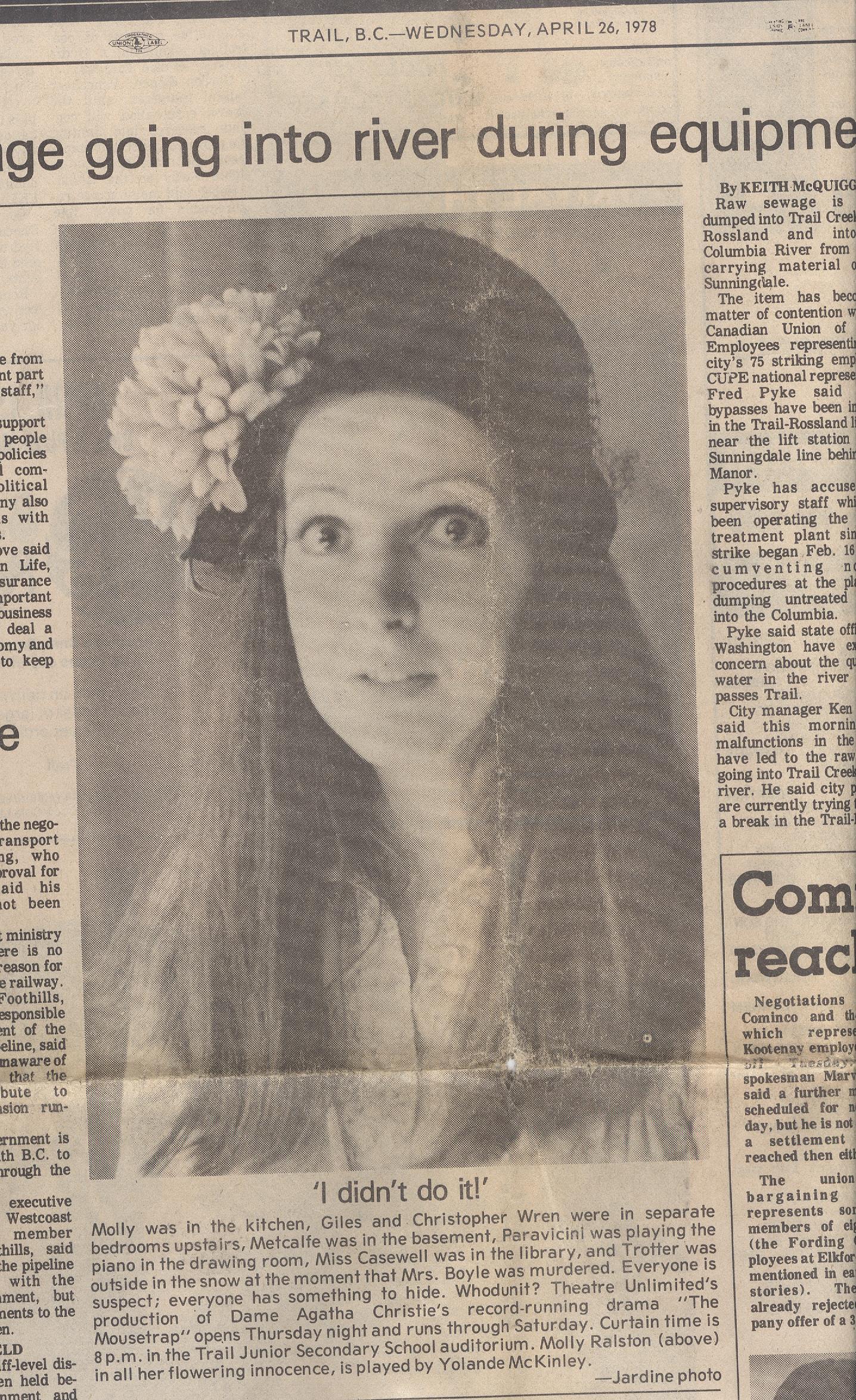
We were able to use artwork from the recent Mousetrap show in Whitehorse for the Trail Theatre Unlimited show as well. Many thanks to artist Lottie Hutton.Seen in a rehearsal are, from left: Tim Skinner as Paravacini, Betti Hall as Mrs. Boyle, Yolanda McKinley as Mollie Ralston, Lawrie Ingersole as innkeeper Miles Ralson, Sam McBride as Sgt. Trotter and Keith Miller as Major Metcalf.Trail Daily Times review of the show by editor Jack Fisher, who would later become active in Theatre Unlimited as an actor and organizer, as well as performing in Rossland Light Opera Players shows.
In early January 1977 the Whitehorse Drama Club met to consider options for a spring production.
Someone suggested doing Agatha Christie’s “The Mousetrap”, as it was setting records as the world’s longest-running play in London. The group agreed that it would be a great show to put on, but it was thought unlikely that the performance rights would be available for an amateur club like ours. When we found out the play was unavailable in England, but available for rent in other countries, we got quite excited about doing it.
Having seen the show in London in ’75, I knew the show was do-able for us because there was only one set and eight characters.
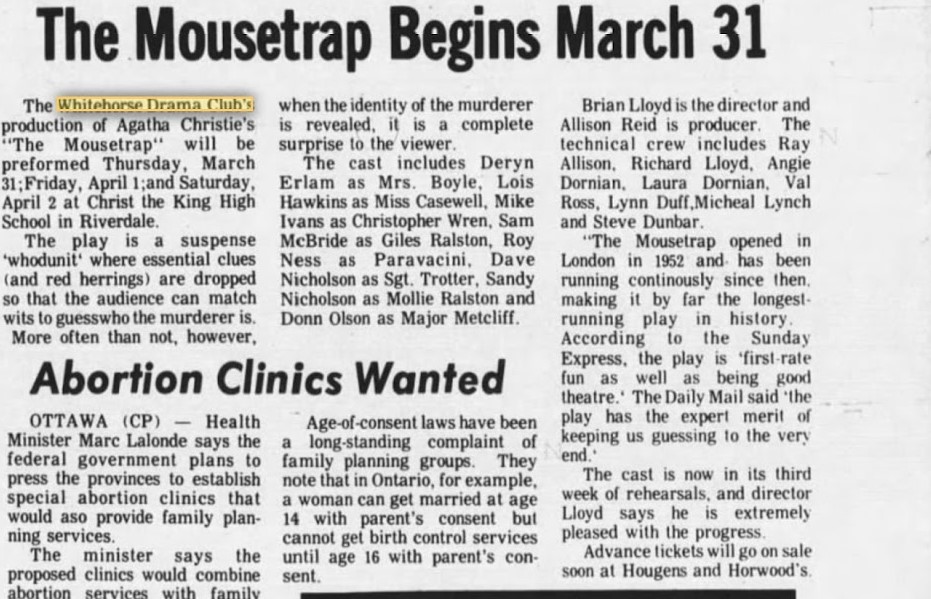
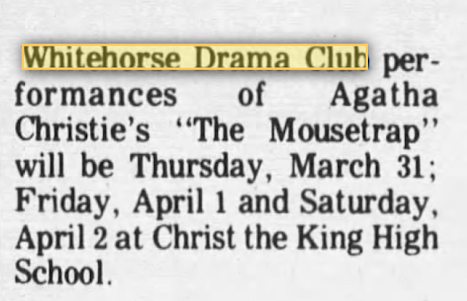
Whitehorse Star article on the production.
poster and program cover design forby Lottie Hutton for WDC’s “The Mousetrap”
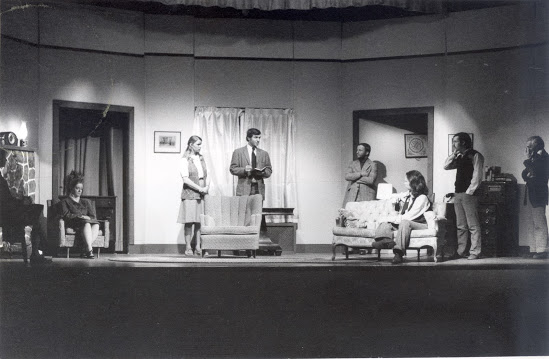
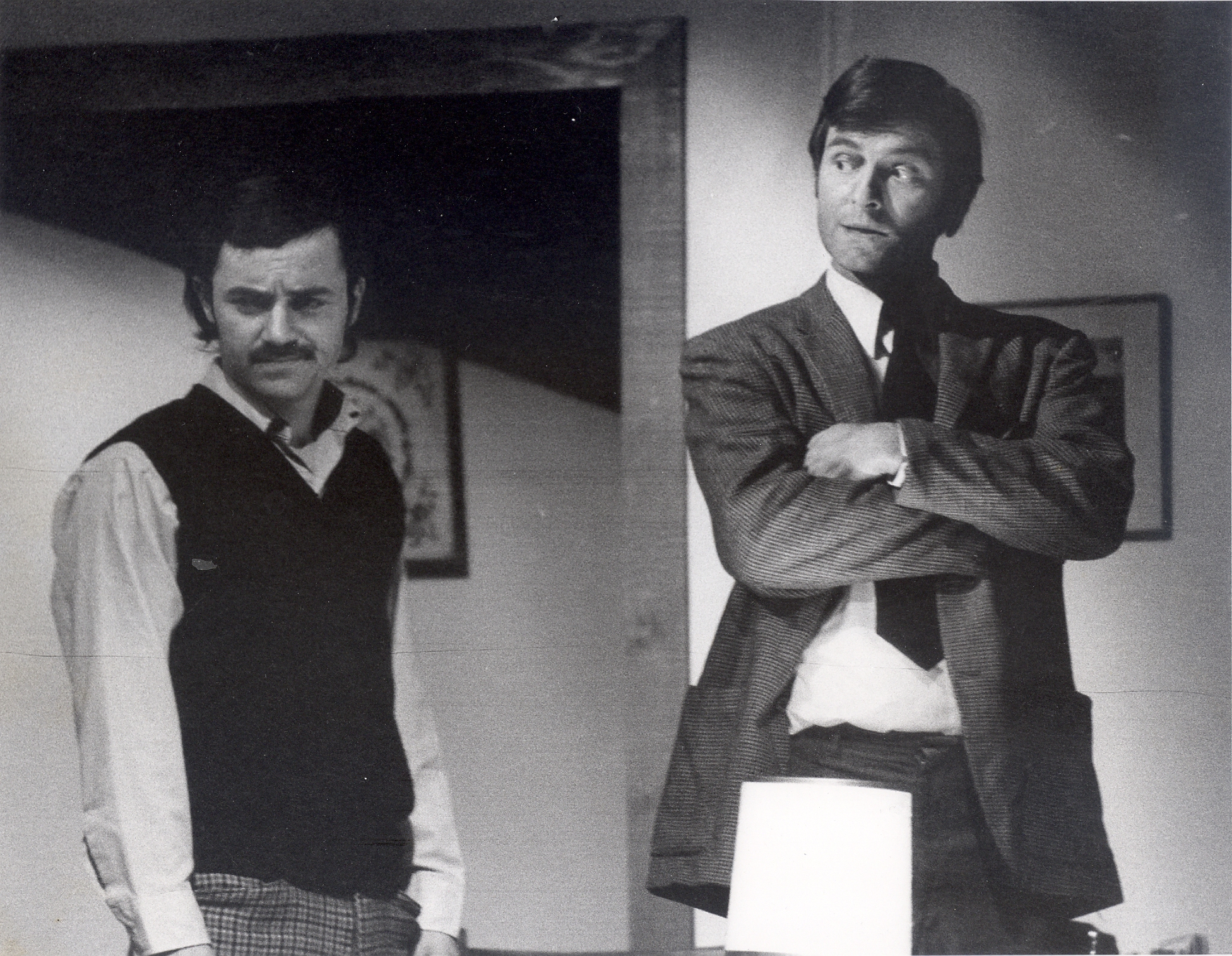
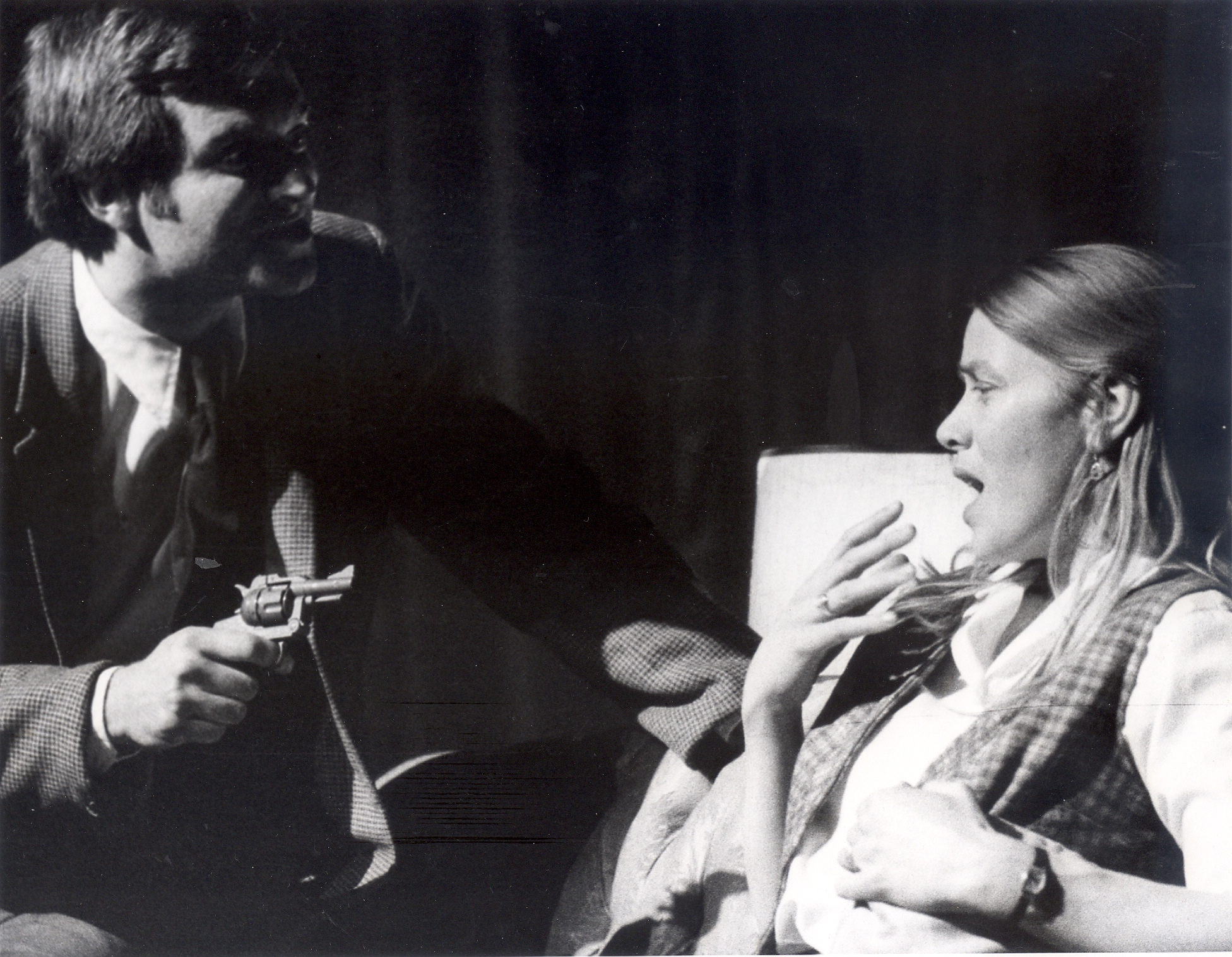
Scenes from our spring production of “The Mousetrap”.
Putting on “Mousetrap” was certainly a thrill for all of us at the Whitehorse Drama Club. There were large, enthusiastic and appreciative audiences for the three-show run.
A couple of months later I was offered a higher-level job by Cominco Ltd. in Trail, B.C., where my parents and large extended family lived, just an hour’s drive from my boyhood home of Nelson.
After presenting the dark, haunting “Veronica’s Room” with adult situations in October 1976, the Whitehorse Drama Club thought it would be good to do something kids would enjoy.
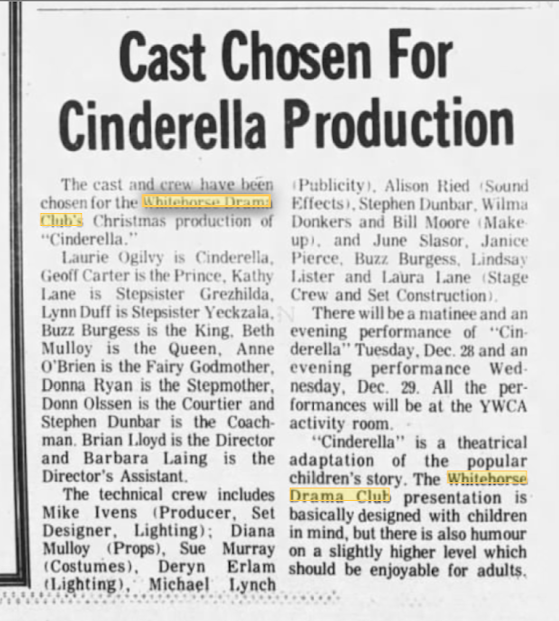
The idea came forward to do a Cinderella play as a Christmas show. Then we were surprised that we could not find a published Cinderella script that we could rent for use in the type of show we wanted to do. In desperation, I offered to try writing a script myself. Using my home typewriter and office typewriter for writing different sections of the play, I got a draft script. Other club members helped in re-typing it with revisions we decided on (this was about seven years before computerized word processing became available).
For the auditions, we welcomed the general public as well as local school students. I was very pleased that several of the F.H. Collins High School students who were in the Sourdough Rendezvous Mellerdrammer with me in early 1976 came out for the auditions, including Laurie Ogilvy, who took on the lead role of Cinderella.
I was not going to be able to participate in the performances of the show in December because I was scheduled to visit friends in England and Ireland over the Christmas holiday period. I watched a couple of early rehearsals of the play and was looking forward to seeing the opening night of the show before my vacation, but then I heard that my grandmother Helen Dewdney had died at age 89. She had lived with our family as a widow when I was growing up, and was like a second mother, so I was not going to miss her funeral in Trail. Being away from Whitehorse meant missing the pre-Christmas performance of the show, as well the two performances in the last days of December.
As a result, I never saw the show. And I did not keep a copy of the script. I heard later that the show came together well and the audiences — particularly children — really enjoyed it.
Laurie Ogilvy as Cinderella in scene with Lynn Duff as evil stepsister Yeckzala.
At about the same time, our club heard from CBC Whitehorse radio centre who said they had a script for a radio play, and would we be interested in participating in a recording of it. I remember going to the CBC studio with some other club members to do a one-act play called “The Price of Freedom is the Cost of Living”. I recall the writer/producer was Sally Halliday of CBC Radio, and I spoke the lines of a character named Uncle Tom. I don’t know if the show was ever broadcast, or if the script is in some archives somewhere. I have not found it in internet searches, but it was almost half a century ago. For us at the club, the experience was a fascinating change-of-pace from stage rehearsing and performance,
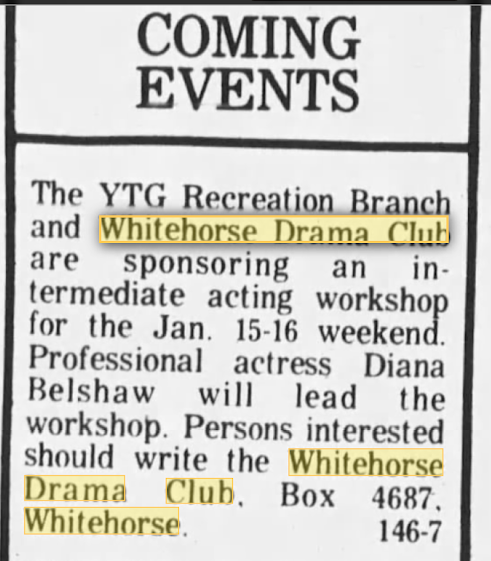
As noted in the newspaper ad above, another project of the drama club at the time was to get some professional training in acting. For this we partnered with the Yukon Territorial Government’s Recreation Branch to sponsor an intermediate acting workshop over a weekend in January. As it turned out, Diana Belshaw was tied up with theatre commitments in Vancouver and could not come. In her place, we were very pleased to benefit from the expertise of professional director and actress Kathryn Shaw.
About a month after the “Love in the Lodge” mellerdramer show closed I saw a story in the Whitehorse Star newspaper in which the Whitehorse Drama Club (WDC) invited individuals interested in community theatre to attend an organizing meeting about the club’s participation in the upcoming 3rd Annual Break-Up Drama Festival in Dawson City, the former capital of the Yukon Territory which was at the centre of the famous Klondike Gold Rush of 1898.
I phoned the contact person and said I would attend the meeting, and be happy to help with publicity, in line with my background as a newspaper reporter. She thanked me for the offer, and encouraged me to try out for a part in the auditions. The meeting was held in the WDC’s longstanding clubhouse, which was a remarkable log cabin-like structure not far from downtown Whitehorse which was large enough for meetings and rehearsals but not for performances, which would often be held on school stages.
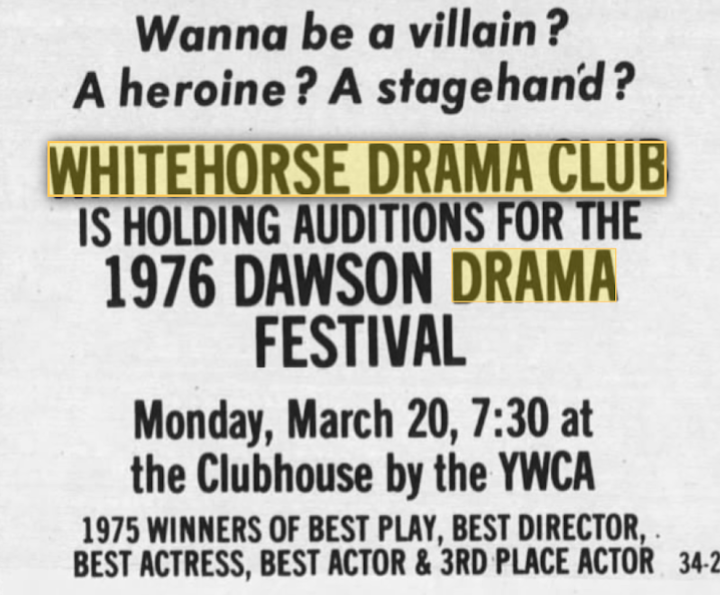
ad in the Whitehorse Star on auditions
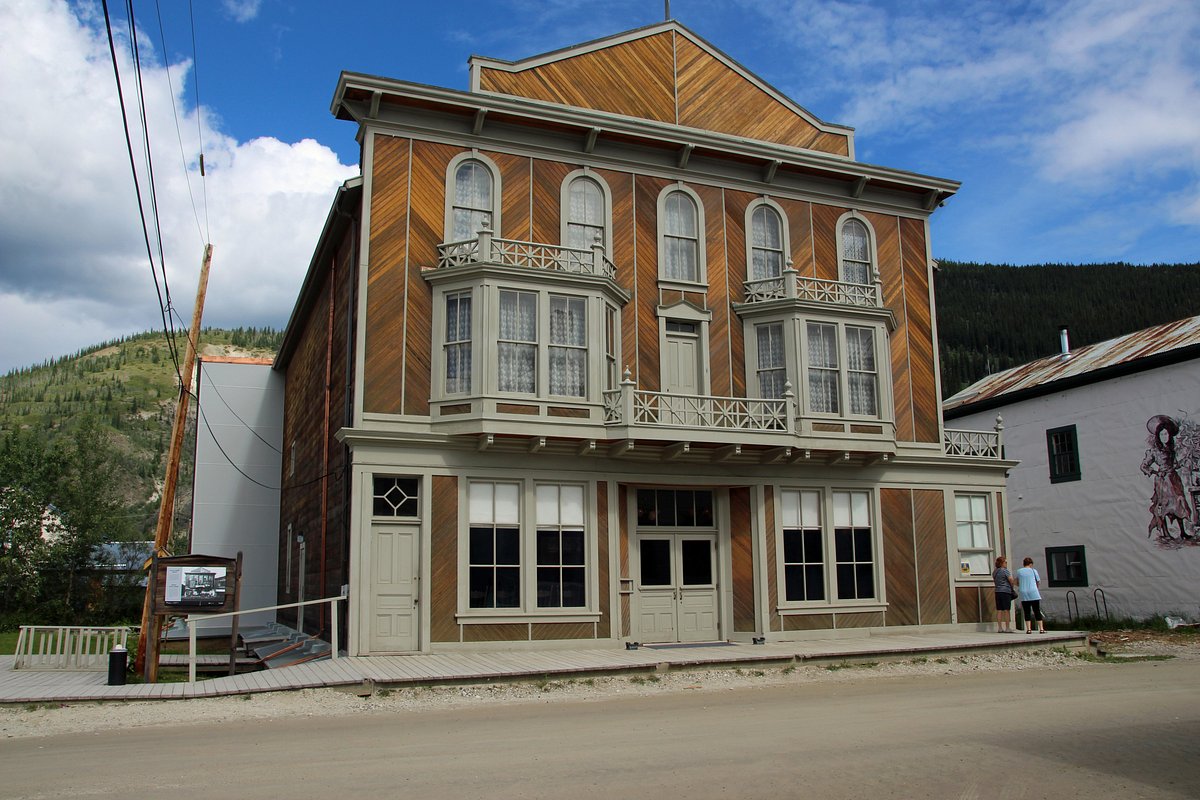
A great aspect of the Break-up Festival (so named because it coincided with the time in late May each spring when the ice on the Yukon River melts enough for boat travel on the river) was its venue: the wonderful Palace Grand Theatre in Dawson City – a replica of the type of the stage and performance hall in the exciting gold rush era. The theatre project was funded by the Diefenbaker government in the early 1960s as part of its commitment to preserving the heritage of Northern Canada.
1890’s Style Palace Grand Theatre in Dawson City, Yukon
As I had just recently played the role of villain in the Sourdough Rendezvous Mellerdramer, I was asked to play a very similar role in WDC’s entry in the festival, called “The Valiant Villain”, written by John Murray. I was very happy to play the character named Seymour S. Schnitzel because I knew it would be a lot of fun.
I had been to Dawson once earlier in the year for a short visit as part of an orientation tour, and looked forward to spending more time there. One of the special things about Dawson City at the time was that it was the only place in Canada where gambling was legal. I remember several visits to Diamond Tooth Gerties Gambling Hall, both during that trip and again when I returned with friends to Dawson City for a summer visit in August 1976. I was very impressed by the shows at Gerties, particularly skits by the Frantic Follies group, including a hilarious acting-out of Robert Service’s classic poem “The Cremation of Sam Magee”.
We drove up to Dawson City on Friday May 21st. It was a gravel road at that time because of problems paved roads had in winter due to periods of extreme cold and permafrost. Even so, with good van on a well-maintained gravel road we were able to average about 60 miles per hour and get to our motel in Dawson in six hours.
We were one of six theatre groups participating in the festival – an even measure of three Canadian and three American clubs. Our competition included the local Klondike Theatre Guild of Dawson City; the Pelly Players of Faro, Yukon; the Canal Community Players of Haines, Alaska; the Poverty Players of Skagway, Alaska; and the Baronof Little Theatre of Sitka, Alaska. I was amazed that folks from Sitka, which is well south of Juneau on the Alaska Panhandle, were able to get to the festival. Today it is a 20-hour Alaska Ferry trip from Sitka to Haines. Then you have a six-hour drive to Whitehorse, and another six hours to Dawson City from there. I felt tired after our drive from Whitehorse, so I could only imagine how exhausted the Sitka troupe were.
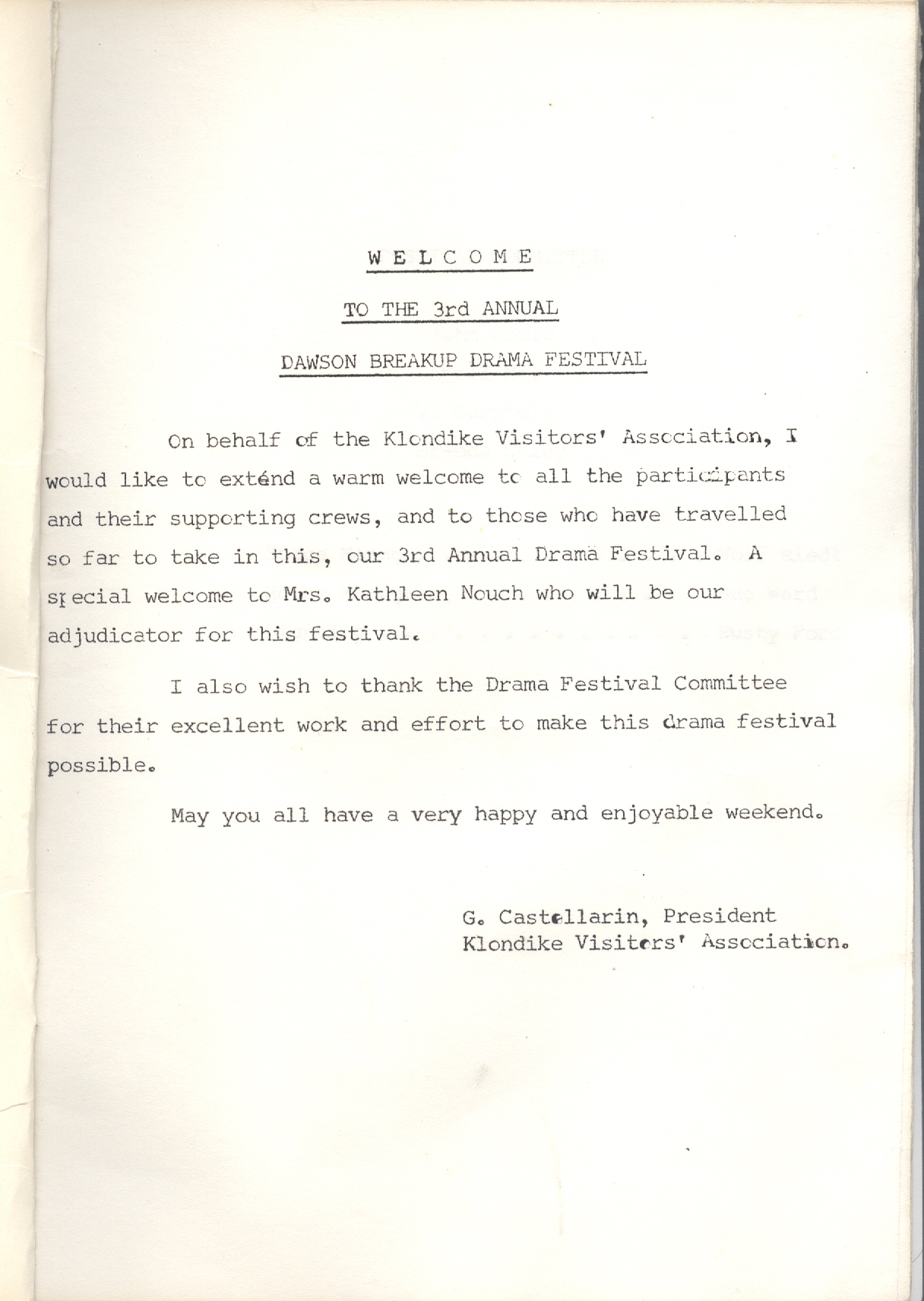
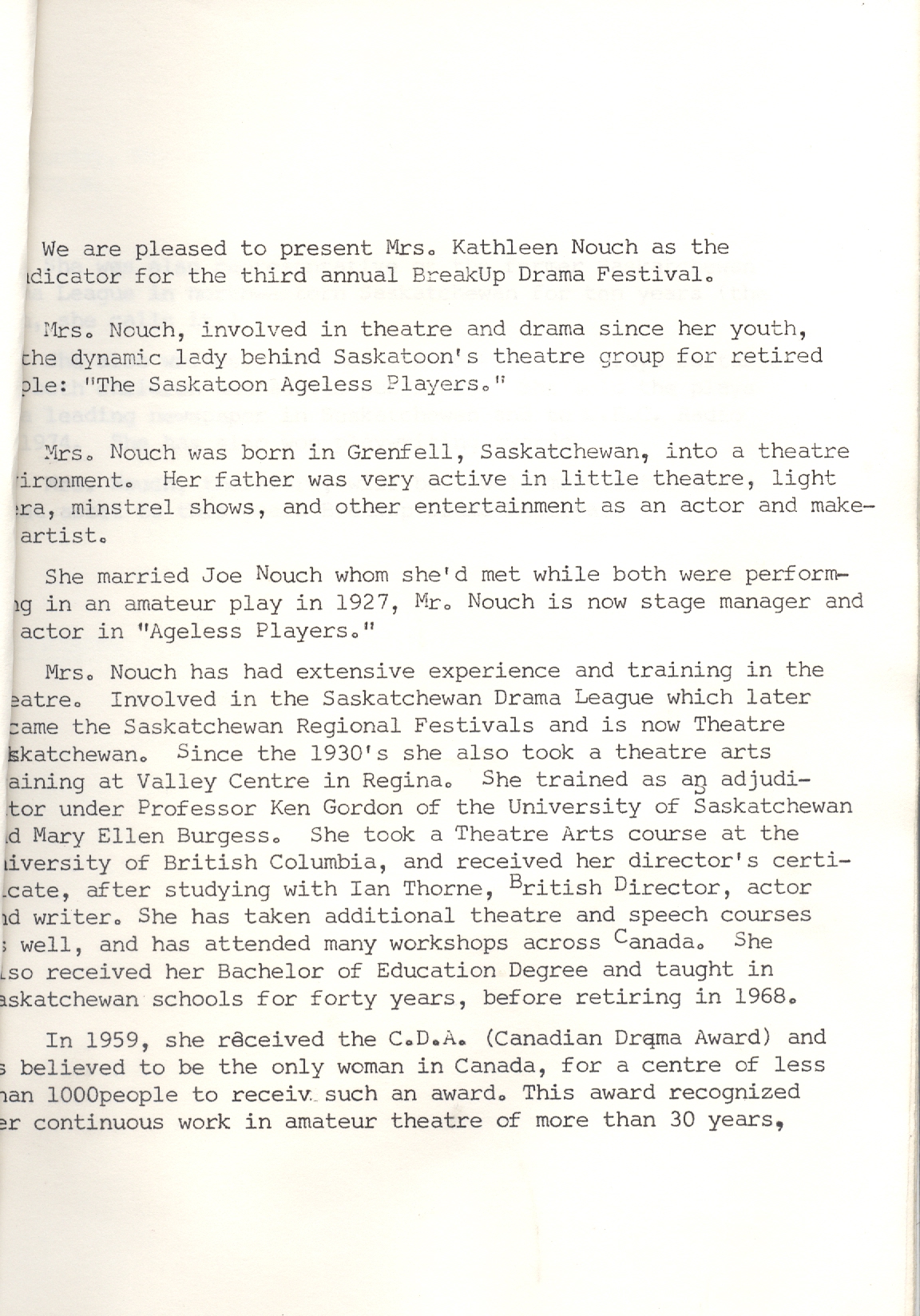
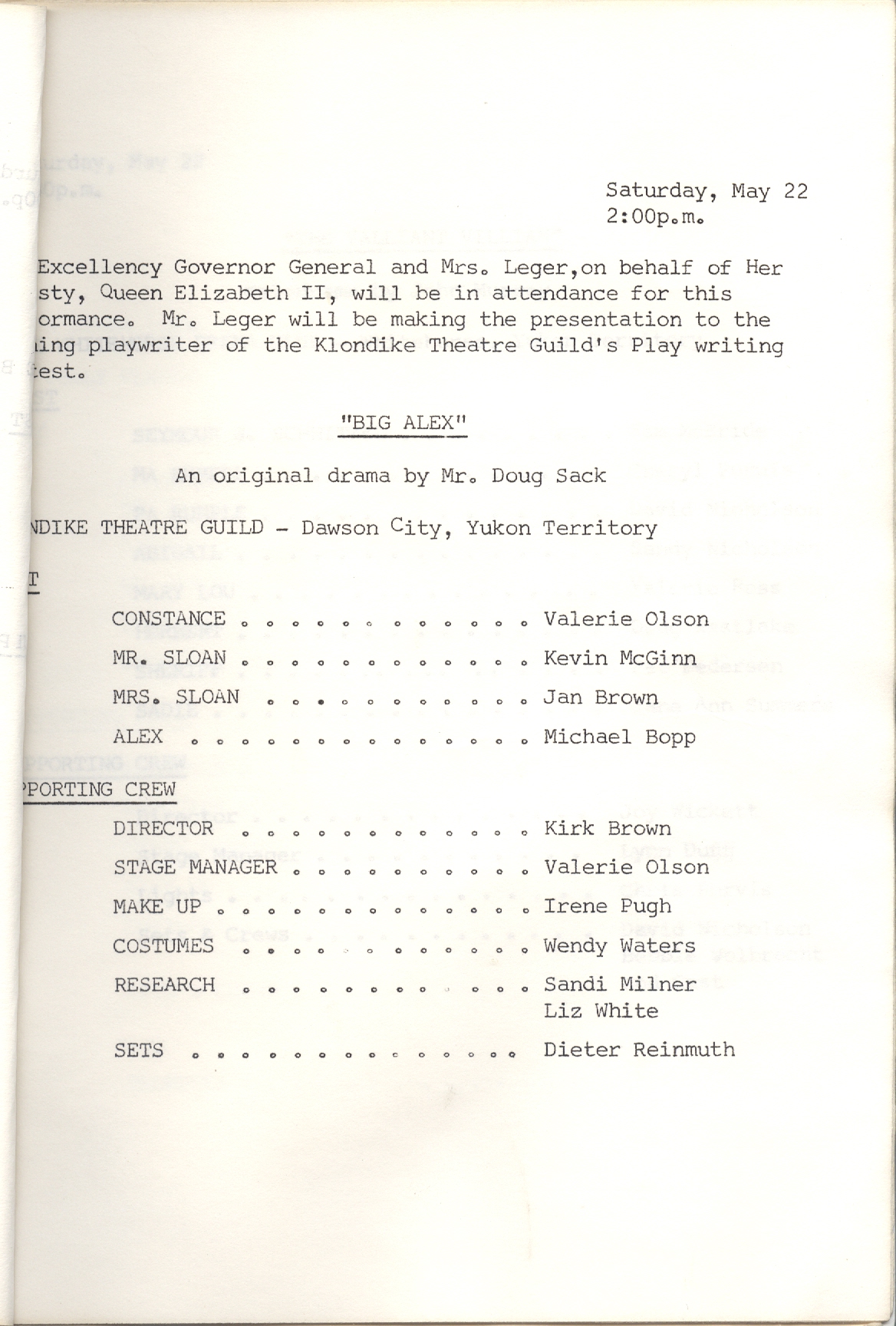
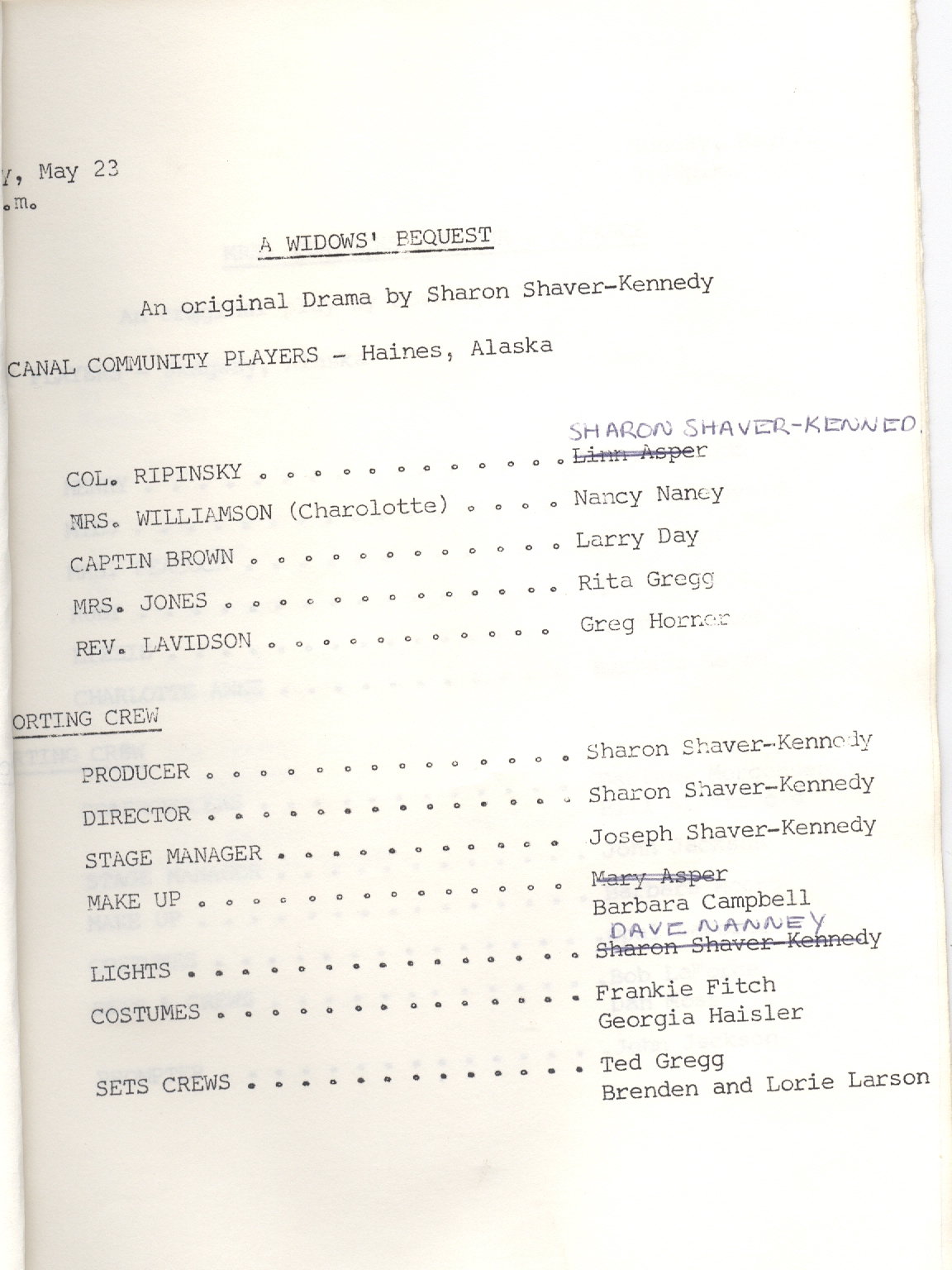
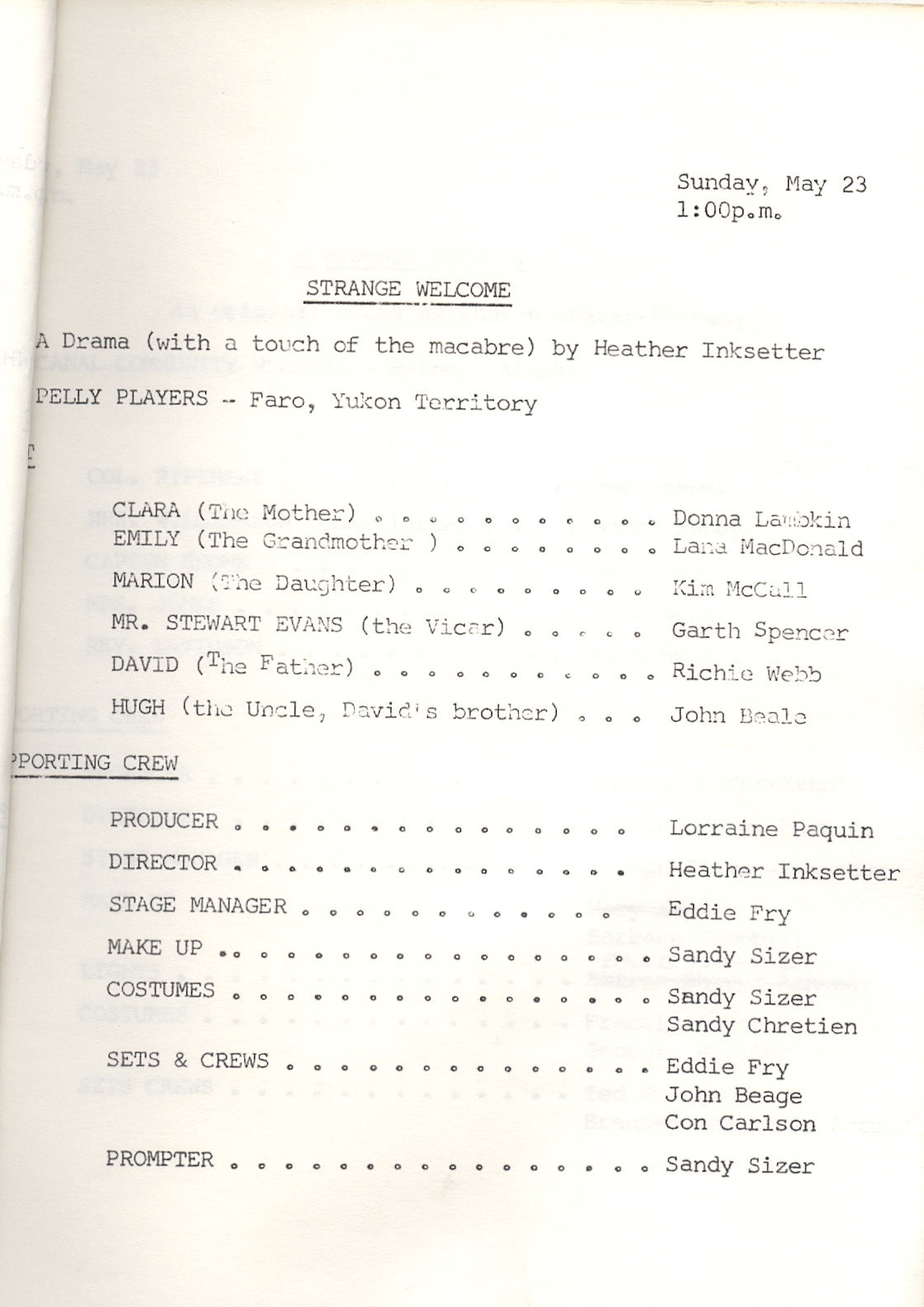
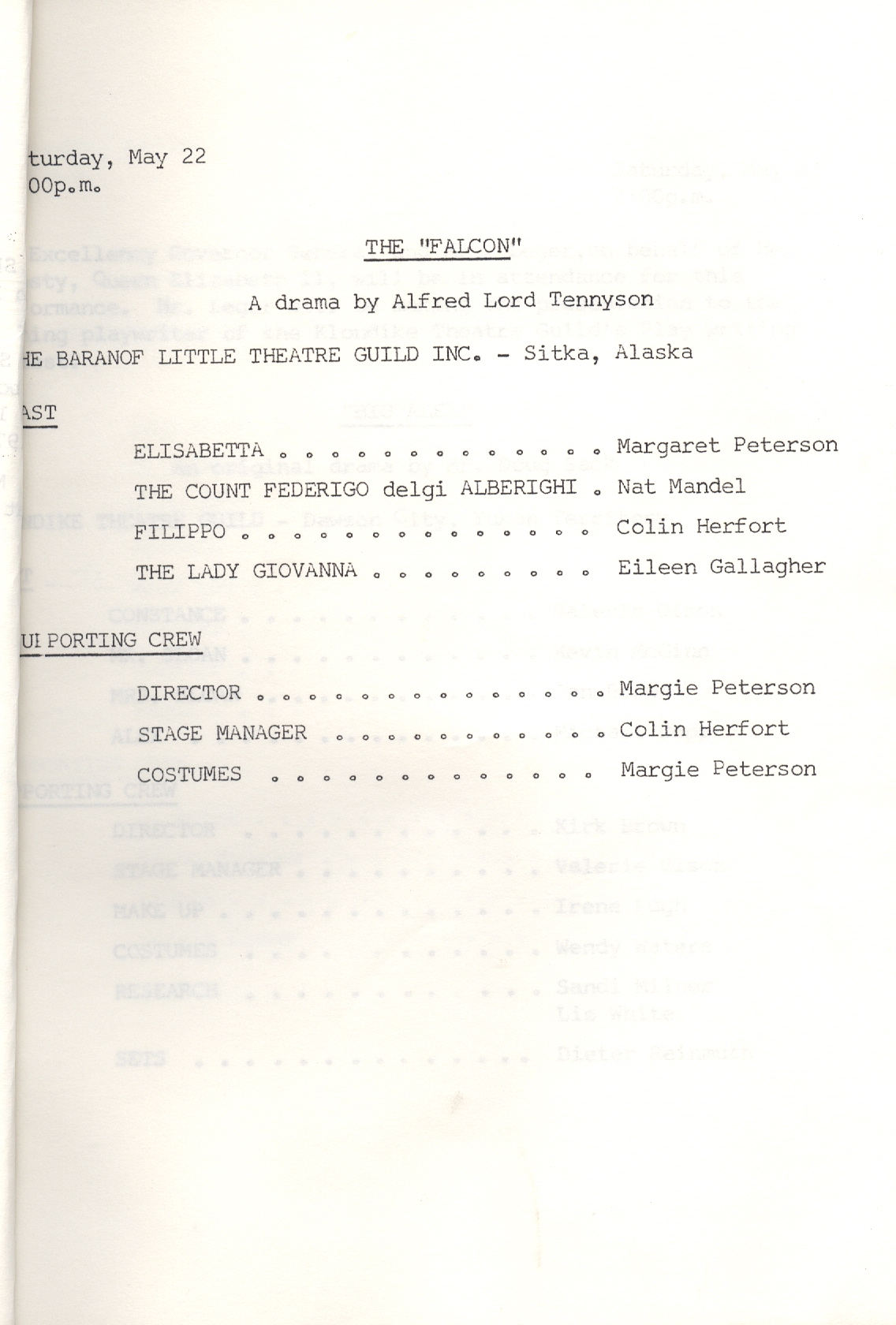
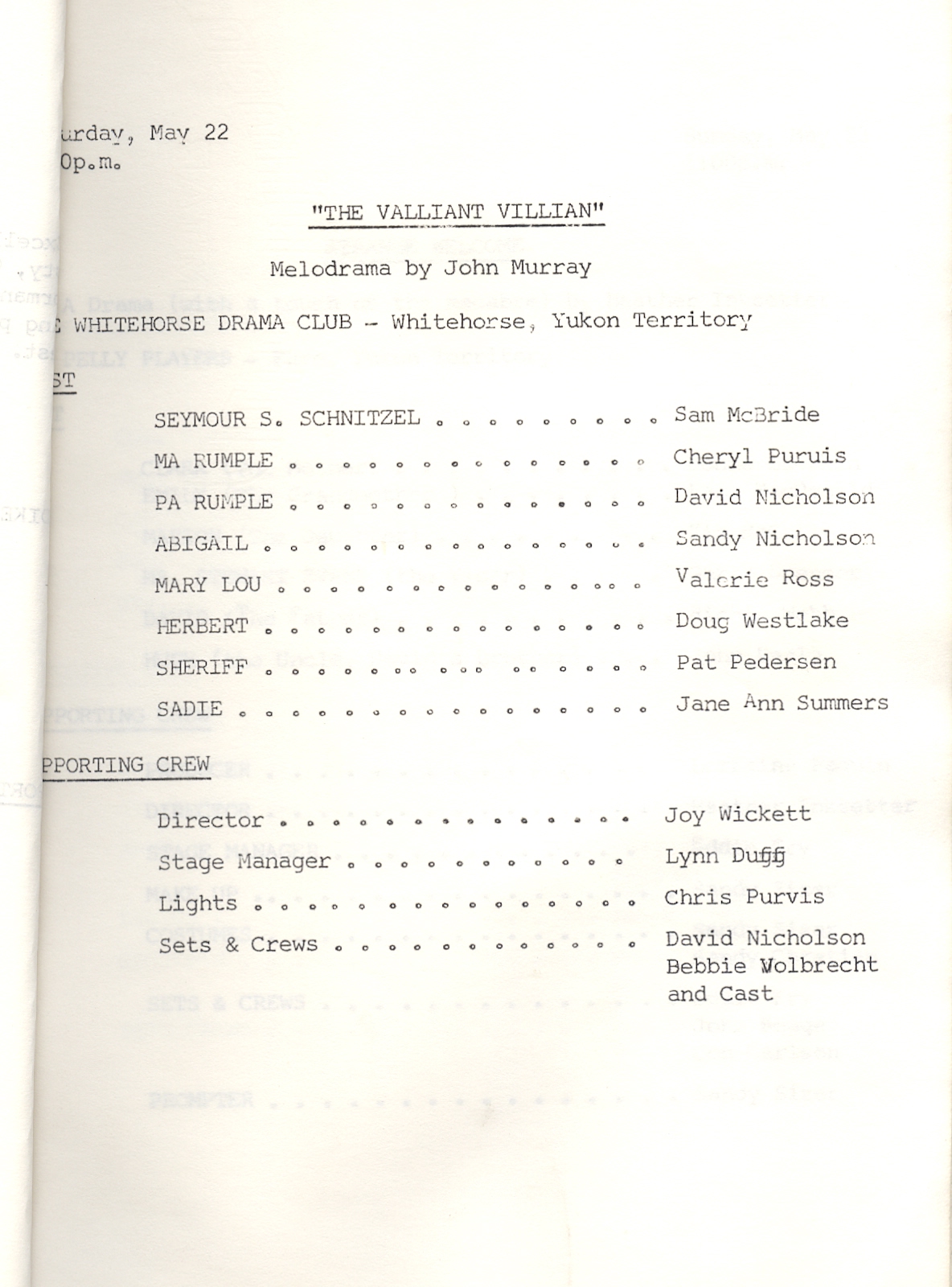
Scans of the program for the Drama Festival, which I kep as a souvenir.
The festival was sponsored by the Klondike Visitors Association (an alliance of businesses supporting tourism) and the city, which at that time had a population of 700.
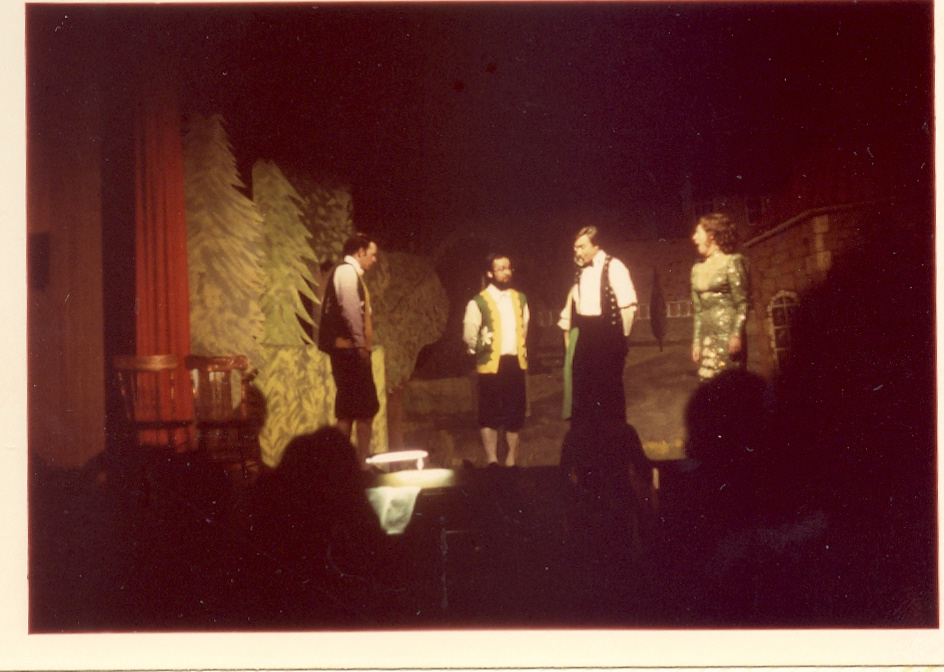
The festival went through the weekend. Our “Valiant Villain” show was either the second or third performance on the Saturday, and the other three groups performed on Sunday. For our cast and crew, it was nice to get our show done so we could relax and enjoy the rest of the festival. The audience participation in our show was terrific – much louder and enthusiastic than the “Love in the Lodge” crowd had been. In response to the action in the play, the audience cheered, booed and hissed vigorously. The festival adjudicator, Kathleen Nouch from Saskatchewan, later mentioned the enthusiasm and energy of the audience in her comments on our play. As an actor, it was a thrill to have the audience respond “on cue” as the show proceeded. It was an exhilarating experience, in a perfect setting in an 1890s-style hall with boisterous spectators.
A fun party and dance on Saturday night was an opportunity to get to know people from the other plays, as well as the technical staff and adjudicator. I remember some of us joking about “lobbying” the adjudicator so she would give our play better marks in her adjudication. The six plays in the festival were in a range of styles and all enjoyable to watch. with ours being the only melodrama. After the conclusion of the performances on Sunday afternoon, adjudicator Nouch announced the awards.
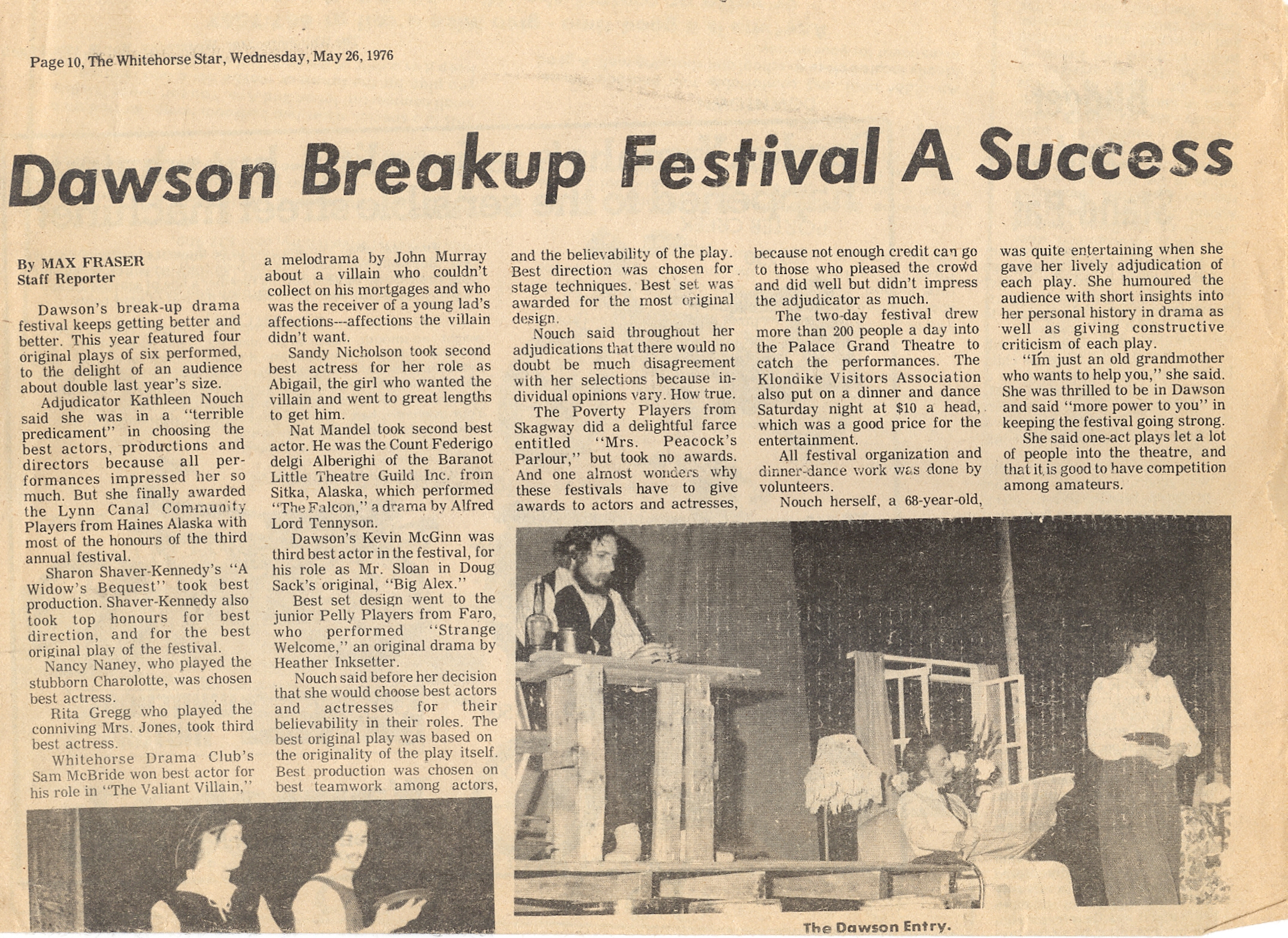
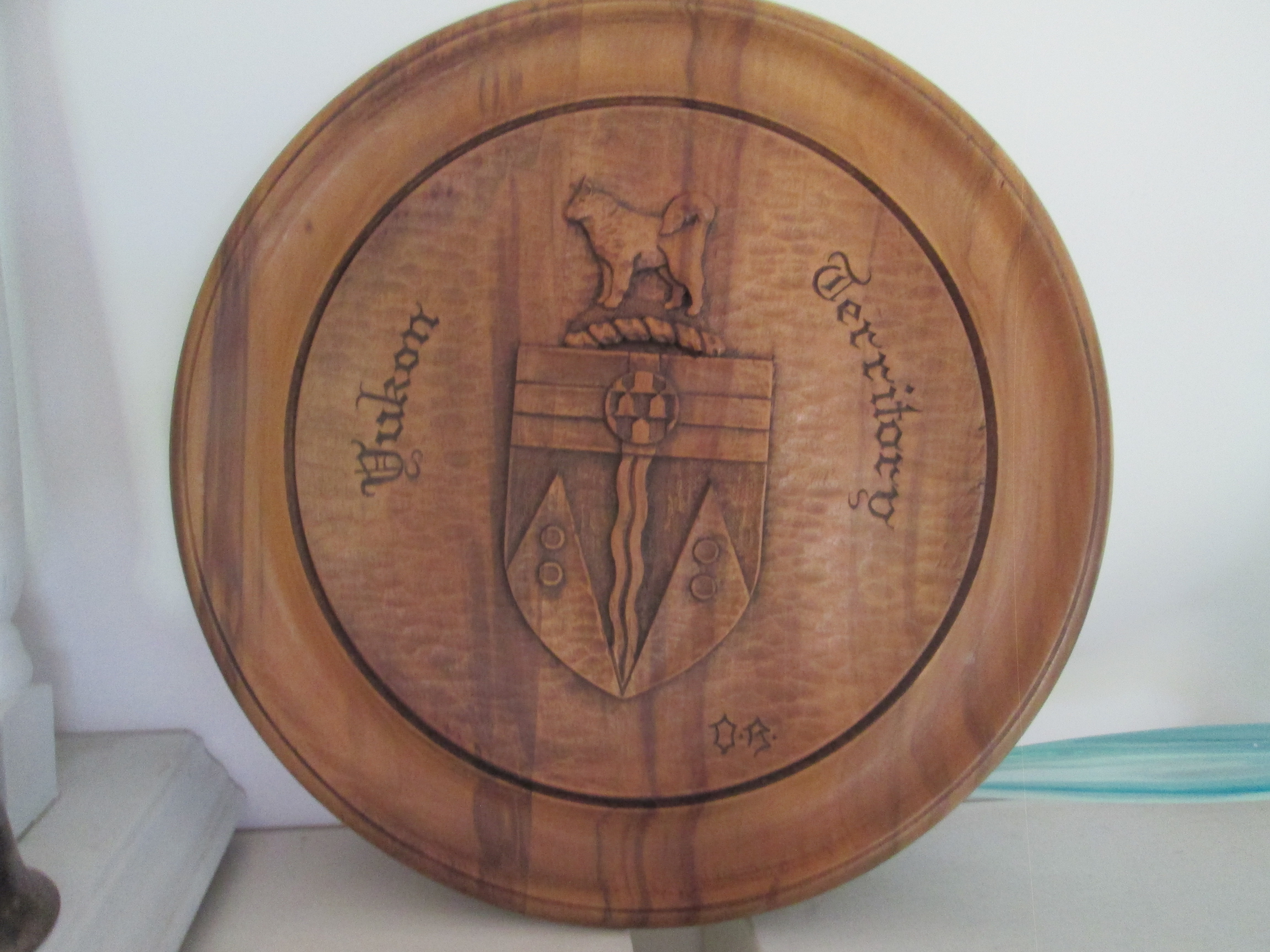
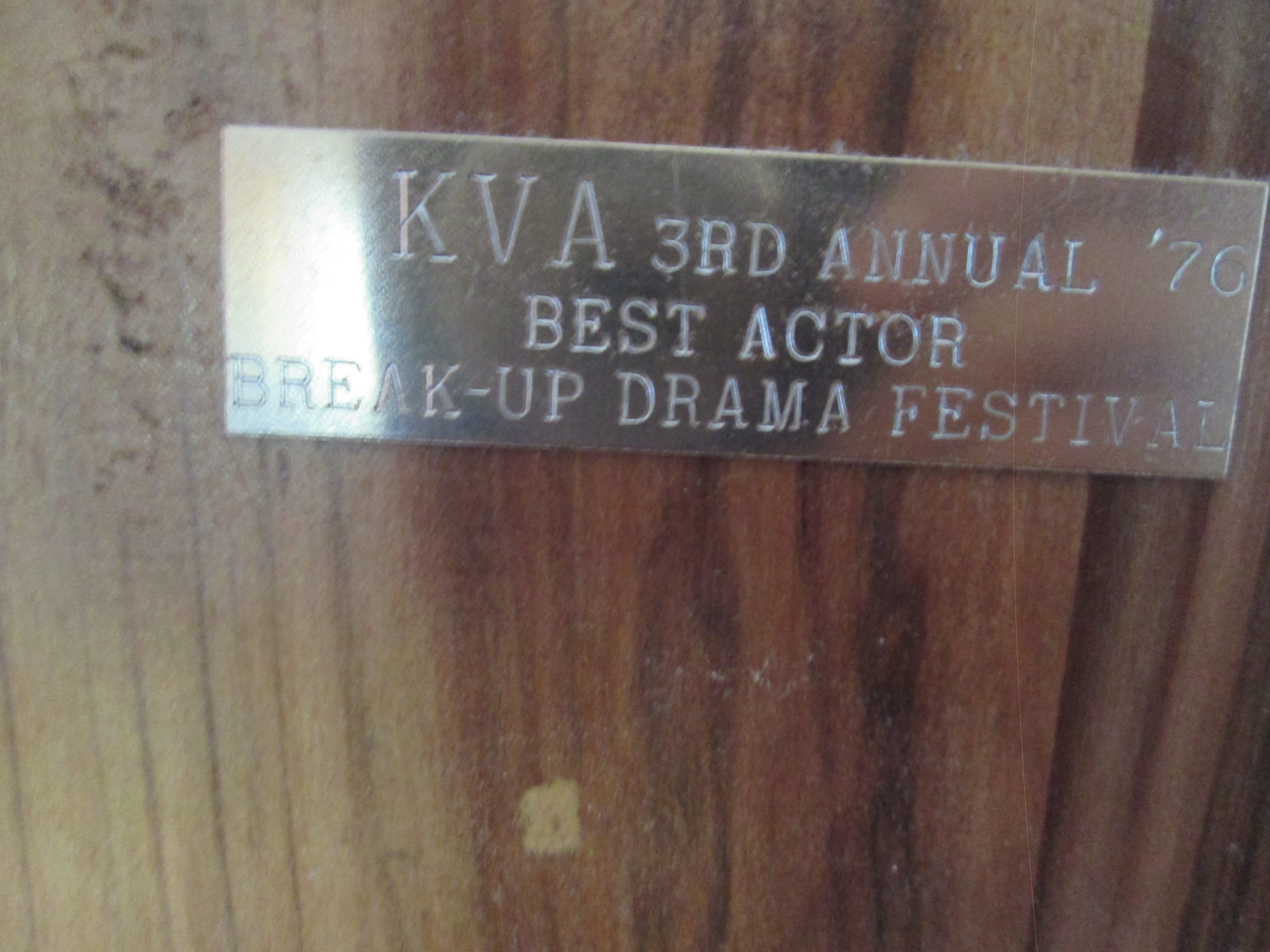
The big winner was the Haines show, with awards for best production, best original play, best director (Sharon Shaver-Kennedy), and best actress (Nancy Naney). “The Valiant Villain” got two awards: me for best actor, and Sandy Nicholson best actress runner-up. As a relative newcomer to community theatre, I was stunned when my name was mentioned for the award. I think it really helped that I continued essentially the same character that I did in February in “Love in the Lodge”. The award was a carving of Yukon’s logo by Dawsonite Otto Beutler. I still have the carving, almost half a century later.
The award for best visual presentation went to Faro’s Pelly Players for “Strange Welcome”.
Following the adjudication, our troupe drove back in the van to Whitehorse. We arrived late in the evening, but still daylight thanks to the North-of-60 latitude and season.
The WDC performed “The Valiant Villain” in Whitehorse twice the following weekend — Friday at the Whitehorse YWCA, and Saturday at the Whitehorse Elementary School gym, along with a school production of “Rockin’ Robin”, a fun spoof of Robin Hood. Ticket revenue from those shows helped offset WDC’s costs associated with the festival, as well as ongoing expenses such as for heating the clubhouse.
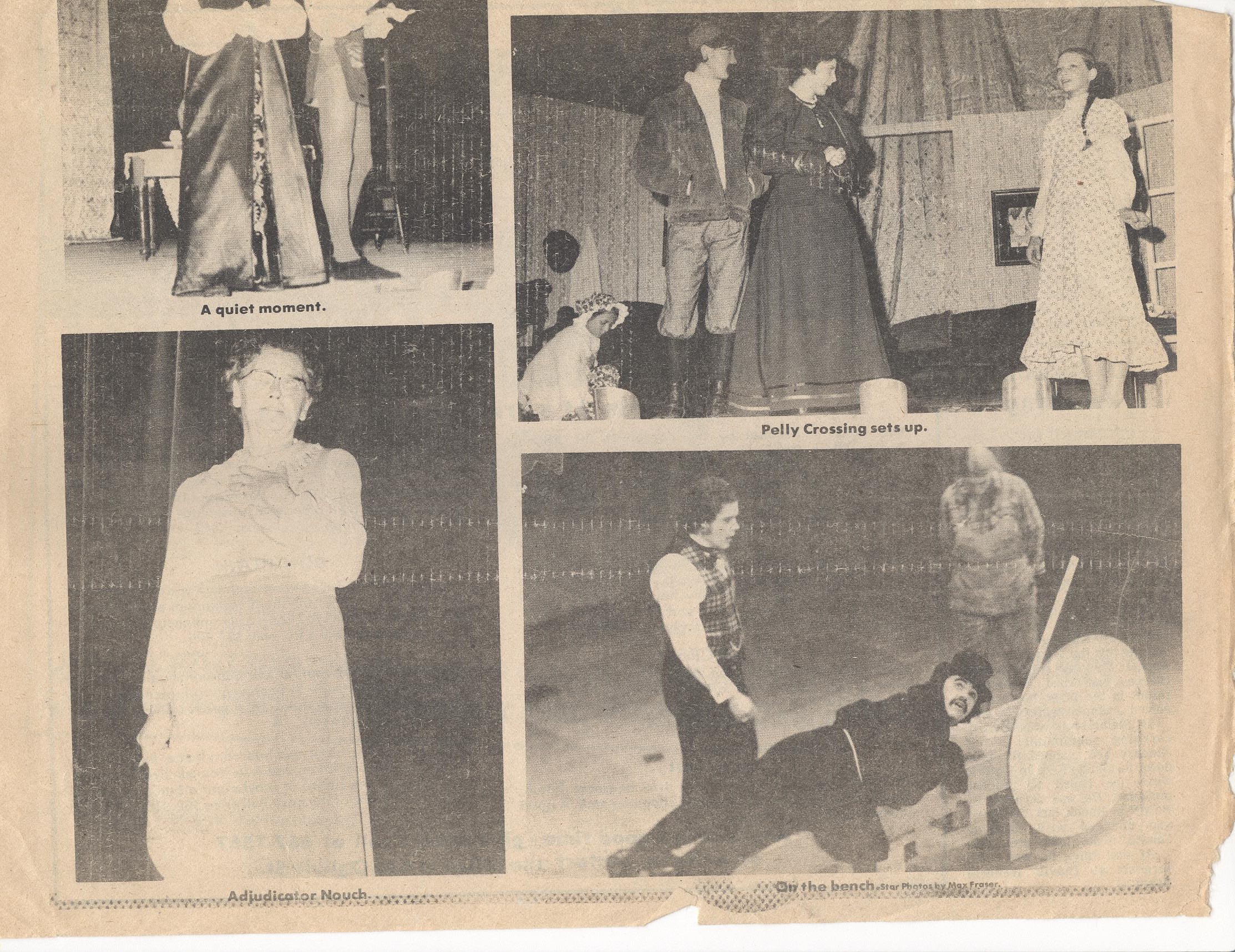
As a collector of memorabilia, I also kept a copy of the program, several photos and news clippings, which I have scanned and used in this posting to help tell this story. Here are program listings for the six entries in the festival.
This is a photo of one of the Alaska plays. Taken from where I was sitting in the audience,Report on the festival in the Whitehorse Star newspaper.My prize for the actor award (front and back side below)., a carving highlighting the Yukon logo, by Otto Beutler of Dawson.plaque on the back of the best actor prize. KVA stands for the Klondize Visitors Association Nice memento of the event, which I will be donating to the Yukon Archives along with other memorabilia I have.WDC cast members Doug and Sandy chatting at a gathering after the festival.
In the summer of 1975 I was travelling across England and staying at youth hostels, but once I got to London I decided to stay there for a couple of weeks rather than exploring Wales and Scotland. The big attraction in London for me was the wide range of high quality, low cost live theatre productions in stylish old theatres. It was easy to line up tickets at the box offices in the morning, which made it possible to go to two or even three shows a day.
I returned to my parents’ home in Trail, B.C. in late August with a keen interest in live theatre. I began looking for a new job, as I had resigned from my work as a reporter for the Kamloops Daily Sentinel in the spring. One of the positions I applied for was Information Officer with the Yukon Territorial Government in Whitehorse. I flew up for an interview with the director of the department Ken Sillak, and was pleased to accept the job offer.
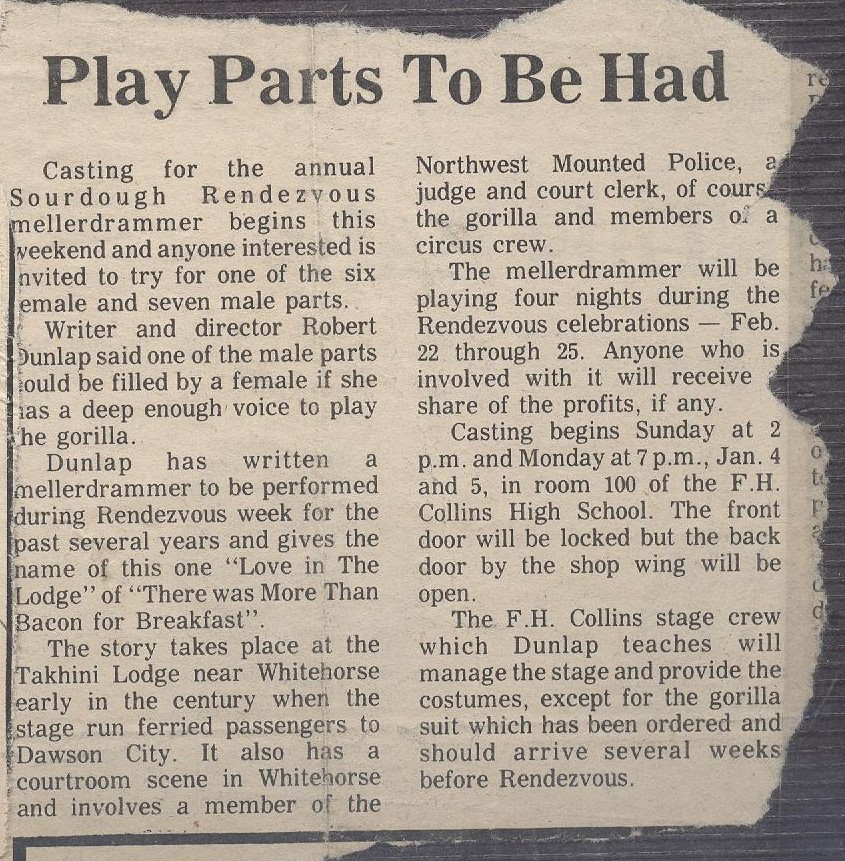
Starting the job in early November 1975, I had a lot to learn because it was my first PR-type job, and I knew very little about the Yukon. Looking for clubs or activities that I might want to participate in, I noticed in the Whitehorse Star newspaper an article about auditions for the annual “Sourdough Rendezvous Mellerdrammer”.
news story about the mellerdrammer auditions
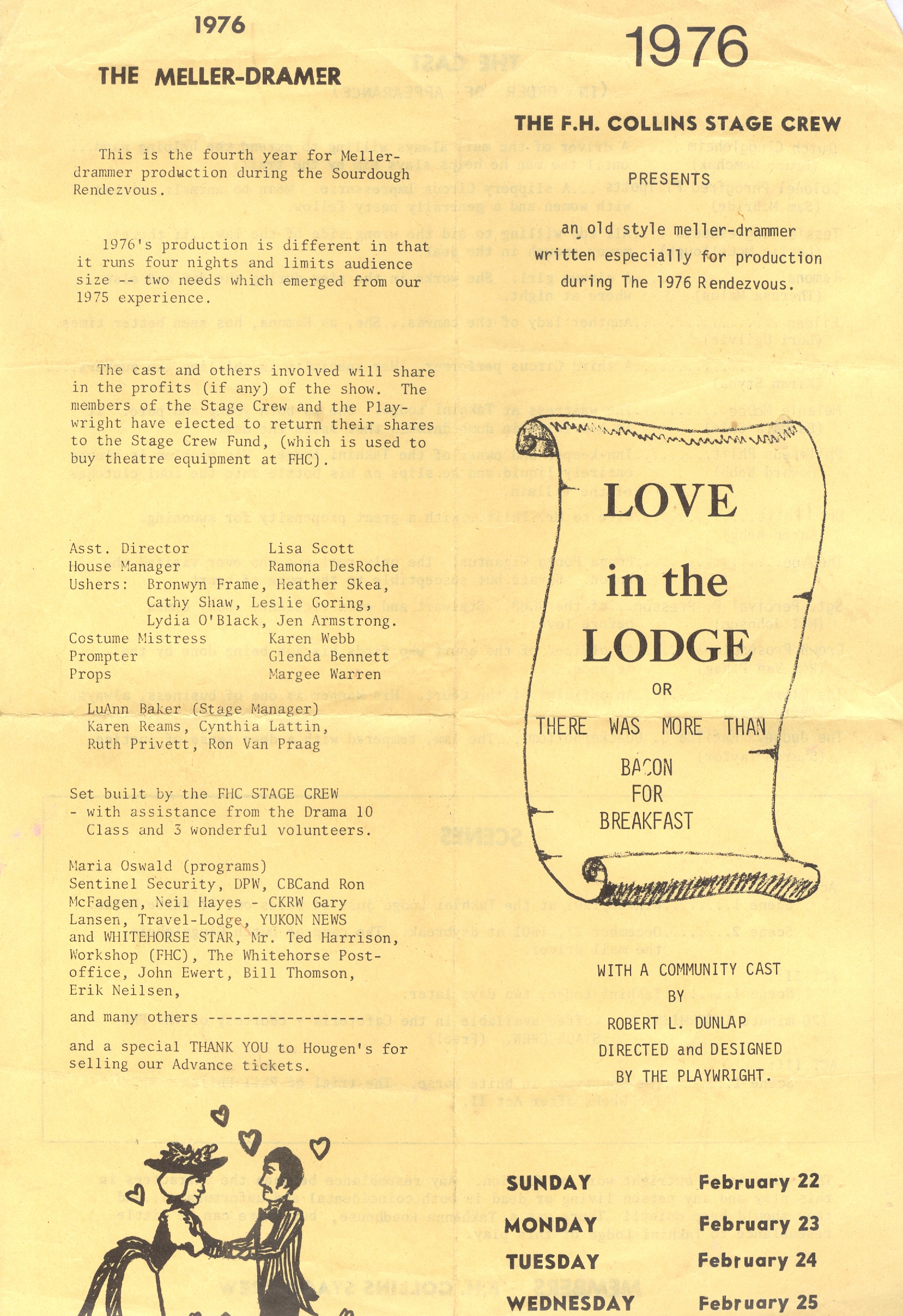
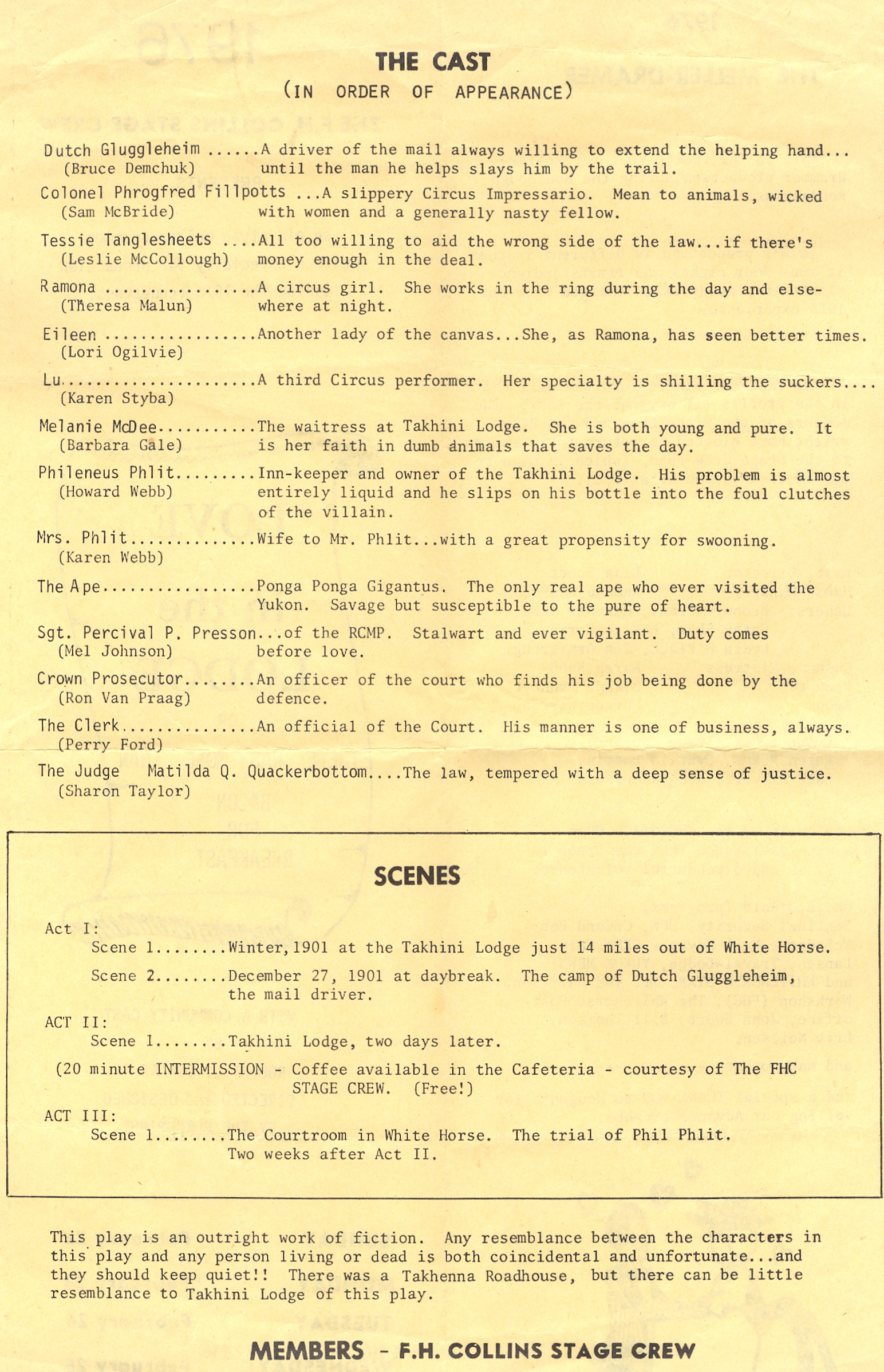
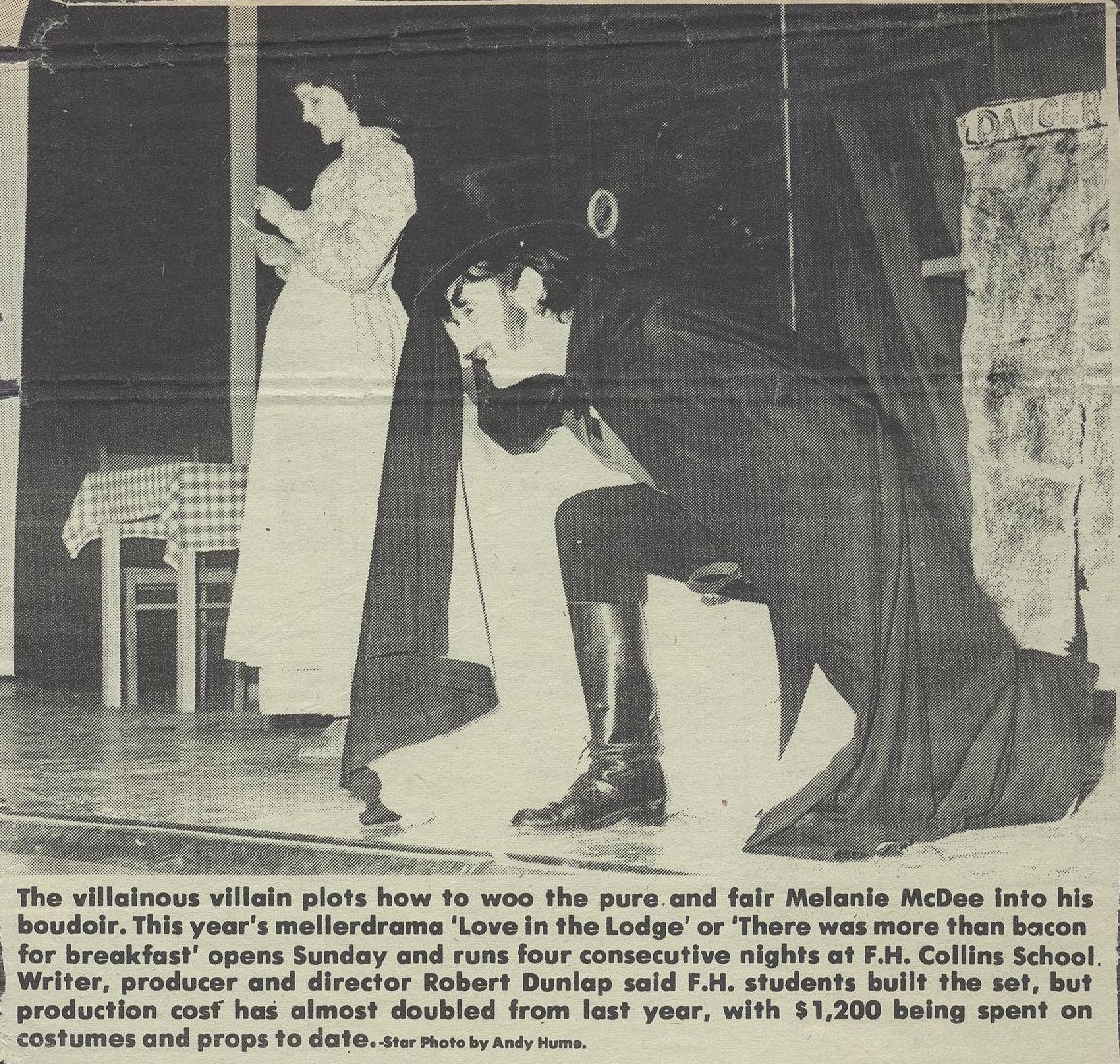
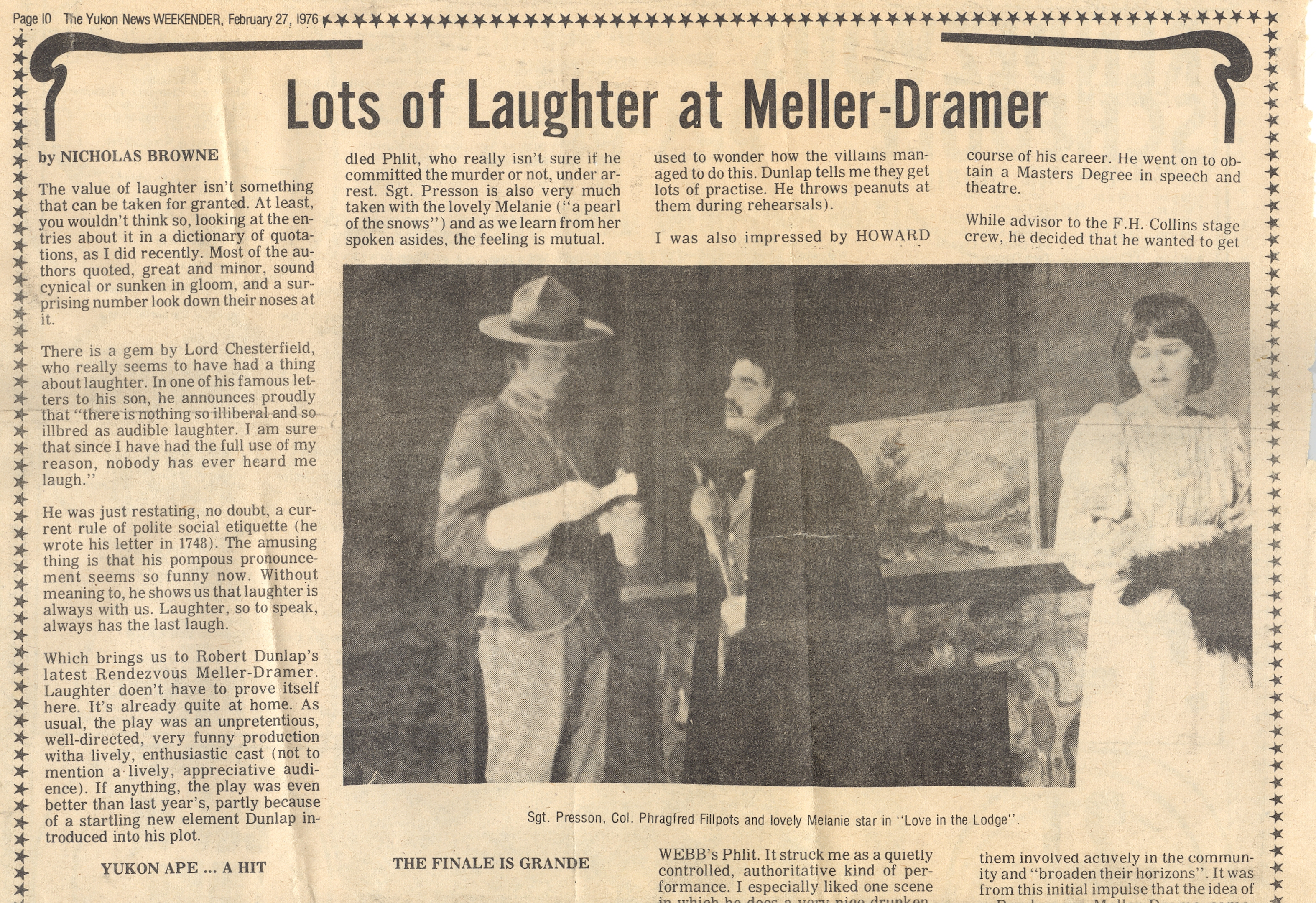
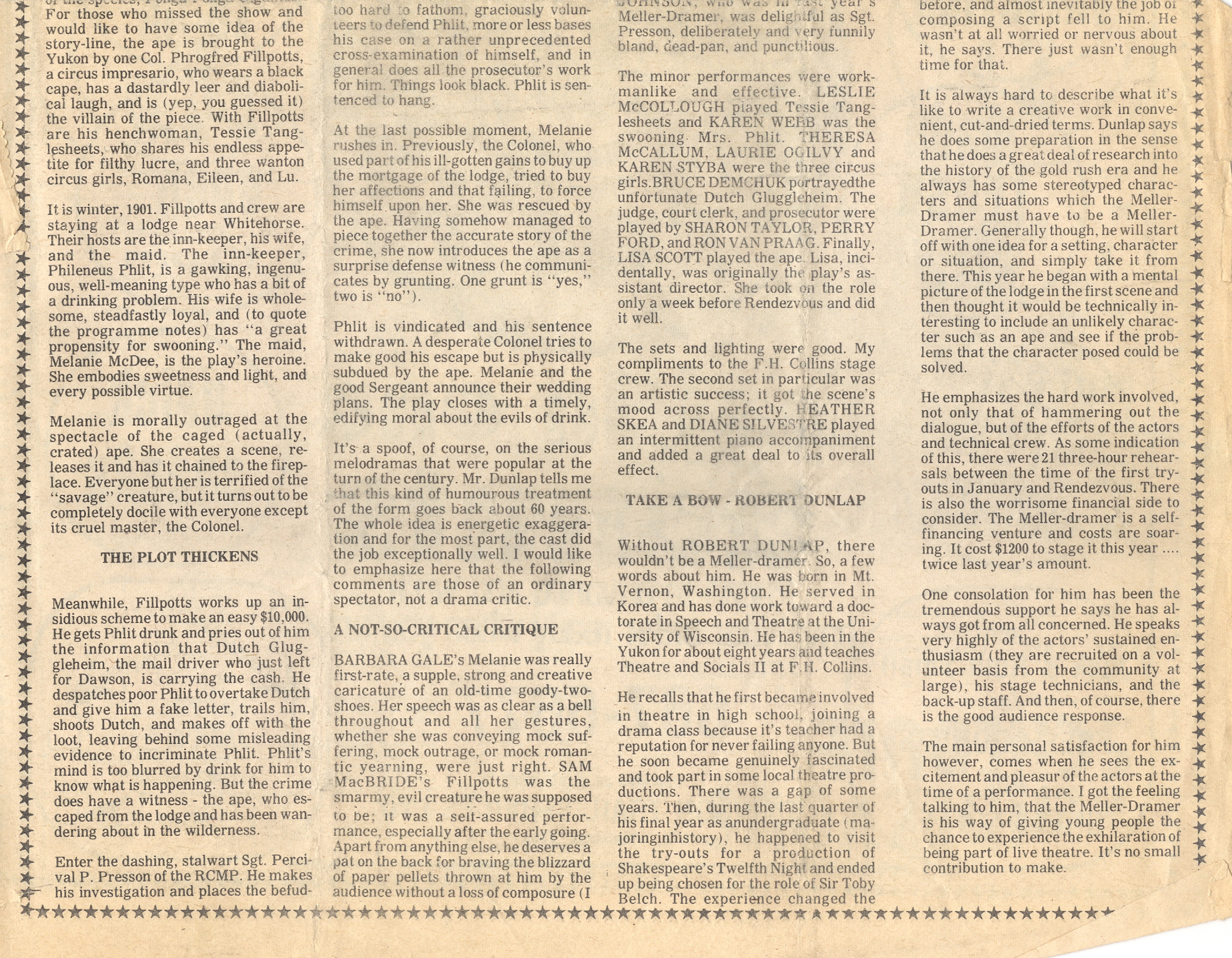
It was a production of the F.H. Collins High School, but adults in the community were invited to try out for one of the adult roles, or to help backstage for a show called “Love at the Lodge – Or There Was More Than Bacon for Breakfast”, written and directed by the school’s drama teacher Robert L. Dunlap. He had done annual shows like this for several years at the school, all of them written by him the previous summer. The shows were set in the 1890s era of the Klondike Gold Rush when Yukon was the centre of the world’s attention, in the style of good versus evil melodramas popular at that time.
From my experience as a newspaper reporter, I thought I might be able to help publicize the show by writing news releases, so I went to the meeting to volunteer with publicity. Once there, the director Dunlap asked me to read some lines of the villain character Colonel Phrogfred Fillpotts. I was amazed that Dunlap offered me the part, as the only previous experience I had in theatre was as a 10-year-old in a non-speaking role in the Notre Dame University production in Nelson, B.C. of “The Trojan Women”. I found my experience as a member of the Nelson Boys Choir for several years helped with voice projection and breath control, which was particularly needed for doing villain-style evil laughs.
Remembering how much I enjoyed watching live theatre in London, I agreed to give it a try. I then found myself having to memorize hundreds of lines in the script, and going to three or more rehearsals a week for five weeks. While Dunlap was a hard taskmaster with both students and adults in the show, the rehearsals were usually quite enjoyable, among a fun group of participants. The three performances of the show were in the third week of February 1976, coinciding with Whitehorse’s annual winter festival known as Sourdough Rendezvous, which celebrated Yukon’s heritage memorialized in the works of poet Robert Service, such as “The Cremation of Sam Magee” and “The Spell of the Yukon”.
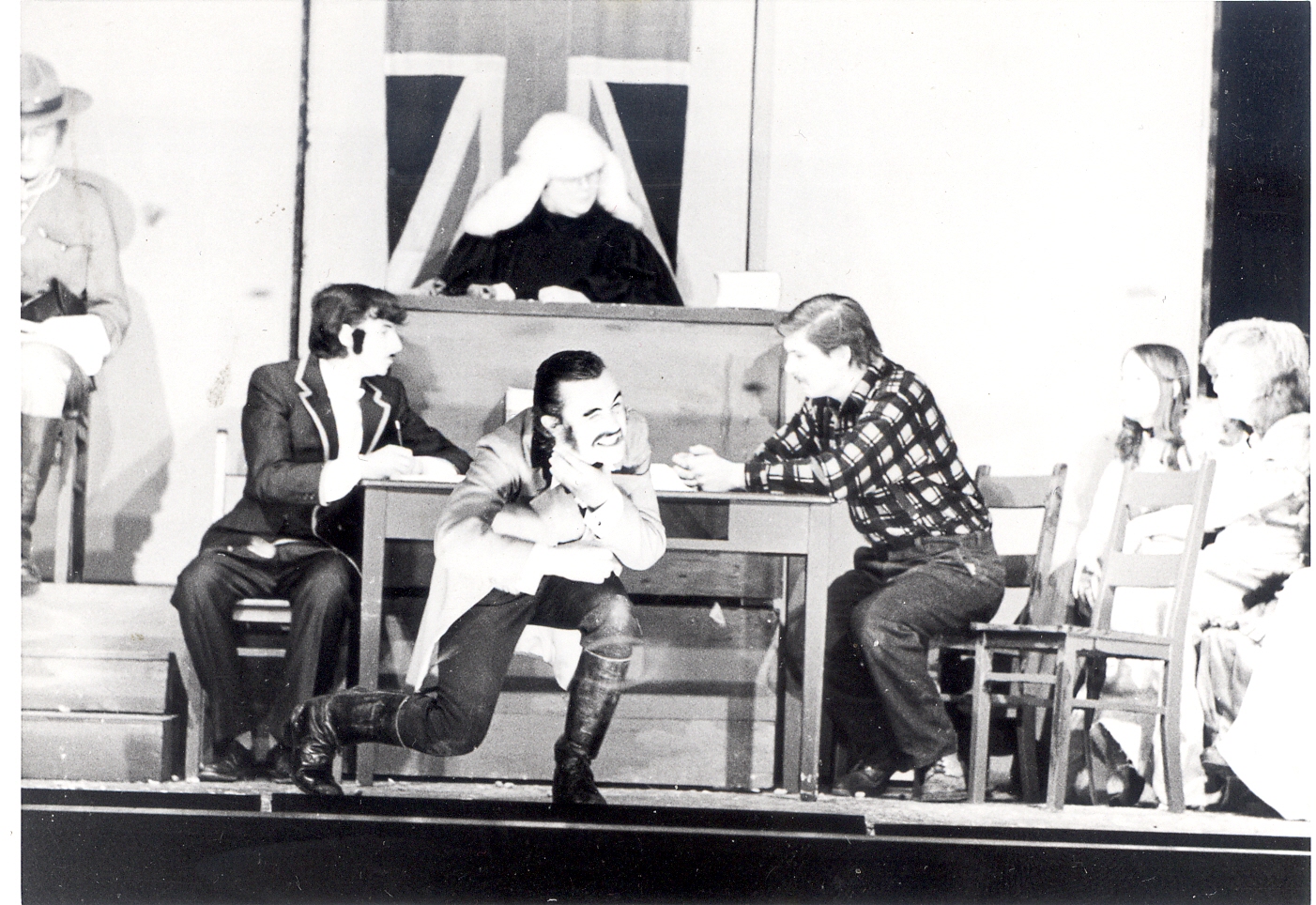
One special challenge with being the villain in a Dunlap show was that he gave out bags of peanuts at the performances and encouraged audience members to throw them at the villain – which they did, quite vigourously. I learned to squint while making asides to the audience, as I knew peanuts would be coming and did not want to be hit by one in an eye.
A few days before the performances our costumes arrived from the costume rental company. I mentioned to my mom in Trail that the top hat that came in for me to wear was way too small. She had a couple of top hats she had inherited from her father Ted Dewdney which she sent to me via Greyhound bus just in time for the shows. One of them, originally owned by our famous ancestor, the Hon. Edgar Dewdney, fit me perfectly so I used it rather than the rented hat.
The shows had some minor glitches, but were lots of fun for performers and audiences alike. I had put a lot of effort into memorizing the lines and movements, so I was not as nervous in the performances as I thought I might be. In fact, it was quite exhilarating, and really turned me on to community theatre. I did not try out for a part in the 1977 Mellerdrammer show because I was busy with the Whitehorse Drama Club’s production of “The Mousetrap”, which was one of the plays I saw performed by professionals in London.
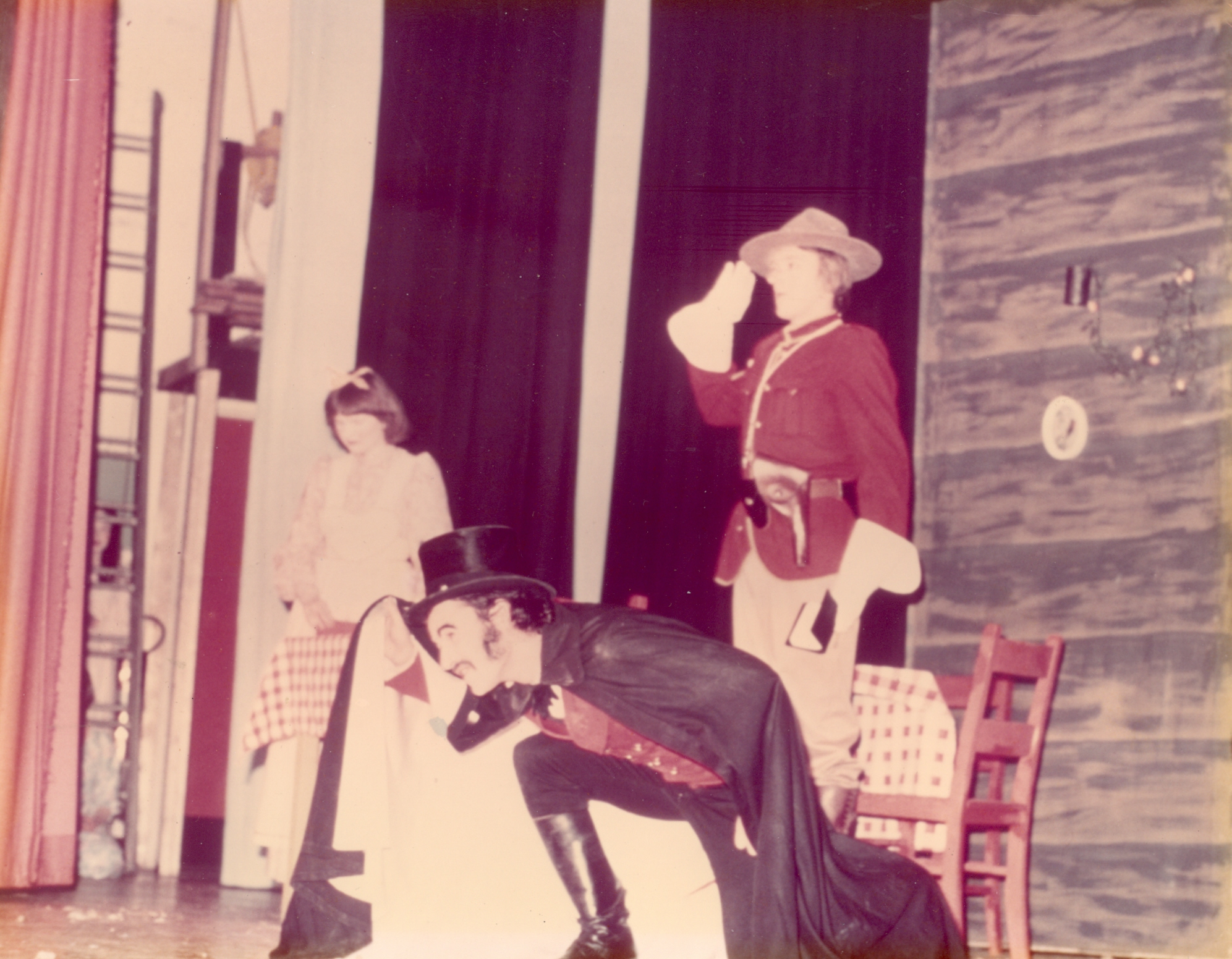
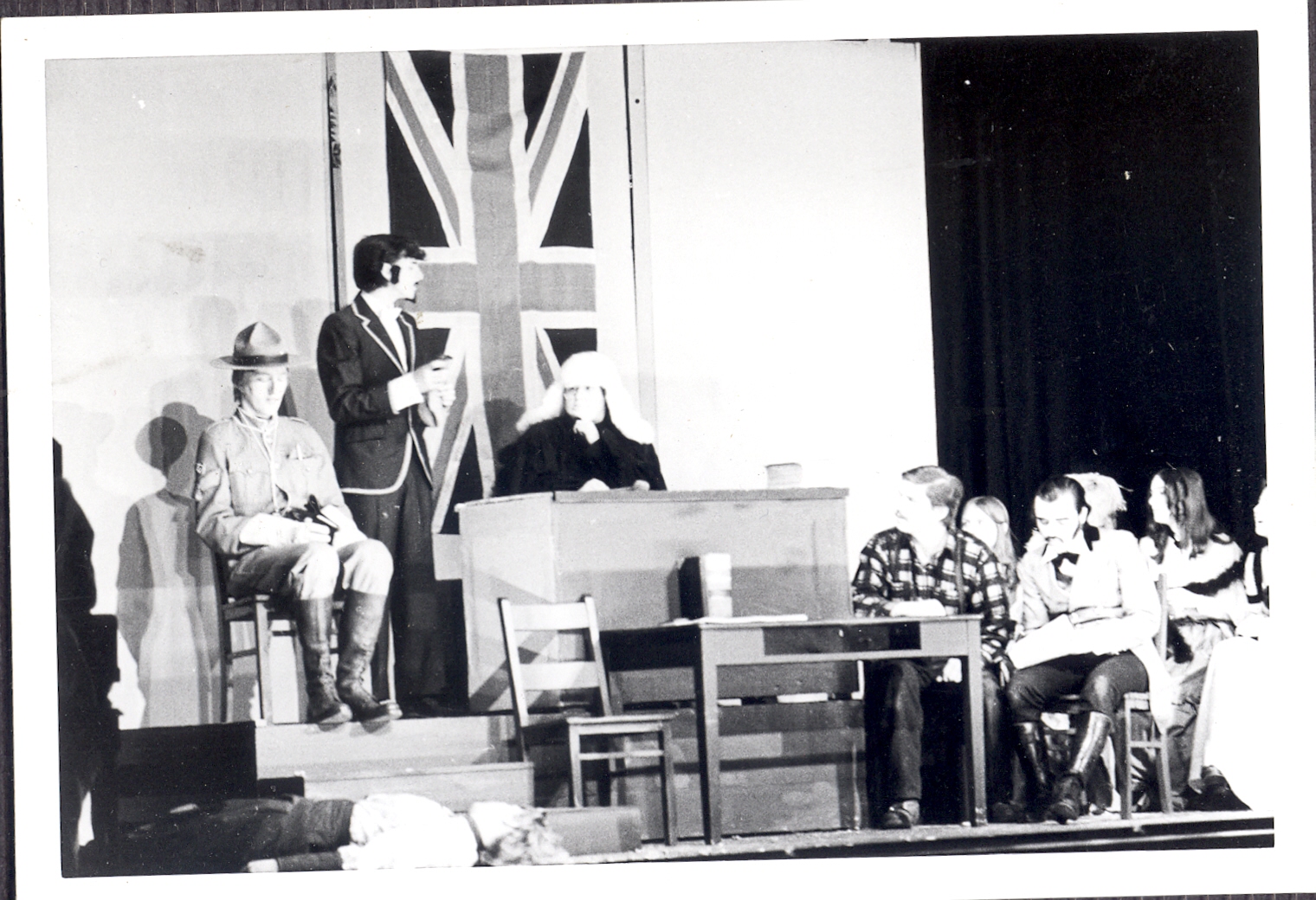
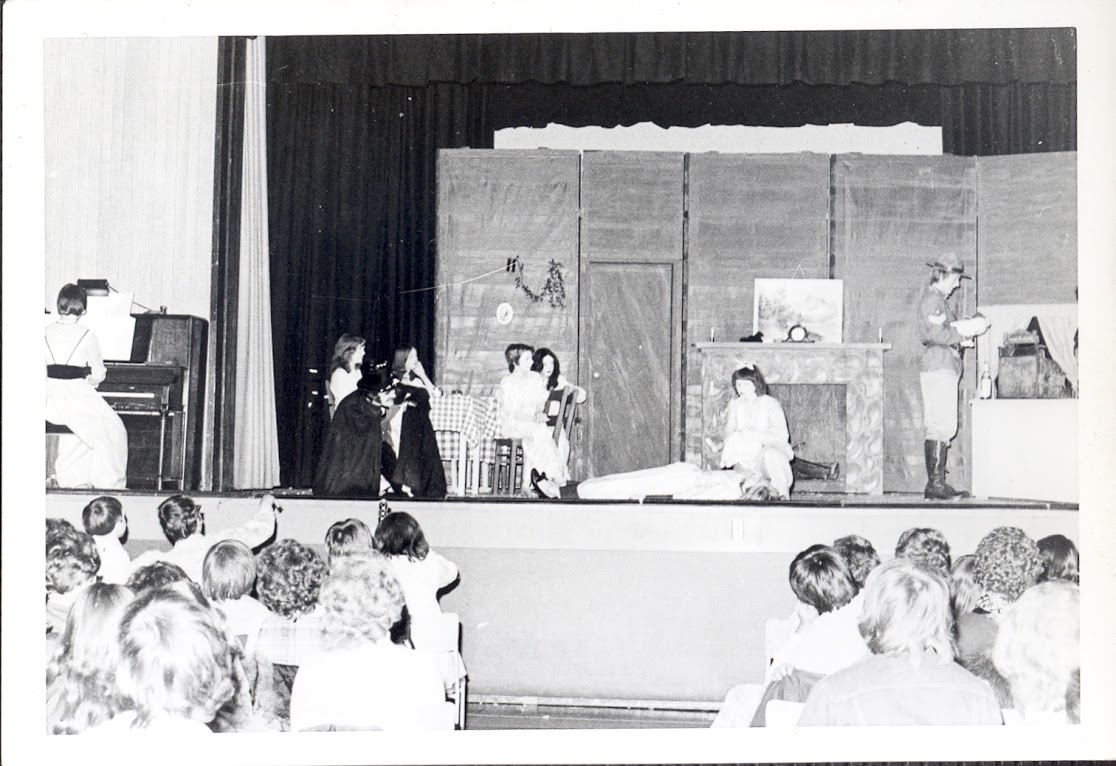
As a collector of memorabilia, I kept the program for the show, as well as news clippings and photos taken by my friend Mike Panchuk. Scanning them and posting them here helps tell the story of the experience better than my memory half a century later.
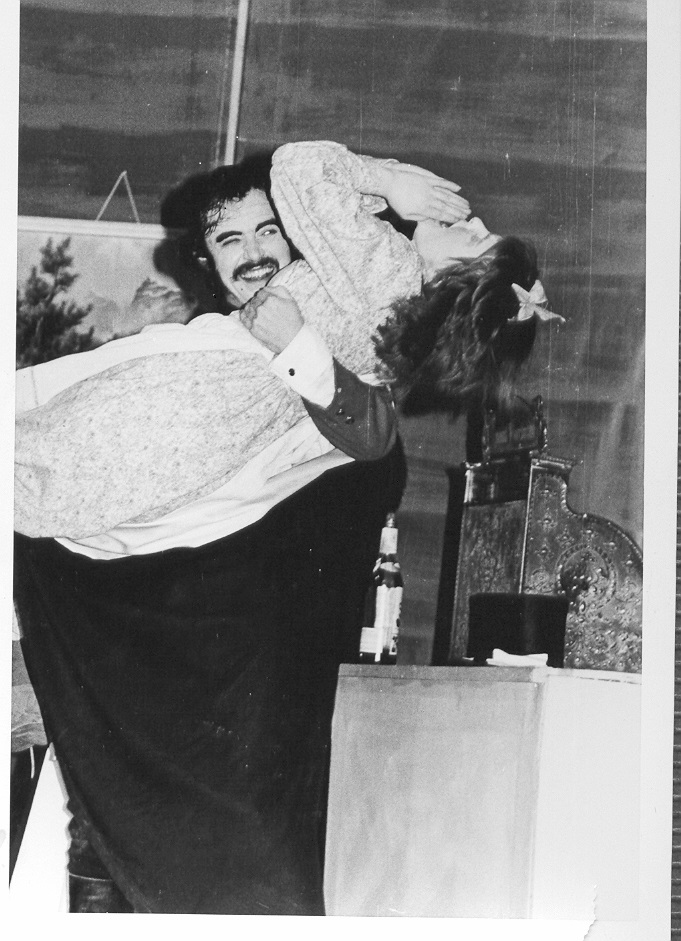
This is the only colour photo I have from the show, taken by my room-mate Mike Panchuk. I am the bad guy doing an “aside” to the audience. Behind me are the heroine Melanie McDee and the policeman.Court scene, as the villain has framed an innocent man who is being tried for the crime. This pic shows audience members throwing peanuts at the villain.villain capturing heroine.Villain about to carry off heroine — only to be foiled by an ape!The Yukon Ape has conquered the villain and saved the day. Notice all the peanuts on the stage, mostly thrown at me.












 thebravestcanadian