by Sam McBride
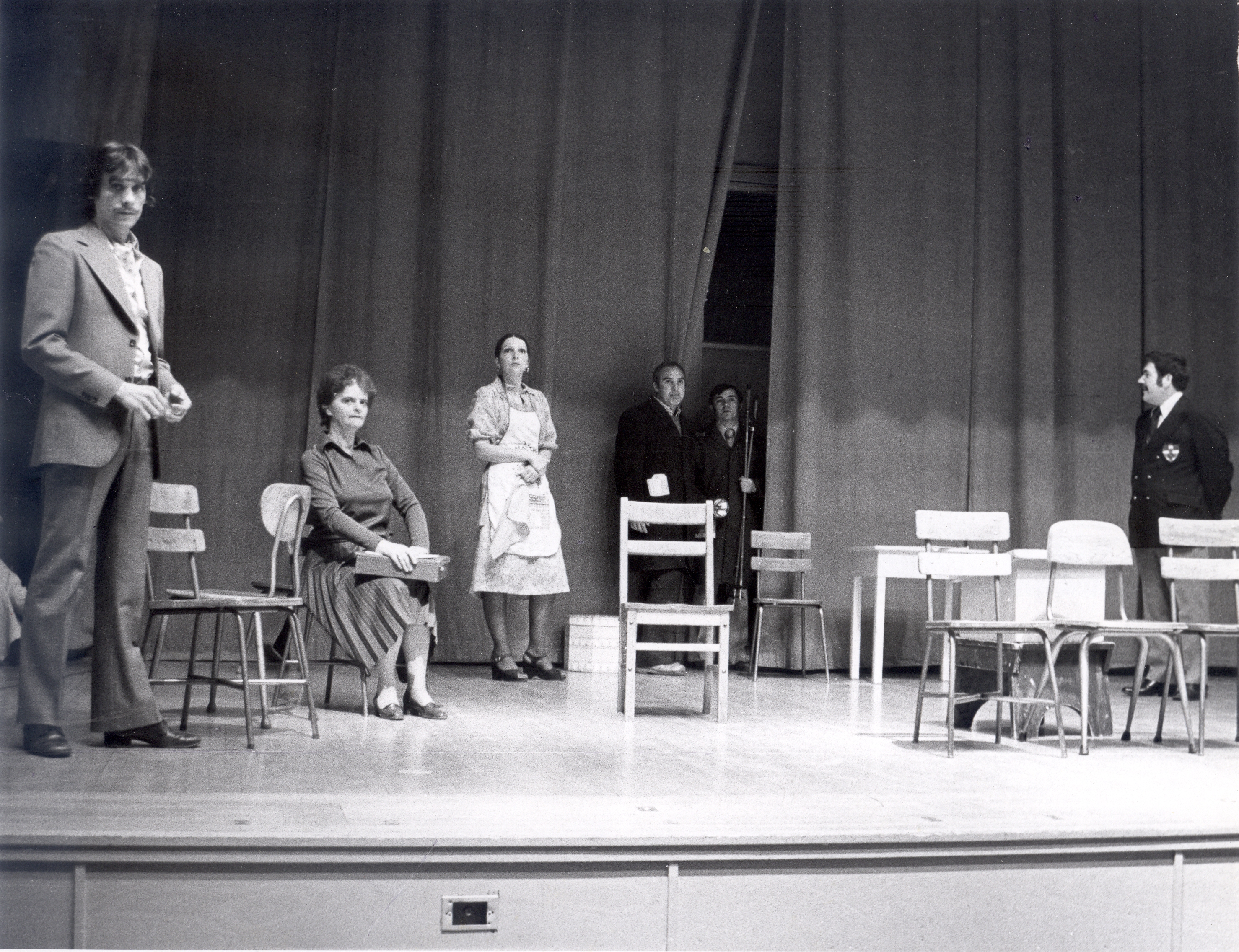
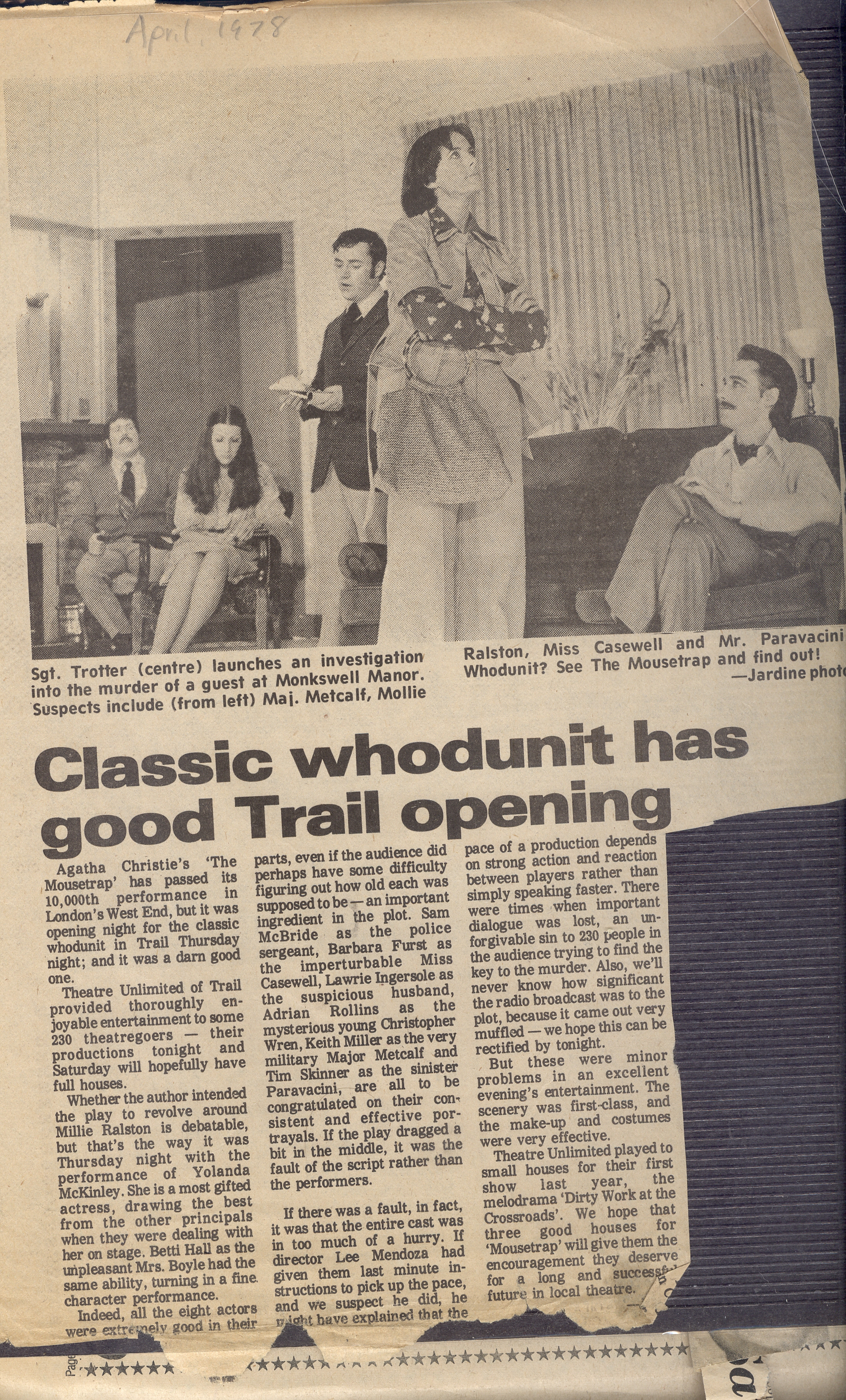
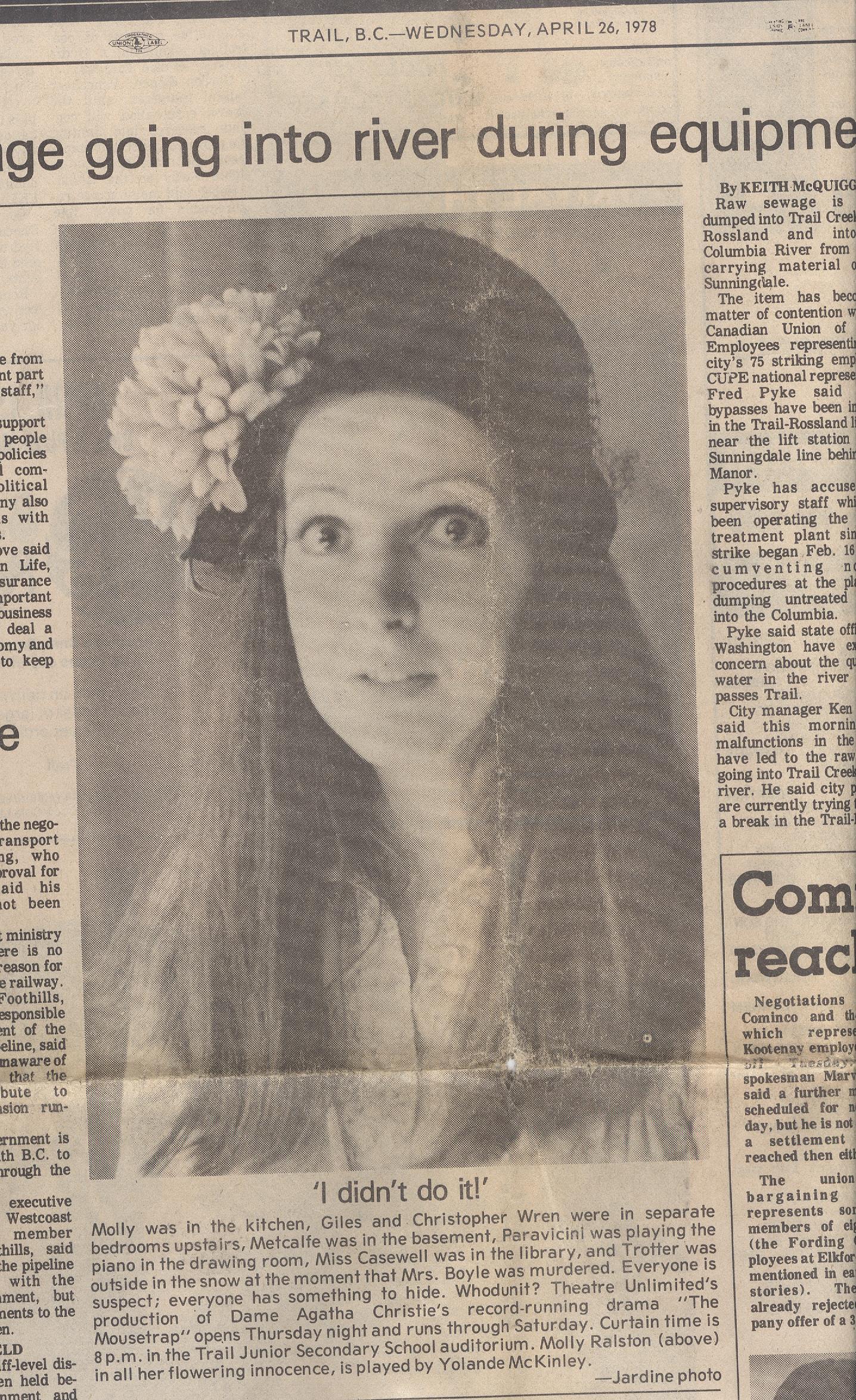
As its second show, Trail Theatre Unlimited chose to present Trail and district audiences with performances of Agatha Christie’s “The Mousetrap”, which had the distinction of being the longest-running play in the history of London theatre.
The murder mystery play had been running continuously in London since opening in the West End in 1952. The 26-year string at the time far exceeded any other show at the time — and its momentum has continued 47 more years to today in 2025, aside from shutting down temporarily on March 16, 2000 due to the Covid virus which impacted live theatre around the world. The show resumed on May 17, 2021 and has been performed continuously at the St. Martin’s Theatre since then. As of 2002, the show was performed for its ten millionth audience member in London. The 30,000th performance on March 19, 2025 was the next cause for celebration.
In early January, 1978 the executive of Trail Theatre Unlimited met to plan for the club’s spring production. The consensus was that the group should build on the successful momentum of their debut show “Dirty Work at the Crossroads” with a spring show that was somewhat more serious than the farce-like melodrama “Dirty Work”. As a member of the executive of Theatre Unlimited, I had suggested to others that we do “something like” The Mousetrap, which I had watched in London in the summer of 1975 and then two years later performed in with the Whitehorse Drama Club in the Yukon. When we could not think of a good alternative, the decision was made to do “The Mousetrap”.
Several members of the club were surprised that such a popular professional show was available for amateur groups to perform, for a reasonable fee of about $50 for each performance. We looked into that, and saw that the rights holder (Agatha Christie’s grandson) had rules that no amateur productions could be done in the United Kingdom, but they were allowed outside the country. Another rule is that no film could be made based on the play until the London show closed, so no movies have ever been made.
Something that all productions — professional or amateur — have to do is live up to the tradition of keeping the identity of the killer secret, so as not to spoil it for future audiences. The actor playing the killer comes on stage after the curtain closes and asks the viewers to keep the secret to themselves, as much of the fun for the audience is trying to guess which of eight characters is the murderer — and Agatha Christie provided clues throughout the play that give you reason to suspect any one of the characters.

 thebravestcanadian